
How to Remove Oil Stains From Your Asphalt Driveway
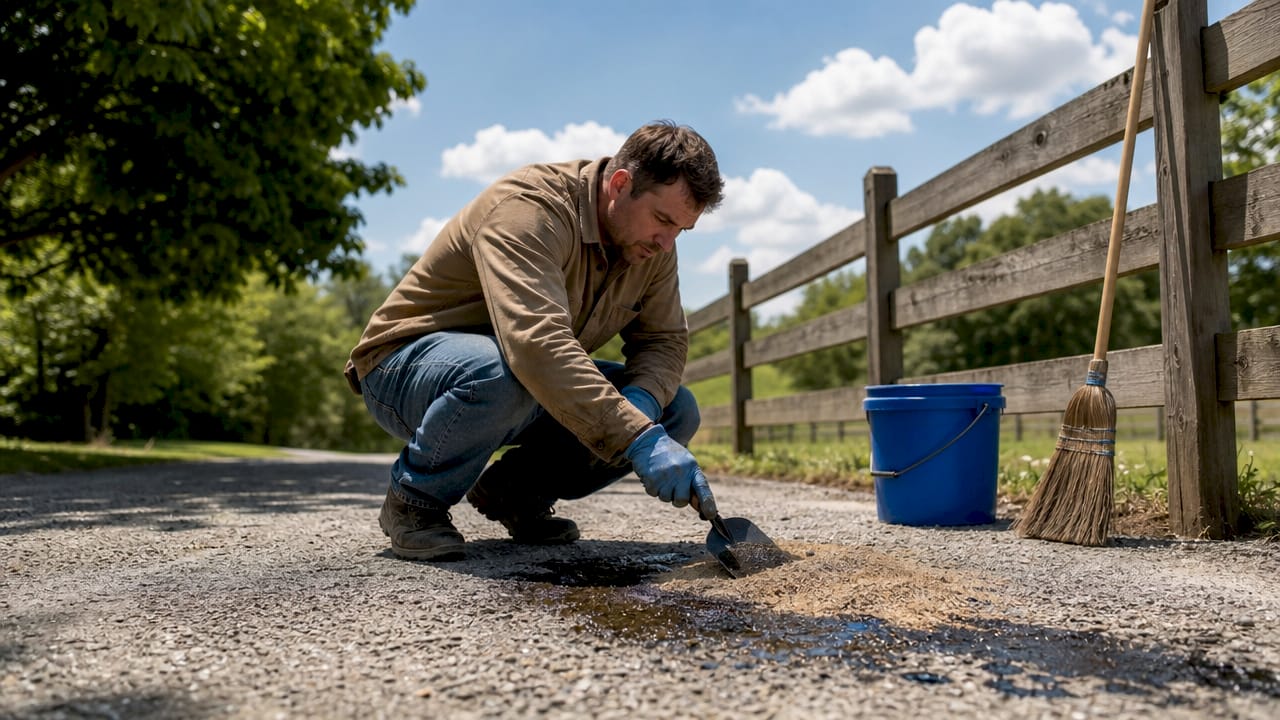
Removing oil stains from an asphalt driveway requires immediate absorption, chemical degreasing, and careful rinsing to prevent permanent damage and restore curb appeal. Engine oil is especially destructive on asphalt because it softens the binder within 24 hours, turning a surface problem into a structural one. The good news is that a fresh spill treated right away responds well to simple household materials like clay-based cat litter and biodegradable degreasers. Older stains take more effort, but the right sequence still delivers real results. This guide covers every stage, from the first minute after a spill to dealing with stains that have been baking in the Colorado sun for weeks.
How to remove oil stains from asphalt driveways: start with absorption
The first step is always absorption, not scrubbing. Scrubbing a fresh spill pushes oil deeper into the asphalt’s porous surface, making removal harder. Absorption pulls the oil out before it bonds.
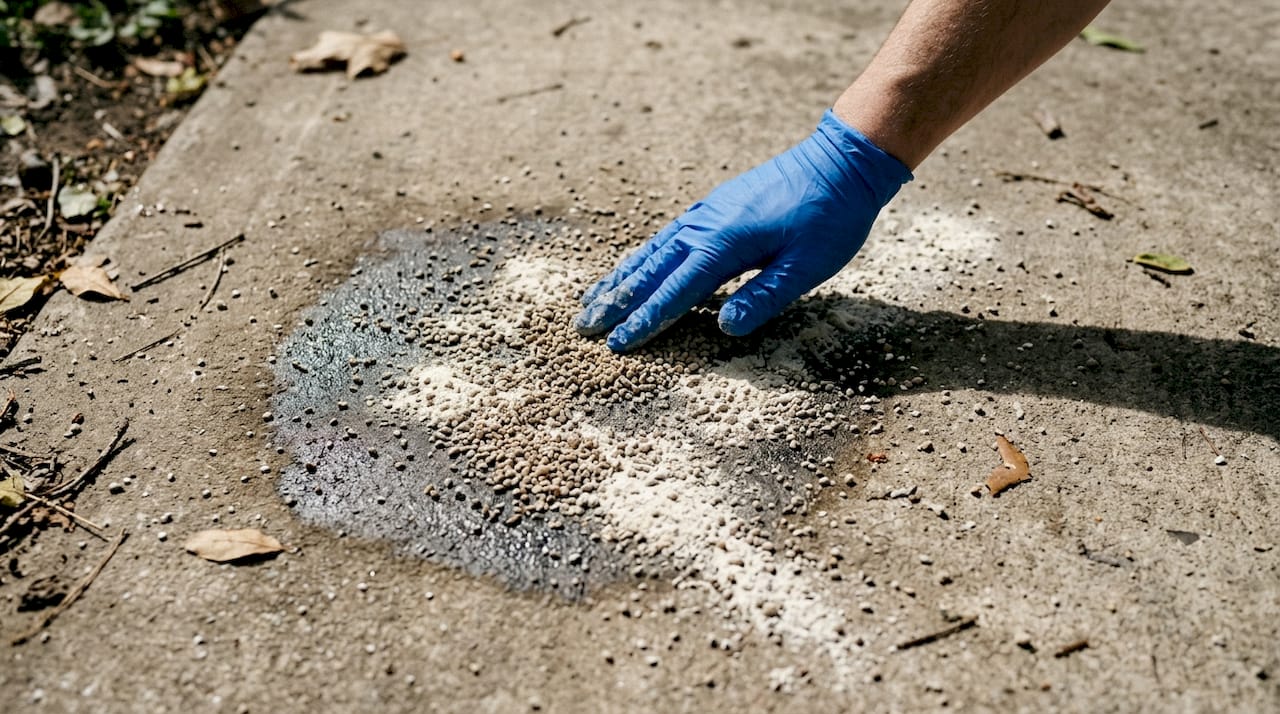
Clay-based cat litter is the most accessible absorbent material for this job. Diatomaceous earth works even better because its microscopic porous structure pulls liquid more aggressively. Baking soda and cornstarch are acceptable for very small spills. All of these are safe to handle and widely available at hardware and grocery stores in Colorado.
Professional cleaning services can remove up to 90% of stains less than 30 days old, while absorbent materials alone remove 40–60% of a fresh spill when applied immediately. That gap shows why absorption is a first step, not a complete solution.
Here is how to apply absorbents correctly:
- Pour the material directly onto the wet spill. Do not spread it with your hands or a brush.
- Layer it at least half an inch thick so the full surface area of the spill is covered.
- Press it down gently with your foot to maximize contact with the oil.
- Let it sit for 30 minutes or until the material looks fully saturated before sweeping it up.
- Sweep the used material into a bag and dispose of it as household waste. Do not rinse it into a storm drain.
Pro Tip: Apply a second layer of fresh absorbent after removing the first. A single application rarely pulls out everything, especially on a spill that has been sitting for more than a few minutes.
For stains that are a day or two old, absorbents still help but will not do the full job on their own. Move to a degreaser after the absorption step.
Which degreasers work best for asphalt oil stain removal?
Degreaser selection is where most homeowners make their biggest mistake. The wrong product does not just fail to clean. It actively damages your driveway.
Petroleum-based solvents dissolve asphalt binder because they share a similar hydrocarbon composition with the oil that holds asphalt together. Using gasoline, mineral spirits, or acetone on an oil stain trades one problem for a worse one. Citrus-based and biodegradable degreasers break down oil without attacking the binder. Trisodium phosphate (TSP) is a stronger option for older stains, but it requires careful rinsing and protective gloves.
Choosing the right product comes down to stain age and severity:
- Fresh stains (under 48 hours): A citrus-based degreaser or dish soap concentrate applied directly to the stain works well. These are pH-neutral and safe for asphalt.
- Recent stains (2–30 days): A biodegradable commercial degreaser with a 15-minute dwell time gives better penetration.
- Set-in stains (over 30 days): TSP or an enzymatic cleaner with a 15–30 minute dwell time, repeated up to three times, is the most effective DIY approach.
Stubborn stains require degreasers with 15–30 minute dwell times and scrubbing, with repetition up to three cycles. However, no chemical should stay on the asphalt surface for more than 10 minutes without monitoring, since prolonged contact can still degrade the binder even with safer products.
Always test any new cleaner on a small, low-visibility section of your driveway first. Apply it, wait 5 minutes, and check for color change or softening before treating the full stain.
Pro Tip: Warm the degreaser slightly before applying it in cold weather. Colorado temperatures in fall and winter slow down chemical reactions, and a warmer product penetrates oil faster.
Enzymatic cleaners are worth mentioning separately. These use biological agents to break down oil molecules at a molecular level. They work more slowly than TSP but are safer for surrounding soil and grass, which matters if your driveway borders a lawn or garden bed. You can find common cleaning mistakes to avoid that apply directly to degreaser misuse and product selection.
How to pressure wash asphalt without causing damage
Pressure washing is the most misused tool in driveway cleaning. High pressure feels powerful, but applied incorrectly it strips the oils that keep asphalt flexible, causing cracking and long-term surface degradation.
The correct settings for asphalt are 1,500–2,000 PSI with a 25-degree fan nozzle, maintaining a distance of 10–14 inches from the surface. Anything above 2,000 PSI risks binder damage. A zero-degree nozzle concentrates pressure into a single point and should never be used on asphalt.
The sequence matters as much as the settings:
- Pre-wet the stained area with plain water to loosen surface debris.
- Apply your chosen degreaser and allow the full dwell time before touching the surface.
- Scrub with a stiff nylon brush using circular motions. Metal brushes damage the surface and should not be used on asphalt.
- Rinse with the pressure washer at the correct PSI, moving the nozzle in smooth, overlapping passes.
- Inspect the stain. Repeat the degreaser step if a shadow remains.
Pressure washing without degreaser pretreatment disperses oil across a wider area but leaves a shadow stain. Skipping the chemical step is the single most common reason homeowners end up with a larger, lighter stain instead of a clean surface.
One more detail that Colorado homeowners often overlook: do not pressure wash in freezing temperatures. Water forced into asphalt pores and then frozen expands and widens existing micro-cracks. Wait for a day above 40°F before washing.
What to do about set-in or older oil stains
Older stains require patience and repetition. A single treatment will not fully remove oil that has been bonding with asphalt for weeks or months. Set realistic expectations before you start.
Follow these steps for set-in stains:
- Apply a heavy coat of biodegradable degreaser or TSP solution directly to the stain.
- Cover the treated area with plastic sheeting to slow evaporation and extend the dwell time to 20–30 minutes.
- Scrub aggressively with a stiff nylon brush, working from the outside of the stain inward to avoid spreading.
- Rinse with a pressure washer at 1,500–2,000 PSI.
- Repeat the full cycle up to three times across separate sessions, allowing the surface to dry between treatments.
A poultice method works well for very deep stains. Mix an absorbent powder like diatomaceous earth with a liquid degreaser to form a thick paste. Apply it to the stain, cover with plastic, and leave it for 8–12 hours. The paste draws oil upward as it dries. This technique is borrowed from stone restoration and works on asphalt for the same reason: capillary action pulls oil toward the drying material.
Sealcoating will not adhere to oily surfaces, so thorough cleaning before any sealing project is non-negotiable. If you plan to sealcoat your driveway this season, treat every oil stain completely and let the surface dry for at least 48 hours first.
Some older stains leave a permanent gray shadow even after full treatment. At that point, the cosmetic damage is done, but the structural threat is neutralized. Sealcoating after cleaning covers the shadow and protects the surface going forward. You can also review ways to improve cleaning results that apply to stubborn stain situations like these.
When DIY methods reach their limit, professional cleaning is the practical next step. Professional cleaning achieves near-complete removal for newer spills, while older stains may require multiple professional treatments and sometimes cannot be fully eliminated.
Key Takeaways
The most effective way to remove oil stains from asphalt is to absorb the spill immediately, apply a biodegradable degreaser with adequate dwell time, scrub with a nylon brush, and rinse at 1,500–2,000 PSI before the oil bonds permanently with the binder.
| Point | Details |
|---|---|
| Act within 24 hours | Engine oil softens asphalt binder fast; immediate treatment prevents structural damage. |
| Use the right degreaser | Citrus-based or biodegradable degreasers clean safely; petroleum solvents destroy the binder. |
| Layer absorbents thickly | Apply at least half an inch of cat litter or diatomaceous earth and leave it for 30 minutes. |
| Control pressure washer settings | Use 1,500–2,000 PSI with a 25-degree nozzle at 10–14 inches to avoid surface damage. |
| Clean before sealcoating | Sealcoat will not bond to oily asphalt; always clean and dry fully before sealing. |
What I’ve learned from watching homeowners fight their driveways
The most common mistake I see is treating a driveway oil stain like a kitchen spill. People grab whatever cleaner is under the sink and scrub hard. That approach fails on asphalt every time, and sometimes makes things worse.
The second mistake is over-relying on pressure washing. A pressure washer feels like the answer to everything, but on asphalt it is a finishing tool, not a primary one. Chemical breakdown has to happen first. Skipping the degreaser step and going straight to high pressure just spreads the problem.
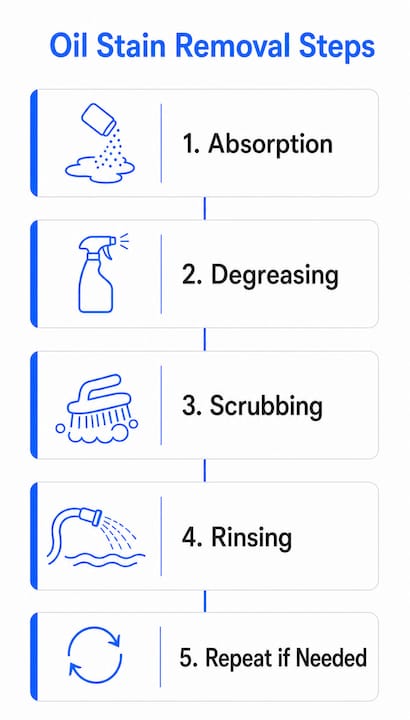
What actually works is boring and methodical: absorb first, degrease second, scrub third, rinse last. Repeat if needed. The homeowners who get the best results are the ones who treat the process like a recipe and follow each step in order.
Colorado’s climate adds a real variable here. The high altitude and intense UV exposure in places like Denver and Colorado Springs accelerate asphalt aging. That means your driveway’s binder is already under more stress than a driveway in a milder climate. Aggressive chemicals or excessive pressure washing on already-stressed asphalt causes damage that shows up fast. Go gentler than you think you need to.
The one thing I would tell every homeowner: keep a small bag of diatomaceous earth in your garage. The moment you see a fresh drip, cover it. That 30-second response is worth more than any cleaner you can buy.
— Brandon
When a professional cleaning makes sense for your driveway
Some stains are simply beyond what a garden hose and a bottle of degreaser can fix. If you have tried the full DIY sequence twice and the stain is still visible, commercial-grade equipment will get you further.

Alldaypowerwashing serves homeowners and property managers across Denver and Colorado Springs with professional driveway cleaning using commercial-grade pressure washing equipment. Their crews handle oil stains, grease buildup, and general surface grime on both residential driveways and commercial lots. Same-week quotes are available, and every job is backed by a satisfaction guarantee. If your driveway needs more than a DIY fix, or if you want to prep the surface before sealcoating this season, get a quote and let a trained crew handle the heavy work.
FAQ
What is the fastest way to clean oil spots on asphalt?
Cover the fresh spill immediately with clay-based cat litter or diatomaceous earth, leave it for 30 minutes, then follow with a citrus-based degreaser and a pressure washer set to 1,500–2,000 PSI.
Can I use dish soap to remove oil stains from my driveway?
Yes, concentrated dish soap works on fresh stains because it is a pH-neutral degreaser. Apply it directly, scrub with a stiff nylon brush, and rinse thoroughly.
Will a pressure washer fully remove an old oil stain?
Pressure washing alone will not fully remove a set-in stain. Applying degreaser before washing yields significantly better results than pressure alone, which only disperses the oil.
How do I prepare my driveway for sealcoating after an oil stain?
Clean the stain completely using the degreaser and pressure washing sequence, then allow the surface to dry for at least 48 hours. Sealcoat will not bond to any surface that still has oil residue.
When should I call a professional for asphalt stain removal?
Call a professional when DIY treatments have been repeated twice without full results, or when the stain is more than 30 days old. Professional services can remove up to 90% of stains under 30 days old using commercial equipment and techniques.