
How to Remove Oil Stains from Your Driveway
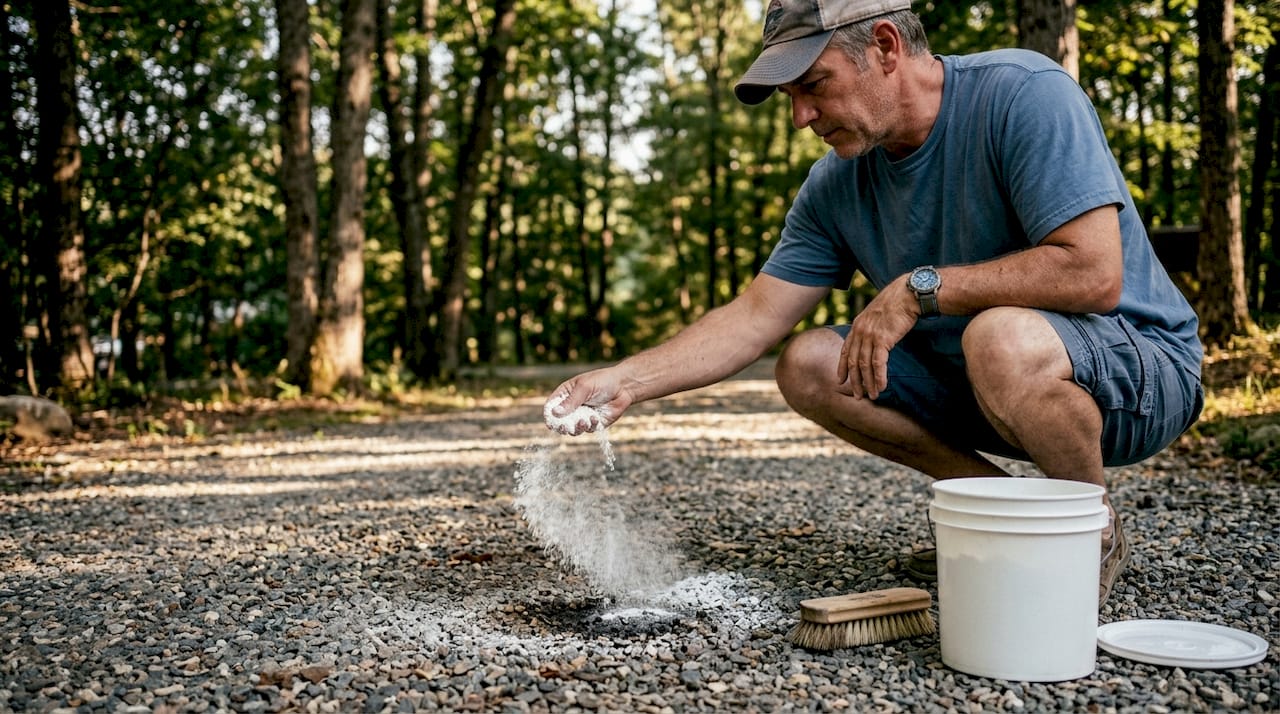
Oil stain removal is defined as the process of extracting petroleum-based residue from porous driveway surfaces using absorbents, alkaline degreasers, or poultice methods. Knowing how to remove oil stains from driveway surfaces correctly is the difference between a clean result and a permanent dark patch that drops your curb appeal. The key rule: act fast. Fresh oil sits on the surface and responds well to household items like cornstarch and baking soda. Old oil bonds with concrete and demands industrial degreasers or a poultice treatment. Colorado homeowners deal with this constantly, from garage leaks to vehicles dripping fluid after a long mountain drive.
What do you need to remove oil stains safely?
Getting the right supplies together before you start saves time and prevents surface damage. The wrong tool or chemical can make a stain worse, especially on asphalt.
Absorbent materials are your first line of defense. Use these for fresh spills:
- Cornstarch or baking soda: finer powders provide better surface area contact with concrete micro-pores than coarse granules. This means more oil gets pulled out before it sets.
- Kitty litter: works in a pinch, but standard clay-based granules are often too coarse to reach the smallest pores in concrete. Use it only if finer options are unavailable.
- Paper towels or old rags: for blotting excess oil before applying powder.
Cleaning agents for the scrubbing phase:
- Alkaline degreasers: the industry standard for concrete oil stain removal. They break down petroleum without etching the surface.
- Dish soap: a mild option for light, fresh stains on concrete.
- Solvent-based degreasers: reserved for old, deep-set stains. Use with caution and good ventilation.
Tools and protective gear:
- Stiff-bristle scrub brush (not wire, which scratches concrete)
- Chemical-resistant gloves
- Safety glasses
- Plastic wrap (for poultice applications)
- Bucket and garden hose
Environmental supplies:
- Old newspapers or cardboard to catch runoff
- Sealable plastic bags for solid waste disposal
- A wet/dry vacuum for liquid collection
Pro Tip: Never use muriatic acid on oil stains. It damages concrete surfaces through irreversible etching and does not remove oil. The stain stays; the surface finish does not.
For asphalt driveways, the supply list changes slightly. Mild detergents or eco-friendly degreasers are the right choice because harsh solvents break down the bitumen binder in asphalt, causing cracking and crumbling over time. Gentle scrubbing preserves the surface integrity.
How to remove fresh oil stains from concrete and asphalt driveways
Speed is the single most important factor with fresh spills. Oil penetrates porous concrete within minutes. A stain you treat in the first hour is far easier to remove than one you find the next morning.
Follow these steps for fresh oil spills:
-
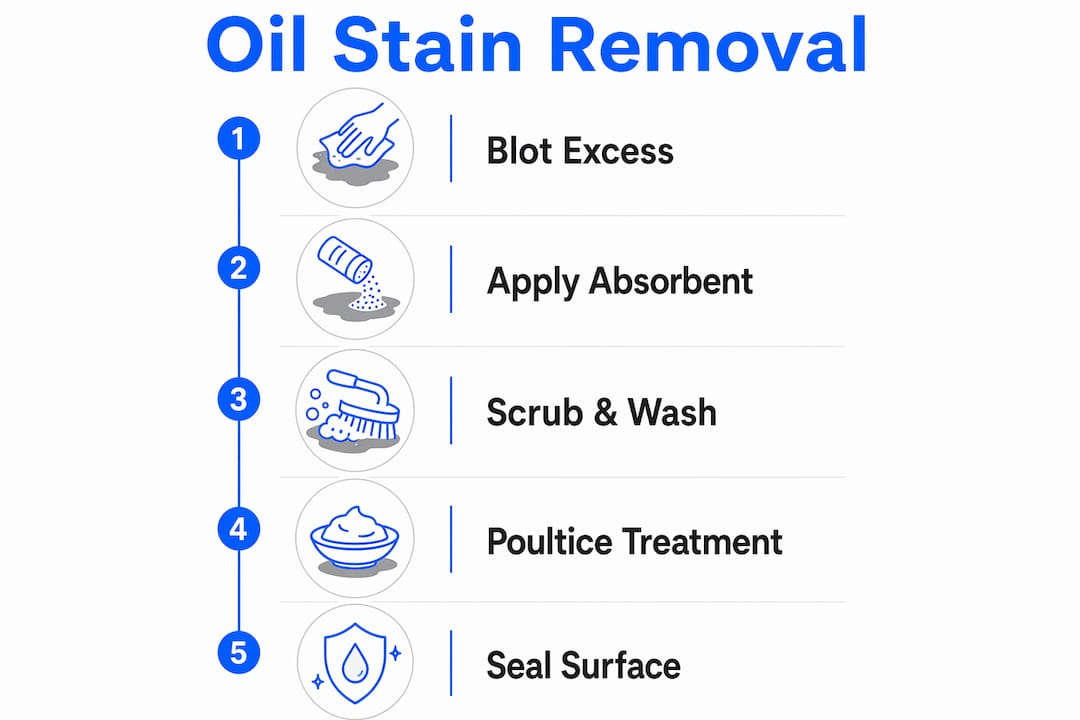
Blot, do not scrub. Use paper towels or rags to lift as much surface oil as possible. Blotting fresh oil prevents it from being pushed deeper into the concrete pores. Press down firmly and lift straight up. Work from the outside of the spill toward the center to avoid spreading it.
-
Apply a fine-grain absorbent. Cover the stain generously with cornstarch or baking soda. These materials have a high surface area that draws oil out of the pores. Pour enough to form a visible layer over the entire stained area.
-
Grind the powder in. Use the sole of your shoe to work the absorbent into the stain with a grinding motion. Grinding the powder in increases contact between the absorbent and the oil trapped in the concrete. This step is often skipped, and it makes a real difference.
-
Wait 24 hours. Leave the absorbent in place for a full day. Rushing this step reduces how much oil the powder pulls out. If rain is forecast in Colorado, cover the area loosely with cardboard to protect it.
-
Sweep and apply degreaser. Sweep up the used powder and dispose of it in a sealed bag. Apply an alkaline degreaser directly to the stain, following the product’s dilution instructions. Let it sit for 5–10 minutes.
-
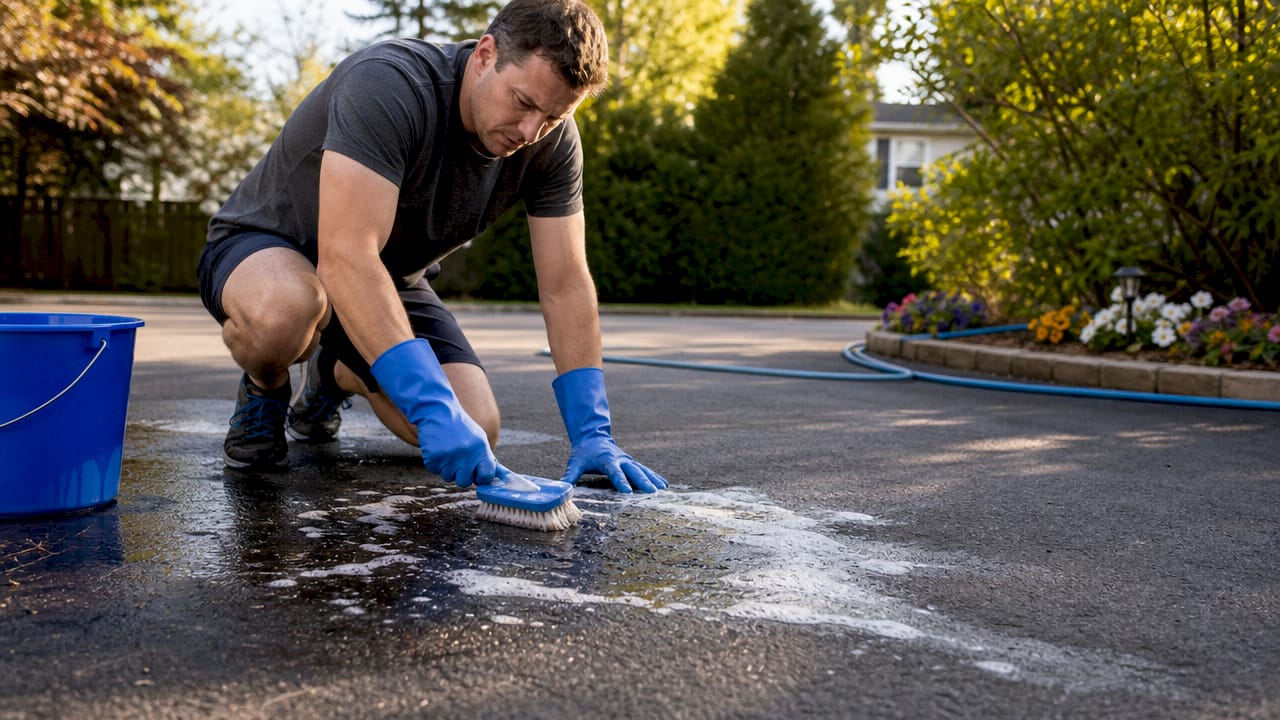
Scrub and rinse. Use a stiff-bristle brush to work the degreaser into the stain using circular motions. Rinse thoroughly with clean water. Collect the runoff rather than letting it flow into the lawn or street.
Pro Tip: For asphalt driveways, skip the degreaser and use warm water with a few drops of dish soap instead. Aggressive chemicals soften asphalt binder and cause long-term surface damage.
One application often handles fresh stains completely. If a faint shadow remains, repeat the degreaser and scrub step once more before the surface fully dries.
How do you remove old or stubborn oil stains from a driveway?
Older oil stains that have bonded with concrete require a different approach entirely. Soap and water will not touch them. You need either a commercial-grade alkaline degreaser, a solvent-based product, or a poultice.
The poultice method
A poultice is a paste made from an absorbent material mixed with a solvent. It draws oil out of deep pores over an extended drying period. This is the most effective DIY method for stains that are weeks or months old.
-
Mix the poultice. Combine an absorbent powder (flour, diatomaceous earth, or baking soda) with a solvent such as acetone or mineral spirits. Mix until you get a thick, peanut-butter-like paste.
-
Apply at the right thickness. Spread the paste 1/4 to 1/2 inch thick over the entire stain. Thinner applications dry too fast and lose drawing power before the oil fully migrates out.
-
Cover with plastic wrap. Tape the edges down to slow evaporation. This keeps the solvent active longer, which is what pulls the oil upward into the absorbent.
-
Wait 24+ hours. The longer the poultice sits, the more oil it extracts. For very old stains, leave it for 48 hours.
-
Remove and scrub. Peel off the plastic wrap and scrape up the dried paste. Scrub the area with an alkaline degreaser and rinse clean.
Here is a quick comparison of methods by stain age and surface type:
| Stain type | Surface | Best method |
|---|---|---|
| Fresh (under 1 hour) | Concrete | Blot, absorbent powder, alkaline degreaser |
| Fresh (under 1 hour) | Asphalt | Blot, absorbent powder, mild dish soap |
| Old (days to weeks) | Concrete | Commercial alkaline degreaser, repeated scrubbing |
| Deep-set (months+) | Concrete | Poultice with solvent, 24–48 hours |
| Deep-set (months+) | Asphalt | Mild eco-friendly degreaser only, no solvents |
Repeated treatments are normal for deep-set stains. Two or three poultice applications may be needed before the stain fades significantly. Patience matters more than scrubbing harder.
Common mistakes to avoid when cleaning oil stains
Most driveway cleaning failures come from a short list of predictable errors. Avoiding them protects both the surface and the environment.
- Scrubbing a fresh spill immediately. This forces oil deeper into the concrete pores before it has a chance to be absorbed. Always blot first.
- Using muriatic acid. This is the most damaging mistake a homeowner can make. Muriatic acid etches concrete permanently and does nothing to remove oil.
- Applying harsh solvents to asphalt. Gasoline, paint thinner, and strong degreasers dissolve the asphalt binder. The surface becomes soft, sticky, and prone to cracking.
- Rinsing waste into the storm drain. Oily residues are environmental pollutants, and washing them into storm drains or grass causes real harm to local waterways. Collect all liquid waste and dispose of it at a local hazardous waste facility.
- Skipping protective gear. Degreasers and solvents irritate skin and eyes. Always wear chemical-resistant gloves and safety glasses.
“Oily residues are environmental pollutants, and improper disposal risks significant environmental harm. Collect all solid and liquid waste and take it to a designated disposal facility rather than rinsing it into the yard or street drain.”
Proper exterior cleaning practices, whether for driveways or vinyl siding maintenance, share the same core principle: use the right product for the surface and handle waste responsibly.
Pro Tip: After cleaning, apply a concrete or asphalt sealer to the driveway. Sealed surfaces repel oil rather than absorbing it, making future spills far easier to clean up.
Key Takeaways
The most effective way to remove oil stains from a driveway is to blot fresh spills immediately, apply a fine-grain absorbent for 24 hours, and follow with an alkaline degreaser suited to your surface type.
| Point | Details |
|---|---|
| Act within the first hour | Fresh oil sits on the surface and responds to household absorbents like cornstarch or baking soda. |
| Blot, never scrub | Scrubbing pushes oil deeper into concrete pores and worsens the stain. |
| Match method to stain age | Old stains need a poultice or commercial degreaser; soap and water will not work. |
| Protect asphalt surfaces | Use only mild, eco-friendly degreasers on asphalt to avoid breaking down the binder. |
| Dispose of waste properly | Collect all oily runoff and solid waste; never rinse it into storm drains or grass. |
What I’ve learned from years of watching driveways get cleaned
Here is the honest truth about driveway oil stains: most homeowners wait too long. They notice the stain, think they will deal with it on the weekend, and by then the oil has bonded with the concrete. What could have been a 30-minute fix with baking soda and a brush becomes a multi-day poultice project.
The second thing I have seen over and over is people reaching for the wrong product. Muriatic acid shows up in garages across Colorado because people assume something that strong must work. It does not. It destroys the surface and leaves the oil right where it was. The age of the stain matters more than the strength of the chemical you throw at it.
Sealing your driveway is the one step that changes everything going forward. A sealed concrete or asphalt surface does not absorb oil the same way. Spills bead up and can be wiped away before they penetrate. If you are in Colorado Springs or Denver, the freeze-thaw cycles already stress your driveway surface every winter. Sealing protects against both oil and water damage at the same time.
When DIY methods have been tried twice and the stain is still visible, that is the moment to call in commercial-grade equipment. A professional pressure washing service uses water temperature, pressure, and degreaser concentration that no garden hose setup can match. The results are not comparable.
— Brandon
When professional cleaning makes more sense
Oil stains that survive two rounds of poultice treatment or commercial degreaser are not a DIY failure. They are a signal that the job needs commercial-grade equipment.

Alldaypowerwashing serves homeowners and property managers across the Denver metro area and Colorado Springs with professional driveway cleaning that goes well beyond what a garden hose and store-bought degreaser can do. The crew uses commercial-grade pressure washing equipment calibrated for concrete and asphalt surfaces, which means the right water temperature, pressure, and degreaser concentration for each job. Alldaypowerwashing is fully insured, offers same-week quotes, and backs every job with a satisfaction guarantee. If your driveway has a stain that has beaten every DIY method you have tried, get a fast quote and let a real crew handle it.
FAQ
What is the fastest way to remove fresh oil from a driveway?
Blot the excess oil immediately with paper towels, then cover the stain with cornstarch or baking soda and grind it in with your shoe sole. Let it sit for 24 hours before sweeping and scrubbing with an alkaline degreaser.
How do you remove oil stains from a concrete driveway that are old?
Old oil stains that have bonded with concrete require a poultice made from an absorbent powder and a solvent, applied 1/4 to 1/2 inch thick and covered with plastic wrap for 24–48 hours. Repeated applications are often needed for stains that are months old.
Can you remove oil stains from a blacktop or asphalt driveway?
Yes, but only with mild, eco-friendly degreasers or dish soap. Harsh solvents and strong chemical degreasers break down the asphalt binder and cause permanent surface damage.
Is kitty litter effective for absorbing driveway oil spills?
Standard clay-based kitty litter is often too coarse to reach the micro-pores in concrete. Finer powders like cornstarch or baking soda absorb more oil from fresh spills because they make better contact with the surface.
Should oily rinse water be washed into the street or lawn?
No. Oily rinse water is an environmental pollutant and should never be directed into storm drains, grass, or soil. Collect all liquid and solid waste and dispose of it at a local hazardous waste facility.