
How to Remove Rust Stains from Your Concrete Driveway
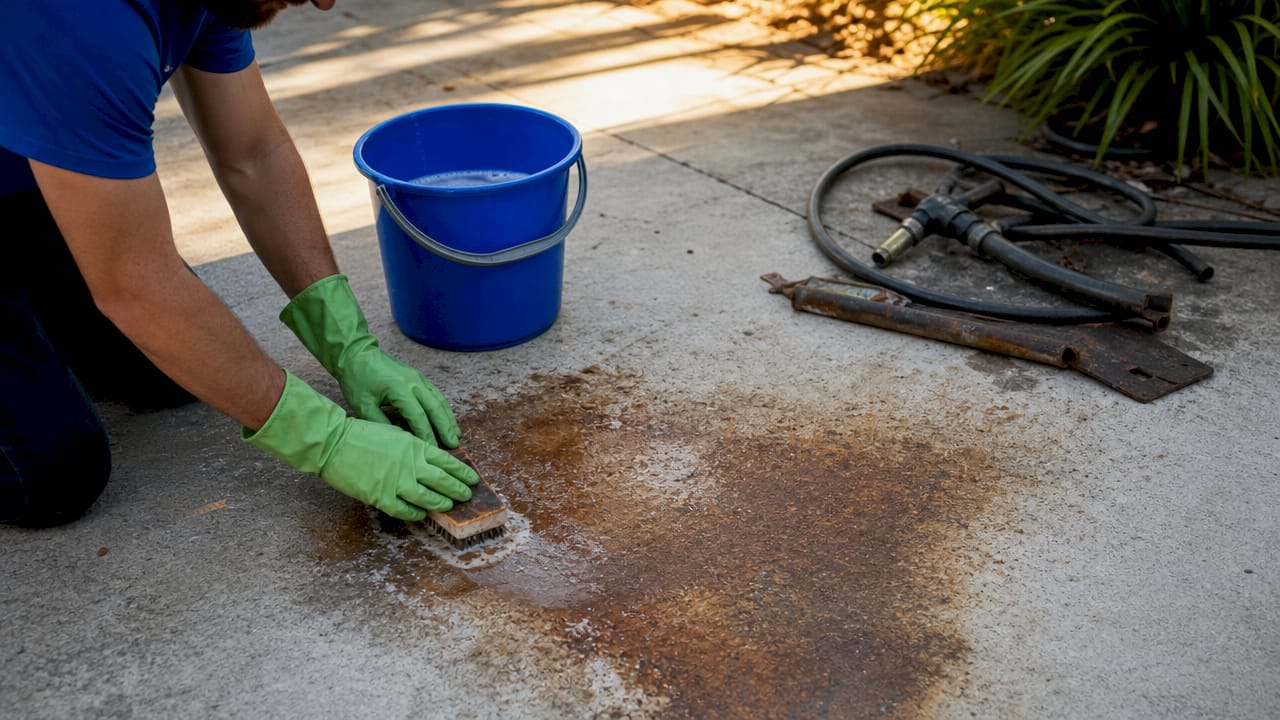
Rust stains on concrete driveways are iron oxide deposits that chemically bond with porous concrete surfaces, and removing them requires acid-based cleaners, not just scrubbing or pressure washing. Knowing how do you remove rust stains from concrete driveway the right way starts with two things: identifying how old the stain is and removing the metal source causing it. Fresh stains respond to household acids like white vinegar or lemon juice. Older, set-in stains need commercial oxalic acid cleaners with longer dwell times. Colorado homeowners deal with this more than most, thanks to iron-rich irrigation water and metal patio furniture sitting on driveways through long, dry summers.
How do you remove rust stains from a concrete driveway?
The most effective approach to cleaning rust stains from a driveway is to match your cleaning method to the stain’s age and depth. A stain that appeared last week behaves very differently from one that has been baking into your concrete for two seasons. Start by sweeping the area clean and removing any metal object sitting on or near the stain. Cleaning while the rust source remains in contact with the concrete guarantees the stain comes back.
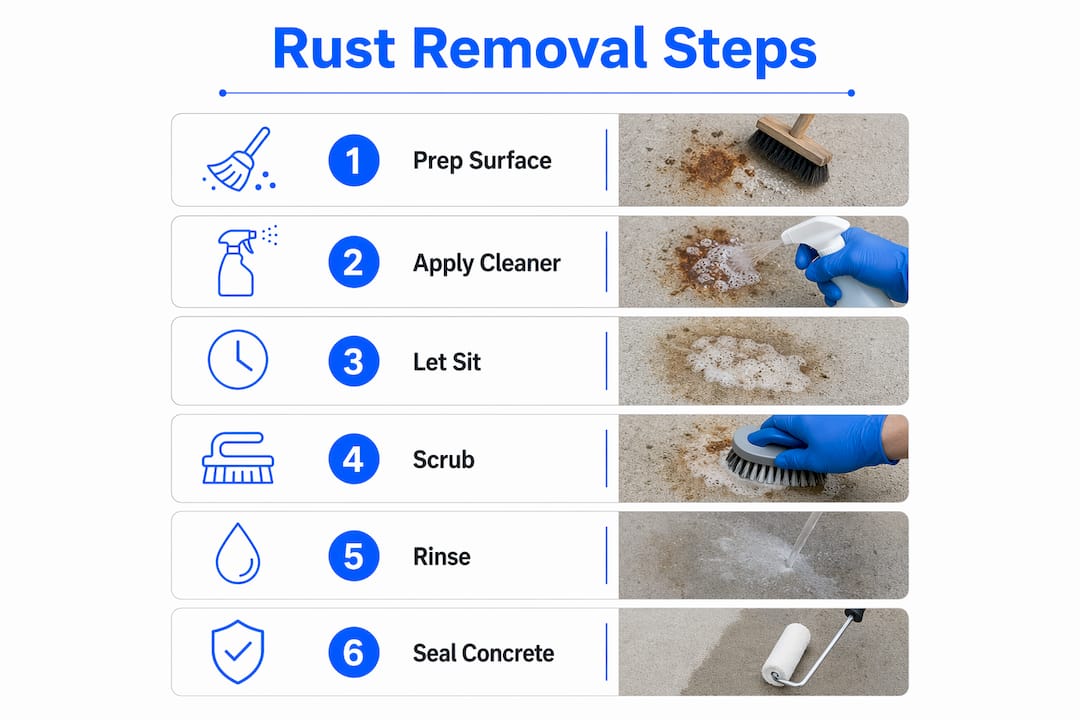
For fresh rust stains, follow these steps:
- Apply white vinegar or lemon juice directly to the stained area. Both contain natural acids that begin dissolving iron oxide on contact.
- Let it dwell for 10–15 minutes. Do not rinse early. The acid needs time to break the chemical bond between rust and concrete.
- Scrub with a stiff-bristle synthetic brush. Use firm, circular strokes. Repeat the application if the stain is still visible after the first pass.
- Rinse with warm soapy water. A garden hose works fine at this stage. Avoid using a pressure washer as your first rinse, since pressure washing alone can push rust deeper into the concrete’s pores.
- Repeat as needed. Light stains often clear in one or two treatments. Stubborn spots may need three or four passes over a couple of days.
Pro Tip: Test any cleaning solution on a small, out-of-the-way section of your driveway before treating the full stain. Decorative or stamped concrete is especially vulnerable to etching from acids.
Pressure washing is a common first instinct, but traditional soaps and pressure washing are largely ineffective on rust stains. Rust chemically bonds with concrete. Water pressure moves it around but does not dissolve it. Save the pressure washer for the final rinse after chemical treatment.
How to handle stubborn, deep-set rust stains on concrete
Older rust stains require a stronger approach. Commercial rust removers formulated for concrete typically use oxalic acid as the active ingredient. Oxalic acid dissolves iron oxide without the aggressive surface damage that muriatic acid causes.
Here is what to know before you start:
- Choose a product designed for concrete. General-purpose rust removers may contain chemicals that etch or discolor concrete surfaces. Read the label carefully.
- Dilute according to instructions. Concentrated oxalic acid solutions need water. Using them full-strength does not speed up the process. It increases the risk of surface damage.
- Allow a dwell time of 15–60 minutes depending on stain severity. Commercial oxalic acid cleaners need this time to penetrate and lift deep-set rust.
- Scrub thoroughly, then rinse completely. Residual acid left on concrete continues to react and can cause long-term surface damage.
- Test on an inconspicuous area first. Muriatic acid is hazardous and can permanently damage concrete, so stick with safer acid-based alternatives for DIY use.
Bleach is a common mistake. Bleach is ineffective for rust stain removal and can leave the concrete unevenly discolored. Iron oxide requires an acid to dissolve. Bleach is a base and does nothing to break that bond.
Pro Tip: If a stain keeps returning within weeks of treatment, the metal source is still present. A grill leg, a plant stand, or a metal edging strip sitting on damp concrete will re-stain the surface faster than any cleaner can fix it.
Signs you need professional help include stains that cover large sections of the driveway, stains that have penetrated deep into the slab, or recurring stains despite repeated treatment and source removal. At that point, commercial-grade equipment and professional-strength chemistry make a real difference.
What tools and safety equipment do you need?
The right tools make rust stain removal faster and safer. Using the wrong ones can create new problems.
Essential cleaning agents:
- White vinegar or lemon juice for fresh, light stains
- Commercial oxalic acid-based rust removers for set-in stains
- Warm soapy water for rinsing
Scrubbing tools:
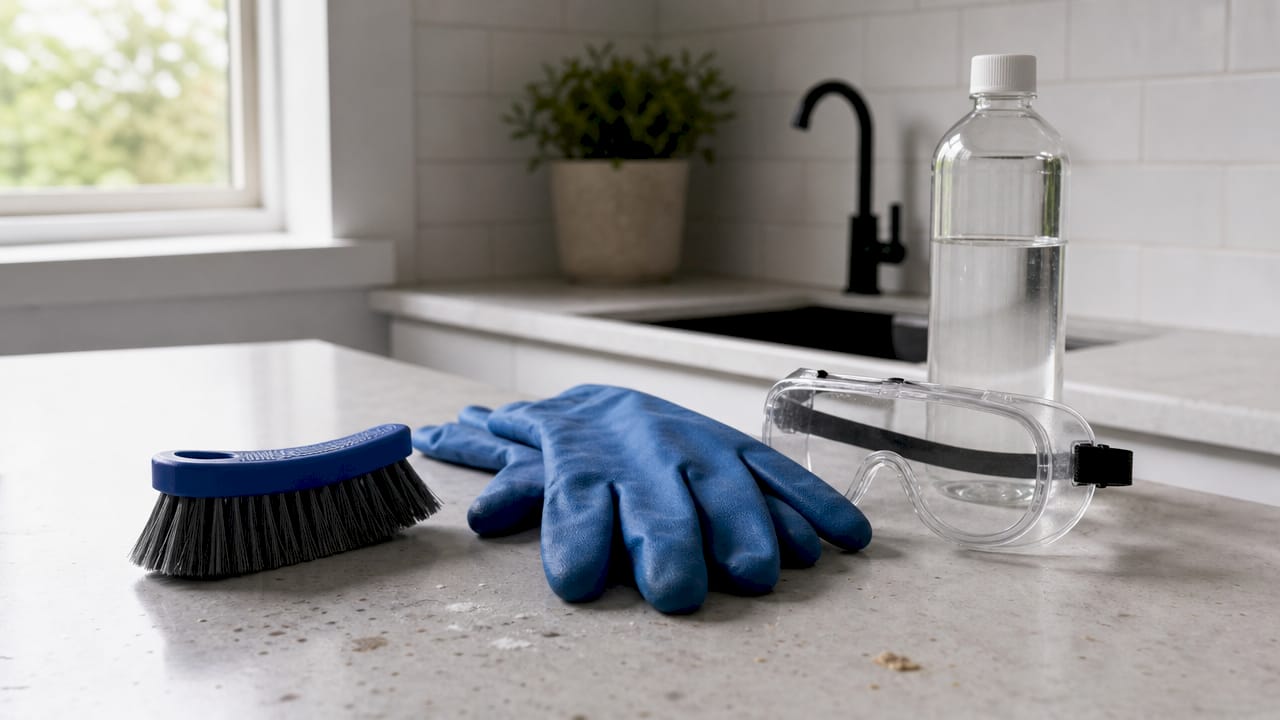
Wire brushes leave microscopic iron particles embedded in the concrete surface, which then rust and create new stains. Always use a synthetic stiff-bristle brush. Nylon or polypropylene bristles scrub effectively without depositing metal fragments.
Safety gear:
- Chemical-resistant gloves (nitrile or rubber)
- Safety glasses or goggles
- Old clothing or a protective apron
| Tool category | Best use | Safety note |
|---|---|---|
| Synthetic stiff-bristle brush | Scrubbing all stain types | Avoid wire brushes; they cause new rust |
| Oxalic acid cleaner | Deep-set or recurring stains | Dilute per label; test first |
| White vinegar or lemon juice | Fresh, light stains | Safe for most concrete types |
| Pressure washer | Final rinse only | Never use as the primary treatment |
| Nitrile gloves and goggles | All treatments | Required for acid-based products |
Sweep the driveway before you start and remove all metal objects from the area. Wet the surrounding concrete lightly to reduce the chance of cleaning solution spreading beyond the stain.
How can homeowners prevent rust stains from coming back?
Prevention is the most cost-effective form of concrete driveway maintenance. Moving metal objects and managing moisture can avoid the vast majority of rust stains before they start.
- Remove or relocate metal objects. Metal furniture, grill legs, and plant stands sitting on concrete continuously feed rust stains when moisture is present. Move them to a rubber mat or off the driveway entirely.
- Seal your concrete every 3–5 years. Sealing concrete with a penetrating sealer limits moisture and chemical penetration, which reduces how deeply rust can bond with the surface. You can read more about power washing before sealing to get the sequence right.
- Check your sprinkler system. Colorado’s water supply in many areas carries dissolved iron. Sprinklers hitting your driveway repeatedly deposit that iron, which oxidizes into rust stains over time. Redirect heads away from concrete surfaces.
- Clean up fertilizer spills immediately. Many lawn fertilizers contain iron compounds. A spilled bag left on a wet driveway will leave a rust stain within hours.
- Run the water beading test. Pour a small amount of water on your sealed driveway. If it beads up, the sealer is working. If it soaks in, resealing is needed to restore protection.
Pro Tip: Seal your driveway in the fall after cleaning season. Colorado winters bring freeze-thaw cycles that open concrete pores and make staining worse the following spring.
Sealing concrete after rust removal extends the driveway’s lifespan and keeps future stains from bonding as deeply. It is one of the most overlooked steps in the entire process.
Key Takeaways
Removing rust stains from concrete requires acid-based treatment, proper scrubbing tools, and source removal to produce lasting results.
| Point | Details |
|---|---|
| Match method to stain age | Use vinegar or lemon juice for fresh stains; use oxalic acid cleaners for deep-set ones. |
| Never use wire brushes | Synthetic stiff-bristle brushes scrub effectively without depositing rust-causing metal fragments. |
| Remove the metal source first | Stains return if the metal object causing them stays in contact with the concrete. |
| Pressure wash last, not first | Use a pressure washer only as a final rinse after chemical treatment, not as the primary tool. |
| Seal every 3–5 years | A penetrating sealer reduces moisture penetration and makes future stains easier to remove. |
What I’ve learned after years of watching homeowners fight rust stains
The most common mistake I see is reaching for the pressure washer first. It feels productive. The water is moving, the surface looks wet and active, and there is a satisfying noise. But pressure washing must follow chemical treatment, not replace it. Skipping the chemistry and going straight to water pressure often makes the stain worse by pushing iron oxide deeper into the concrete’s pores.
The second mistake is impatience with dwell time. Homeowners apply vinegar, wait two minutes, scrub hard, and declare the product useless. Acid needs time to break the chemical bond between rust and concrete. Ten to fifteen minutes for household acids, and up to an hour for commercial oxalic acid products. Rushing that step wastes product and effort.
The third and most frustrating mistake is cleaning without removing the source. I have seen driveways treated three times in a single summer because a metal grill leg was sitting in the same spot every time. The stain came back within two weeks each time. Remove the object. Put a rubber mat under it. That single step eliminates most repeat stain problems.
Sealing after cleaning is the step most homeowners skip entirely. They clean the stain, feel satisfied, and move on. But an unsealed concrete surface is an open invitation for the next stain. A penetrating sealer applied after a thorough clean is the difference between a driveway that stays clean and one that needs treatment every season.
— Brandon
When DIY is not enough: professional concrete cleaning in Colorado
Some rust stains go beyond what household acids and a scrub brush can handle. Large coverage areas, deep penetration into the slab, or stains caused by iron-rich irrigation water over many years call for commercial-grade equipment and professional-strength chemistry.

Alldaypowerwashing serves homeowners across Colorado Springs and the Denver metro area with professional pressure washing services that combine chemical rust treatment with commercial-grade rinsing equipment. The crew handles the prep, the chemistry, and the rinse sequence correctly every time. Alldaypowerwashing is fully insured, offers same-week quotes, and backs its work with a satisfaction guarantee. If your driveway has rust stains that keep coming back or cover more ground than a DIY treatment can handle, get a fast quote and let a real crew take it from there.
FAQ
Does bleach remove rust stains from concrete?
Bleach does not remove rust stains. Bleach cannot dissolve iron oxide and often leaves concrete unevenly discolored. Use an acid-based cleaner instead.
How long should I leave vinegar on a rust stain?
Leave white vinegar or lemon juice on the stain for 10–15 minutes before scrubbing. Rinsing too early reduces the acid’s effectiveness.
Can I use a pressure washer to remove rust from concrete?
A pressure washer works only as a final rinse after chemical treatment. Using it as a standalone solution can push rust deeper into the concrete’s pores rather than removing it.
How often should I seal my concrete driveway to prevent rust stains?
Seal your concrete every 3–5 years using a penetrating sealer. Run the water beading test annually to check whether the sealer is still working.
Why do rust stains keep coming back after I clean them?
Rust stains recur when the metal source is still in contact with the concrete. Moving metal objects like furniture, grills, or plant stands off the driveway is the only way to stop repeat staining.