
Killing Moss on Asphalt Driveway: 2026 Guide
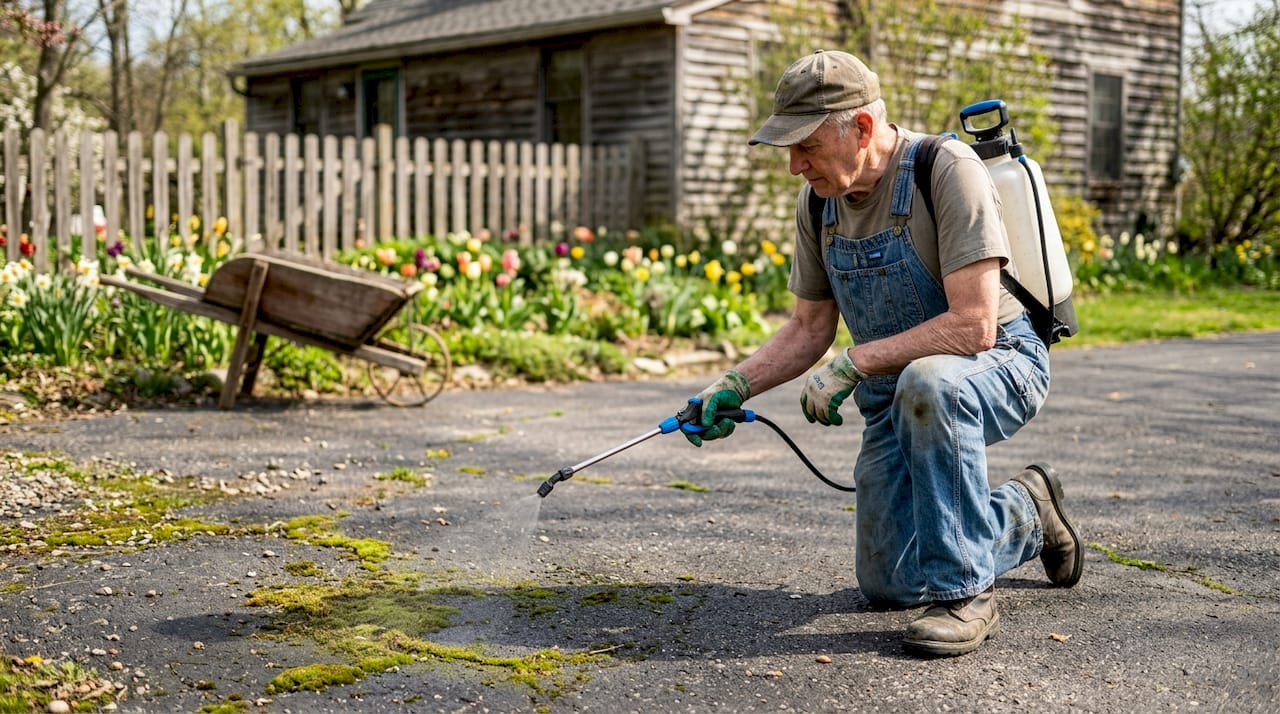
Killing moss on an asphalt driveway requires a careful balance of chemical treatment and physical cleaning that removes moss roots without damaging the soft, porous surface beneath. Asphalt uses a bitumen binder that aggressive chemicals and high-pressure washing can permanently weaken. The most effective approach combines a biocide such as benzalkonium chloride or diluted white vinegar with gentle rinsing and a follow-up preventive routine. Colorado homeowners face this problem often, especially on driveways shaded by pines or bordered by drainage that pools after spring snowmelt.
What tools and materials do you need to kill moss on asphalt?
The right supplies make the difference between a clean driveway and a damaged one. Gather everything before you start so you are not improvising mid-job.
Chemical options:
- Diluted white vinegar (5% acetic acid): Affordable and widely available. Apply directly and moss browns within hours, dying fully within 24 hours. Rinse thoroughly after to protect the asphalt binder.
- Diluted bleach (1:10 bleach to water): A reliable DIY method. Apply for 15–20 minutes, scrub, then rinse completely. Bleach left on the surface can dry out bitumen oils over time.
- Benzalkonium chloride biocide: The strongest long-term option. This biocide kills moss over time without requiring rinsing and creates a residual barrier that prevents regrowth for several months.
Physical tools:
- Stiff outdoor yard broom or wire moss brush
- Electric weed sweeper (speeds up bulk removal on large driveways)
- Garden hose with adjustable nozzle or a pressure washer with a fan tip
- Leaf blower for debris clearance before treatment
Safety gear:
- Chemical-resistant gloves
- Safety glasses or goggles
- Old clothing you do not mind staining
Pro Tip: Never mix bleach and vinegar. The combination produces chlorine gas, which is hazardous. Choose one chemical method and stick with it for the entire job.
The pressure washer setting matters as much as the chemical you choose. Use a wide fan tip, not a turbo nozzle, and keep the wand at least 30cm from the surface. That distance protects the asphalt from the fretting damage that turbo nozzles cause.
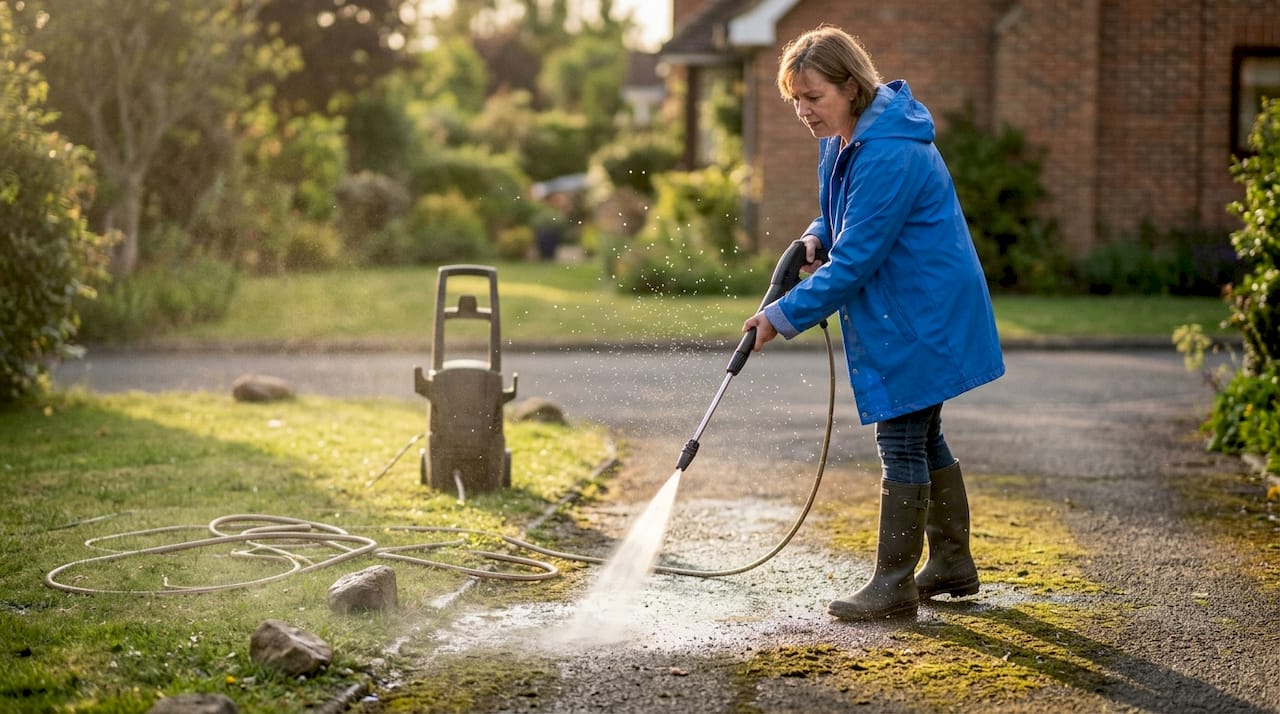
Step-by-step process for killing moss on your asphalt driveway
Work through these steps in order. Skipping ahead, especially past the chemical dwell time, is the most common reason moss comes back within weeks.
-
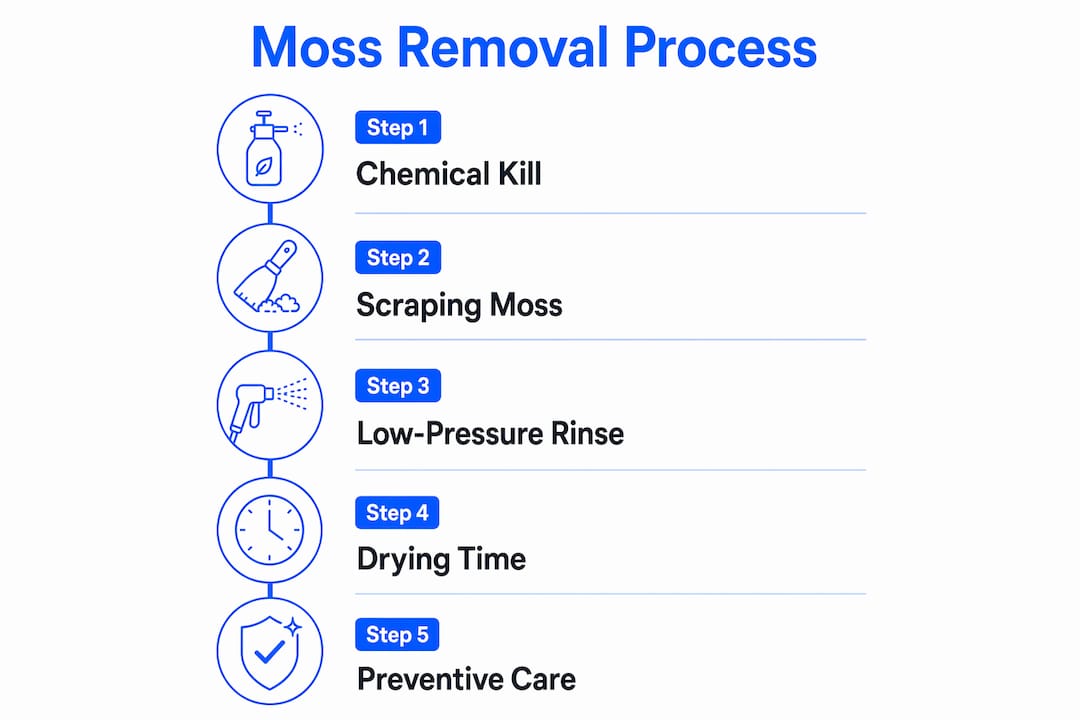
Clear loose debris first. Sweep or blow away leaves, dirt, and loose moss clumps. Organic debris feeds moss and blocks chemicals from reaching the surface.
-
Scrape or brush off bulk moss. Use a stiff yard broom or wire brush to remove the thickest clumps. Do not skip this step. Thick moss mats prevent biocides from penetrating to the roots.
-
Apply your chosen chemical. Spray or pour the solution evenly across the affected area. For vinegar, allow a 15–20 minute dwell time. For a benzalkonium chloride biocide, apply and leave it to absorb for 7–14 days without rinsing. That extended contact time is what kills the root system.
-
Kill the roots, not just the surface. Moss has rhizoids, small root-like structures that embed firmly in porous asphalt. Superficial scraping without chemical treatment leads to regrowth within two weeks. The chemical must penetrate and kill those roots.
-
Rinse with low pressure. After the dwell time, rinse the dead moss away using a garden hose or pressure washer with a fan tip. Hold the wand at a 45° angle, 30–40cm from the surface. This angle lifts debris without blasting the binder out of the asphalt.
-
Scrub stubborn patches. Use your stiff brush on any remaining stained areas, then rinse again.
-
Apply a moss inhibitor. Once the surface is dry, apply a moss inhibitor or a second coat of benzalkonium chloride biocide. This step extends your protection window significantly.
Pro Tip: Choose a dry day with no rain forecast for at least 24 hours. Rain washes away chemicals before they can work, and wet asphalt makes it harder to see which areas you have already treated.
Timing matters in Colorado specifically. Late spring and early fall are the best windows. Summer heat dries treatments too fast, and winter freezes make rinsing impractical and can trap chemicals in surface cracks.
What mistakes damage driveways during moss removal?
Most driveway damage during moss removal comes from two sources: the wrong pressure washer nozzle and impatience with chemical dwell times. Both are easy to avoid once you know what to watch for.
- Using turbo nozzles on asphalt. High-pressure turbo nozzles remove sand and binder from the asphalt surface, causing a crumbling effect called fretting. This damage is permanent. Always use a fan tip.
- Scraping without chemical treatment. Physically removing moss without killing the roots first guarantees regrowth. The rhizoids left behind sprout new growth within two weeks, especially in shaded, moist Colorado driveways.
- Overusing acidic cleaners. Frequent acidic or bleach use risks breaking down asphalt’s bitumen binder. Limit bleach treatments to once or twice per season and always rinse completely.
- Leaving organic debris behind. Leaves, pollen, and dirt left on the driveway after treatment give moss exactly what it needs to return. Sweep the surface clean after every treatment.
- Not repeating treatment when needed. Heavy infestations may need two rounds. If green patches reappear after two weeks, reapply the biocide rather than scrubbing harder.
“Moss regrowth is almost guaranteed if environmental factors like shade and moisture are not addressed alongside killing existing moss. Chemical treatment alone is only half the solution.”
Pro Tip: After rinsing, inspect the surface while it is still wet. Fretting damage shows up as a rough, sandy texture where the surface should be smooth. If you see this, stop and switch to a lower-pressure setting immediately.
Watch for color changes in the asphalt after treatment. Bleached or faded patches near treated areas can signal binder damage. If you notice this, rinse the area thoroughly and switch to a benzalkonium chloride biocide for future treatments.
How do you prevent moss from coming back on asphalt?
Prevention is the most cost-effective part of moss control. A driveway treated once and then ignored will grow moss back within one season, especially in Colorado’s wetter microclimates along the Front Range foothills.
Moss thrives on four conditions: shade, moisture, organic debris, and porous texture. Addressing these conditions reduces recurrence far more reliably than repeated chemical treatments alone.
- Trim overhanging trees and shrubs. Increasing sunlight exposure is the single most effective long-term prevention step. Even one additional hour of direct sun per day significantly slows moss growth.
- Improve drainage. Water pooling on or beside the driveway is the primary moisture source for moss. Check that your driveway slopes away from the house and that edges drain freely. A yard drainage guide can help you identify pooling problems before they feed moss growth.
- Sweep or blow debris regularly. Leaves, pine needles, and pollen create a nutrient layer that moss colonizes quickly. Sweep or blow the driveway every one to two weeks during fall and spring.
- Apply a moss inhibitor after cleaning. A benzalkonium chloride-based inhibitor applied after each cleaning session provides residual protection for several months.
- Seal the asphalt surface. A tarmac restorer or asphalt sealant fills the porous surface that moss roots grip. Sealing every two to three years reduces the foothold moss needs to establish itself.
- Clean storm drains near the driveway. Blocked drains increase surface moisture. A storm drain maintenance routine keeps water moving away from your driveway rather than pooling beside it.
Pro Tip: Professional hot-water treatments offer 18–24 months of protection versus 6–12 months for cold water DIY methods. If moss keeps returning despite your best efforts, a professional hot-water treatment is worth the investment.
The goal is to make your driveway a poor environment for moss, not just a clean one. Combine the chemical kill with these environmental controls and you will dramatically cut the frequency of future treatments.
Key Takeaways
Killing moss on an asphalt driveway requires chemical root treatment, low-pressure rinsing, and consistent preventive maintenance to stop regrowth.
| Point | Details |
|---|---|
| Chemical root kill is non-negotiable | Scraping moss without a biocide leaves roots intact, causing regrowth within two weeks. |
| Fan tip only on asphalt | Turbo nozzles cause permanent fretting damage; use a wide fan tip at 30–40cm distance. |
| Benzalkonium chloride lasts longest | This biocide creates a residual barrier lasting several months and is gentler on asphalt than bleach. |
| Prevention beats repeated treatment | Trimming shade, improving drainage, and sealing the surface reduce moss recurrence far more than chemicals alone. |
| Professional hot-water treatment extends results | Hot-water methods provide 18–24 months of protection compared to 6–12 months from cold-water DIY approaches. |
What I have learned from years of watching homeowners fight moss
Homeowners almost always underestimate how soft asphalt really is. They reach for the pressure washer on the highest setting because it feels like the most thorough approach. What they get instead is a driveway that looks clean for two weeks and then starts crumbling at the edges. The bitumen binder that holds asphalt together is not designed to take that kind of direct force.
The other mistake I see constantly is treating moss like a surface problem. You can scrub a driveway until it looks spotless and still have a full moss carpet back within a month. The rhizoids are still in the pores, waiting. Chemical treatment is not optional. It is the whole job. The scrubbing just removes what is already dead.
What actually works is patience. Apply the biocide, wait the full dwell time, rinse gently, and then address the conditions that let moss grow in the first place. That sequence, done once properly, beats doing a rushed job three times a year. Colorado driveways in shaded areas near the foothills need this approach more than most, because the moisture and organic debris conditions are nearly ideal for moss year-round.
The homeowners who keep their driveways clean long-term are not the ones who scrub hardest. They are the ones who trim their trees, keep their drains clear, and apply a moss inhibitor after every cleaning. That is the real secret.
— Brandon
Alldaypowerwashing handles the tough moss jobs in Denver
Moss removal on asphalt is straightforward when the infestation is light. When it covers most of the driveway or keeps returning despite repeated DIY treatments, the problem usually runs deeper than surface cleaning can fix.

Alldaypowerwashing serves Denver metro homeowners with commercial-grade equipment and hot-water treatments that penetrate deeper and last longer than standard cold-water methods. Their crews use fan-tip pressure washing at the correct distance and angle to protect your asphalt while removing dead moss completely. Same-week quotes are available, and every job comes with a satisfaction guarantee. If you want a professional driveway cleaning that protects your surface and keeps moss away for up to two years, Alldaypowerwashing is the call to make.
FAQ
What is the best moss killer for asphalt driveways?
Benzalkonium chloride biocide is the best moss killer for asphalt. It kills moss over time, requires no rinsing, and creates a residual barrier that prevents regrowth for several months without damaging the bitumen binder.
How long does it take to kill moss on a driveway?
Vinegar kills moss within 24 hours, while benzalkonium chloride biocides take 7–14 days to fully kill the root system. The longer dwell time of biocides produces more lasting results.
Can I use a pressure washer to remove moss from asphalt?
Yes, but only with a wide fan tip held 30–40cm from the surface at a 45° angle. Turbo nozzles remove the sand and binder from asphalt, causing permanent fretting damage.
Why does moss keep coming back after I remove it?
Moss regrows because the roots, called rhizoids, remain embedded in the asphalt after physical scraping. Chemical treatment that penetrates and kills those roots is the only way to stop rapid regrowth.
How do I prevent moss on my driveway long term?
Trim overhanging trees to increase sunlight, improve drainage to eliminate pooling water, sweep debris regularly, and apply a moss inhibitor after each cleaning. Sealing the asphalt every two to three years also reduces the porous surface that moss roots grip.