
Low Pressure House Washing: A Safe Guide for Homeowners
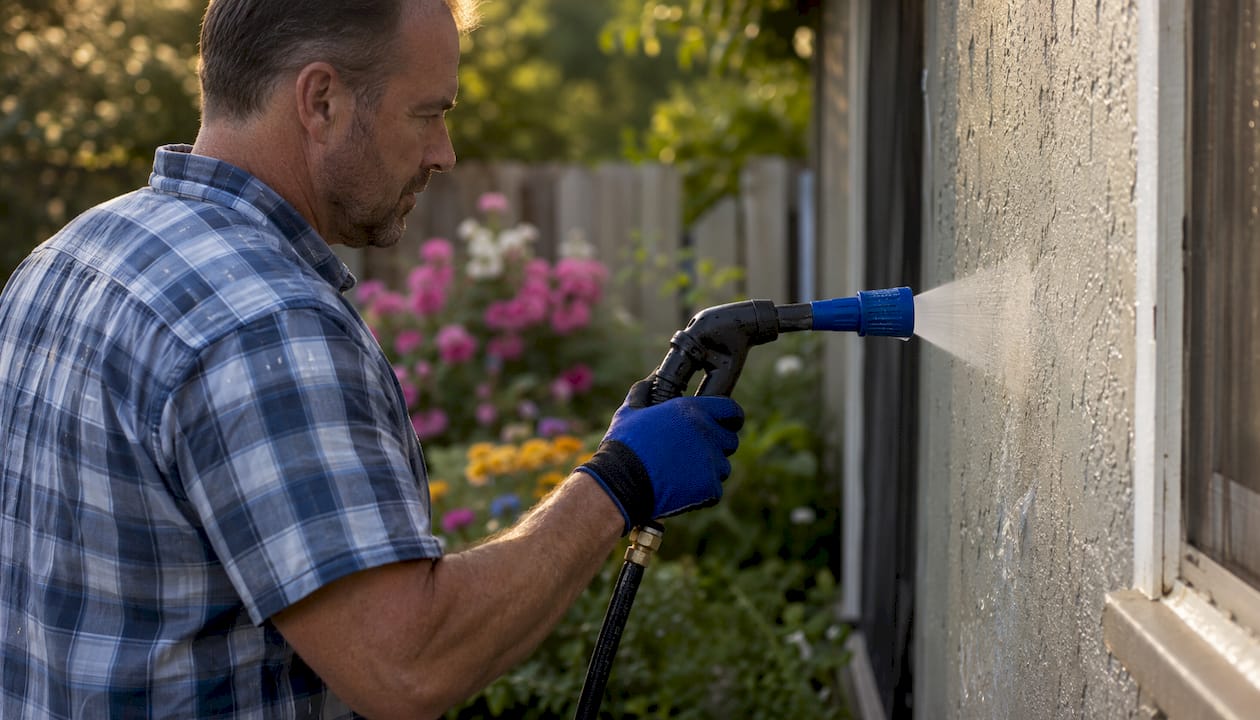
Low pressure house washing is a cleaning method that uses gentle water pressure combined with specialized chemical solutions to safely remove dirt, mold, and algae from your home’s exterior. The industry term for this approach is soft washing, and it operates at 40–500 PSI, compared to traditional pressure washing at 2,500–4,000+ PSI. That difference in force is what separates a clean that lasts 1–3 years from one that fades within months. Colorado homeowners deal with intense UV exposure, freeze-thaw cycles, and seasonal moisture that accelerate organic growth on siding and roofs. Soft washing addresses all of it without putting your home at risk.
What is low pressure house washing and how does it work?
Soft washing kills organic growth at the root using chemistry, not force. Traditional pressure washing blasts surface dirt away mechanically, which means mold, algae, and mildew regrow quickly because their root systems stay intact. Soft washing applies a surfactant-based solution that penetrates and kills biological growth at the source. The result is a cleaner that lasts far longer with less physical stress on your home’s exterior.
The cleaning power comes from sodium hypochlorite (SH) mixed with surfactants. Surfactants help the solution cling to vertical surfaces and extend the chemical dwell time to 10–20 minutes, giving the chemistry time to work. Roofing manufacturers including ARMA, CertainTeed, and GAF specifically recommend low-pressure chemical cleaning for asphalt shingles because high pressure destroys protective granules and voids warranties. That endorsement alone tells you this method is the professional standard, not a shortcut.
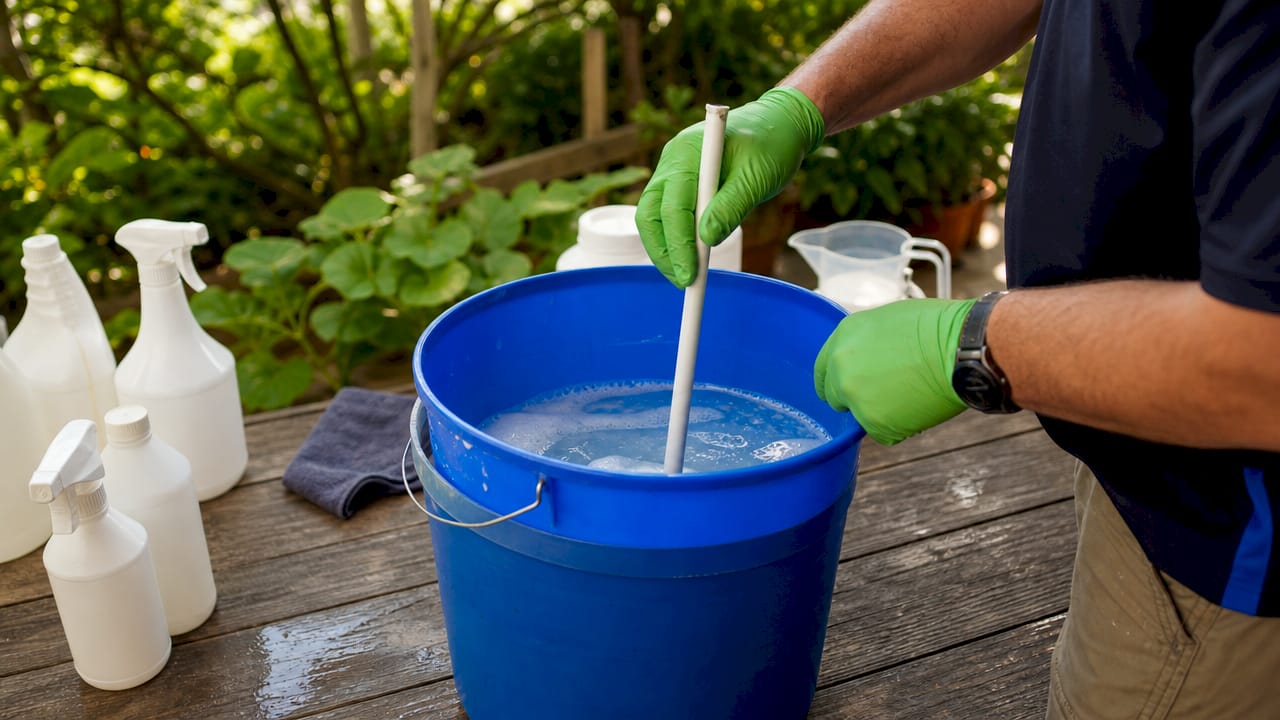
Essential tools and cleaning solutions for soft washing
The right equipment makes or breaks a soft wash job. You have two main options: a dedicated soft wash pump system or a modified consumer-grade pressure washer.
Soft wash pump systems
Dedicated soft wash pumps deliver solution at low pressure without the mechanical stress of a pressure washer. They are the preferred choice for professional house washing services because they give you full control over flow rate and chemical concentration. Alldaypowerwashing uses commercial-grade equipment in this category for every residential job.
Modified pressure washers
Consumer-grade pressure washers can perform soft washing when you attach a large-orifice soap nozzle. This nozzle drops the output pressure to roughly 300 PSI and engages the downstream chemical injector without damaging the pump. Never use a standard nozzle with chemical solutions. The pressure will be too high and the injector will not draw properly.
Cleaning solutions
Mixing ratios matter. Use these as your baseline:
| Surface | Sodium hypochlorite concentration | Dwell time |
|---|---|---|
| Vinyl and fiber cement siding | 1–2% | 10–15 minutes |
| Wood siding | 1–2% | 10 minutes |
| Roof shingles | 3–6% | 15–20 minutes |
| Stucco and EIFS | 1–2% | 10–15 minutes |
| Brick and concrete | 2–3% | 10–15 minutes |
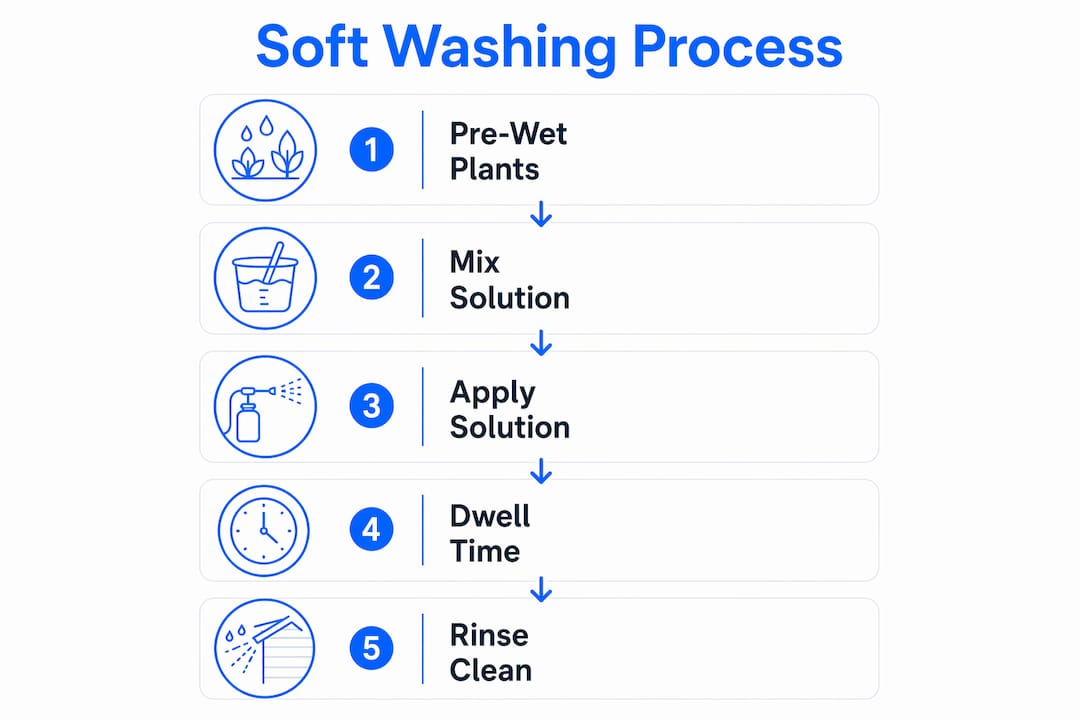
Always add a surfactant to your mix. It slows evaporation and keeps the solution active on the surface longer. Professional-grade sodium hypochlorite requires full PPE: chemical-resistant gloves, eye protection, and protective clothing. Pre-wet all nearby plants and landscaping before you start, and rinse them again after the job.
Pro Tip: Pre-wet your landscaping thoroughly before applying any cleaning solution. Saturated soil and foliage absorb far less chemical runoff than dry plants.
How to wash your house safely using low pressure techniques
Follow these steps in order. Skipping any one of them is where most DIY jobs go wrong.
-
Evaluate the surface. Walk the entire perimeter and note any cracked caulk, damaged siding, or open gaps near windows and doors. High pressure over 500 PSI forces water behind siding and shingles, causing rot and structural damage. Soft washing eliminates that risk, but existing gaps still need attention before you apply any liquid.
-
Protect the surroundings. Cover electrical outlets, light fixtures, and AC units with plastic sheeting. Move patio furniture away from the work area. Pre-wet all plants, shrubs, and grass within 10 feet of the house.
-
Mix your cleaning solution. Follow the concentration table above for your specific surface. Mix in a dedicated chemical tank or downstream injector. Never mix chemicals in a pressure washer tank.
-
Apply solution from the bottom up. Bottom-up application on vertical siding prevents streaking. When you spray top-down, chemical runs over untreated sections below and dries before you reach them, leaving visible lines. Work in manageable sections of 6–8 feet wide.
-
Maintain a moist coating during dwell time. The goal is a moist medium coating, not flooding. Over-wetting wastes chemical and reduces oxygen contact, which is what activates the sodium hypochlorite. If a section starts to dry before dwell time is up, mist it lightly.
-
Rinse with low pressure. Use a wide-angle nozzle at 40–100 PSI. Work top-down during the rinse phase. Rinse thoroughly until all chemical residue is gone.
-
Neutralize and inspect. Rinse all landscaping again with clean water. Walk the perimeter and check for any missed spots or streaks. Touch up as needed.
Pro Tip: On hot Colorado summer days, work in the shade or early morning. Direct sun dries your solution too fast and cuts dwell time in half.
Common mistakes to avoid when washing your home’s exterior
Most damage from exterior cleaning comes from user error, not the method itself. These are the mistakes that cause real problems.
- Using too much pressure on delicate surfaces. Vinyl siding dents and cracks above 500 PSI. Wood siding splinters. Stucco erodes. Stick to the soft wash range for these materials.
- Applying solution top-down on siding. Chemical runoff over untreated areas creates streaks that are difficult to remove. Always go bottom-up on vertical surfaces.
- Skipping the dwell time. Rinsing too early means the chemistry never fully kills the organic growth. You will see regrowth within weeks instead of years.
- Neglecting plant protection. Even biodegradable sodium hypochlorite solutions can burn foliage at professional concentrations. Pre-wet and post-rinse every time.
- Using the wrong nozzle. A zero-degree or 15-degree nozzle at close range will gouge wood, etch concrete, and crack grout. Use a 40-degree or soap nozzle for chemical application.
- Ignoring surface damage before washing. Cracked caulk and open seams allow water intrusion regardless of pressure. Repair them first.
Soft washing also uses approximately 60% less water than traditional pressure washing. That is a meaningful advantage in Colorado, where water conservation is a real concern, especially during dry summers along the Front Range.
How does low pressure washing differ by surface type?
Every exterior material responds differently to water and chemicals. Adapting your approach by surface type is what separates a professional result from a damaged one.
Vinyl siding is the most common exterior material in Colorado homes. It looks durable but warps and cracks under high pressure. The soft wash technique at 1–2% SH removes mold and algae without stressing the material. Keep the nozzle at least 12 inches from the surface during rinsing.
Wood siding and decks are the most fragile surfaces you will encounter. High pressure raises the wood grain, splinters edges, and drives moisture deep into the material. A 1–2% SH solution with a gentle rinse cleans effectively and preserves the wood’s integrity. Always rinse thoroughly to prevent bleaching.
Stucco and EIFS (Exterior Insulation and Finish Systems) are porous and trap moisture easily. High pressure erodes the surface coating and pushes water into the insulation layer behind it, creating ideal conditions for mold growth inside the wall. Low pressure chemical cleaning is the only safe method for these materials.
Asphalt roof shingles require the softest approach of all. Granules on shingles protect against UV damage and extend roof life. High pressure strips those granules permanently. A 3–6% SH solution applied at low pressure kills moss, algae, and lichen without touching the granules. This is the method endorsed by major roofing manufacturers for warranty compliance.
Brick, stone, and concrete are the most forgiving surfaces. Moderate pressure (500–1,200 PSI) combined with a 2–3% SH solution works well for heavy staining. For routine cleaning, low pressure chemical application is still the safer starting point. You can always increase pressure if needed; you cannot undo damage once it is done.
For homeowners in the Denver metro area, Alldaypowerwashing offers exterior cleaning services matched to each surface type with commercial-grade equipment. Pairing your soft wash routine with proper exterior cleaning tools for windows and trim gives your home a complete, consistent finish.
Key takeaways
Soft washing is the safest and most effective method for cleaning a home’s exterior because chemistry kills organic growth at the root while low pressure protects delicate surfaces from damage.
| Point | Details |
|---|---|
| PSI range matters | Soft washing operates at 40–500 PSI, far below the 2,500+ PSI that damages siding and shingles. |
| Chemistry does the work | Sodium hypochlorite at 1–6% concentration kills mold and algae at the root for results lasting 1–3 years. |
| Apply bottom-up on siding | Bottom-up chemical application prevents streaks caused by runoff over untreated sections. |
| Protect landscaping every time | Pre-wet plants before applying solution and rinse them again after the job to prevent chemical burns. |
| Surface type dictates approach | Roofs, stucco, and wood need the gentlest treatment; brick and concrete can tolerate moderate pressure. |
What I’ve learned after years of watching homeowners damage their own homes
The most common call I get is from a homeowner who rented a pressure washer, cranked it up to full power, and blew the paint off their siding or cracked their stucco. They thought more pressure meant a better clean. It does not. Pressure is a blunt instrument. Chemistry is precise.
What I have seen work consistently is the soft wash approach, applied with patience. The dwell time step is where most DIYers cut corners. They spray the solution, wait two minutes, and rinse. That is not enough. The sodium hypochlorite needs 10–20 minutes to oxidize and kill biological growth at the root. Rushing it means you are just rinsing the surface, not cleaning it.
Colorado’s climate adds another layer of complexity. The high altitude UV intensity dries solutions faster than in humid climates. On a 90-degree day in July, your dwell time can drop significantly if you are not actively maintaining moisture on the surface. I always tell homeowners: if you are doing this yourself, start early in the morning and work on the shaded side of the house first.
The environmental argument for soft washing is also real, not just marketing. Using 60% less water matters in a state that regularly faces drought conditions. Biodegradable surfactants break down without leaving harmful residue in your soil. That is a genuine advantage, not a talking point.
My honest recommendation: for roofs, stucco, and EIFS, hire a professional. The risk of moisture intrusion from even a single mistake is too costly. For vinyl siding and concrete, a careful DIYer with the right equipment and proper chemical ratios can get excellent results. Know your limits and know your surfaces.
— Brandon
Alldaypowerwashing brings professional soft washing to Colorado homes
Colorado homes face a tough combination of UV exposure, wind-driven debris, and seasonal moisture that accelerates mold and algae growth on every exterior surface. Alldaypowerwashing serves homeowners across Colorado Springs and the Denver metro area with fully insured, commercial-grade soft washing that matches the right solution to each surface.

Every job uses professional-grade equipment and correctly mixed cleaning solutions, not consumer shortcuts. The crews are real, the results are guaranteed, and same-week quotes are available. Whether your home has vinyl siding, stucco, or an aging roof, Alldaypowerwashing delivers a professional house washing that protects your investment and lasts. Request a quote and get your home cleaned the right way.
FAQ
What PSI is considered low pressure for house washing?
Low pressure house washing, or soft washing, operates at 40–500 PSI. Traditional pressure washing runs at 2,500–4,000+ PSI, which is too high for most residential exterior surfaces.
How long do soft wash results last compared to pressure washing?
Soft washing results last 1–3 years because the chemical solution kills organic growth at the root. Pressure washing only removes surface dirt, so mold and algae return within months.
Is soft washing safe for all exterior surfaces?
Soft washing is safe for vinyl siding, wood, stucco, EIFS, and asphalt shingles. Brick and concrete can tolerate slightly higher pressure, but soft washing remains the safest starting point for any surface.
Do I need to protect my plants before soft washing?
Pre-wet all plants and landscaping before applying any cleaning solution, then rinse them again after the job. Sodium hypochlorite at professional concentrations can burn foliage even in biodegradable formulas. Learn more at Alldaypowerwashing’s FAQ.
How much water does soft washing use compared to pressure washing?
Soft washing uses approximately 60% less water than traditional pressure washing because the cleaning chemistry does the work, not water volume. That makes it a practical choice for water-conscious Colorado homeowners.