
Best Cleaner for Pressure Washing House: 2026 Guide
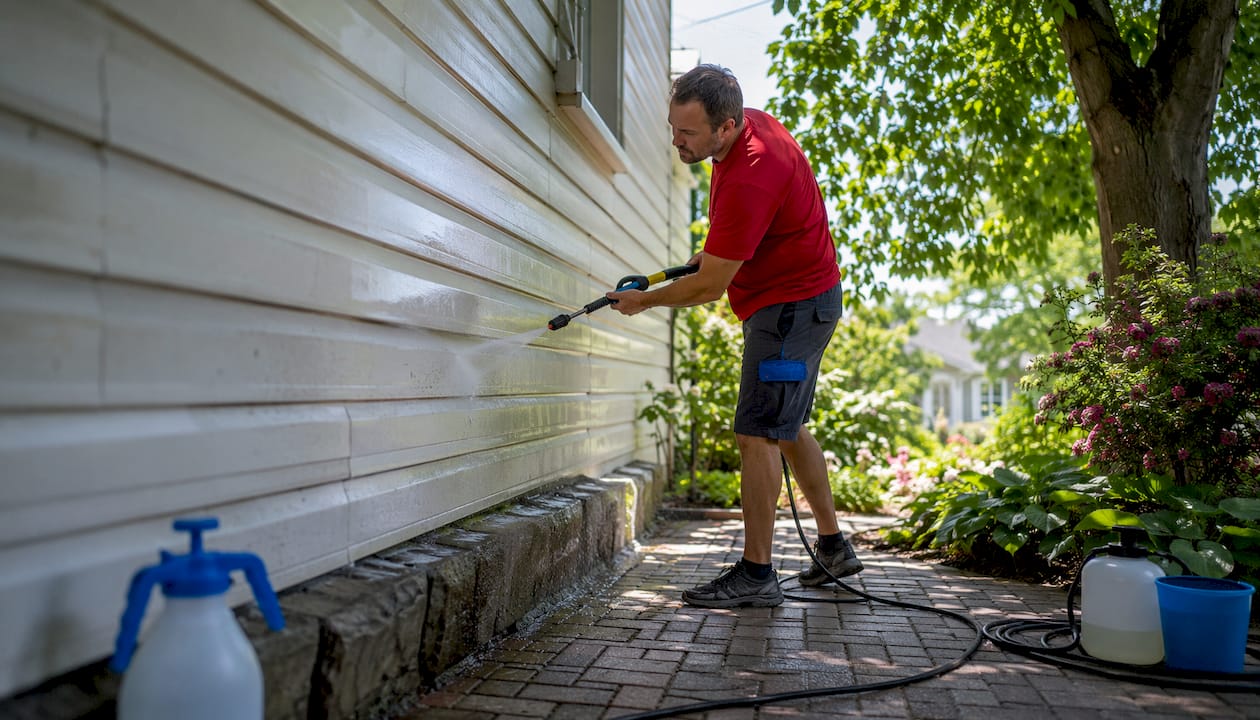
For most house exteriors, the best cleaner for pressure washing is a pressure-washer-specific concentrate used with a soft-wash technique, not a household cleaner. Three products consistently earn top marks from homeowners and pros alike:
- Zep House & Siding Pressure Wash Cleaner Concentrate — one gallon makes up to 20 gallons of solution, covering roughly 5,000 sq ft
- Simple Green House & Siding Cleaner — non-caustic, non-acidic, dilutes up to 11 gallons per bottle
- Sun Joe Heavy-Duty Pressure-Washer Cleaner — biodegradable, bleach-free, rated best overall by independent testing
Apply any of these with a low-pressure nozzle, let the solution dwell for an appropriate period, typically several minutes, and rinse top-down before it dries. Never substitute dish soap, laundry detergent, or general-purpose household cleaners — they can clog your pressure washer’s siphon system and leave a soapy film that’s hard to rinse off siding.
Table of Contents
- Which cleaner and PSI work best for each surface on your house?
- How professionals actually clean a house: soft-wash vs. high pressure
- How to mix and apply house-washing cleaners safely
- What does it actually cost to pressure wash a 2,000 sq ft house?
- The top house-washing concentrates: what each one does best
- Key Takeaways
- When DIY is fine and when it’s time to call a pro
- Get a same-week quote from Alldaypowerwashing
- Useful sources
Which cleaner and PSI work best for each surface on your house?
Surface type drives everything: the cleaner formula, the pressure setting, and how long you let it sit. Getting this wrong on wood or fiber cement can void a manufacturer warranty or force water behind siding.
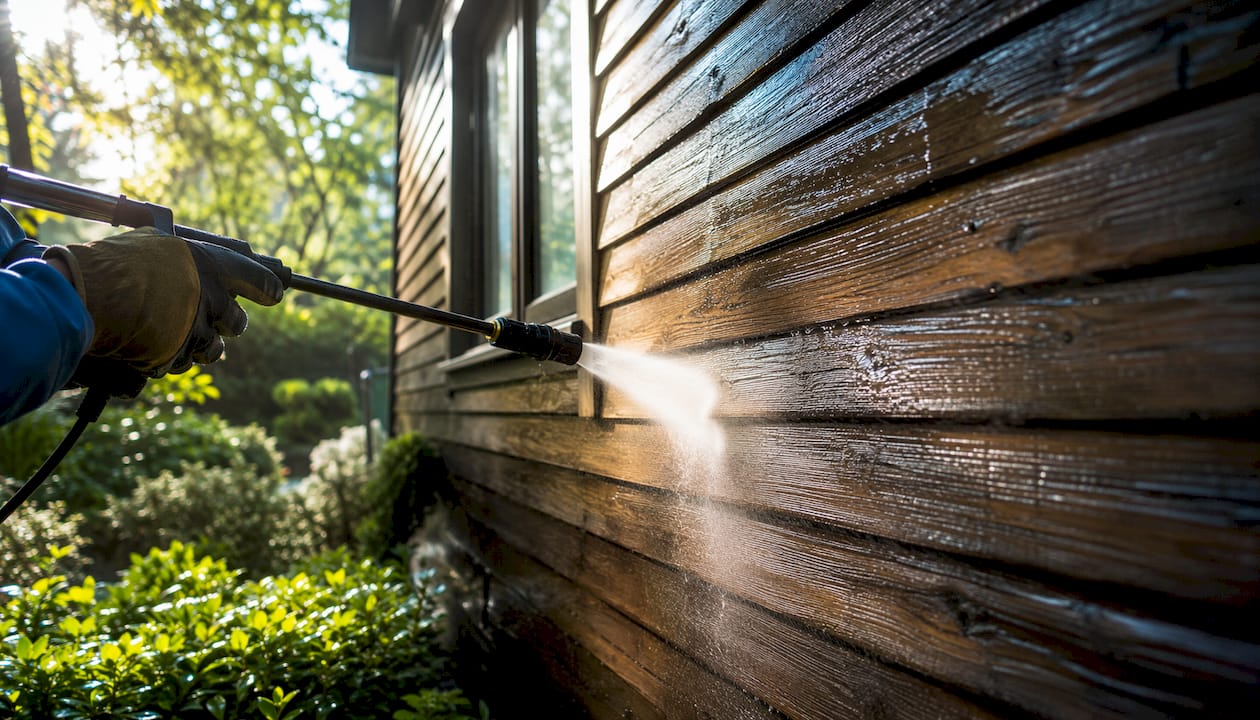
| Surface | Cleaner Type | Pressure Setting | Nozzle | Dwell Time |
|---|---|---|---|---|
| Vinyl siding | Non-bleach surfactant or mildewcide | Medium to high pressure appropriate for vinyl siding | 40° | Several minutes |
| Aluminum siding | Non-bleach surfactant | Medium pressure suitable for metal surfaces | 40° | Several minutes |
| Painted wood | Non-bleach surfactant | Lower to medium pressure for delicate wood | 40° | Brief period |
| Stucco | Non-bleach surfactant | Light to medium pressure recommended | 40° (wider angle for unpainted) | Moderate duration |
| Brick | Mildewcide or surfactant | Pressure suited for masonry surfaces | Narrower angle nozzle | Longer dwell |
| Concrete | Surfactant or mildewcide | Higher pressure suitable for durable surfaces | Narrow nozzle | Extended dwell |
A few surface-specific notes worth knowing:
- Fiber cement siding (James Hardie and similar): stay below 1,500 PSI and check your warranty before you start. High pressure can drive water into the board edges.
- Brick: saturate the surface with plain water before applying detergent. This prevents the cleaner from soaking into the mortar and helps it work on the surface grime instead.
- Painted surfaces: stick to a non-bleach formula and a wide 40° nozzle. Bleach-based mildewcides can lift or fade exterior paint.
Pro Tip: If you’re cleaning siding before a repaint, a thorough soft-wash with a surfactant concentrate is one of the best ways to prep the surface. Painting over dirty siding causes adhesion failures within a season. For more on siding prep before painting, the guidance from exterior painting specialists is worth a read.
How professionals actually clean a house: soft-wash vs. high pressure
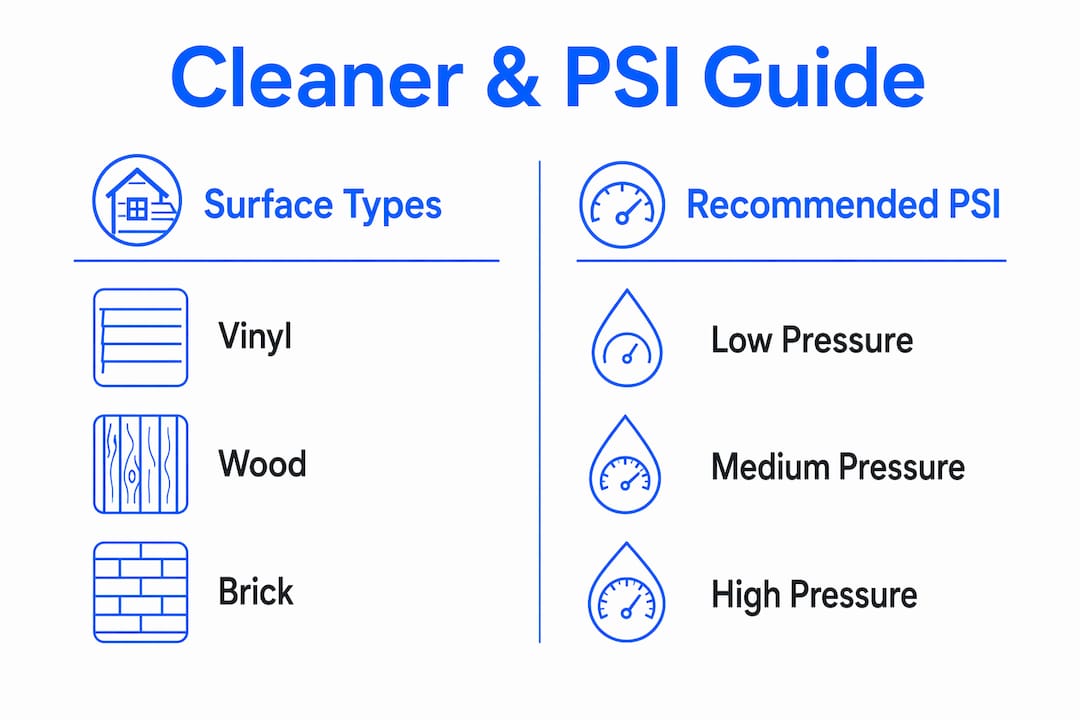
The industry standard for house washing is soft-washing: low pressure plus a detergent that does the chemical work. Most residential electric pressure washers operate in the 1,300–2,000 PSI range, which is appropriate for siding when paired with the right cleaner. High pressure is generally reserved for durable masonry surfaces such as concrete and some brick types.
Dwell time often matters more than raw pressure. Professionals prioritize letting detergent penetrate organic growth for 5–15 minutes before rinsing. Mold, mildew, and algae need time to break down chemically — blasting with high PSI before the cleaner has worked just spreads the contamination around.
Here’s the step-by-step method pros follow:
- Pre-wet vegetation and nearby surfaces with plain water to dilute any overspray.
- Apply detergent bottom-to-top using a low-pressure nozzle or the pressure washer’s siphon tube. Working bottom-up prevents streaking on vertical surfaces.
- Let it dwell for 5–15 minutes. Watch the surface — if it starts to dry in direct sun, mist it lightly to keep it wet.
- Rinse top-to-bottom with a higher-pressure nozzle, working in small sections.
- Post-rinse landscaping with plain water to dilute any runoff that reached plants or grass.
Soft-washing also prevents a common DIY mistake: forcing water behind siding panels or into electrical fixtures by holding the nozzle too close at too steep an angle. Keep the wand at least 12–18 inches from the surface and angle it slightly downward.
How to mix and apply house-washing cleaners safely
Follow the product label. That’s the short version. The longer version involves a few specifics that prevent both equipment damage and personal injury.
Dilution and yield:
- Zep House & Siding: one gallon concentrate yields up to 20 gallons of working solution per manufacturer instructions. Apply bottom-to-top; rinse top-to-bottom.
- Simple Green House & Siding: dilute 1 part concentrate with 10 parts water (roughly 2 cups per 1.25 gallons of water) for standard cleaning.
- Sun Joe: pour directly into the pressure washer’s soap reservoir or dilute in a bucket for brush application.
PPE and application sequence:
- Wear chemical-resistant gloves, safety goggles, and long sleeves.
- Keep the pressure washer’s detergent nozzle (usually black, low-pressure) on when applying soap. Switch to a higher-pressure nozzle only for rinsing.
- Never apply detergent through a high-pressure nozzle — it can aerosolize the chemical and create inhalation risk.
What not to mix:
- Never combine bleach with any other cleaner. The reaction can release chlorine gas. If you’re using a mildewcide that contains sodium hypochlorite, use it alone, exactly as labeled.
- Don’t let concentrated solution sit in the pressure washer’s system between jobs — flush with clean water.
Pro Tip: Always test your chosen cleaner on a small, hidden area first — behind a downspout or near the foundation — and let it dry completely before committing to the full surface. This catches unexpected staining or finish changes before they become a problem.
Runoff matters in Colorado, especially near landscaping and storm drains. Pre-wet plants before you start, and give them a thorough rinse after you’re done. For jobs near storm drains, route runoff onto a lawn or permeable surface when possible.
What does it actually cost to pressure wash a 2,000 sq ft house?
DIY and professional costs differ significantly, and the gap widens with house height and surface condition.
DIY cost components (rough ranges):
- Cleaner concentrate: $15–$40 per gallon (covers 5,000–20,000 sq ft depending on dilution)
- Pressure washer rental costs vary by location and rental duration.
- Personal protective equipment such as gloves and goggles is recommended when pressure washing.
- Time commitment for pressure washing a typical single-story home varies depending on preparation and cleaning needs.
Professional pricing for a ~2,000 sq ft home: According to Colorado house washing pricing data, Professional house washing in Denver and Colorado Springs may be cost-competitive compared to DIY when factoring in time, equipment, and materials… Pricing varies by condition, height, and access. Consumer Reports testing confirms that detergents speed mildew removal significantly versus water alone, which affects how long a pro crew needs on-site.
When to hire instead of DIY:
- Two-story or taller exterior (ladder work plus pressure washing is a real fall risk)
- Heavy mold or algae coverage that’s been building for multiple seasons
- Fiber cement, cedar shake, or any siding with an active manufacturer warranty
- You’re prepping for a paint job and need a guaranteed clean surface
The top house-washing concentrates: what each one does best
1. Sun Joe Heavy-Duty Pressure-Washer Cleaner
Sun Joe’s all-purpose concentrate is biodegradable, bleach-free, and non-toxic. It handles vinyl, aluminum, wood, and brick, and it pours directly into a pressure washer soap reservoir. Independent testing by Bob Vila rated it best overall for ease of use and effectiveness across multiple surfaces. It won’t strip paint or harm landscaping when used as directed. The one limitation: it’s not a mildewcide, so for heavy black mold or algae, you may need a second pass or a stronger formula.
| Feature | Detail |
|---|---|
| Formula | Bleach-free concentrate |
| Best for | Vinyl, aluminum, wood, brick |
| Eco rating | Biodegradable, non-toxic |
| Application | Soap reservoir or bucket |
2. Simple Green House & Siding Cleaner
Non-caustic and non-acidic, Simple Green’s formula is the go-to for homeowners who want effective cleaning without the handling concerns of bleach-based products. One bottle dilutes up to 11 gallons of cleaning solution. It works on vinyl, aluminum, stucco, painted wood, and terra cotta roof tiles. For lightly soiled siding, it’s often all you need. The manufacturer specifies saturating nearby plants with water after cleaning, which is good practice regardless of which product you use.
3. Zep House & Siding Pressure Wash Cleaner Concentrate
Zep’s concentrate is the economy choice for large coverage areas. One gallon yields multiple gallons of working solution, per manufacturer instructions. The manufacturer instructions are explicit: apply bottom-to-top, rinse top-to-bottom, do not let it dry on the surface, and do not mix with bleach. It’s a strong performer on mildew and environmental grime on vinyl and aluminum. Buy the gallon, not the quart — the per-ounce cost drops considerably.
Buying tip: Look for “pressure-washer-rated” or “pressure-washer concentrate” on the label. Products not rated for pressure washers can foam excessively or damage internal seals. Biodegradable labeling is worth prioritizing in Colorado, where runoff near landscaping and waterways is a real consideration.
Key Takeaways
Soft-wash concentrates used at correct PSI and dwell time outperform high-pressure water alone for most house exteriors, and all three recommended products are available at major home improvement retailers.
| Point | Details |
|---|---|
| Soft-wash first | Use low pressure plus a concentrate; high PSI alone spreads contamination and risks surface damage. |
| Dwell time matters | Let detergent sit for 5–15 minutes before rinsing; never let it dry on the surface. |
| Match cleaner to surface | Bleach-free surfactants for painted wood and aluminum; mildewcides for heavy mold on brick and concrete. |
| Test before full application | Apply to a hidden area first and let it dry to catch unexpected staining or finish changes. |
| Alldaypowerwashing for complex jobs | For multi-story homes, heavy organic growth, or warranty-sensitive siding in Colorado, Alldaypowerwashing provides insured crews, commercial-grade equipment, and a satisfaction guarantee. |
When DIY is fine and when it’s time to call a pro
Single-story homes with mild mildew and vinyl or aluminum siding are genuinely good candidates for DIY pressure washing. If you’re comfortable operating a pressure washer, following dilution instructions, and working safely around ladders, you can get solid results with any of the three concentrates above.
The calculus changes fast on two-story homes. Combining ladder work with a live pressure washer wand is one of the more common sources of serious DIY injuries. Heavy organic growth that’s been accumulating for years often requires multiple applications and commercial-grade equipment to fully clear. And if your home has fiber cement siding, cedar shake, or any exterior under an active warranty, a single improper pressure wash can void coverage that costs far more to replace than a professional cleaning.
Alldaypowerwashing serves Colorado Springs and the Denver metro with fully insured crews, commercial-grade equipment, and a satisfaction guarantee. The difference between a commercial soft-wash rig and a rented consumer unit isn’t just pressure — it’s flow rate, chemical injection precision, and the experience to read a surface and adjust on the fly. For homes with complex rooflines, multi-story exteriors, or significant mold and algae buildup, that gap in capability is real.
Get a same-week quote from Alldaypowerwashing

Cleaning your house exterior yourself is a reasonable weekend project for straightforward single-story homes. For everything else in Colorado Springs and Denver, Alldaypowerwashing delivers the kind of result that a rented pressure washer and a gallon of concentrate simply can’t match. Fully insured crews show up with commercial equipment, assess your siding type and contamination level, protect your landscaping throughout the job, and walk you through the results before they leave. No guesswork on dilution ratios, no risk of voiding your siding warranty, and no half-day rental return to worry about.
Request a same-week quote for house washing in Denver or Colorado Springs, or browse the full range of services to see what’s included.
Useful sources
These are the primary references used for technical guidance in this article. Check them for exact dilution charts, PSI recommendations, and current product formulations before you buy.
- Zep House & Siding Pressure Wash Cleaner Concentrate — manufacturer page with dilution chart, application sequence, and safety warnings (including the bleach-mixing prohibition)
- Simple Green House & Siding Cleaner — product page with coverage data, surface compatibility list, and step-by-step pressure washer instructions
- Sun Joe House & Deck Concentrated Cleaner — manufacturer page confirming biodegradable, bleach-free formula and compatible surfaces
- Popular Mechanics: How to Pressure Wash a House — soft-wash methodology, dwell time guidance, and PSI recommendations by surface
- Bob Vila: Best Pressure Washer Soaps — independent product testing and rankings, including Sun Joe’s best-overall rating
- Consumer Reports: Best Pressure Washer Detergents — independent testing on when detergents outperform water-only cleaning
- Lowe’s: How to Pressure Wash a House — PSI ranges by surface type, nozzle selection, and brick/stucco-specific guidance
Always follow the manufacturer label for your specific product. Dilution ratios, dwell times, and surface compatibility can vary between formulations, and the label is the authoritative source.
Recommended
- Low Pressure House Washing: A Safe Guide for Homeowners — All Day Power Washing
- House Pressure Washing Prices in Colorado: 2026 Guide — All Day Power Washing
- Top 3 Graffiti Removal Service Near Me Providers 2026 — All Day Power Washing
- Heavy Equipment Power Washing in Colorado: Top Providers — All Day Power Washing