
Parking Lot Pressure Washing: A Hiring Guide for Property Managers
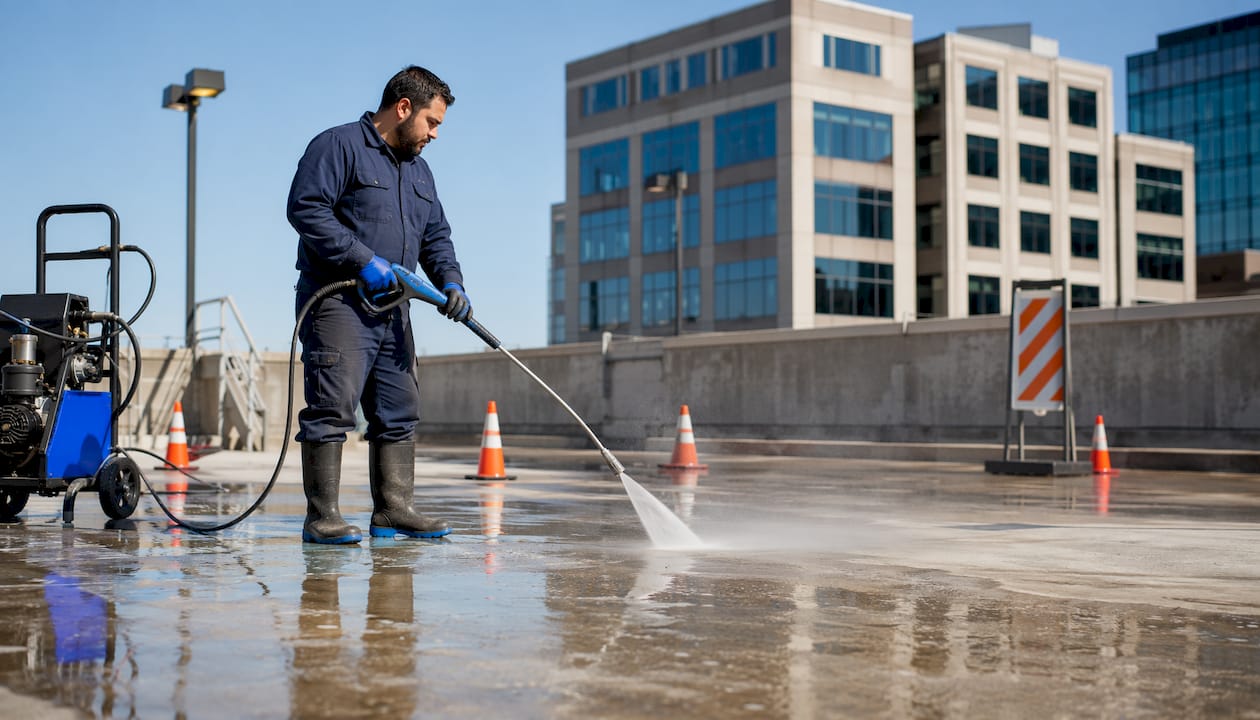
Hire a licensed commercial hot-water pressure washing contractor with wastewater recovery. That’s the short answer for any property manager or commercial owner dealing with a dirty lot in Colorado. Here’s what that decision actually requires:
- Get a site-specific quote that includes equipment specs (PSI/GPM rating and hot-water capability).
- Request a written wastewater-management plan before signing anything. No plan means real NPDES liability exposure for you, not just the contractor.
- Ask for a certificate of insurance (COI) naming your property.
- Alldaypowerwashing offers same-week quotes for commercial lots in Colorado Springs and the Denver metro area. Request a quote, and get a COI, timeline, and disposal plan back fast.
Table of Contents
- What does parking lot pressure washing actually cover?
- How professionals clean parking lots: equipment, PSI/GPM, and hot vs. cold water
- When does a lot need routine maintenance vs. full restoration?
- How contractors price parking-lot jobs and what timelines look like
- Stormwater rules and wastewater capture: what property owners must know
- How to choose a parking-lot pressure washing contractor
- What to expect on the day of service
- Key Takeaways
- Why the standard advice on parking-lot cleaning misses the point
- Get a commercial lot quote from Alldaypowerwashing
- Authoritative sources and where to read more
What does parking lot pressure washing actually cover?
A full commercial cleaning service goes well beyond running a wand down the drive lanes. Standard scope includes parking stalls, drive lanes, loading docks, gas pads, curbs and islands, dumpster pads, and trash enclosures. Parking garage deck cleaning is a separate line item but uses the same hot-water equipment.
Optional add-ons worth asking about: striping prep (surface must be clean and dry before paint adheres), sealcoat prep, graffiti spot removal, and oil spot re-treatment for stubborn petroleum staining. For lots with heavy oil accumulation, re-treatment is often a separate charge because it requires extended dwell time and additional degreaser.
Pro Tip: Schedule zone-by-zone so the lot stays operational. A good crew stages cones and signage to keep one section open while cleaning another, which matters for retail and restaurant properties that can’t close the lot entirely.
How professionals clean parking lots: equipment, PSI/GPM, and hot vs. cold water
Cold water pressure washing is not adequate for commercial parking lots. Hot water emulsifies petroleum at the molecular level in a way cold water simply cannot, which means cold-water units either leave oil behind or require aggressive mechanical force that damages pavement. Commercial contractors use hot-water units paired with rotary surface cleaners rather than open-lance wands.
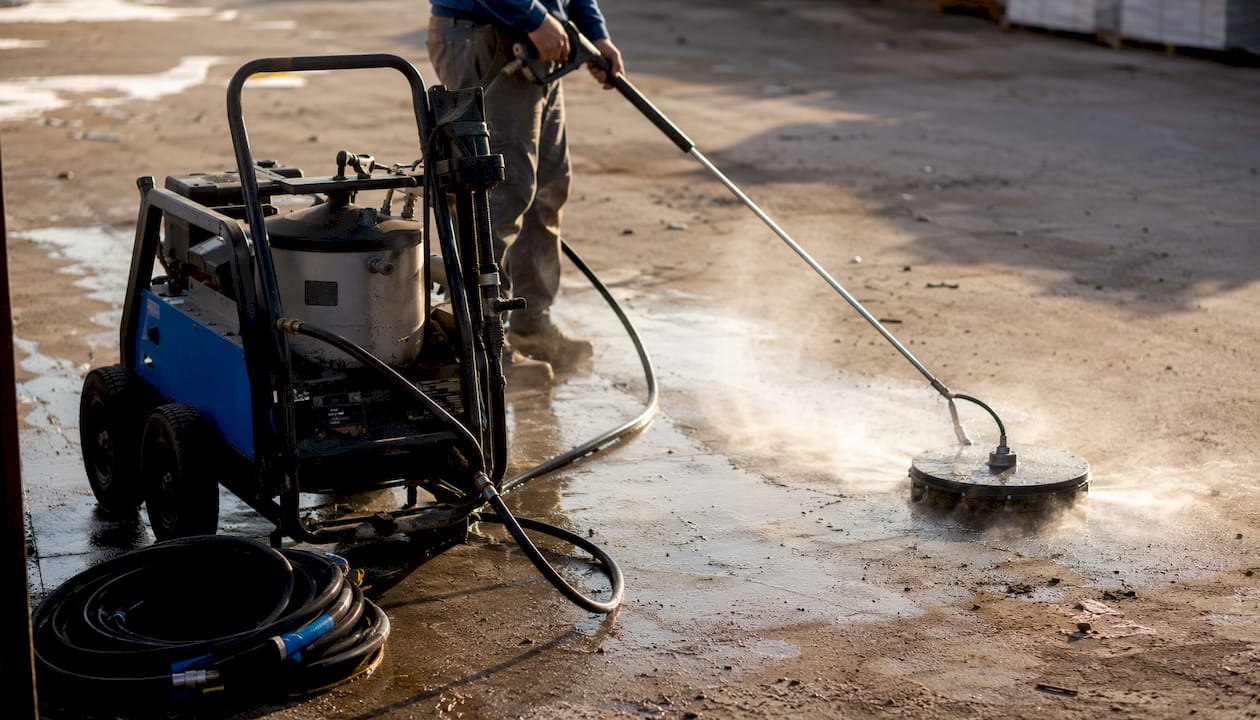
Flow rate (GPM) drives throughput on large lots. A unit pushing 4–5 GPM covers ground significantly faster than a residential 2 GPM machine, which matters when you’re cleaning a 50,000-square-foot retail lot before 6 AM.
| Surface | Recommended PSI | Notes |
|---|---|---|
| Asphalt | — | Lower pressure protects binder; hot water essential for oil |
| Concrete | — | Tolerates higher PSI; may need steam for deep hydrocarbon stains |
| Painted striping | Controlled pressure recommended | Controlled pressure to avoid stripping markings |
Pre-treatment with biodegradable degreasers and adequate dwell time does most of the actual work. The pressure wash that follows is the rinse, not the cleaner. Skipping dwell time commonly results in less effective cleaning on petroleum-stained surfaces.
Pro Tip: Rotary surface cleaners distribute pressure evenly across a spinning head, which prevents the “tiger striping” that open-wand blasting leaves on concrete and protects asphalt binder from concentrated high-PSI damage. If a contractor shows up with only a wand for a large commercial lot, that’s a problem.
When does a lot need routine maintenance vs. full restoration?
Most commercial lots need routine maintenance cleaning on a schedule tied to traffic volume: monthly for high-traffic retail and grocery, quarterly for moderate-traffic office parks, and semiannual for lower-traffic facilities. Routine maintenance handles general grime, light oil drips, tire marks, and biological buildup before it becomes embedded.
Restoration-grade cleaning is a different protocol. Trigger it when there is extensive petroleum staining or significant biological growth covering a substantial portion of the surface area.
- Standard maintenance passes are no longer lifting stains to an acceptable level.
- You’re prepping for sealcoat or restriping and need a clean substrate.
Restoration work involves extended pre-treatment dwell times (often 15–30 minutes per zone), hot-water or steam application, mandatory wastewater recovery, and sometimes multiple visits. It costs more per square foot than maintenance cleaning, but it’s the only approach that actually works on heavily contaminated surfaces. For a broader view of parking lot maintenance best practices, including lifecycle planning between cleaning cycles, that’s worth reading before you set your annual budget.
How contractors price parking-lot jobs and what timelines look like
Pricing varies by square footage, contamination severity, surface type, access constraints, wastewater handling requirements, and whether the work happens during business hours or overnight. Most commercial contractors use one of three models:
| Pricing Model | Typical Use Case |
|---|---|
| Per square foot | Standard for large lots; easier to compare bids |
| Per-visit flat rate | Smaller lots or recurring maintenance contracts |
| Line-item pricing | Heavy oil reclamation, wastewater recovery, or multi-zone jobs |
Ballpark ranges for commercial lot cleaning vary widely. A small lot (under 10,000 sq ft) with light contamination might run a few hundred dollars per visit. A large retail or industrial lot with heavy petroleum staining, wastewater recovery, and overnight scheduling can run into the thousands. The pricing factors for commercial pressure washing follow similar logic: surface area, contamination level, and access all move the number.
Timeline-wise, a small lot takes 2–4 hours with a two-person crew. A medium lot (20,000–50,000 sq ft) typically runs a full day. Large lots or parking garages with multiple decks often require phased visits.
Recurring maintenance contracts consistently reduce per-visit cost and extend pavement life by preventing the kind of deep contamination that requires expensive restoration work.
Stormwater rules and wastewater capture: what property owners must know
Under EPA NPDES rules, allowing polluted wash water containing oil, grease, or heavy metals to enter storm drains is illegal. Property owners, not just contractors, can be held liable. Colorado municipalities add their own pretreatment ordinances on top of federal rules, so the exposure is real and local.
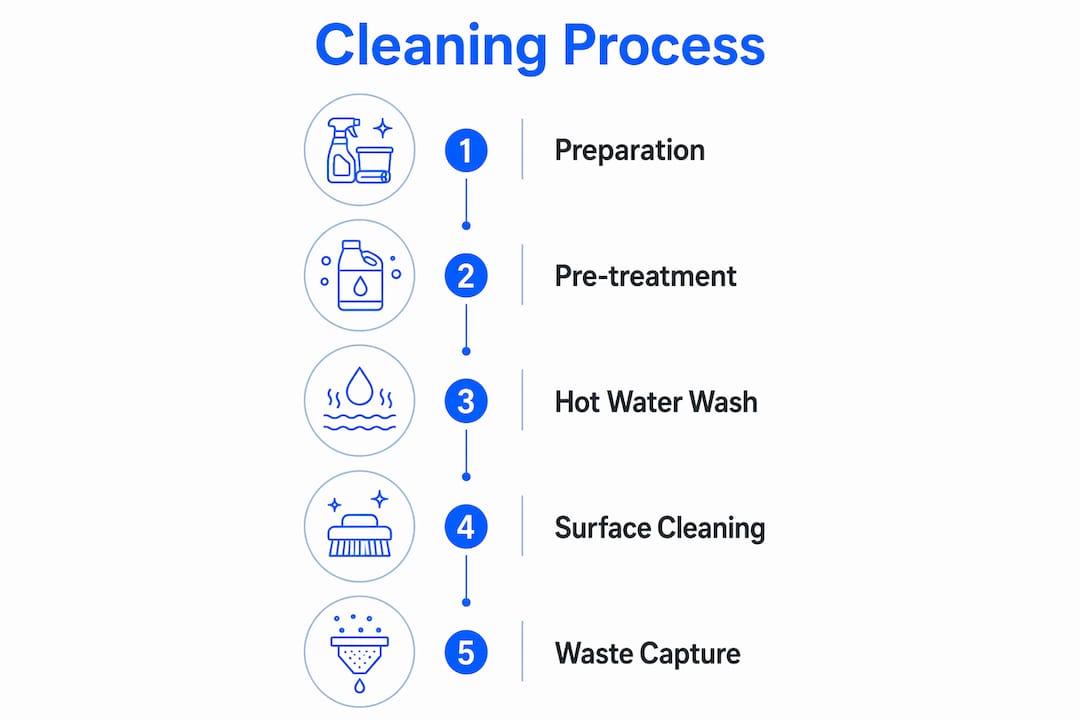
Practical mitigation on the job site includes drain blocking with plugs or filter socks, berms to contain runoff, and vacuum water-recovery systems that collect and transport wash water to an approved disposal facility. Ask for disposal manifests and receipts as part of your post-job documentation package. Your contract should explicitly name the contractor as responsible for compliant disposal and require them to carry the liability, not pass it back to you.
How to choose a parking-lot pressure washing contractor
A proper vendor assessment starts with a site walk-through. Any contractor who quotes remotely without seeing the lot is estimating, not pricing. Beyond that, here’s what to ask and what to look for:
Questions to ask every bidder:
- What PSI/GPM does your equipment run, and is it hot-water capable?
- How do you handle wastewater on a lot this size?
- Can you provide before/after photos from comparable commercial jobs?
- Are you licensed and insured? Will you provide a COI naming this property?
- What’s your re-clean policy if results don’t meet spec?
Red flags:
- No mention of wastewater handling until you bring it up.
- Unwillingness to provide a site-specific scope or equipment spec.
- No commercial references or job photos.
- Quote delivered without a site visit.
Contract terms to include: scope line items by zone, re-clean guarantee, waste disposal receipts required post-job, insurance naming the property if required, and defined scheduling windows with access-control responsibilities.
Post-clean documentation including photos and disposal manifests protects you if a compliance question comes up later. Make it a contract requirement, not a request.
For lots that will be restriped after cleaning, parking lot line marking prep requires a fully clean, dry surface, so coordinate the cleaning and striping timeline before scheduling either.
What to expect on the day of service
A professional crew arrives with cones, signage, and drain protection before any water runs. The site walk happens first, confirming zone sequence and access points. Equipment staging typically requires a water source connection and enough clearance for the truck-mounted unit.
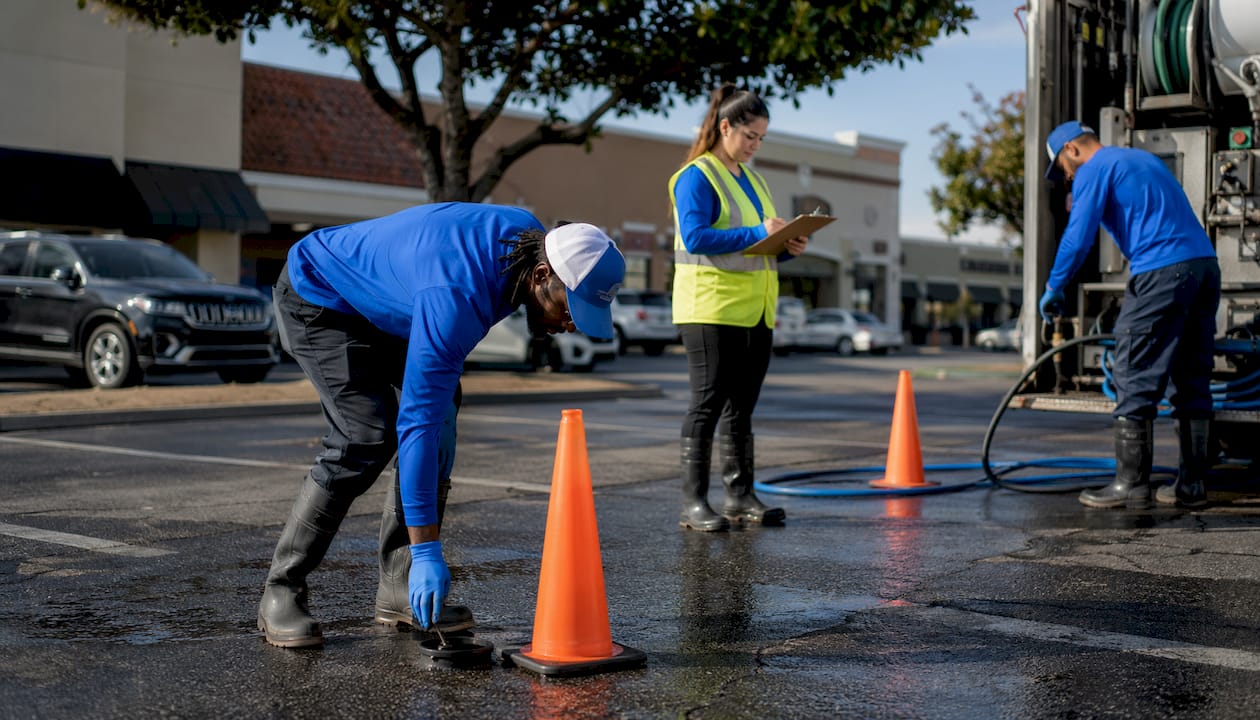
Crew workflow runs from the cleanest zones to the most contaminated, so petroleum and biological runoff doesn’t migrate into already-cleaned areas. A two-person crew on a mid-size lot will handle pre-treatment, wash passes, and wastewater recovery simultaneously. Best-practice process ends with a final rinse, a walkthrough inspection, spot re-treatments on any missed areas, and a photo report delivered to the property manager.
Key Takeaways
Commercial parking-lot cleaning requires a licensed hot-water contractor with documented wastewater recovery, and skipping either requirement creates both compliance risk and pavement damage.
| Point | Details |
|---|---|
| Hot water is non-negotiable | Cold water cannot emulsify petroleum; always verify hot-water capability before hiring. |
| Maintenance vs. restoration threshold | Lots with more than 10% petroleum staining or extensive biological coverage need restoration-grade protocol, not routine cleaning. |
| NPDES liability falls on owners | Request disposal manifests and written wastewater plans before work begins. |
| Recurring plans cut costs | Maintenance contracts reduce per-visit pricing and prevent expensive restoration cycles. |
| Alldaypowerwashing for Colorado lots | Licensed, insured, and equipped for commercial lots in Colorado Springs and Denver with same-week quotes and a satisfaction guarantee. |
Why the standard advice on parking-lot cleaning misses the point
Most guides focus on frequency and surface type. Those matter, but the real issue property managers underestimate is liability transfer. When a contractor’s wash water runs into a storm drain, the property owner is exposed under NPDES, not just the contractor. The cleaning itself is almost secondary to the compliance chain: wastewater recovery, disposal manifests, and contract language that assigns responsibility correctly.
The other thing most articles skip: pavement damage from the wrong equipment is cumulative and invisible until it isn’t. High-PSI open-wand blasting strips asphalt binder over time, accelerating surface failure in a way that won’t show up for a season or two. By then, the connection to the cleaning method is easy to miss. Rotary surface cleaners and controlled heat are the right tools, and a contractor who doesn’t use them on asphalt is costing you money on the back end even when the lot looks clean after the job.
Get a commercial lot quote from Alldaypowerwashing
Alldaypowerwashing handles commercial parking-lot cleaning across Colorado Springs and the Denver metro area with commercial-grade hot-water equipment, documented wastewater recovery, and a satisfaction guarantee that means the job gets done right or they come back.
To get a fast, site-specific quote, send the property address, an estimate of the lot’s square footage, photos of any heavy staining or problem areas, and access details (gate codes, preferred scheduling window). Alldaypowerwashing will return a quote with an equipment spec, wastewater disposal plan, timeline, and COI. Get your quote for Denver or reach the team directly through the quote request page.
Authoritative sources and where to read more
- EPA NPDES Stormwater Program: The primary federal source on stormwater discharge rules and property-owner liability. Use this to verify what your contractor’s wastewater plan must address.
- Power Washing Authority: Parking Lot Powerwashing: Industry-level guidance on commercial applications, equipment standards, and maintenance vs. restoration protocols.
- CCS: How to Pressure Wash a Parking Lot: Practical best-practice walkthrough covering site prep, process steps, and documentation requirements.
When vetting a contractor, cross-reference their stated wastewater method against EPA NPDES guidance. If their approach doesn’t include physical recovery and documented disposal, it doesn’t meet the standard, regardless of what they claim on their website.
Recommended
- House Pressure Washing Prices in Colorado: 2026 Guide — All Day Power Washing
- Low Pressure House Washing: A Safe Guide for Homeowners — All Day Power Washing
- Top 3 Graffiti Removal Service Near Me Providers 2026 — All Day Power Washing
- Pressure Washing a Stucco House: Colorado’s Safe Guide — All Day Power Washing