

Hire Retail Storefront Cleaners Property Managers Trust
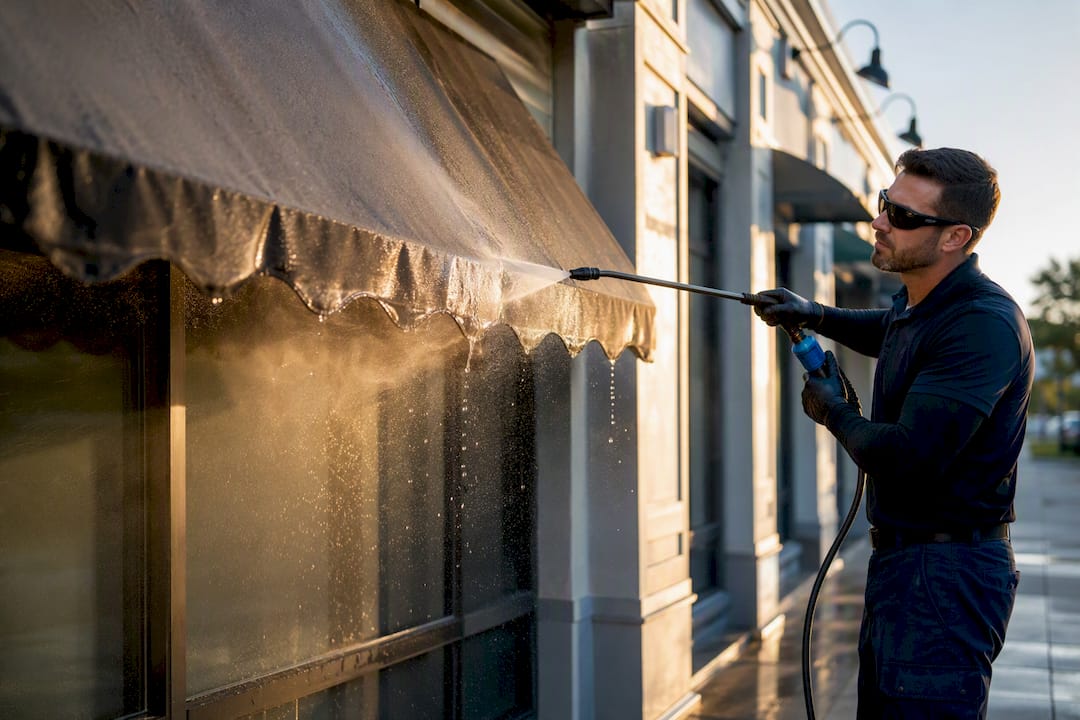
Retail storefront cleaning covers sidewalks, entry pads, the facade, awnings, signage, and any drive-through or dumpster pad on the property, using hot-water pressure washing for concrete and grease, soft washing for delicate surfaces, and degreasers for oil. Book it monthly if you run a restaurant or drive-through, quarterly for most retail storefronts. Before signing anyone, get a written scope of work, a certificate of insurance, and a promise of before-and-after photos with every visit.
TL;DR:
- A detailed scope of work should specify cleaning methods for each surface, including exclusions for windows and interior floors, with a clear schedule and warranty.
- Soft washing is essential for delicate surfaces like facades and awnings to prevent damage, while hot-water pressure washing is necessary for concrete and grease-heavy areas.
- Costs generally range from $200 to $600 for single storefronts, with multi-tenant centers costing more depending on linear footage, grease removal, and additional chemistry.
- Proper contracts must include proof of insurance, photo documentation, response time SLAs, and a cancellation clause to avoid reliance on vague agreements.
- Regular maintenance scheduled monthly for high-traffic locations and quarterly for others keeps grime, stains, and organic buildup from accumulating and causing damage over time.
Table of Contents
- What Should a Retail Storefront Cleaning Quote Include?
- How Do Pros Clean Storefronts Without Damaging Them?
- What Does Professional Storefront Cleaning Cost?
- How Do You Choose a Storefront Cleaning Company?
- What Happens on the Day of Service?
- How Sustainable Is Professional Storefront Cleaning?
- How Do You Handle Graffiti, Stains, and Seasonal Buildup?
- A Property Manager’s Perspective
- Get a Storefront Cleaning Quote That Covers Everything
- Sources
- FAQ
What Should a Retail Storefront Cleaning Quote Include?
A vague quote is how disputes start. Before you compare bids, put every contractor through the same checklist to ensure you’re actually comparing apples to apples.
Ask for the scope broken out by surface, with the method named for each:
- Sidewalks and entry pads: hot-water pressure washing with a surface-cleaner attachment for even, streak-free results.
- Facade: soft washing for stucco, EIFS, painted brick, or vinyl, low-pressure rinsing for sealed masonry.
- Awnings: soft washing only. Fabric and vinyl awnings can shrink or tear under direct high pressure.
- Signage: low-pressure rinse to avoid stripping vinyl lettering or damaging LED components.
- Drive-through and dumpster pads: degreasing agents plus hot water to break down oil and food residue.
Beyond the surface list, a legitimate quote states the total square footage being cleaned, spells out what’s excluded (window glass, interior floors, tenant signage not owned by the landlord), and includes a warranty or re-treatment window if stains resurface. It should also propose a schedule: after-hours start time, an estimated crew arrival window, and how the crew plans to work around customers or deliveries. If a quote skips any of this, you don’t have a real quote yet. You have a guess with a dollar sign on it.
How Do Pros Clean Storefronts Without Damaging Them?
The method matters more than the machine. Soft washing, which uses low pressure with a cleaning solution, is the right call for siding, EIFS, painted surfaces, and fabric or vinyl awnings, because pressure washing can crack, dent, or strip these materials outright. High pressure looks satisfying on video. On a stucco facade it can blow out the finish coat.
Concrete is the opposite case. Sidewalks, entry pads, and drive-through lanes need force and heat. Hot-water pressure washing loosens grease and gum far faster than cold water, and surface-cleaner attachments produce a more even, streak-free finish than a handheld wand, because they distribute pressure across the whole surface instead of leaving overlapping arc marks. Gum, in particular, usually needs a dedicated degumming solution or sustained hot water to release cleanly.
Pro Tip: Ask any bidder what wastewater plan they use. Runoff from degreasers and detergents can violate local stormwater rules if it drains straight into a storm sewer, so a crew that talks through containment or diversion before you ask is a crew that’s done this before.
A few non-negotiables to build into any scope of work:
- Chemistry that’s biodegradable and appropriate for the surface, not a one-size-fits-all degreaser.
- A wastewater containment or diversion plan for grease and chemical runoff.
- Crews trained on ladder safety, chemical handling, and basic OSHA field practices.
- A documented reason for choosing soft wash versus pressure wash on each surface, not a default to whichever is faster.
Damage almost always traces back to one thing: someone used pressure where they should have used soft wash, or skipped the surfactant step and tried to blast a stain out with force alone. Ask how a crew decides between the two before you ask what they charge.
What Does Professional Storefront Cleaning Cost?
Price depends on square footage, surface condition, and how much grease or oil is involved, but rough bands hold up across most markets. A single storefront, meaning sidewalk, entry pad, and facade touch-up, typically runs $200 to $600 per visit. A multi-tenant strip center or shopping plaza with shared sidewalks and several storefronts often costs several hundred to a few thousand dollars per visit, depending on total linear footage and how many pads need degreasing.
Time on-site follows a similar pattern. Most single-storefront jobs take a few hours, longer if there’s heavy gum buildup, grease-caked pads, or awnings that need a separate soft-wash pass. Multi-tenant properties stretch into a full shift or longer once you add setup, hose runs, and multiple building faces.
What actually drives the price up isn’t square footage alone. It’s grease removal, hot-water equipment requirements, awning cleaning (which needs separate chemistry from concrete), and whether the job covers one tenant or an entire center. Property managers running recurring contracts across several buildings often get a lower per-visit rate by bundling storefront cleaning with other exterior maintenance like parking lot sweeping or gutter service, since one mobilized crew can cover more ground per trip.
Before you sign anything, confirm the contract has these five items:
- A detailed, surface-by-surface scope of work with named exclusions.
- Proof of insurance, ideally at least $1 million in general liability, with your property named as an additional insured.
- An SLA covering response time for callbacks if a spot gets missed.
- Photo documentation delivered after every single visit.
- A cancellation clause, 30 days is standard, and a warranty window (often 30 to 90 days depending on surface) for re-treatment.
Skip any one of these and you’re trusting a handshake instead of a contract.
How Do You Choose a Storefront Cleaning Company?
Cheapest bid wins more often than it should, and it’s the single most common regret property managers report after a bad cleaning job. Here’s the actual order of operations before you hire anyone.
- Ask for a certificate of insurance first. No COI, no conversation. This protects your property if a crew member gets hurt or damages something on-site.
- Request before-and-after photos from a similar job. A retail facade or drive-through pad, not a random driveway. Method shows up in the results.
- Confirm hot-water capability. Cold-water rigs can’t touch grease or set gum the way hot water can.
- Ask what soft-wash chemicals they use on awnings and facades. A vague answer like “our special solution” is a red flag.
- Get written exclusions. What’s not included matters as much as what is.
- Lock in the warranty and callback policy before signing. Not after.
Watch for these red flags: a scope that says “clean exterior” with no surface breakdown, refusal to provide a COI, no photo evidence of past work, and pushback when you ask about after-hours scheduling. A crew that insists on daytime work because it’s easier for them isn’t thinking about your customers.
Pro Tip: When two bids are close in price, the tiebreaker is documentation, not charisma. The contractor who hands you a written method and a real warranty beats the one who just seems confident on the phone.
What Happens on the Day of Service?
Crews typically arrive about an hour before the scheduled start to stage hoses, hot-water units, and chemical tanks, then work the job during off-hours to avoid tangling with customers or deliveries. Retail after-hours work usually means early morning or late evening; restaurants with drive-throughs often need overnight windows.
On your end, prep is short but it matters:
- Move planters, sandwich boards, and patio furniture off the pad.
- Secure or cover window displays near the entry.
- Notify overnight or opening staff so nobody’s surprised by hoses across the sidewalk.
- Confirm gate codes, key access, or alarm instructions in advance.
When the crew wraps, don’t just take their word for it. Walk the site with before-and-after photos in hand, check off each surface against the original scope, and flag anything that looks off right then. That walkthrough is your documentation if a callback becomes necessary later.
How Sustainable Is Professional Storefront Cleaning?
Most professional crews have shifted toward biodegradable detergents and degreasers, both because they work well on grease and gum and because runoff regulations increasingly require it. A harsh, non-biodegradable chemical that washes into a storm drain can trigger a local environmental violation, and that liability lands on the property owner as much as the contractor.
Water use is the other half of the equation. Hot-water pressure washing systems clean faster at lower pressure than cold-water rigs, which means less water run per square foot to hit the same result. Surface-cleaner attachments help here too. Even coverage means fewer repeat passes over the same section of concrete.
Wastewater containment matters just as much as the chemistry going down. Grease and degreaser runoff from a dumpster or drive-through pad shouldn’t flow straight into a storm sewer. Reputable crews use containment mats, wet-vacuum recovery, or diversion into a sanitary drain where local code allows it. If a bidder can’t explain where the dirty water goes, that’s worth a follow-up question before you sign anything.
None of this needs to cost you more. Biodegradable chemistry and hot-water efficiency are standard practice for crews who do this work regularly, not a premium add-on you have to request separately.
How Do You Handle Graffiti, Stains, and Seasonal Buildup?
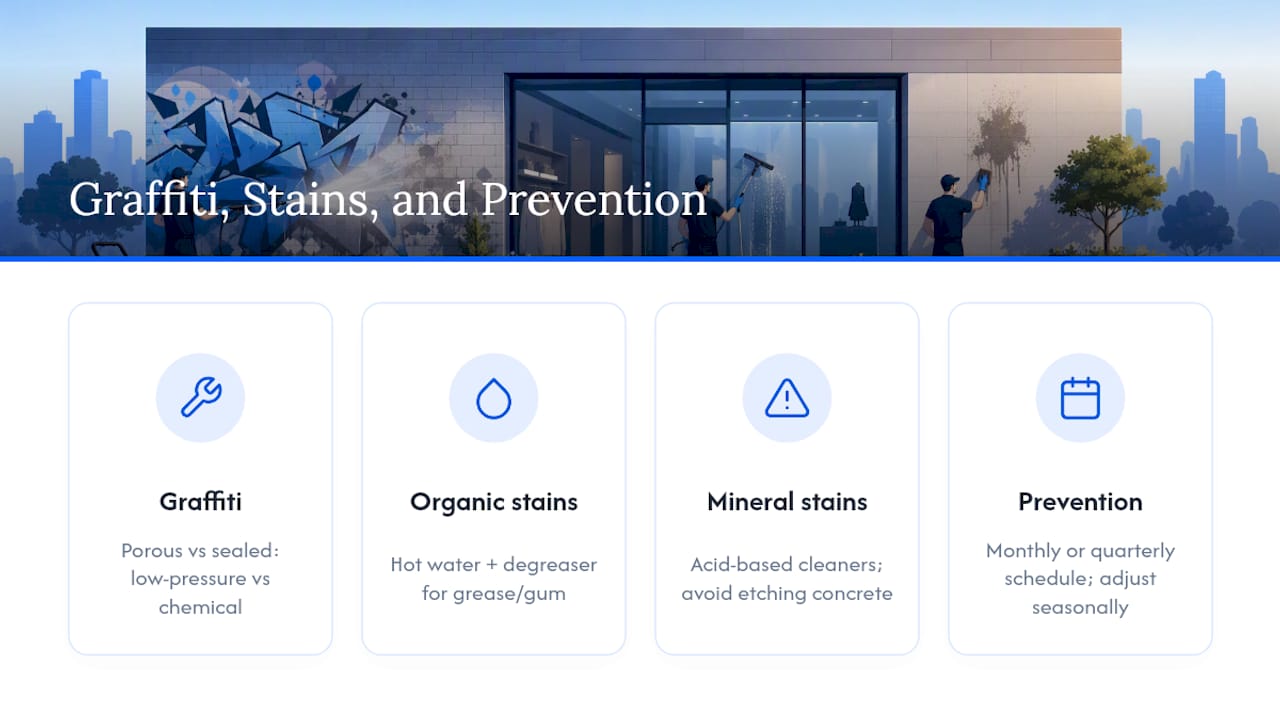
Graffiti removal depends entirely on what’s under the paint. Porous surfaces like unsealed brick or stucco often need a specialized graffiti remover paired with low-pressure rinsing, since aggressive pressure can drive pigment deeper into the pores instead of lifting it out. Sealed or painted surfaces usually respond faster to a chemical stripper and a single soft-wash pass.
Stubborn stains split into two categories: organic (grease, gum, food residue) and mineral (rust, efflorescence, hard-water spotting). Organic stains respond to hot water and degreasers. Mineral stains often need an acid-based cleaner formulated specifically for that residue, applied carefully so it doesn’t etch the concrete.
Seasonal issues shift the priority list throughout the year. Spring brings pollen film and winter grime buildup after months of salt and de-icer exposure. Summer means faster-drying grease near restaurant pads and more foot traffic tracking in dirt. Fall drops leaves and organic staining onto sidewalks and drains. Winter is the hardest on concrete, since de-icing salt accelerates surface pitting and leaves a chalky residue that needs a proper rinse, not just a quick pass.
The fix for most of these isn’t a heroic one-time deep clean. It’s staying on a consistent monthly or quarterly schedule so grime never gets the chance to bond to the surface in the first place.
A Property Manager’s Perspective
All Day Power Washing runs commercial-grade equipment with real crews on real job sites across Colorado Springs and Denver, not subcontracted labor working off a template. The company offers same-week quotes and carries full insurance, backing every job with a satisfaction guarantee. Beyond storefronts, its kitchen hood degreasing follows an inspection-ready schedule with two-level sign-off, the kind of procedural discipline that should be the baseline for any exterior cleaning contract you sign, not the exception.
— Brandon
Get a Storefront Cleaning Quote That Covers Everything
A professional storefront cleaning company handles the full scope covered in this guide, sidewalks, facades, awnings, signage, and drive-through or dumpster pads, using soft-wash and hot-water methods that keep delicate surfaces intact and concrete actually clean. Rather than juggling separate vendors for each surface, you get one crew, one scope of work, and one point of contact for the whole property.

When you request a quote through the Alldaypowerwashing site, include your property address, a few photos of the areas that need attention, the specific surfaces you want cleaned, and how often you’d like service. Ask for a certificate of insurance and before-and-after photo documentation as part of the proposal. Colorado Springs and Denver metro property managers can also check the Denver service page for local scheduling details, or browse recent work on the Google reviews page before booking. If you’re setting up a recurring maintenance program across multiple properties, a marketing partner like Baby Love Growth’s cleaning services resource is worth a look for structuring that side of the business. Request your quote today and get a written scope back before you commit to anything.
Sources
Pricing bands and method recommendations come from Jacobson’s Power Washing. Contract and insurance checklists draw on HydroWash360’s contract guide. Scheduling guidance references Brightness Window Cleaning’s spring playbook, and bundling insights come from Snug’s Services property manager guide.
- Storefront and Retail Pressure Washing for Small Businesses
- Commercial Pressure Washing Contract Guide | Jacksonville FL
- Storefront Pressure Washing in NJ & NYC: A Spring Playbook
- Choosing a Commercial Pressure Washing Company: The 2026 Property Manager’s Guide
FAQ
How Often Should a Retail Storefront Be Pressure Washed?
High-traffic restaurants and drive-throughs typically need monthly cleaning, while most independent retail storefronts do well on a quarterly schedule.
What’s the Difference Between Soft Washing and Pressure Washing?
Soft washing uses low pressure with a cleaning solution and is required for facades, EIFS, and awnings, while high-pressure hot-water washing is reserved for concrete, sidewalks, and grease-heavy pads.
How Much Does Storefront Cleaning Cost?
A single storefront typically runs $200 to $600 per visit. Multi-tenant strip centers often cost several hundred to a few thousand dollars per visit depending on total linear footage and number of degreased pads. Alldaypowerwashing does not publish flat rates online, so request a quote directly through its site for a number specific to your property.
What Should Be in a Storefront Cleaning Contract?
Look for a detailed scope of work, proof of general liability insurance naming your property as additional insured, an SLA for callbacks, photo documentation, and a 30-day cancellation clause.
Can Storefront Cleaning Remove Graffiti and Gum?
Yes. Graffiti typically needs a dedicated remover paired with low-pressure rinsing, and gum usually requires hot water or a degumming solution to fully release from concrete or pavers.