
Eco Friendly Pressure Washing: Safe Guide for Homeowners
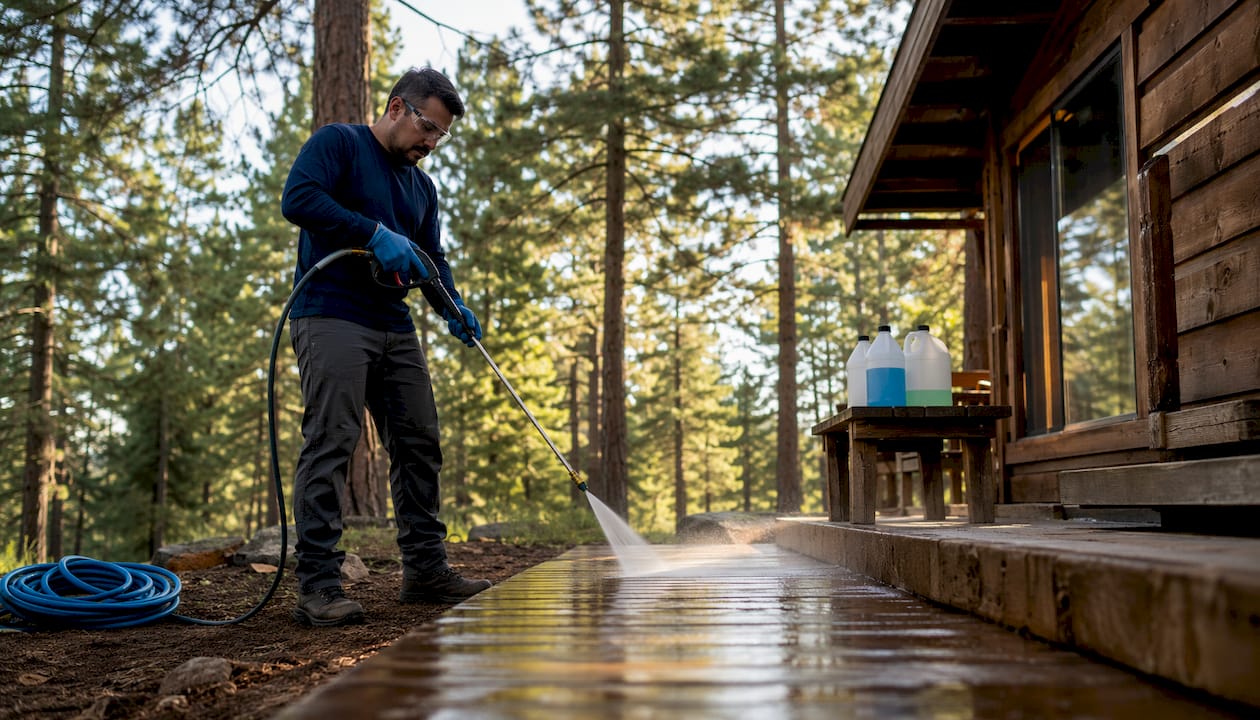
Eco-friendly pressure washing means cleaning exterior surfaces using methods that contain runoff, minimize chemical use, and prevent contaminated wash water from reaching storm drains or local waterways. The single most important thing you can do right now: block any nearby storm drains before water hits the ground.
Three quick checks you can do in the next 15 minutes:
- Walk your property and locate every storm drain within 20 feet of the area you plan to clean
- Check whether plants, mulch beds, or soil are directly in the path of runoff
- Decide whether you need a pro with wastewater capture equipment, or whether a simple containment mat will do
Pro Tip: If a contractor’s entire “eco” pitch is “we use biodegradable soap,” keep looking. Biodegradable products still require containment and proper disposal — that label alone tells you nothing about their runoff practices.
Table of Contents
- What does eco-friendly pressure washing actually mean?
- Environmental risks and U.S. rules you need to know
- Core best practices for a genuinely eco-friendly job
- Soft-wash vs. high-pressure: which one should you use?
- How to protect landscaping, pets, and nearby water
- Alternatives to pressure washing that reduce environmental risk
- What do eco-friendly pressure washing jobs typically cost?
- How to choose a contractor for eco-friendly pressure washing
- How Alldaypowerwashing handles eco-friendly jobs in practice
- Key Takeaways
- The gap between “green” marketing and actual eco practice
- Alldaypowerwashing: get a same-week quote for your property
- Useful sources and further reading
What does eco-friendly pressure washing actually mean?
Eco-friendly pressure washing focuses on reducing harmful runoff and conserving water by relying on pressure, temperature, and technique rather than heavy chemicals. The goal is effective cleaning that does not leave a trail of contaminated water flowing toward the nearest drain.
Three methods cover most residential and commercial jobs:
- Soft-wash: Low pressure (typically under 500 PSI) combined with a diluted cleaning solution. Best for roof shingles, painted wood siding, stucco, and surfaces where high pressure would cause damage.
- Low-pressure surface cleaners: Spinning bar heads that clean concrete and pavers evenly without wand marks. More water-efficient than a standard wand.
- Cold or hot high-pressure washing: 1,500–4,000 PSI for durable surfaces like bare concrete, brick, and heavy equipment. Effective on oil and grease but generates more runoff volume.
Typical eco-conscious jobs include house siding, wood decks, driveways, commercial parking lots, and fleet vehicles. One point that trips people up: certified green solutions still require containment and proper disposal. “Biodegradable” on the label means the product can break down under the right conditions — not that dumping it into a storm drain is fine.
Environmental risks and U.S. rules you need to know
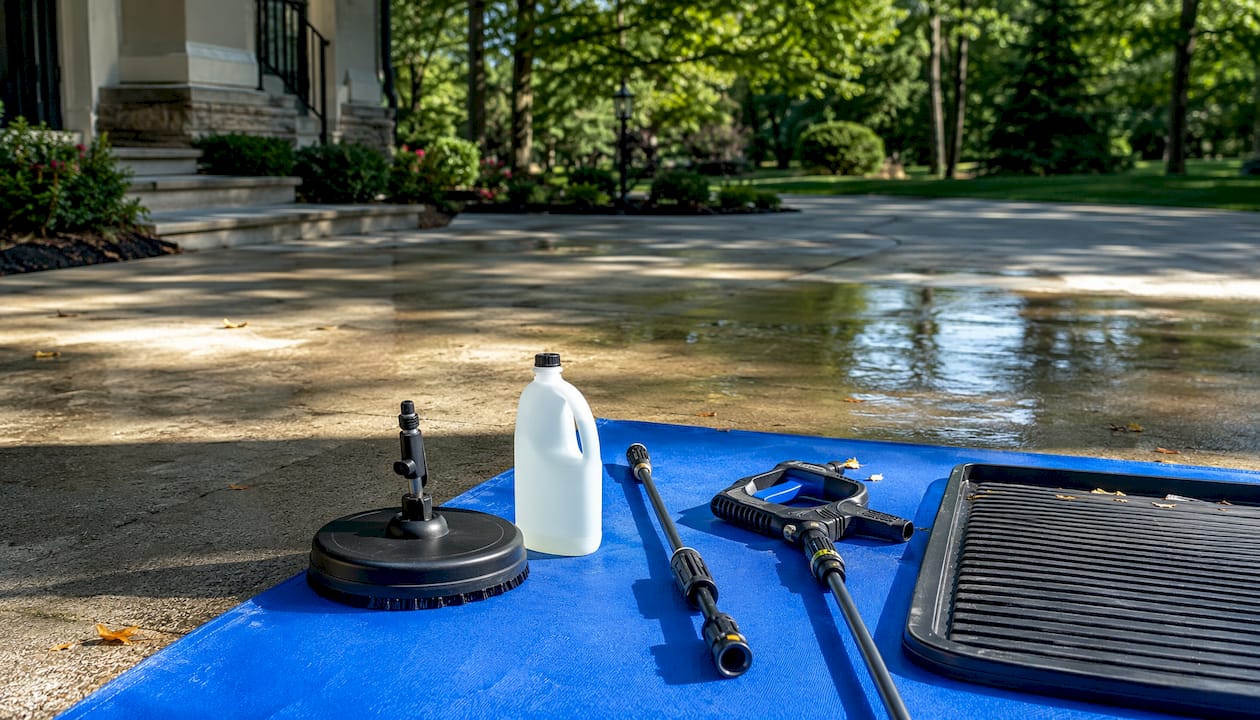
Discharging wash water into storm drains is restricted under federal law and can carry real fines. The EPA’s stormwater discharge rules prohibit sending polluted runoff into storm systems, and property owners — not just contractors — can be held liable for illegal discharges.
Advanced reclamation systems can capture up to 98% of wastewater for recycling or proper disposal, making them the compliance gold standard for commercial and high-volume jobs.
UNC’s Environmental Health and Safety program makes a point worth repeating: biodegradable labeling can be misleading. Products formulated to break down inside a sewage treatment plant can still harm local streams if they reach them directly through a storm drain. The biology works differently in an open waterway than in a controlled treatment environment.
Legal risks and compliance steps to know:
- Wash water containing detergents, oil, or organic debris cannot legally flow to a storm drain in most U.S. jurisdictions
- Fines for illegal discharge vary by municipality but can be significant for repeat violations
- If you need to discharge to a sanitary sewer, contact your local utility authority first — a permit or pre-approval is often required
- Containment mats, drain plugs, and berms are the practical first line of defense on any job
Core best practices for a genuinely eco-friendly job
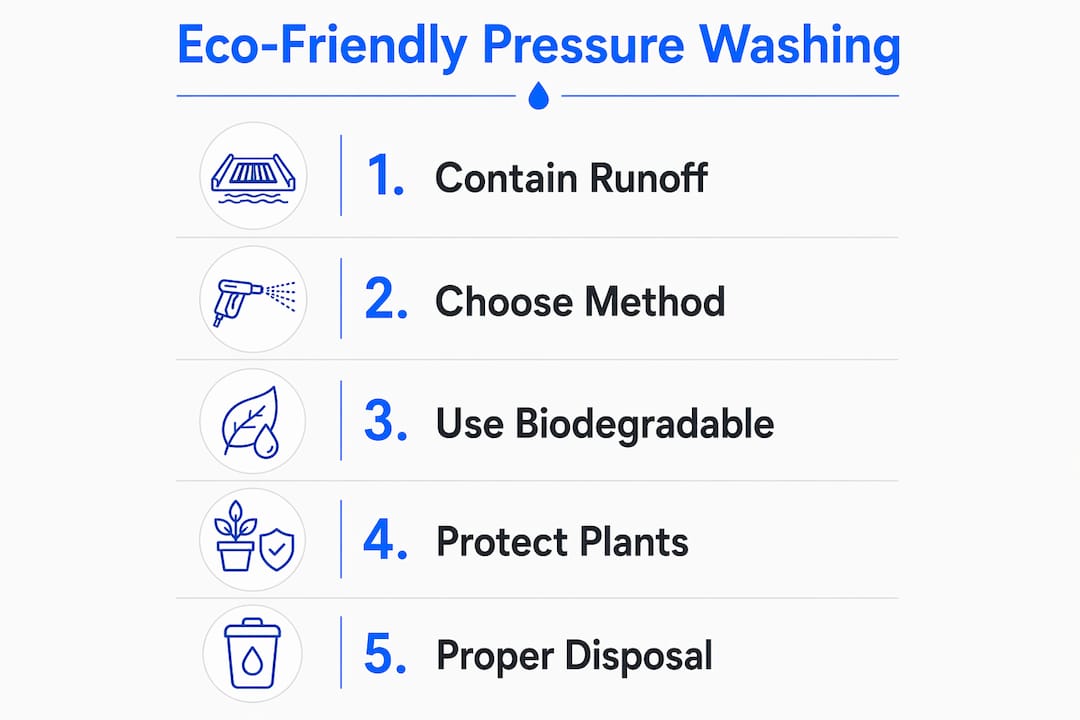
The four principles that separate real sustainable cleaning from a marketing claim: contain the water, reclaim or properly dispose of it, minimize chemicals, and use the right pressure for the surface.
Step-by-step checklist:
- Clear loose debris (leaves, dirt, gravel) with a broom or blower before any water touches the surface — wet debris becomes contaminated slurry that is harder to capture.
- Block storm drains within the work zone using drain plugs or absorbent berms.
- Pre-wet plants and soil adjacent to the work area.
- Test the surface with plain water at the target pressure before adding any detergent. Water alone is often adequate and avoids generating chemically contaminated wastewater.
- Apply detergent only where necessary, using the minimum effective dilution.
- Use a surface cleaner or appropriate nozzle rather than a raw wand on flat surfaces — it reduces water use and keeps runoff contained.
- Collect runoff using a wet/dry vacuum, portable catch mat, or reclamation system.
- Dispose of captured water according to local rules (sanitary sewer with permission, or a licensed disposal facility for heavily contaminated loads).
Tools that reduce water use:
- Rotating surface cleaners (cover more area per gallon than a wand)
- High-efficiency nozzles matched to the surface
- Downstream injectors that apply detergent only where needed
Pro Tip: Pre-clearing dry debris is the single step most DIYers skip. Once you mix dirt and detergent with water, you have contaminated runoff. Keep them separate as long as possible.
Soft-wash vs. high-pressure: which one should you use?
Soft-wash is the right call for delicate surfaces and organic growth like algae, mold, and mildew. High-pressure is better for durable surfaces and heavy contamination like oil, grease, and embedded grime. Using the wrong method damages surfaces and can create more runoff than necessary.
| Factor | Soft-Wash | High-Pressure |
|---|---|---|
| Typical PSI range | Under 500 PSI | 1,500–4,000 PSI |
| Detergent use | Higher (solution does the work) | Lower (pressure does the work) |
| Damage risk | Low on delicate surfaces | High on wood, stucco, soft brick |
| Best use cases | Roofs, painted siding, stucco, decks | Concrete, bare brick, equipment, driveways |
| Runoff volume | Lower | Higher |
For a deeper look at low-pressure house washing on specific siding types, the method matters as much as the equipment.
Red flags for high-pressure use:
- Painted or stained wood (strips finish and raises grain)
- Older stucco or EIFS cladding (forces water behind the surface)
- Asphalt shingles (dislodges granules and voids warranties)
- Any surface showing existing cracks or loose material
How to protect landscaping, pets, and nearby water
Isolate plants and soil before the first drop of water falls, and never let wash water run uncontained toward a storm drain or natural waterway. Those two rules cover most of the damage that happens on residential jobs.
On-site protections to put in place:
- Soak nearby plants and mulch beds with plain water before cleaning starts — dilutes any detergent that drifts or splashes
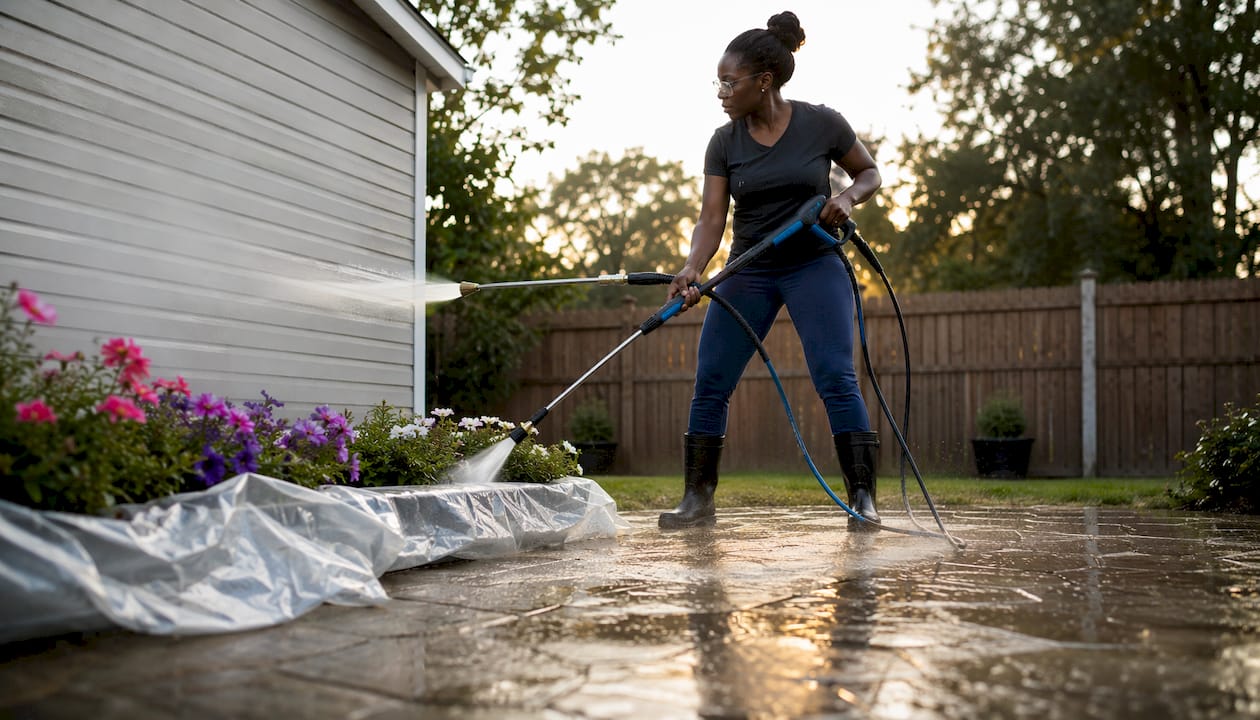
- Cover sensitive plants with plastic sheeting or tarps during detergent application; remove covers promptly after rinsing
- Use tarps, berms, drain covers, and portable catch mats to keep runoff within the work zone
- Move or crate pets away from the work area during and immediately after cleaning
- Shut off any drip irrigation or sprinkler zones in the work area to avoid diluting containment
For Colorado readers, protecting landscaping during exterior maintenance follows the same logic as protecting plants during other outdoor work — physical barriers and pre-wetting are your best tools.
Pro Tip: Choose plant-based, USDA BioPreferred detergents and keep dwell time to the minimum the product recommends. The longer a chemical solution sits on soil or plant material, the more it absorbs — shorter contact time means less risk even with certified green products.
Alternatives to pressure washing that reduce environmental risk
Manual scrubbing, steam cleaning, and enzymatic cleaners are the three main alternatives, and each has a specific situation where it outperforms a pressure washer on environmental grounds.
Manual scrubbing with a stiff brush and a diluted enzymatic cleaner works well for small stained areas on concrete or pavers where generating gallons of runoff makes no sense. It is slower but produces almost no wastewater.
Steam cleaning uses heat rather than pressure or chemicals to break down grease and biofilm. It is particularly effective indoors and in areas with sensitive landscaping nearby, since the water volume is minimal. The trade-off is slower throughput on large surfaces.
Enzymatic cleaners applied as a spot treatment break down organic matter (oil, grease, mold) over time without pressure. They work well on driveways with isolated stains — see the approach used for oil stain removal on asphalt for a practical example.
One thing these alternatives share with pressure washing: if you use a chemical treatment, containment and disposal still apply. Spot-treating a concrete pad with a concentrated enzymatic cleaner and then hosing it into the street is still an illegal discharge in most jurisdictions.
What do eco-friendly pressure washing jobs typically cost?
Most residential eco-friendly jobs take a few hours to a full day, depending on surface area and whether wastewater reclamation equipment is involved. Containment adds labor and equipment time, which is reflected in the price.
Ballpark ranges for common jobs (residential and small commercial):
- House washing (single-story, average size): $200–$400
- Driveway or concrete pad cleaning: $100–$250
- Deck or patio cleaning: $150–$300
- Small commercial lot or retail pad: $300–$700+
- Fleet or heavy equipment washing: priced per unit, varies widely
For Colorado-specific house pressure washing prices, local factors like altitude, sun exposure, and the type of organic growth common along the Front Range all affect scope and cost.
Factors that push costs up:
- Wastewater reclamation equipment rental or service fee
- Difficult access (second stories, tight lots, steep grades)
- Heavy contamination requiring multiple passes or stronger solutions
- Scheduling around weather (freezing temps affect both cleaning effectiveness and runoff behavior)
In Colorado, late spring through early fall is the practical window for most exterior cleaning. Temperatures below 40°F slow detergent activity and can freeze runoff before it reaches containment, which creates a different set of problems.
How to choose a contractor for eco-friendly pressure washing
Ask for written proof of a wastewater containment and disposal plan before you agree to anything. A contractor who cannot describe their reclamation or capture method in specific terms is not doing eco-friendly work, regardless of what their website says.
Questions to ask every contractor:
- What containment equipment do you use on-site (mats, berms, drain plugs, vacuum recovery)?
- Do you have a wastewater reclamation system, or do you use temporary capture and manual removal?
- Where does captured wastewater go — sanitary sewer with a permit, or a licensed disposal facility?
- Are you licensed and insured in Colorado?
- Can you provide references or photos from a comparable job?
- Do you carry general liability and workers’ compensation coverage?
- What certifications or training do your crews have for chemical handling?
Red flags to watch for:
- No containment plan, or a vague answer like “it just drains away”
- “Eco-friendly” claims backed only by a product brand name, not a method
- Unwillingness to provide references or before/after photos
- Consumer-grade equipment on a commercial-scale job
- No proof of insurance
Green pressure washing technologies that vacuum and recycle wastewater reduce your liability as a property owner, not just the contractor’s. If contaminated runoff leaves your property, you can share responsibility for the discharge.
How Alldaypowerwashing handles eco-friendly jobs in practice
Alldaypowerwashing brings commercial-grade equipment and fully insured crews to every job in Colorado Springs and the Denver metro area. Their standard process starts with pre-clearing debris, blocking drains, and pre-wetting adjacent landscaping before any water or detergent is applied.
For residential house washing, the crew selects the appropriate method (soft-wash for siding and rooflines, higher pressure for concrete and hardscape) and contains runoff using mats or portable berms. On commercial lots and fleet washing jobs, where wastewater volume is higher, Alldaypowerwashing can discuss heavy equipment washing options that include reclamation setups appropriate to the job scale.
Pro Tip: For most residential jobs, temporary capture with a wet/dry vacuum and containment mat is sufficient. Upgrade to a full reclamation system when you are cleaning a surface with oil, grease, or chemical contamination — the disposal requirements are stricter and the liability is higher.
Same-week quotes are available, and every job comes with a satisfaction guarantee. That combination of local responsiveness and insured crews is what makes the difference between a contractor who talks about sustainability and one who actually practices it.
Key Takeaways
Eco-friendly pressure washing is defined by containment and proper disposal, not by the detergent brand — verify both before any water hits the ground.
| Point | Details |
|---|---|
| Contain runoff first | Block storm drains and set up berms or catch mats before cleaning starts. |
| Biodegradable ≠ safe to discharge | Even certified green soaps require containment and proper disposal under EPA and local rules. |
| Match method to surface | Use soft-wash (under 500 PSI) for delicate surfaces; reserve high-pressure for concrete and equipment. |
| Vet your contractor | Ask for a written containment and disposal plan; reclamation systems can capture up to 98% of wastewater. |
| Alldaypowerwashing | Insured crews, commercial-grade equipment, and containment practices on every job in Colorado Springs and Denver. |
The gap between “green” marketing and actual eco practice
Most of what gets marketed as environmentally friendly power washing is really just a detergent swap. A contractor switches from a caustic cleaner to a plant-based one, updates their website, and calls it sustainable. The runoff still flows straight to the storm drain.
The practices that actually protect waterways — drain blocking, containment mats, wastewater capture, proper disposal — add time and cost to a job. That is exactly why so few contractors bother. When a company charges the same as everyone else and still claims full eco compliance, the math does not work. Either they are cutting corners on containment, or they are not doing the volume of work that makes reclamation equipment worth owning.
What I find more useful than any certification label is a simple question: “Where does your wash water go?” A contractor who answers that question specifically and immediately, without hesitation, is doing the work correctly. One who pivots to talking about their soap brand is not.
Colorado’s Front Range has real stormwater sensitivity — the drainage patterns here feed directly into waterways that matter to the region. Choosing a contractor who treats containment as standard practice, not an upsell, is the most concrete thing a property owner can do.
Alldaypowerwashing: get a same-week quote for your property
Colorado homeowners and property managers who want the job done right the first time have a direct option: Alldaypowerwashing serves Colorado Springs and the Denver metro area with fully insured crews and commercial-grade equipment on every job.

Services include house washing, driveway and concrete cleaning, commercial lot and retail pad cleaning, fleet and heavy equipment washing, kitchen hood degreasing, and gutter cleaning. Every job comes with a satisfaction guarantee, and same-week quotes mean you are not waiting weeks to get on the schedule. If your job involves significant wastewater volume or contaminated runoff, the team can walk you through containment options before the crew arrives. Request a quote and get a straight answer on scope, method, and price.
Useful sources and further reading
- EPA NPDES Stormwater Guidance — Federal rules on stormwater discharges; the primary authority on what can and cannot go into storm drains.
- UNC EHS Pressure Washing Pollution Prevention — Practical guidance on containment, biodegradable product limitations, and on-site runoff controls.
- MTM Hydro: Eco-Friendly Pressure Washing Tools — Equipment and technique recommendations for reducing chemical use and runoff.
- Terra Source Co.: EcoClean Product Guidance — Detail on USDA BioPreferred certified cleaning solutions and safe application practices.
- Cam Spray: Eco-Friendly Pressure Washing Overview — Covers water efficiency and the environmental case for pressure washing over alternative cleaning methods.
Always check your local municipality’s stormwater rules before any cleaning job — regulations vary by city and county across Colorado, and what is permitted in one jurisdiction may require a permit or be prohibited in another.