

Freeze Thaw Concrete Damage: Causes, Fixes, and Prevention
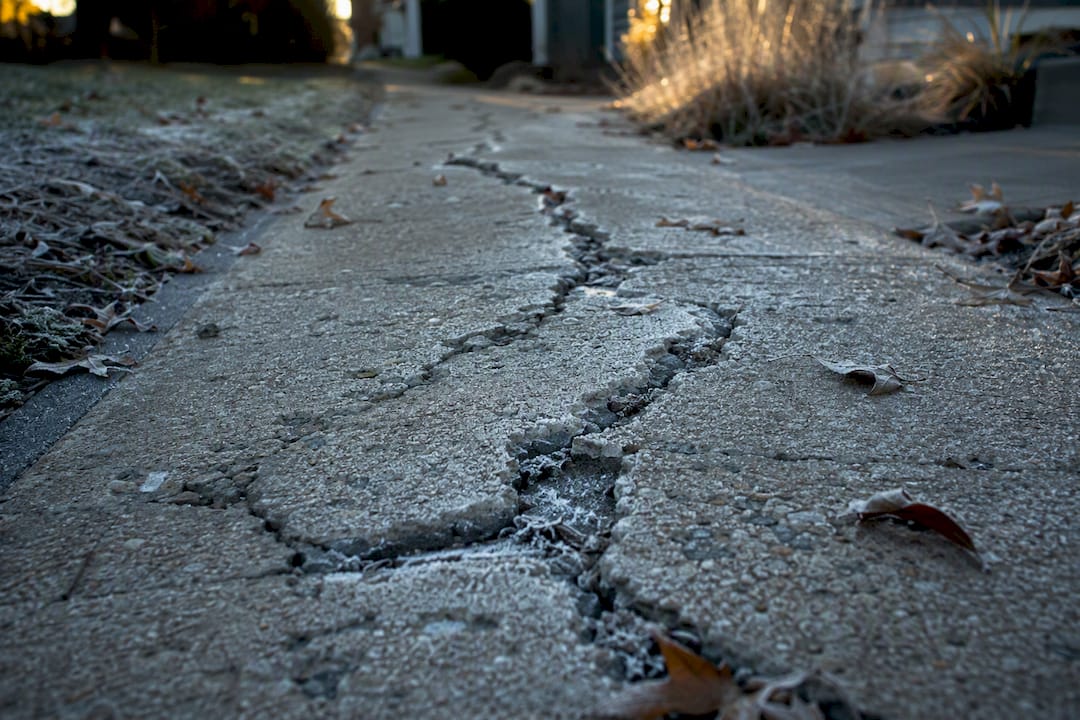
Yes, repeated freeze thaw cycles will break down concrete that stays saturated or lacks proper air voids, producing scaling, cracking, and spalling that gets worse every winter. If you’re staring at a driveway or lot with rough patches or exposed stone, act now, not next spring.
- Check for exposed aggregate or cracks that run deeper than hairline width
- Stop dumping heavy rock salt on the surface if you can switch to a gentler deicer
- Photograph the damage now so you can track how fast it spreads
- For new concrete, insist on air entrainment; for existing slabs, get sealant and drainage sorted before the next freeze
TL;DR:
- Proper air entrainment at the time of pour is essential to prevent freeze thaw damage, as it creates microscopic pockets for ice expansion.
- Early signs of damage include surface scaling, hairline cracking, hollow sounds in tapping tests, and standing water due to poor drainage.
- Regular sealing with penetrating sealers every two to three years helps maintain water repellency and slow deterioration of existing concrete slabs.
- Salt removal through rinsing and improving drainage are crucial, since embedded salts and excess moisture accelerate freeze thaw damage over time.
- Structural cracks or rebar exposure require professional assessment and possibly slab replacement, rather than simple patching or cosmetic fixes.
Table of Contents
- What Causes Freeze Thaw Concrete Damage?
- How Do You Spot Freeze-Thaw Damage Early?
- Why Do Some Slabs Hold Up Better Than Others?
- What Actually Prevents Freeze-Thaw Damage?
- Which Repair Fits Your Level of Concrete Damage?
- Does Fresh Concrete Freeze Faster Than Old Concrete?
- When Should You Call a Pressure Washing Professional?
- Key Takeaways
- What Most Advice On Freeze-Thaw Damage Gets Wrong
- Sources
What Causes Freeze Thaw Concrete Damage?
Trapped inside a rigid slab, that expansion has nowhere to go, so it pushes outward against the surrounding material with enough force to crack it from the inside out.
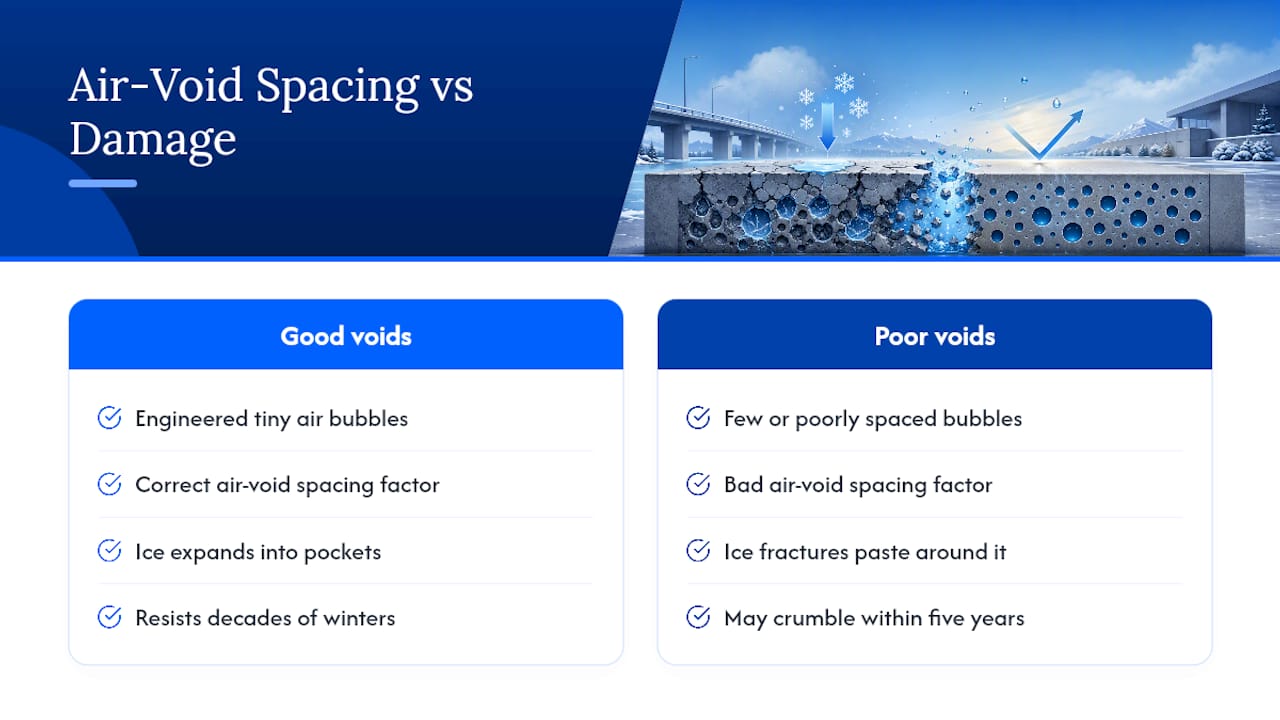
This is where air entrainment earns its keep. Manufacturers mix in tiny air bubbles, engineered to a specific spacing, so expanding ice has microscopic pockets to squeeze into instead of fracturing the paste around it. The air-void spacing factor in hardened concrete is the single biggest factor separating slabs that shrug off decades of winters from ones that crumble in five years.
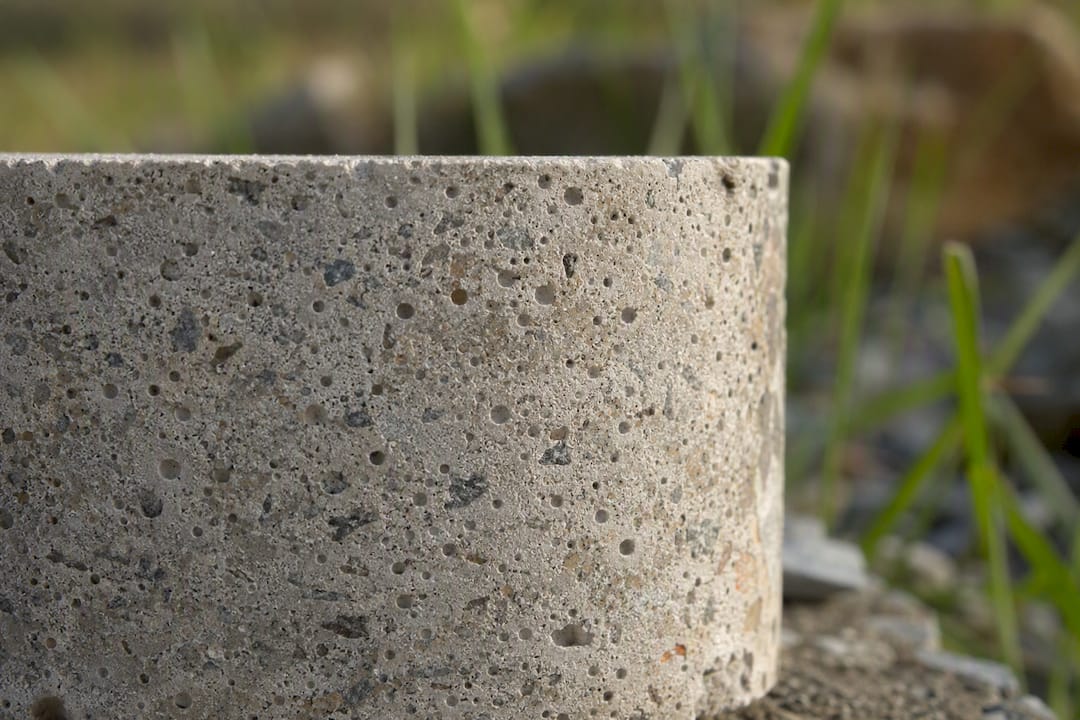
Researchers also point to other forces at work, including hydrostatic pressure, osmotic pressure, and salt crystallization, all interacting inside the pore structure during a freeze thaw cycle. You don’t need to memorize the physics. Just know that saturation plus poor air-void structure is the recipe for trouble.
How Do You Spot Freeze-Thaw Damage Early?
The damage usually announces itself in stages, and catching it early saves money.
- Surface scaling. A thin layer flakes or peels away, often leaving a rough, pitted texture that looks like the top layer got sandblasted.
- Fine, random cracking. Hairline cracks that don’t follow a straight line often mean the paste itself is deteriorating, not just settling.
- Larger structural cracks. Cracks wider than a quarter inch, or ones that run through the full depth of the slab, need closer attention.
- Spalling. Chunks break off and expose the aggregate underneath, sometimes down to rebar.
- Powdering or dusting. The surface crumbles to a chalky residue underfoot, a sign the cement paste has lost its bond.
Do a simple tap test with a hammer handle. A dull, hollow sound usually means the concrete beneath the surface has delaminated. Also check for ponding water after rain, since standing water means poor drainage that keeps the slab saturated longer than it should be.
Pro Tip: Freeze-thaw damage tends to appear gradually across multiple seasons, while finishing or curing defects usually show up within days or weeks of the pour. If a crack pattern showed up before the first real winter, look at the placement and curing process, not the weather.
Why Do Some Slabs Hold Up Better Than Others?
Two driveways poured the same year, in the same neighborhood, can age completely differently, and the difference almost always traces back to the mix design and how the concrete was placed. Air entrainment, a lower water-to-cement ratio, and durable aggregates all reduce the internal pore space where water can collect and freeze.
Supplementary materials like fly ash or silica fume, along with synthetic fibers, can further refine the pore structure and slow crack propagation. But material quality only tells half the story.
Exposure conditions matter just as much. Concrete that sits saturated because of poor drainage, or that gets hit repeatedly with de-icing salts, deteriorates far faster than concrete kept relatively dry. De-icing salts worsen the problem by creating localized crystallization pressure and drawing more moisture into the pore network, on top of the corrosion risk they pose to embedded rebar. Heavy vehicle traffic and shaded microclimates that stay wet longer both add to the load. The uncomfortable truth is that the air-void spacing factor is baked in at the time of the pour. You cannot retrofit it into concrete that’s already hardened.
What Actually Prevents Freeze-Thaw Damage?
Prevention splits into two tracks: what you do before the pour, and what you do to protect concrete that’s already down.
For new concrete:
- Specify air-entraining admixtures and a low water-to-cement ratio in the mix design
- Use aggregates rated for freeze-thaw exposure, not generic fill material
- Cure the slab properly and shield it from freezing temperatures during the early strength-gain window
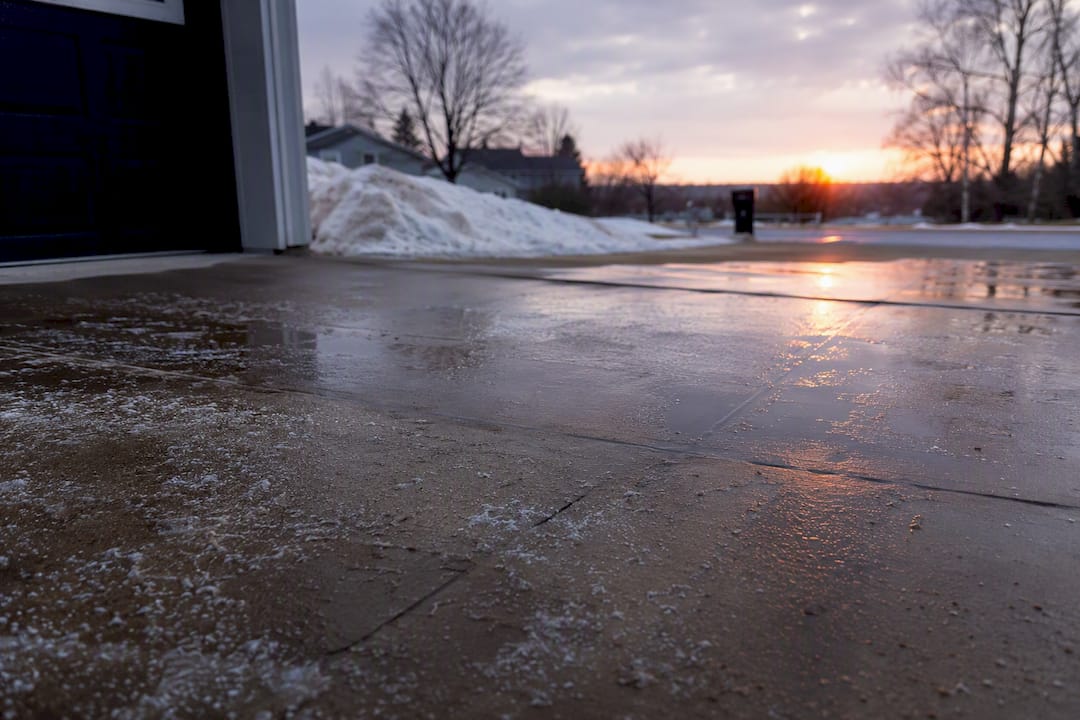
For existing slabs, surface sealants and reduced permeability do a lot of the heavy lifting. Penetrating sealers like silanes and siloxanes soak into the pores and repel water without changing the surface look, which makes them a solid pick for driveways and walkways. Film-forming sealers sit on top and offer more visible protection but can trap moisture if applied incorrectly, so they work better on surfaces with good drainage already. Sealing driveway cracks before winter closes off the easiest entry points for water. Improving grading so water sheds away from the slab, switching to gentler deicers, and rinsing salt residue off regularly all extend the life of whatever sealer you apply.
Pro Tip: Reseal penetrating sealers every two to three years and film-forming coatings more often, depending on foot and vehicle traffic. A homeowner’s guide to sealing outdoor surfaces walks through the tradeoffs between the two types in more detail.
Which Repair Fits Your Level of Concrete Damage?
Match the fix to the severity, not the other way around.
- Minor scaling. Clean the surface thoroughly, remove any loose material, and apply a penetrating sealer or a thin resurfacing compound to restore the wearing layer.
- Moderate cracking or spalling. Remove all unsound concrete down to solid material, then patch with a polymer-modified mortar. Diamond grinding or a full resurfacing overlay can restore a uniform surface across larger damaged areas.
- Severe or structural damage. Cracks that run through the slab, exposed and corroding rebar, or sections that have heaved or shifted call for a structural evaluation. At that point, slab replacement is usually cheaper long-term than repeated patching that won’t hold.
Rust stains from corroding rebar often show up on the surface before the structural crack does, so don’t ignore discoloration around a crack line. For garage floors with interior damage, a coating like epoxy can restore both function and appearance once the underlying surface is properly prepped.
Does Fresh Concrete Freeze Faster Than Old Concrete?
Newly poured concrete is far more vulnerable than cured concrete because it hasn’t built the strength to resist ice expansion yet. Freezing during that early curing window, typically the first several days, can permanently weaken the slab before it ever gets a chance to perform.
Once concrete matures, damage builds gradually through repeated freeze thaw cycles, often over several seasons rather than all at once. If you notice cracks widening or new spalling appearing within a single winter, that’s a red flag worth a professional look rather than a wait-and-see approach.
When Should You Call a Pressure Washing Professional?
A thorough inspection maps the extent of scaling and cracking, checks moisture levels in the slab, and assesses how much de-icing salt residue has built up in the pores. That last part matters more than most property owners realize, since embedded salt keeps drawing in moisture long after winter ends.
This is where professional cleaning fits into the repair process, not after it. Alldaypowerwashing uses commercial-grade equipment to strip salt deposits and contaminants that trap moisture in damaged concrete, which preps the surface properly before any sealant or patch material gets applied.
Call in a pro when you see:
- Spalls larger than a few inches across, or areas with exposed rebar
- Damage that’s visibly worsening from one season to the next
- Large commercial lots or fleet areas where salt buildup is heavy and hard to remove by hand
Key Takeaways
Freeze thaw concrete damage develops when saturated pores freeze, expand, and crack the surrounding material, and the best defense combines air entrainment, drainage, and routine sealant maintenance.
| Point | Details |
|---|---|
| Identify early | Watch for scaling, random hairline cracks, and hollow-sounding spots before they turn into spalling. |
| Air voids are permanent | Air entrainment must happen at the pour; it cannot be added after concrete hardens. |
| Reseal on a schedule | Penetrating sealers typically need reapplication every two to three years depending on traffic. |
| Match repair to severity | Minor scaling needs cleaning and sealing; structural cracks need a professional evaluation. |
| Clean salts regularly | Rinsing de-icing salt residue reduces both freeze-thaw stress and rebar corrosion risk. |
What Most Advice On Freeze-Thaw Damage Gets Wrong
Most guides treat freeze thaw damage like a maintenance checklist you can knock out once and forget. That’s backward. The research is clear that the air-void spacing factor is locked in at the pour and never fixable afterward, which means every recommendation for existing concrete is damage control, not a cure. Property owners waste money chasing surface fixes for problems that started with a bad mix design a decade earlier.
What actually moves the needle is sequencing: clean the salt out first, then seal, then patch, in that order. Skip the cleaning step and you’re sealing contamination into the slab. That’s the piece conventional advice glosses over, and it’s exactly where professional cleaning earns its cost before any sealant or patch touches the surface.
If you take one thing from this, prioritize drainage and salt removal over cosmetic patching. A slab that stays dry and clean will outlast one that gets patched every spring but never stops absorbing water.
— Brandon
Ready to get salt residue and grime off your concrete before winter does more damage? Request a same-week quote from Alldaypowerwashing, serving Colorado Springs and the Denver metro area with fully insured, commercial-grade crews.
Sources
For technical depth, review the FHWA research resources on concrete deterioration, ACI 201.2R-16 on durable concrete, and the SHRP2 overview of concrete deterioration mechanisms.
- FHWA / DOT research resources on concrete deterioration
- 201.2R-16: Guide to Durable Concrete (ACI preview)
- Impact of Freeze–Thaw Cycles on the Long-Term Performance of Concrete Pavement and Related Improvement Measures: A Review
- Freeze–Thaw Durability of Concrete–A Short Review