

How Often to Clean Gutters: A U.S. Homeowner’s Guide
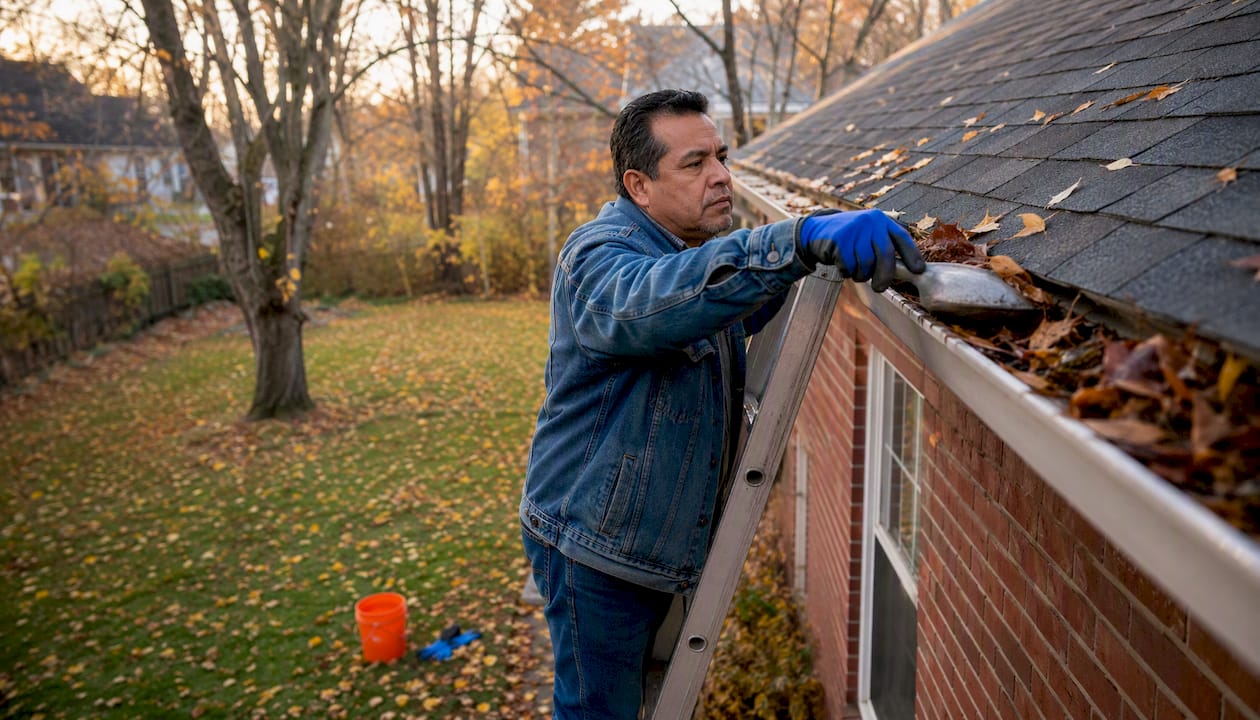
Most U.S. homes need gutter cleaning at least twice a year: once in late spring and once in late fall. That’s the baseline maintenance pros agree on. If you have pine trees nearby, increase the frequency accordingly. Few trees? An annual cleaning is often sufficient. Here’s the quick breakdown:
- Few or no trees: Annual cleaning, plus a check after major storms
- Average suburban lot with mixed deciduous trees: Spring and late fall (twice yearly)
- Oak-heavy or heavily canopied yard: At minimum twice yearly, often more
- Pine trees nearby: Quarterly, because pine needles fall year-round and mat into a layer water can’t pass through
Alldaypowerwashing serves homeowners and commercial properties across Colorado Springs and the Denver metro with professional gutter cleaning backed by commercial-grade equipment, full insurance, and a satisfaction guarantee.
Table of Contents
- What factors change how often you should clean gutters?
- Signs your gutters need cleaning right now
- Gutter cleaning schedules for common property situations
- DIY or hire a pro? How to decide
- What a professional gutter cleaning visit includes
- Questions to ask before hiring a gutter cleaning company
- How to reduce how often you need gutter cleaning
- Your gutter maintenance checklist and schedule templates
- Key Takeaways
- Why the “twice a year” rule is right, but the timing is what actually matters
- Alldaypowerwashing handles gutter cleaning in Colorado Springs and Denver
What factors change how often you should clean gutters?
The twice-yearly baseline assumes a typical suburban lot. Several factors can increase cleaning frequency.
Tree species and proximity matter most. Pine trees shed needles continuously, not just in fall, so gutters under a pine canopy can clog within weeks. Oak trees drop large, heavy leaves in concentrated bursts that compact quickly. Either situation calls for more frequent service than a standard deciduous mix.
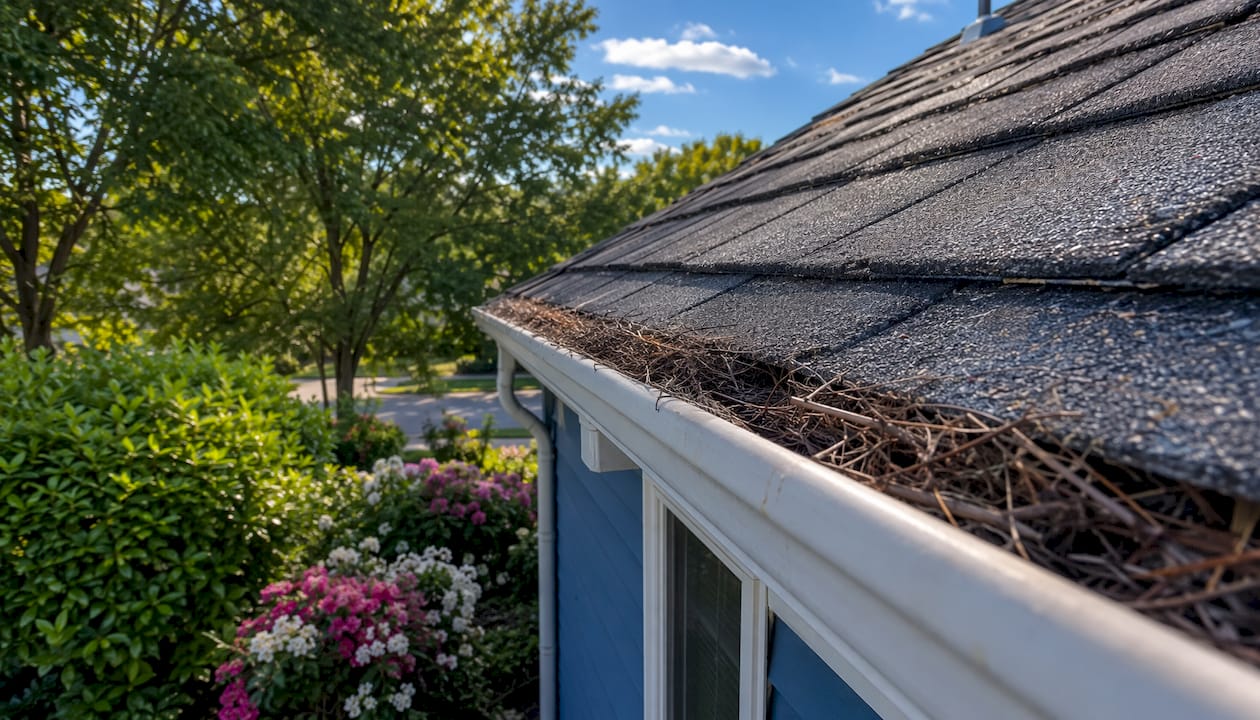
Local climate and storm frequency also shift the schedule. Storm-prone or high-rainfall regions often need quarterly inspections or post-storm checks. In Colorado, late-spring hailstorms and monsoon-season downpours can push debris into gutters faster than a twice-yearly schedule handles.
Roof and gutter design adds another variable. Older or large homes with complex rooflines, multiple valleys, or seamed gutters accumulate debris in low spots that standard cleaning intervals miss. The more valleys and angles your roof has, the more debris funnels into a few concentrated spots.
Gutter guards help but don’t eliminate maintenance. Micromesh systems can extend cleaning intervals to 1–2 years, but the guard surface still collects debris and needs periodic brushing.
Pro Tip: Don’t schedule fall cleaning by the calendar. Watch your trees. Once roughly 80% of leaves have dropped, and before your first hard freeze, that’s your window. In Denver and Colorado Springs, that often means late October into early November.
Signs your gutters need cleaning right now
Some situations don’t wait for a scheduled visit. Watch for these:
- Water spilling over the sides during rain, even light rain
- Sagging or sections pulling away from the fascia
- Plants or grass sprouting from the trough
- Staining streaks on siding or paint peeling near the roofline
- Standing water visible inside the channel after dry weather
Overflow, sagging, and plant growth are signs damage is already happening, not just building. Gutter cleaning is a structural protection task. Water backing up behind the fascia leads to rot, mold, and foundation leaks that cost far more than a routine cleaning. If you spot any of these signs after a storm, schedule service before the next rain event. You can also check out signs you need a house cleaner for a broader look at visible maintenance red flags around your home.
Gutter cleaning schedules for common property situations
| Property situation | Recommended frequency | Best timing |
|---|---|---|
| Few or no mature trees | Once a year + post-storm checks | Late fall, after leaf drop |
| Typical suburban lot, mixed deciduous | Twice yearly | Late spring (April–May); late fall (Oct–Nov) |
| Oak-heavy yard | Twice yearly, minimum | After peak leaf drop in fall; spring for seed pods |
| Pine trees nearby | Quarterly | March, June, September, December (adjust for local freeze) |
| Large or complex roof, older seamed gutters | Quarterly | Spring, midsummer check, fall, pre-freeze |
| Storm-prone or high-rainfall region | Quarterly + after major storms | Post-storm visual check promptly |
| Gutter guards installed | Inspect yearly, full clean every 1–2 years | Fall inspection; clean when surface debris visible |
Timing a late-fall cleaning after most leaves have dropped but before the first hard freeze is the single most protective thing you can do for your gutters. Clean too early and the rest of the leaves refill the channel. Wait too long and you’re dealing with frozen debris mats.
Regional nuance matters here. In Denver’s Ponderosa pine zones, spring cleaning should happen earlier to clear winter needle accumulation before heavy spring rains hit. The local first-hard-freeze date is your non-negotiable deadline for fall service, not a fixed calendar date.
DIY or hire a pro? How to decide
For a single-story home with easy ladder access and no structural concerns, DIY cleaning is reasonable. A gutter scoop, garden hose, and a stable ladder cover the basics. But several situations call for a professional crew:
- Two-story or taller homes: Ladder height and roof pitch create real fall risk
- Ice or snow present: Never clean gutters on a frozen roof
- Visible structural damage: Sagging hangers, cracked seams, or active leaks need professional assessment
- Clogged downspouts you can’t reach: Forcing a clog from the wrong end can damage the downspout connection
- Post-storm debris loads: A crew can assess and clear faster and more safely than a solo DIY effort
Professionals use low-pressure gutter attachments and commercial vacuums rather than high-pressure nozzles aimed directly at the gutter material. High pressure on seamed gutters strips coatings and blows out joints. That’s a repair bill, not a cleaning. For a deeper look at why pressure matters, the low-pressure house washing guide from Alldaypowerwashing explains the technique.
What a professional gutter cleaning visit includes
A thorough professional visit covers more than scooping leaves. Here’s what to expect:
- Debris removal from all gutter channels and downspout openings
- Flush test of downspouts to confirm clear flow
- Visual inspection of hangers, seams, and end caps
- Check for low spots where water pools
- Minor repair recommendations noted in writing
- Before-and-after photos documenting the job
Equipment matters. Crews should use low-pressure attachments or commercial vacuums, not standard pressure-washing wands aimed at the gutter itself. Seams and hanger connections are the first things to fail under high pressure.
Pro Tip: Ask for a written report of any structural concerns and a photo of problem spots. That documentation lets you track whether a small issue is getting worse between visits, and it protects you if a contractor later claims damage they didn’t cause.
Trust signals worth confirming before you book: full insurance, a satisfaction guarantee, same-week quote availability, crew-based teams (not solo subcontractors), and photo documentation as standard practice. Alldaypowerwashing includes all of these as part of their service offering.
Questions to ask before hiring a gutter cleaning company
Don’t hand over the job without a quick vetting check. Ask these directly:
- Are you fully insured, and can you provide proof?
- Do you provide before-and-after photos of the work?
- Do you use low-pressure or gutter-specific attachments (not standard high-pressure nozzles)?
- What exactly is included in the quoted price?
- Do you offer a satisfaction guarantee?
Red flags: no insurance, vague scope with no written estimate, insistence on high-pressure blasting of the gutter channel, refusal to provide references or photos, and no clear timeline for the work.
For post-storm calls, same-week quote availability matters. Water damage moves fast. A company that can’t respond within a few days after a major storm isn’t the right fit for urgent situations.
How to reduce how often you need gutter cleaning
A few upgrades genuinely extend the interval between full cleanings.
Gutter guards: Micromesh systems are the most effective option. They can stretch cleaning intervals to 1–2 years, but the guard surface still needs annual brushing to clear fine debris and pollen. They don’t eliminate maintenance; they reduce it.
Tree trimming: Cutting back branches that overhang the roofline by more than a few feet directly reduces debris load. This is especially effective for pine trees, where proximity is the primary driver of quarterly cleaning needs.
Downspout improvements: Add extensions or splash blocks to move water at least four feet from the foundation. Proper pitch in the gutter channel (roughly a quarter inch of slope per ten feet toward the downspout) prevents standing water that accelerates corrosion.
Pro Tip: Pair any preventive upgrade with an annual professional inspection. Guards and trimming reduce frequency, but they don’t catch loose hangers, developing low spots, or early seam failures. A trained eye once a year costs far less than a repair.
For a broader look at seasonal home maintenance timing, seasonal home cleaning tasks offers a useful companion checklist.
Your gutter maintenance checklist and schedule templates
Before every cleaning (safety and inspection check):
- Stable ladder on level ground, or hire a pro for two-story+ homes
- Check for visible sagging, detached sections, or standing water
- Note any staining on siding or fascia
- Confirm downspout extensions are in place
After every cleaning:
- Flush downspouts with a hose and confirm water exits freely at the base
- Check that gutters drain toward downspouts with no standing water
- Photograph any problem spots for your records
| Schedule template | Timing | Trigger for earlier service |
|---|---|---|
| Annual | Late fall, after leaf drop | Storm damage, overflow, visible plants |
| Biannual | Late spring (April–May) + late fall (Oct–Nov) | Heavy leaf drop, post-storm overflow |
| Quarterly | March, June, September, December | Pine needle matting, storm debris, visible clog |
| Post-storm check | Soon after a major storm | Always; assess before next rain event |
Key Takeaways
Clean gutters at least twice a year, increase frequency to quarterly for pine-heavy or storm-prone properties, and always complete the late-fall cleaning after 80% leaf drop and before the first hard freeze.
| Point | Details |
|---|---|
| Baseline frequency | Twice yearly (spring and late fall) covers most U.S. homes. |
| Pine trees change everything | Quarterly cleaning prevents needle matting that blocks flow entirely. |
| Fall timing is non-negotiable | Clean after ~80% leaf drop but before first hard freeze to prevent ice dams. |
| Hire a pro for height or damage | Two-story homes, structural damage, or post-storm loads call for insured professional crews. |
| Alldaypowerwashing | Fully insured, commercial-grade gutter cleaning in Colorado Springs and Denver with same-week quotes and a satisfaction guarantee. |
Why the “twice a year” rule is right, but the timing is what actually matters
Most homeowners who follow a twice-yearly schedule still end up with ice dams or fascia rot. The schedule isn’t wrong. The timing is. Cleaning gutters in early October because it feels like fall is the mistake. If your trees still have 40% of their leaves on, you’ve cleaned too early and the gutters will refill before the first freeze.
The real rule is phenology-based, not calendar-based. Watch the trees. When they’re roughly 80% bare, that’s the window. In Colorado Springs and the Denver metro, that window often falls in late October to early November, depending on elevation and the specific tree species on your block. A cleaning done at the right moment, even if it’s only once a year, protects better than two cleanings timed poorly.
The other thing most guides understate: the spring cleaning matters more than people think. Seed pods, blossoms, and winter debris compact differently than fall leaves. They’re denser and harder to flush. Skipping spring cleaning and relying on fall alone leaves that compacted layer sitting through summer heat, which accelerates corrosion in aluminum gutters.
Alldaypowerwashing handles gutter cleaning in Colorado Springs and Denver
Dirty, clogged gutters are a structural problem, not just an eyesore. Alldaypowerwashing brings commercial-grade equipment and trained crews to residential and commercial properties across Denver and the Colorado Springs area, handling gutter cleaning with low-pressure gutter-specific attachments that clear debris without damaging seams or coatings.

Every job comes with before-and-after photo documentation, a written estimate, and a satisfaction guarantee. Crews are fully insured, and same-week quotes are available for post-storm calls when waiting isn’t an option. Whether you’re on a twice-yearly schedule or need a one-time clearing after a heavy storm, request a quote and get a same-week response from a local crew that shows up with the right equipment.
Recommended
- Low Pressure House Washing: A Safe Guide for Homeowners — All Day Power Washing
- Pressure Washing a Stucco House: Colorado’s Safe Guide — All Day Power Washing
- House Pressure Washing Prices in Colorado: 2026 Guide — All Day Power Washing
- How to Remove Rust Stains from Your Concrete Driveway — All Day Power Washing