

Inspection Ready Commercial Kitchen Schedule With Two Level Sign Off
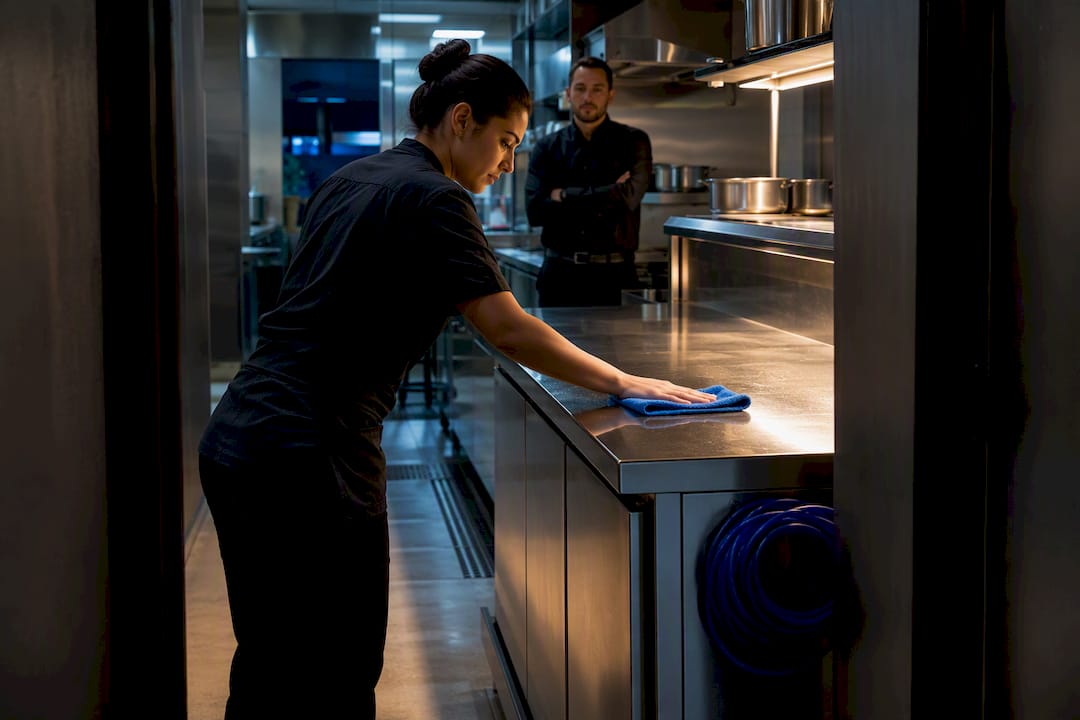
A commercial kitchen cleaning schedule is a written matrix that lists every task, the area it covers, how often it happens, the method or chemical used, who owns it, and who signs off. Build one around three frequencies, daily, weekly, and monthly, plus scheduled professional services like hood cleaning. Start today by walking your kitchen, listing every surface and piece of equipment, assigning a name to each task, and opening a signed daily log.
TL;DR:
- Regularly removing and soaking hood filters weekly prevents fire hazards and health violations, especially in high-volume kitchens.
- Implementing a sign-off system with staff initials and manager signatures ensures accountability and helps pass inspection checks.
- Monthly deep cleaning of walk-in coolers and ductwork by professionals is essential to prevent grease buildup and maintain safety.
- Using test strips for sanitizer concentration verification is critical, as improper dilution can contribute significantly to foodborne illness outbreaks.
- Outsourcing exterior grease removal from dumpsters and rooftops helps reduce pest issues and prevents costly citations.
Table of Contents
- What Goes on a Daily Back-of-House Cleaning Schedule?
- What Should Front-of-House Cleaning Cover Each Week?
- How Do You Make a Cleaning Schedule Actually Get Followed?
- How Do You Verify Sanitizer Concentration Is Correct?
- How Often Should Hood and Exhaust Systems Be Cleaned?
- What Deep-Clean Tasks Need Extra Staff or a Contractor?
- How Do You Build a Printable Cleaning Schedule Template?
- When Should You Bring in Professional Cleaners for Hood and Exterior Grease?
- What Actually Makes a Cleaning Program Inspection-Ready
- Professional Hood Degreasing and Exterior Cleaning Support
- Sources
- FAQ
What Goes on a Daily Back-of-House Cleaning Schedule?
The back-of-house cleaning checklist is where most health code violations actually happen, not the dining room. A grease-crusted hood filter or a warm walk-in gasket will fail an inspection faster than a dusty light fixture ever will.
Daily tasks need to happen during service and again at close:
- Sanitize prep surfaces and cutting stations between tasks, not just at the end of the shift
- Rotate and sanitize cutting boards by food type to stop cross-contamination
- Wipe down equipment exteriors, including range hoods, fryers, and reach-in handles
- Empty and clean grease catches before they overflow into drains
- Sweep and mop all back-of-house floors, with extra attention under mats and near drains
- Scrub floor drains to prevent buildup that causes odor and slow drainage
Performance Foodservice’s opening and closing checklists list the same sequence most operators actually follow: power up equipment, verify holding temperatures, then clean and sanitize the line coolers before service starts and again at close, based on its BOH restart checklist. That opening and closing rhythm is worth copying directly into your own daily duties.
Weekly tasks dig deeper than a wipe-down:
- Deep-clean oven interiors, racks, and door seals
- Remove and soak hood filters in degreaser, not just wipe the surface
- Sanitize the ice machine exterior and bin
- Clean refrigeration interiors and inspect door gaskets for mold or wear
Monthly tasks cover what daily and weekly cleaning can’t reach:
- Deep clean the entire walk-in cooler, floor to ceiling, including shelving
- Move and clean behind and underneath heavy equipment
- Inspect and, if needed, pump the grease trap
- Confirm whether professional hood or duct service is due
Spread weekly tasks across your slowest days instead of stacking them all on one person’s shift. A single line cook shouldn’t be soaking filters, deep cleaning the walk-in, and scrubbing the fryer station on the same Tuesday, because the deep clean tasks will get rushed or skipped, according to guidance from ChefStore’s scheduling guide.
What Should Front-of-House Cleaning Cover Each Week?
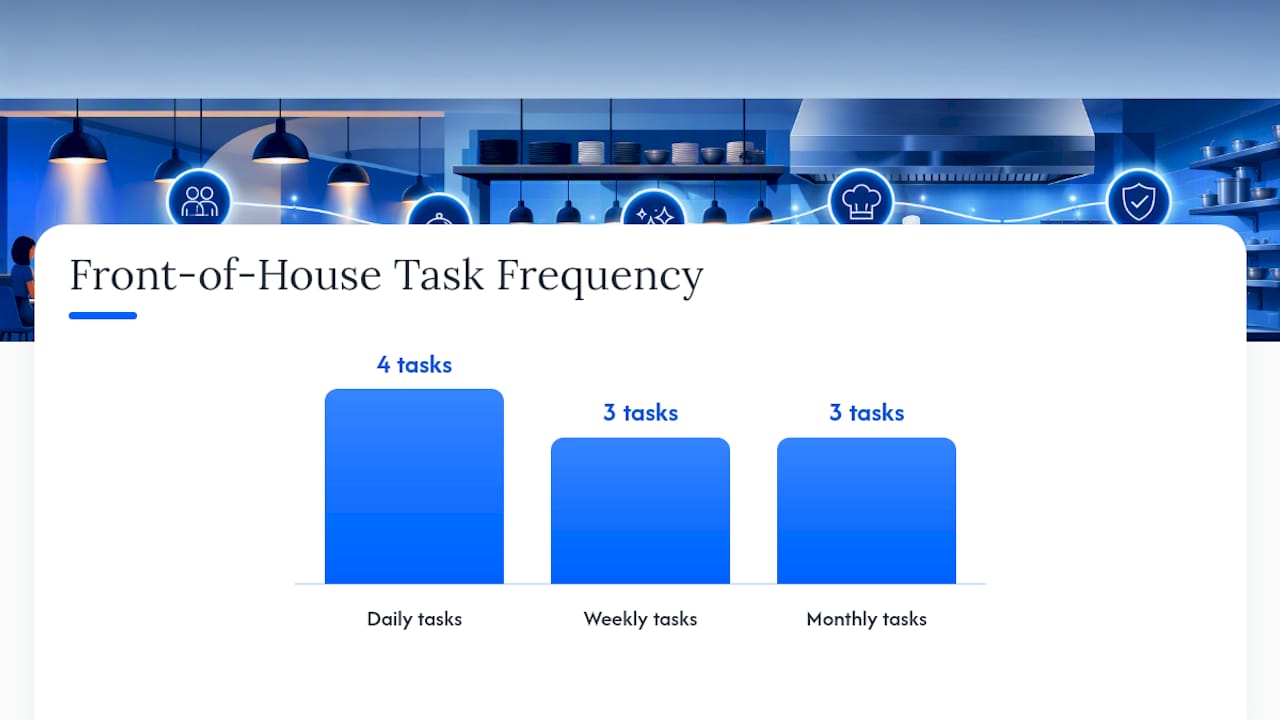
Guests judge your kitchen’s hygiene by what they can see, and health inspectors judge the front-of-house area just as strictly as the line. A kitchen sanitation checklist that only covers the back of the house misses half of what actually gets flagged.
Daily front-of-house duties:
- Sanitize tabletops, high chairs, and condiment stations between every seating
- Wipe down POS terminals, door handles, and other high-touch surfaces multiple times a shift
- Clean and restock restrooms, checking hourly during peak service
- Spot-clean floors and entryway glass throughout the shift
Weekly front-of-house tasks:
- Deep-clean floors with a machine scrubber, not just a mop
- Shampoo or spot-treat upholstered booths and chairs
- Vacuum and spot-treat carpets near entrances and vents
Monthly front-of-house tasks:
- Dust and wipe down light fixtures and signage
- Run seasonal deep cleans on windows, blinds, and decor
- Deep-sanitize restrooms, including grout, fixtures, and vents
How Do You Make a Cleaning Schedule Actually Get Followed?
A schedule only works if someone owns each line item and someone else checks it. Without that structure, tasks quietly become “someone else’s job,” and that is exactly how a hood filter goes three weeks without a soak.
- Name an owner for every task. Not “kitchen staff,” but a specific role or person assigned to that line for that shift.
- Require a two-level sign-off. The person who does the task initials it; a manager reviews and signs the sheet before close, a workflow Foodsafety recommends specifically to cut down on tasks getting marked done without actually happening.
- Store every signed sheet. Keep a binder or digital folder with at least 90 days of logs on hand for surprise inspections.
- Audit weekly. A manager should spot-check completed tasks against the log at least once a week, not just sign off on trust.
Pro Tip: Keep your daily log fields simple: date, task, time completed, staff initials, manager signature, and a notes column for anything unusual. Complicated forms get abandoned by week three.
How Do You Verify Sanitizer Concentration Is Correct?
Cleaning and sanitizing are two separate steps, and skipping straight to sanitizer without cleaning first leaves food residue that blocks the chemical from working. Clean first to remove visible debris, then sanitize to kill what’s left, and give the sanitizer its full contact time. Wiping it off early defeats the purpose.
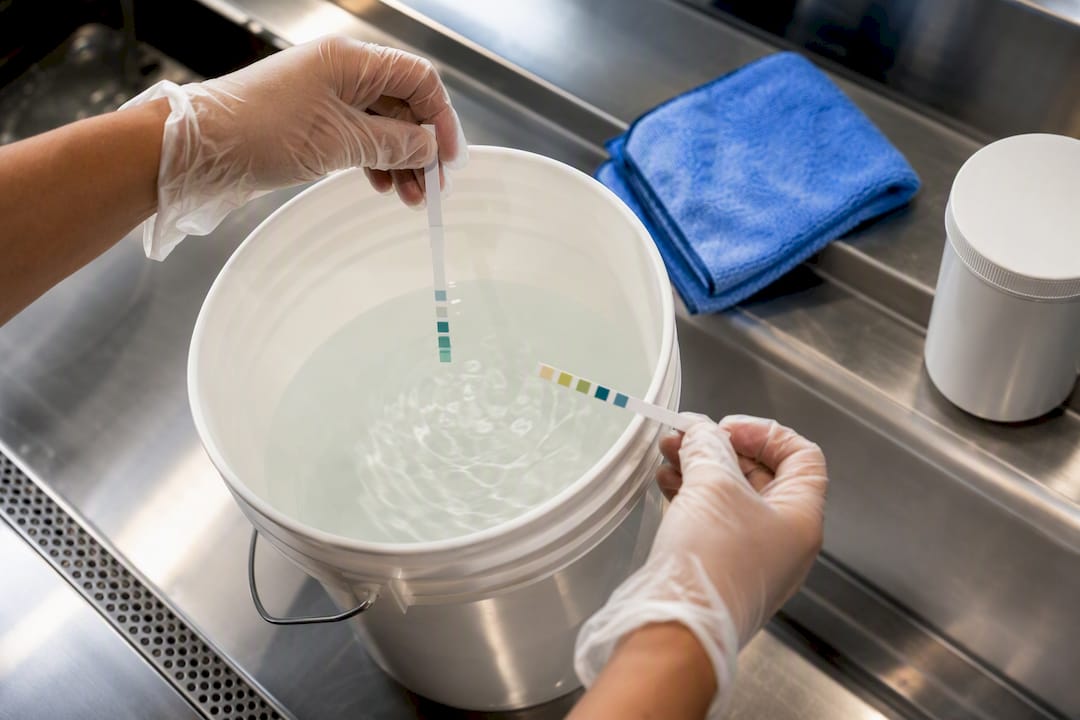
Most kitchens use either chlorine-based or quaternary ammonium sanitizers, and each has a different effective concentration range and contact time. You cannot eyeball this. Test strips are the only reliable way to confirm concentration, and they should be checked every time you mix a new batch.
- Label every secondary spray bottle with the chemical name, never leave one unmarked
- Keep Safety Data Sheets accessible in the kitchen, not locked in an office
- Never mix chemicals, especially bleach and ammonia-based cleaners
- Store all chemicals away from food, prep surfaces, and single-service items
Foodborne illness sickens an estimated 48 million people in the U.S. every year, and improperly diluted sanitizer is one of the quieter contributors to that number. For concentration and contact-time specifics, follow the manufacturer’s label first, then cross-check against your state’s food code and the EPA’s list of registered disinfectants to confirm the product is approved for your application.
How Often Should Hood and Exhaust Systems Be Cleaned?
Grease buildup in a hood system is a fire hazard first and a health code violation second. Your in-house crew handles the surface-level work; a licensed contractor handles what’s inside the ductwork.
- Remove and soak hood filters weekly, or biweekly in lower-volume kitchens
- Wipe down the canopy surface after any unusually heavy fry or grill service
- Watch for excess smoke, persistent burnt odors, or visible grease pooling in duct seams, all signs that demand an immediate call to a professional, not a wait-and-see approach
Professional hood and duct cleaning frequency depends on your cooking volume and grease load, and a contractor should leave you with a dated service certificate and a recommended next-service date. That paperwork belongs in your monthly matrix right next to the task it replaces, not filed away separately where it gets forgotten before the next inspection. Our own breakdown of what an ASR file needs for a hood inspection covers exactly what documentation inspectors expect to see.
Pro Tip: Photograph the inside of your hood filters before and after each professional service. If a fire marshal ever questions your maintenance history, dated photos back up the paperwork instantly.
What Deep-Clean Tasks Need Extra Staff or a Contractor?
Some tasks are too disruptive or too specialized for a single closer to handle alone. These get scheduled, not squeezed in.
- Ice machine deep sanitize (monthly): typically needs two people and 60 to 90 minutes, since the bin and dispensing lines both need disassembly.
- Condenser coil cleaning (monthly or quarterly): often contracted out, especially in kitchens without an HVAC-trained staffer.
- Full walk-in cooler clean (monthly): schedule during your lowest-delivery day so shelving can sit empty long enough to actually dry.
- Water heater and equipment descaling: hard water accelerates scale buildup, so kitchens in hard-water regions should shorten this cadence and keep vendor service reports on file.
After any deep clean, confirm equipment powers back on correctly, holding temperatures are within range, and there’s no leftover residue before returning it to service.
How Do You Build a Printable Cleaning Schedule Template?
A usable template needs the same eight columns whether you build it in a spreadsheet or print it on a clipboard sheet: Task | Area/Equipment | Frequency | Method/Chemical | Owner | Initials | Manager Sign-Off | Notes.
Small teams should bundle related tasks under one shift owner instead of assigning ten separate names. Larger kitchens benefit from rotating ownership weekly so no single person burns out on the same deep-clean task every cycle. Either way, log contractor service dates and certificate numbers directly in the Notes column of the matrix, not in a separate binder that gets checked less often.
| Format | Best for | Tradeoff |
|---|---|---|
| Printable PDF | Small teams, paper-based kitchens | Easy to post, harder to search past records |
| Spreadsheet | Multi-location or larger operations | Searchable history, needs someone to maintain it |
| Digital checklist app | Teams already using mobile devices | Fastest sign-off, requires reliable Wi-Fi |
A template like the one from TrainedTeam’s kitchen cleaning schedule follows this same structure and is worth using as a starting matrix before you customize it to your own equipment list.
When Should You Bring in Professional Cleaners for Hood and Exterior Grease?
In-house crews handle filters and surfaces. They rarely handle rooftop grease containment, deep duct interiors, or exterior grease that’s tracked onto concrete near dumpster pads and loading docks. That’s contractor territory.
- Expect a signed service certificate, before-and-after photos, and a documented scope of work
- Ask for a recommended next-service date, and log it directly into your monthly matrix
- Exterior grease removal from dumpster pads and loading areas cuts down on pests and slip hazards that indoor cleaning can’t touch
- Rooftop grease containment prevents runoff issues that show up as a surprise citation
Our guides on rooftop grease containment and removing grease from concrete walk through exactly what these services fix and why they matter to your total cleaning load.
What Actually Makes a Cleaning Program Inspection-Ready
Named ownership changes behavior in a way generic reminders never do. When a task has one person’s initials attached to it and a manager’s signature on top, misses drop off almost immediately, not because staff suddenly care more, but because accountability has a name attached now.
Run a real audit monthly, not just after a bad inspection. And when something does go wrong, a spill, a pest sighting, a failed filter check, update the schedule that week. A schedule that never changes after an incident isn’t really being managed.
— Brandon
Professional Hood Degreasing and Exterior Cleaning Support
Your written schedule handles the daily grind. These services require commercial-grade equipment and a crew that shows up on the scheduled date, not a subcontractor juggling multiple job sites.

Professional services are available for kitchen hood degreasing under NFPA-96 guidelines, dumpster pad and loading area cleaning, and exterior grease removal from concrete in the Colorado Springs and Denver metro area. Service visits typically include a certificate, before-and-after photos, and a scope of work that can be added to your monthly log for inspections. That paperwork is what separates a documented maintenance history from a manager’s word during a walkthrough.
If your hood filters are overdue for a professional soak or your loading dock has grease tracked into the concrete, request a quote for pressure washing in Denver and get a service date on the calendar this week.
Sources
- CDC — Food Safety Data & Statistics
- FDA — State retail and food service codes and regulations
- EPA — List N: Disinfectants for use against SARS-CoV-2
FAQ
How Often Should a Commercial Kitchen Cleaning Schedule Be Updated?
Review it monthly and revise it immediately after any incident, failed inspection, or menu change that adds new equipment or ingredients.
What’s the Difference Between Cleaning and Sanitizing?
Cleaning removes visible dirt and food residue; sanitizing kills remaining pathogens, and skipping the cleaning step first makes sanitizer far less effective.
How Often Should Hood Filters Be Cleaned?
Most kitchens should remove and soak filters weekly, with biweekly service acceptable for lower-volume operations, while ductwork itself needs a licensed professional on a cadence tied to grease load.
Who Should Sign Off on Daily Cleaning Logs?
The staff member who performed the task should initial it, and a manager should verify and sign the same sheet before the kitchen closes, a two-level check that cuts down on missed tasks.
Can Alldaypowerwashing Help With Kitchen Exterior Cleaning?
Yes. Alldaypowerwashing services dumpster pads, loading areas, and exterior grease removal around Colorado Springs and Denver, and provides a service certificate and photos for your maintenance records.