
How to Remove Grease From Concrete Without Ruining It
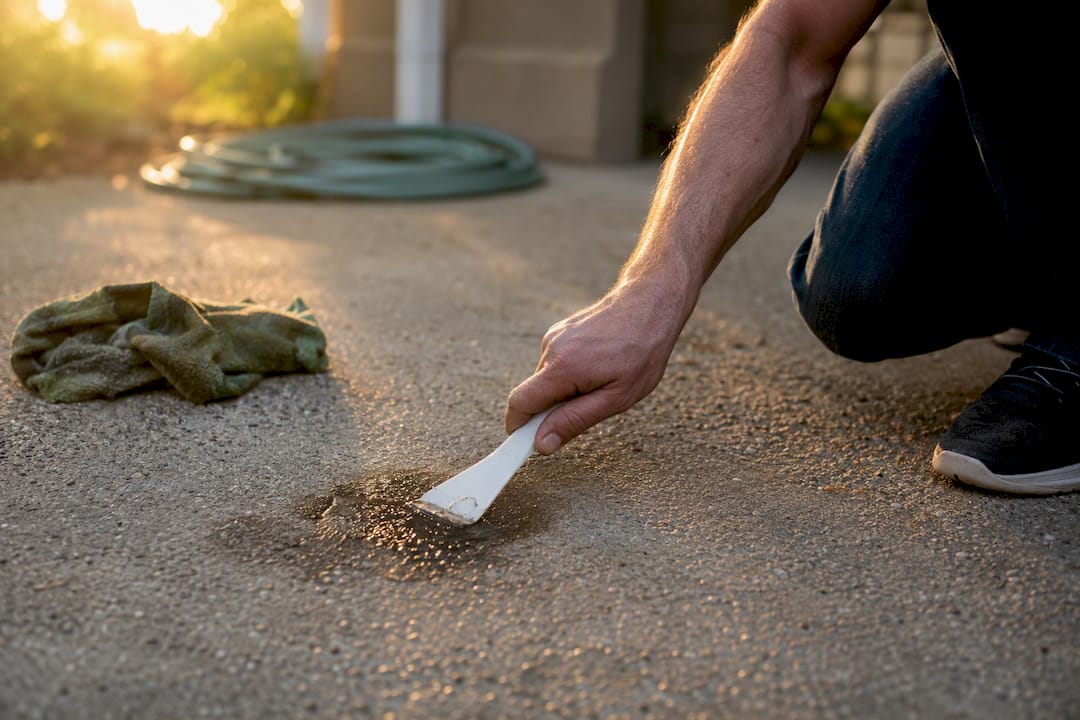
For fresh grease, blot it dry, then work in dish soap and hot water before it sets. For a stain that’s already soaked in, follow a two-stage approach: loosen the grease with a concrete-safe alkaline degreaser or solvent, then pull it out with an absorbent or poultice. If it’s a large area, a hazardous product, or a stain that keeps winning after three tries, that’s your signal to call a pro.
TL;DR:
- Fresh grease stains should be blotted and work in dish soap within five minutes to prevent deep pore absorption.
- For older stains, a staged approach using alkaline degreasers or solvents with absorbent poultices yields better results than single methods.
- Commercial-grade degreasers, proper safety gear, and patience are essential for stubborn or deeply set-in grease, often requiring multiple treatments.
- DIY removal becomes less effective on large or persistent stains, making professional cleaning with equipment and chemicals more efficient and less risky.
- Sealing concrete with penetrating sealers helps prevent future grease absorption, but regular quick cleanup of new drips is still crucial.
Table of Contents
- How Do You Get Fresh Grease Off Concrete Fast?
- Stronger DIY Fixes for Older or Set-In Grease Stains
- The Poultice Method for Ghost Stains That Won’t Quit
- What Tools and Supplies Do You Actually Need?
- What’s the Right Order of Operations for Any Grease Stain?
- Staying Safe: PPE, Runoff, and Disposal Rules
- When Should You Call in a Professional Instead?
- Keep Grease From Coming Back: Sealing and Simple Maintenance
- A Cleaning Pro’s Honest Take on DIY Grease Removal
- Ready for a Professional Concrete Clean?
- Sources
How Do You Get Fresh Grease Off Concrete Fast?
The first five minutes matter more than any product you’ll buy later. Concrete is porous, so every second grease sits on the surface is time it spends soaking deeper into the pores where it’s much harder to reach.
Start by scraping off any solid grease with a plastic putty knife or the edge of a dustpan. Then blot, never rub, any liquid with paper towels or rags. Rubbing just spreads the oil across more surface area and pushes it into pores you hadn’t contaminated yet.
For small, fresh spots, plain clay cat litter or baking soda makes a surprisingly effective absorbent. Pour it directly on the stain, let it sit for 15 to 20 minutes to pull up surface oil, then sweep it away.
From there, move to soap:
- Sprinkle dish soap or powdered laundry detergent directly onto the damp stain.
- Let it sit for 15 to 30 minutes so it has time to break down the oil.
- Scrub with a stiff nylon brush, working in small circles rather than long strokes.
- Rinse with the hottest water your hose can deliver.
A pressure washer can help rinse the loosened residue away faster, but keep it under 3,000 psi on concrete driveways and garage floors. Anything higher, especially with a narrow nozzle held too close, can etch or pit the surface, and pressure alone won’t touch oil that has already soaked below the surface. Think of pressure washing as a rinse step, not a removal method.
Stronger DIY Fixes for Older or Set-In Grease Stains
Once grease has had days or weeks to work into the concrete, dish soap won’t cut it. You need something that either breaks the oil down chemically or physically drags it back out.
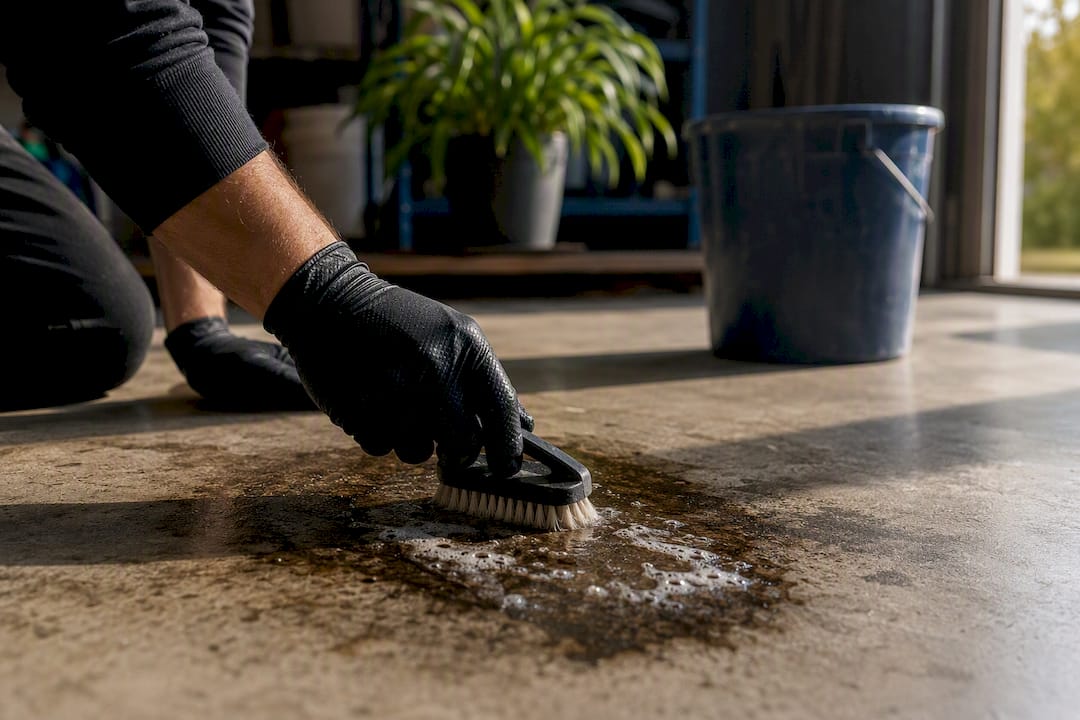
Alkaline, concrete-safe degreasers work through a process called saponification, essentially turning the fat molecules in grease into water-soluble soap. This is the same chemistry your grandmother used with lye soap, just formulated to be gentler on masonry. The catch is dwell time: these products need to sit, often 10 to 20 minutes depending on the brand, to fully penetrate the concrete’s pores before you agitate and rinse. Rushing this step is the number one reason DIY degreasing fails.
Solvent-based products like engine degreaser or adhesive remover work differently. They dissolve petroleum-based oils rather than saponifying them, which makes them better suited to motor oil and heavy machinery grease than to cooking fats. They also come with real safety caveats: strong fumes, flammability, and the risk of driving contaminants deeper if you don’t extract them properly afterward.
A staged approach—loosen first, then extract—consistently outperforms single-method attempts. Professionals tend to reach for saponifying degreasers on food and biological grease, and solvent-plus-absorbent combos on petroleum stains.
Here’s the solvent and absorbent workflow that professionals actually use:
- Pour solvent directly over the stain and work it in with a brush so it reaches the pores.
- Let it dwell 10 minutes for a fresh spot, up to 30 minutes for something set in.
- Cover the area with a 1/4 to 1/2 inch layer of clay absorbent.
- Leave it overnight so the absorbent can wick the oil upward.
- Sweep away the spent absorbent, inspect the stain, and repeat if a shadow remains.
Never substitute gasoline or another volatile fuel for a proper solvent, and never run this process in an enclosed garage without the door open and a fan running. The fumes build up faster than you’d expect in a space that size.
The Poultice Method for Ghost Stains That Won’t Quit
Some stains sit deep enough that surface cleaning just moves them around instead of removing them. That’s when you need a poultice, an absorbent paste that draws oil out of the concrete through capillary action rather than chemical breakdown.
The paste itself can be as simple as powdered clay or diatomaceous earth mixed with a solvent or mineral spirits until it reaches a pancake-batter consistency. You can mix your own, but pre-mixed commercial poultices tend to be easier for most homeowners to get right on the first try, since getting the ratio wrong at home is a common failure point.
- Spread the paste 1/4 to 1/2 inch thick directly over the stain, extending an inch or two past its visible edges.
- Cover it completely with plastic sheeting and tape down the edges.
- Leave it undisturbed for 24 to 72 hours, checking the label for the manufacturer’s specific window.
- Remove the dried poultice with a plastic scraper and rinse the area with clean water.
Check the result once the concrete dries fully, wet concrete can hide a lingering shadow. If a faint stain remains, a second poultice cycle usually finishes the job.
Pro Tip: Old, “ghost” stains that have been there for years sometimes need two or three poultice cycles. Don’t judge failure after just one round.
What Tools and Supplies Do You Actually Need?
You don’t need a garage full of specialty chemicals. A focused kit covers almost every grease situation you’ll run into.
For cleaners, keep three categories on hand: an alkaline, concrete-safe degreaser for organic and cooking grease, a solvent-based degreaser for motor oil and heavier petroleum stains, and an enzymatic or citrus cleaner for lighter, everyday soiling where you’d rather skip harsh chemicals.
For absorbents, plain clay cat litter is the budget option and works nearly as well as branded absorbents for most residential stains, at a fraction of the cost. Commercial oil absorbent granules cost more but tend to have a finer texture that wicks oil slightly faster.
- A stiff nylon or horsehair brush for scrubbing without scratching the surface.
- A push broom for spreading and sweeping absorbents over larger areas.
- A hand trowel for scraping off dried poultice without gouging the concrete.
- A pressure washer capable of 400 to 2,000 psi for the rinse stage, adjusted to the surface.
PPE isn’t optional once you’re working with solvents: nitrile gloves, eye protection, closed-toe boots, and a respirator rated for organic vapors if you’re indoors or in a garage. A concrete-specific alkaline degreaser will also outperform dish soap on anything past the “fresh spill” stage, so don’t be afraid to spend the extra few dollars on the right product.
What’s the Right Order of Operations for Any Grease Stain?
Most homeowners waste time by jumping straight to the strongest product they own. A quick assessment first saves you money and a ruined afternoon.
Before you touch a bottle, check four things: how old the stain is, how large it is, how porous or sealed the concrete looks, and whether there’s a storm drain or landscaping nearby that runoff could reach. Those answers decide your method.
- Fresh spill (minutes to a day old): dish soap, hot water, and a stiff brush.
- Older stain (days to weeks): an alkaline degreaser with a full dwell time, then a hot rinse.
- Stubborn or set-in stain (weeks to years): solvent plus clay absorbent overnight, escalating to a poultice if a shadow remains.
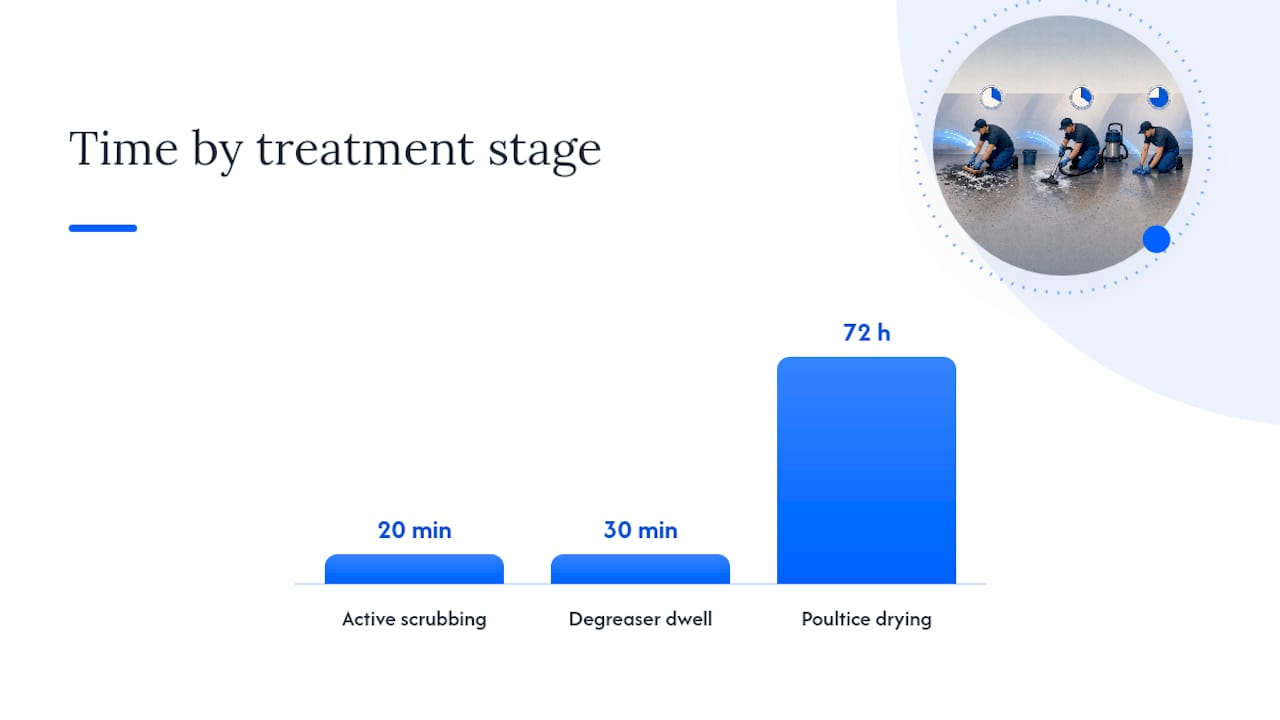
Budget your time accordingly. Active scrubbing rarely takes more than 20 minutes, but dwell and drying time is where the real work happens, anywhere from 30 minutes for a degreaser to a full 72 hours for a poultice. For a typical small to moderate stain, expect to spend a modest amount on supplies for one full cycle. Repeat treatments add to that cost but rarely push a DIY job past $75 to $100 in materials.
If you’ve run the same method twice with no visible improvement, that’s your cue to stop. Repeating a failed technique a third time usually just wastes product and time you could spend calling a professional or planning for resurfacing.
Staying Safe: PPE, Runoff, and Disposal Rules
Grease removal chemicals aren’t dangerous if you handle them the way the label tells you to, but skipping the basics is where people get hurt or make a bigger mess.
- Wear nitrile gloves and eye protection any time you’re working with degreasers or solvents, and add a respirator if you’re in an enclosed space.
- Keep the area ventilated. Solvent fumes build up fast in a closed garage.
- Never dump concentrated rinse water or leftover solvent into a storm drain. Contain it, absorb it with clay litter, and dispose of the used absorbent in household trash unless your municipality has separate hazardous-waste rules.
- Avoid using flammable solvents on concrete that’s been sitting in direct sun and is hot to the touch.
- Test any new product on a small, hidden patch first; strong alkaline cleaners can etch soft stone or damage certain sealers.
When Should You Call in a Professional Instead?
Some jobs are better handed off, and knowing when saves you both money and a ruined weekend. A large stained area, a stain that’s survived two or three honest DIY attempts, or a job that calls for industrial-strength solvents are all good reasons to bring in help. Commercial lots, restaurant pads, and dumpster pads usually fall into this category by default.
Professionals bring commercial-grade degreasers, hot-water extraction equipment, and mechanical grinding for stains that have bonded to the concrete’s surface. When a stain has genuinely stained the concrete itself rather than just sitting in it, resurfacing or an epoxy coating often makes more sense than another round of chemicals.
When you get a quote, ask about surface prep, containment for runoff, disposal method, and whether there’s a satisfaction guarantee. Alldaypowerwashing runs commercial-grade equipment with insured crews on every job, and offers same-week quotes so a bad stain doesn’t sit on your driveway for a month.
Keep Grease From Coming Back: Sealing and Simple Maintenance
A sealer is the cheapest insurance you can buy for a concrete driveway or garage floor. Penetrating sealers soak into the pores and repel oil from within, while topical coatings sit on top and offer more visible protection but wear faster under vehicle traffic.
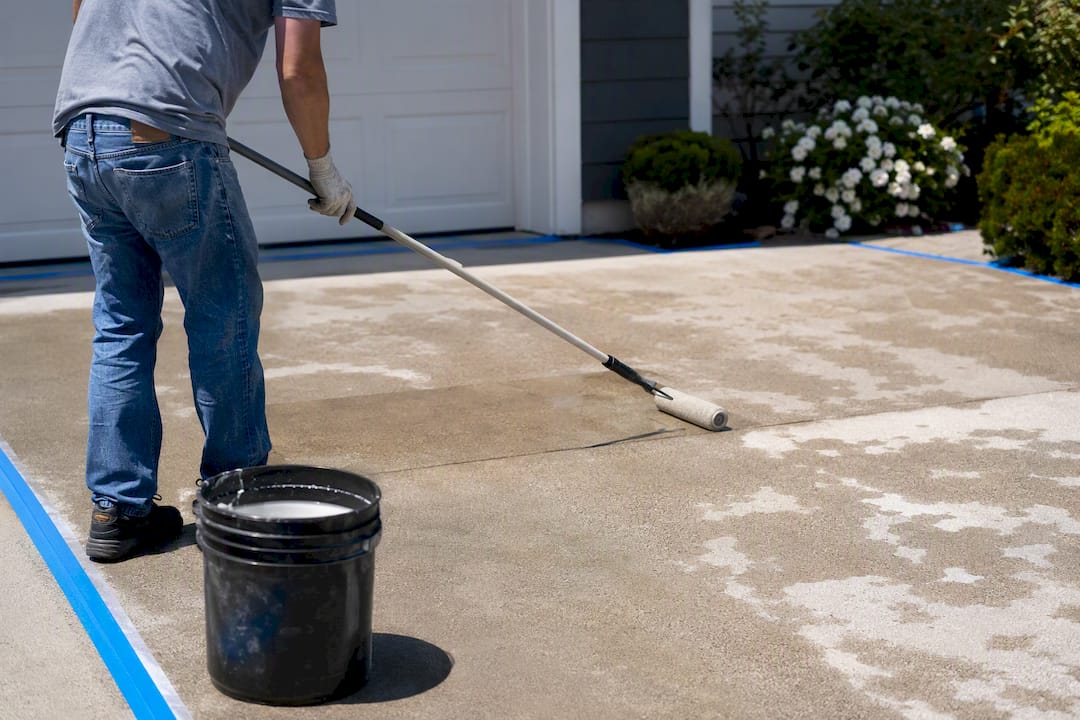
Most driveway sealers hold up for about two to three years before they need reapplying, less in a garage with heavy vehicle use. Between resealing, the habit that actually matters is speed: blot new drips the moment you see them, hose down the floor regularly, and fix the leaking gasket or hose before it becomes a monthly stain.
A Cleaning Pro’s Honest Take on DIY Grease Removal
DIY handles most grease stains just fine, and there’s no reason to call anyone for a fresh drip or a small spot from last week. Where DIY quietly fails is on old, large, or repeat-offender stains, where an inexperienced hand can do real damage to the surface while chasing a stain that needed a different tool from the start.
The biggest mistake I see is people scrubbing harder instead of smarter, or reaching for gasoline because it’s already in the garage. Gasoline doesn’t lift grease. It just pushes the oil deeper and adds a fire risk you didn’t need. If you want one free diagnostic tool, watch the suds while you agitate. Milky, light brown suds mean you’re making progress; suds that stay dark and murky mean the grease is still down in the pores and you’ve got another round ahead of you.
— Brandon
Ready for a Professional Concrete Clean?
If you’ve fought a grease stain through two or three rounds and it’s still staring back at you, Alldaypowerwashing skips the guesswork with commercial-grade degreasers and hot-water extraction that go deeper than a driveway sprayer ever will.

Alldaypowerwashing handles driveway and garage floor cleaning, commercial lot and dumpster pad degreasing, and NFPA-96 kitchen hood degreasing for restaurants across Colorado Springs and Denver. Every crew runs insured, uses commercial-grade equipment instead of consumer-grade rentals, and backs the work with a satisfaction guarantee. Because quotes turn around the same week, you’re not waiting a month to get a stubborn stain off your property. If your driveway, garage floor, or commercial pad needs more than another poultice cycle, request a quote for pressure washing in Denver or check available service options to see what fits your property.
Sources
For related DIY methods, see Alldaypowerwashing’s guide to removing oil stains from asphalt driveways and its breakdown of rust stain removal on concrete.
- How to get rid of grease stains — This Old House
- How to remove grease stains from concrete — PROSOCO
- Oil stains on concrete: poultices, degreasers, and why some stains return — CraftingWithConcrete
- How to remove oil stains from concrete driveway and garage floor — Build-Construct
Recommended
- How to Remove Rust Stains from Your Concrete Driveway — All Day Power Washing
- How to Remove Oil Stains From Your Asphalt Driveway — All Day Power Washing
- Top 3 Graffiti Removal Service Near Me Providers 2026 — All Day Power Washing
- Best Cleaner for Pressure Washing House: 2026 Guide — All Day Power Washing