

Homeowners: How Often to Clean Gutter Guards by Type and Tree Cover
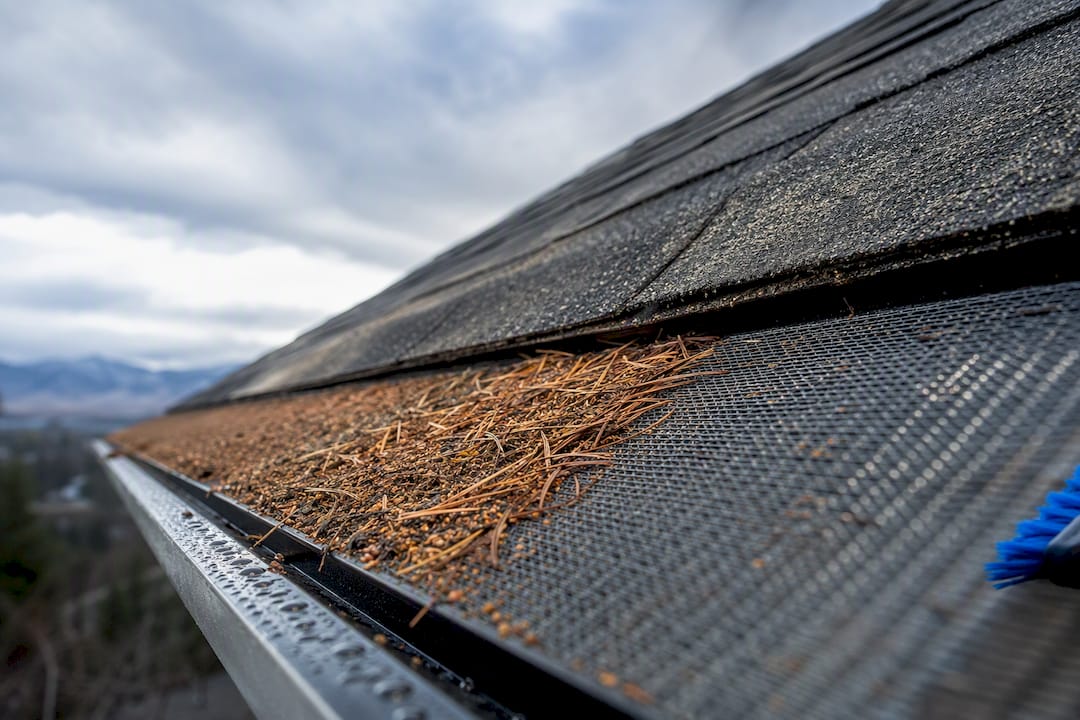
No, gutter guards don’t eliminate cleaning, they just change the job. You’ll still need to clear surface debris, check for sagging or overflow, and flush your downspouts, but you’ll do it less often than with open gutters. The two habits that matter most: a quick visual check after any major storm, and a full inspection each spring and fall.
TL;DR:
- Gutter guards require at least annual cleaning, with frequency increasing to multiple times a year in regions with heavy pine or oak trees.
- Micro-mesh guards, though effective, still need professional or DIY maintenance to remove mineral deposits and biological growth over time.
- Downspouts are the most common unprotected failure point, often causing overflow despite guard installation.
- Avoid using pressure washers or abrasive tools on guards, as they can damage the system and void warranties.
- Routine checks should include visual inspection for overflow, debris mats, and slow drainage, supplemented by flushing downspouts with a hose.
Table of Contents
- Why gutter guards still need cleaning even after installation
- How often should you clean gutters with guards?
- How do you know if your gutter guards need cleaning?
- Safe ways to clean gutter guards yourself
- When should you call a professional gutter cleaner?
- What mistakes cost homeowners the most on gutter guard upkeep?
- A publisher’s take on realistic gutter guard maintenance
- How Alldaypowerwashing handles gutter guard cleaning
- Sources
Why gutter guards still need cleaning even after installation
Guards block leaves, but they were never designed to stop everything. Shingle granules wash off your roof in a fine grit that slides right through most mesh openings. Pollen and pine needles are worse, they mat together into a dense layer that sits directly on top of the guard surface instead of falling through it.
That surface layer causes two specific problems. The first is “bridging,” where debris builds a shelf across the guard’s holes, and water starts running over the top instead of through it. The second is “damming” near valleys or low spots, where wet debris compacts and blocks flow entirely. Neither requires a clogged gutter channel underneath. The guard itself becomes the obstruction.
Debris that commonly causes trouble even with guards installed:
- Shingle granules that pack into micro-mesh pores over several seasons
- Pine needles that thread through screen-style guards and build up inside the channel
- Seed husks and helicopter seeds that mat on brush and foam inserts
- Wind-blown pollen that forms a sticky film during peak season
- Standing sludge in downspouts, which guards do nothing to prevent
Downspouts stay the weak link in almost every system. Guards protect the horizontal channel, not the vertical pipe, and independent contractor guidance consistently flags a skipped downspout flush as the most common reason homeowners still get overflow despite having guards.
How often should you clean gutters with guards?
Cleaning frequency depends heavily on which guard type you have and what’s hanging over your roof. There’s no single number that works for every house.
- Micro-mesh: at least once a year for basic cleaning, with professional service periodically in humid climates
- Reverse-curve: roughly once a year, since the curved design sheds most surface debris on its own
- Screen guards: periodic cleaning throughout the year, typically multiple times annually, because larger openings let more through
- Brush inserts: multiple times per year requiring removal for cleaning
- Foam inserts: multiple times per year with a similar removal and cleaning requirement
Micro-mesh guards rank among the most effective at blocking debris, yet even they require at least annual attention, and This Old House’s maintenance guide notes that humid regions can see mineral deposits and biological growth build up on mesh that needs a professional clean every couple of years.
Tree coverage changes everything; for comprehensive advice on maintaining your yard around rooflines, see this step-by-step seasonal garden maintenance guide. A house shaded by pines needs quarterly attention regardless of guard type, since needles slip through gaps that block broader leaves without a problem. Heavy oak or maple canopy pushes you toward the higher end of any range above. Homes with little to no overhanging trees, especially with reverse-curve or micro-mesh guards, can often stretch to once a year and stay ahead of trouble.

A workable baseline schedule: perform inspections regularly through the year, adding extra checks if you have heavy pine coverage, and always flush downspouts during maintenance visits. Shingle roofs shed more grit in the first few years after installation or a reroof, so budget extra attention during that window.
How do you know if your gutter guards need cleaning?
Run this quick check from the ground or a ladder before deciding whether a full cleaning session is due:
- Look for overflow lines on the fascia board or streaking down the siding below the gutter edge.
- Check for visible plant growth, small weeds or moss rooted in trapped debris on top of the guard.
- Watch for sagging sections, gutters pulling away from the fascia usually mean trapped weight from wet buildup.
- Spot debris mats sitting on the guard surface instead of sliding off during rain.
- Flush a downspout with a hose and confirm water exits cleanly at the bottom outlet within a few seconds.
That last step is the one homeowners skip most often, and it’s the single most reliable test. If water backs up or drains slowly, something’s blocked even if the gutter itself looks fine from below. Run this check after any storm that dumps heavy rain or wind-blown debris, plus once each season as routine maintenance.
Safe ways to clean gutter guards yourself
Ground-level tools handle most routine maintenance without a ladder. A telescoping gutter brush paired with a garden hose spray wand clears surface debris and flushes fine grit out of micro-mesh and screen guards without you climbing anything.
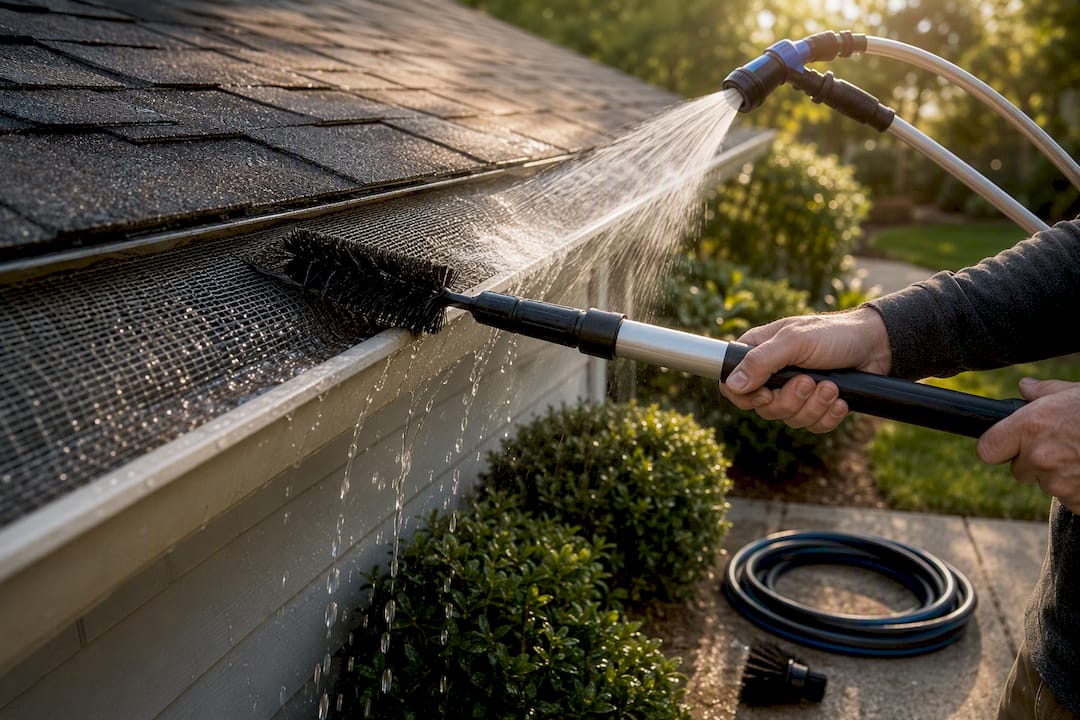
For brush and foam inserts, periodic removal is part of the design, not a failure. Slide the insert out, rinse it thoroughly on the ground, let it dry, and reseat it. Skipping this step is why some sources note that brush and foam systems can end up taking more time to service than an open gutter would.
What to avoid:
- Pressure washers on micro-mesh or thin aluminum frames, the force can warp mesh and void manufacturer warranties
- Harsh chemical cleaners that degrade mesh coatings or plastic housings over time
- Prying at fastened guards to peek underneath, this bends brackets and breaks seals
- Working from a ladder in wet or windy conditions
Pro Tip: Check your gutter guard’s manual before using any cleaning tool. Some micro-mesh warranties specifically exclude damage from pressure washing, even at low settings, so a garden hose is the safer default.
When should you call a professional gutter cleaner?
High rooflines, steep pitches, or two-story homes push most jobs out of reasonable DIY territory fast. Add biofilm or mineral buildup on micro-mesh, which usually needs controlled low-pressure equipment to clear without damage, and a warranty-sensitive guard system that requires correct reinstallation, and professional service starts making more sense than a weekend project.
A professional visit typically includes:
- Low-pressure mesh cleaning that won’t warp frames or void coverage
- Safe removal and reinstallation of brush, foam, or screen inserts
- Full downspout flushing at every outlet, not just a visual check
- Fastener and bracket inspection for sagging or loosening
Most homes need this once a year. Heavy tree canopy or a hard-to-access roofline can push that to twice.
What mistakes cost homeowners the most on gutter guard upkeep?
The costliest mistake is treating “gutter guards” as “gutter guards forever.” Marketing claims that guards mean you’ll never clean again are inaccurate, and acting on that belief lets debris sit for years until it hardens into sludge that’s far tougher to remove than fresh leaves.
Common damaging habits:
- Pressure washing mesh guards, which warps material and voids most warranties
- Prying fastened guards loose instead of removing them per the manufacturer’s method
- Using wire brushes or abrasive scrubbers that scratch protective coatings
Guarded systems can lower your total annual maintenance cost, since you’re paying for fewer visits, but each visit often costs more than an open-gutter cleaning because of the extra handling insert removal and reinstallation require. The right mental model: reduced frequency, not zero maintenance.
A publisher’s take on realistic gutter guard maintenance
Here’s the baseline we’d tell a neighbor: visual checks every spring and fall, full professional service once a year unless you’re under heavy pine or oak canopy, in which case twice. That schedule catches nearly everything before it turns into an overflow problem or fascia damage.
The company runs insured crews with commercial-grade equipment and offers quotes promptly in the local area, so getting a professional inspection scheduled is convenient. If your gutters haven’t been checked this season, that’s the gap worth closing first.
— Brandon
How Alldaypowerwashing handles gutter guard cleaning
A gutter cleaning service can inspect your guard system, clear matted debris without damaging mesh or frames, and flush every downspout to confirm clean flow, all in one visit instead of guessing whether your guards are actually doing their job.

Heavy pine coverage, humid summers, and Colorado’s hail season all put guards to the test faster than most manufacturers admit. Rather than climbing a ladder to find out if your system is bridging or damming, book a same-week quote for gutter cleaning in Denver and get a professional read on where your gutters actually stand. Crews carry commercial-grade equipment built for guard-safe cleaning, not just a hose and a prayer, and every job comes backed by a satisfaction guarantee. Get your gutters checked before the next storm decides for you.
Sources
- Do gutter guards work? What homeowners should know before buying | USA Today
- Long-Term Maintenance for Gutter Guards: A Complete Guide | This Old House
- Gutter guards still need cleaning | RoofScour