

Gutter Tiger Stripes: How Homeowners Remove and Prevent Them
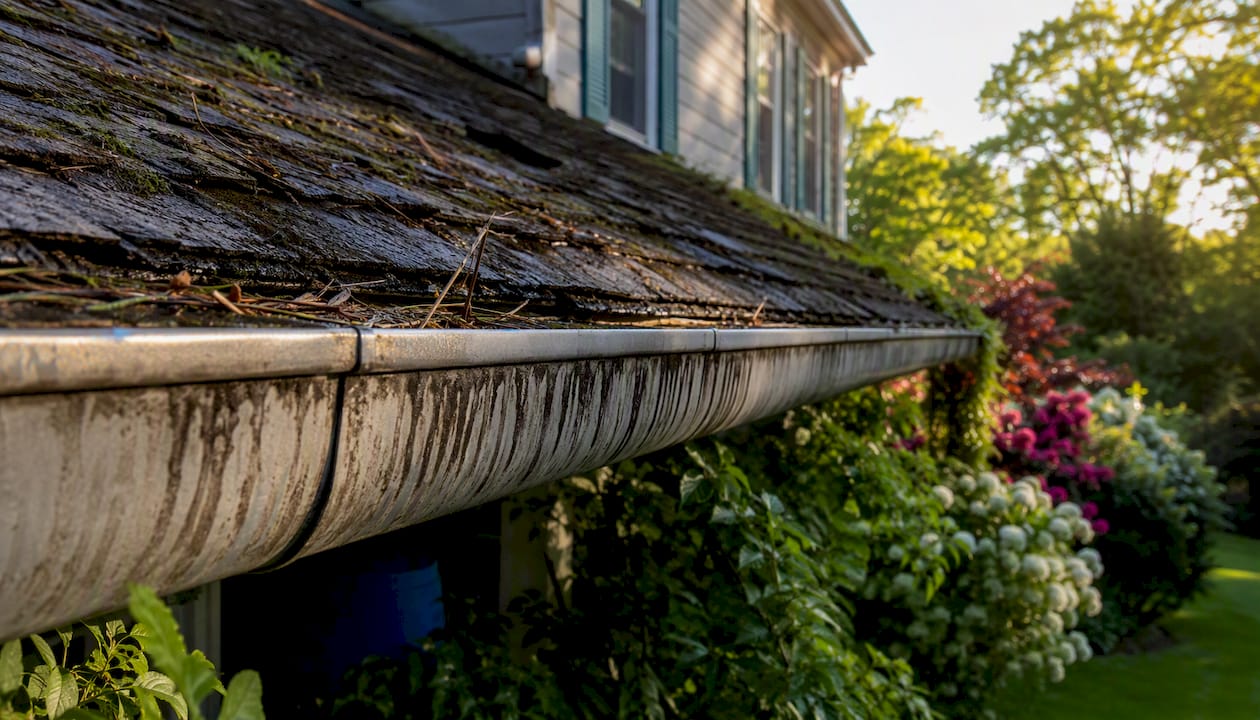
Those dark vertical streaks running down the face of your gutters are called tiger stripes, and they are chemically bonded runoff residue — asphalt oils, shingle granules, and airborne pollutants that fuse to oxidized gutter paint. The good news: most cases respond well to chemical brightening, and professional restoration can restore gutters to roughly 90–95% of their original color; for severely oxidized paint, recovery may reach about 80% and repainting may become necessary. Here are three things to do right now:
- Run a test patch. Dampen a cloth with a diluted gutter brightener and rub a small section. If color lifts, the stains are removable. If nothing moves, the paint may have failed.
- Call a pro for second-story or severe jobs. Height and access risk outweigh any DIY savings.
- Inspect the roof and gutters if stripes return fast. Rapid recurrence signals an upstream problem, not just a cleaning frequency issue.
Table of Contents
- What causes gutter tiger stripes?
- Can tiger stripes actually be removed?
- How to remove tiger stripes yourself, step by step
- What professional gutter restoration includes
- How to stop tiger stripes from coming back
- How to pick the right professional for this job
- What field experience reveals about tiger stripe removal
- Key Takeaways
- The real cost of ignoring tiger stripes
- Alldaypowerwashing handles gutter tiger stripes in Colorado Springs and Denver
- Useful resources
What causes gutter tiger stripes?
The pattern is not random. Every time it rains, water picks up asphalt oils and mineral filler from aging shingles, mixes with airborne particulates and pollen, and runs off the roof edge in concentrated streams. Where that water drips repeatedly over the gutter face, it deposits a thin layer of residue. Over time, that residue electrostatically bonds to the oxidized paint on aluminum gutters, creating streaks that plain water and household cleaners cannot touch.
The vertical pattern follows the physics of water concentration. Drip points at low spots, seams, and downspout ends carry the heaviest load of contaminants, so those locations develop the darkest lines first.
Several factors accelerate the process:
| Contributing Factor | Why It Matters |
|---|---|
| Aging or worn shingles | Release more asphalt oils and mineral granules per rain event |
| Nearby trees and organic debris | Add pollen, tannins, and biological material to roof runoff |
| Air pollution and road dust | Increase particulate load that bonds to wet gutter surfaces |
| Oxidized or older gutter paint | Creates a rougher, more porous surface that holds residue |
| Clogged or misaligned gutters | Force overflow that concentrates runoff on the gutter face |
Roof age matters more than most homeowners expect. A 15-year-old asphalt shingle roof sheds significantly more granule material than a newer one, which means the same gutter on an older home will stripe faster and darker. If stripes return within a season of cleaning, the roof is usually the first place to look.
Can tiger stripes actually be removed?
Most of them, yes. Recent bonded residue on gutters with intact paint responds well to the right chemistry. Severely oxidized gutters, where the factory coating has chalked or peeled, are a different story: professional brightening may only recover about 80% of the original color in those cases, and repainting becomes the more realistic recommendation.
The test patch described earlier is your fastest diagnostic. Rub a small area with a diluted brightener and a soft cloth. Three outcomes are possible:
- Color lifts cleanly — Restoration to roughly 90–95% of original color is realistic.
High-pressure washing is not the answer here. Aluminum gutters dent under high PSI, and pressure strips factory coatings faster than the stains themselves. Plenty of homeowners have made the mistake of pointing a pressure washer at tiger stripes and ended up with clean-looking but permanently damaged gutters. Chemistry and dwell time do the work; pressure is only for rinsing.
Bleach is another common wrong turn. It handles some organic growth on the surface, but it does not dissolve the bonded asphalt residue, and used incorrectly it accelerates paint oxidation while damaging plants and concrete below.
How to remove tiger stripes yourself, step by step
Single-story gutters with intact paint are a reasonable DIY project if you follow the right sequence. Two-story or high-access situations belong with a professional.
Safety and setup first
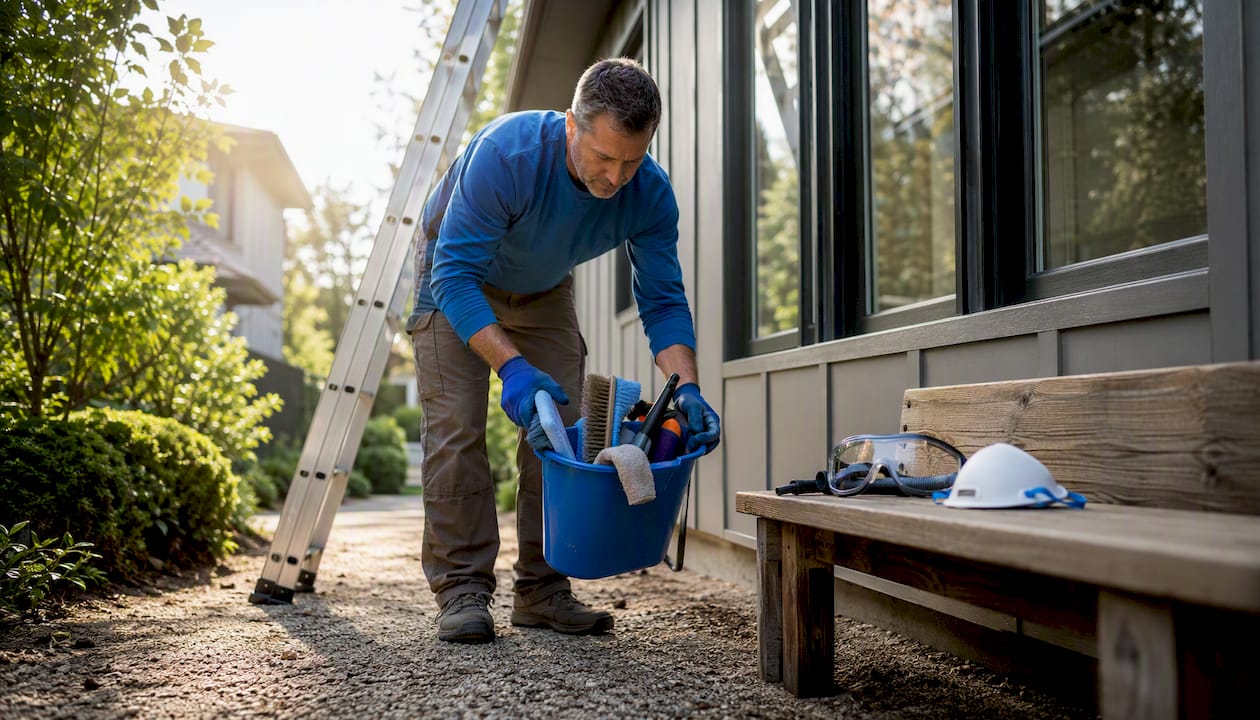
Before touching any cleaner, gather your PPE: chemical-resistant gloves, safety glasses or goggles, and old clothes. Wet down any plants, shrubs, or hardscape directly below the work area. Work on a calm, warm day — cold temperatures reduce chemical effectiveness, and wind carries overspray onto surfaces you did not intend to treat.
What to use (and what to skip)
Oxalic acid-based brighteners and pH-balanced surfactants are the right tools. They chemically dissolve the oxidation and asphalt residue without attacking the paint underneath. Products like Gutter Zap, Gutter Grenade, or similar aluminum-safe brighteners are widely available at home improvement stores. Read the label for dilution ratios — too strong and you risk paint damage, too weak and you waste time.
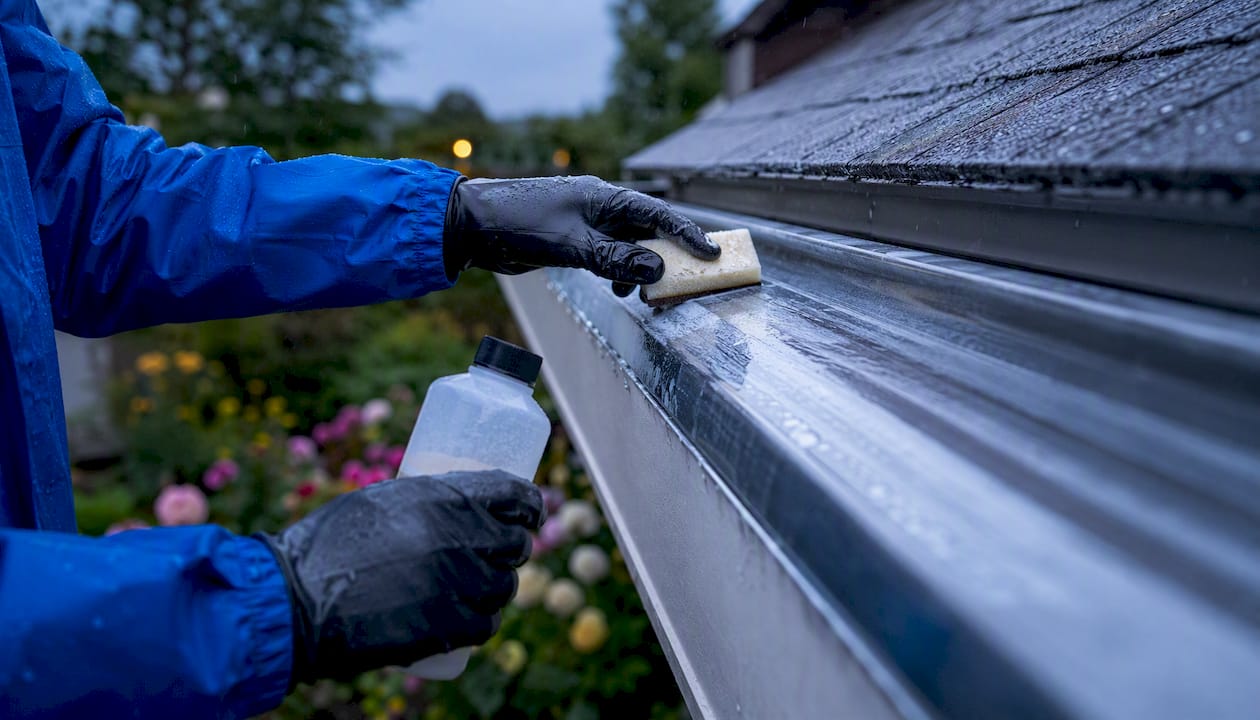
Skip bleach as a primary solution. Skip abrasive pads and coarse brushes entirely. Microscopic scratches from abrasive tools create grooves that trap future contamination and make the next round of stripes worse. A soft nylon brush is the right tool for agitation.
For a broader look at choosing the right exterior cleaning products, the chemistry principles carry over from surface to surface.
The removal procedure
- Inspect the full gutter run. Note the worst sections, any peeling paint, and any areas where water is pooling or overflowing.
- Run a test patch. Apply diluted brightener to a 6-inch section, let it dwell 2–3 minutes, then wipe with a damp cloth. Assess the result before committing to the full run.
- Apply brightener to a manageable section (roughly 4–6 linear feet at a time). Spray or brush on at the manufacturer’s recommended dilution.
- Let it dwell. Most brighteners need 3–5 minutes of contact time. Do not let the product dry on the surface — work in the shade or mist lightly if needed.
- Agitate gently with a soft nylon brush using light, vertical strokes that follow the stripe direction.
- Rinse thoroughly with low-pressure water. A standard garden hose with a spray nozzle works well. If you use a pressure washer, keep it below 600 PSI and hold the wand at least 18 inches from the surface.
- Repeat on stubborn sections after the surface dries. A second application usually handles what the first pass missed.
Pro Tip: Schedule the job for a warm morning when temperatures are above 60°F. Brightening chemistries activate more effectively in warmer conditions, which means less scrubbing and better results.
Environmental cleanup
Neutralize runoff before it reaches storm drains. A light rinse of the surrounding soil and hardscape with plain water dilutes the chemical concentration. Check your local municipality’s guidelines for chemical disposal — many Colorado communities have specific rules about cleaning product runoff into storm systems. For more on eco-friendly cleaning practices that protect your property and the surrounding environment, that resource covers runoff management in detail.
What professional gutter restoration includes
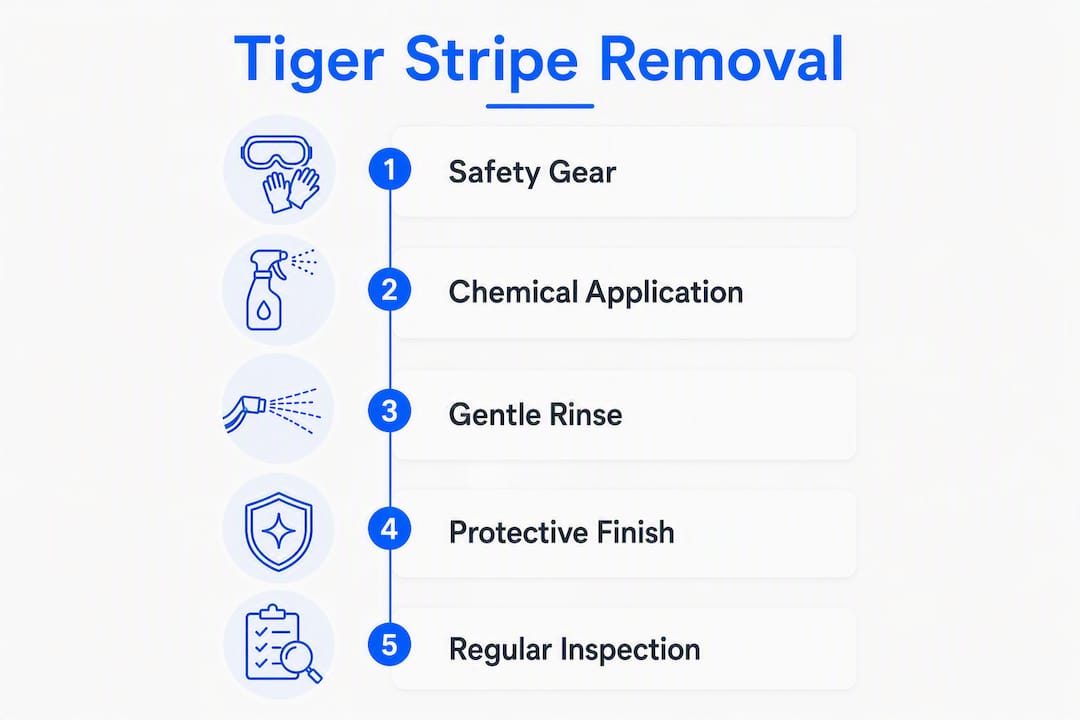
A trained exterior-restoration crew follows a four-stage process that goes beyond what a garden hose and a bottle of brightener can accomplish.
Stage 1: Inspection and diagnostics. The crew checks gutter pitch, looks for internal clogs, identifies paint condition, and notes any areas where high-pressure rinsing would cause damage. This step determines which chemistry concentration is appropriate.
Stage 2: Controlled chemical application. Specialized pH-balanced brighteners are applied at calibrated dilutions, with dwell times adjusted for temperature and stain severity. Pros also protect landscaping and hardscape before application.
Stage 3: Low-pressure rinsing. Controlled rinsing removes dissolved residue without denting aluminum or stripping coatings. This is where professional equipment earns its keep — consistent, regulated pressure that a consumer pressure washer cannot replicate.
Stage 4: Optional protective finish. A hydrophobic wax or sealant applied after cleaning delays the return of tiger striping by creating a surface that sheds runoff more cleanly. This step is optional but worth asking about.
Most standard residential jobs complete in a few hours. Second-story access, severe oxidation, or very long gutter runs extend that timeline. Pricing typically varies based on linear footage, access difficulty, and stain severity.
| Job Type | Typical Time | Typical Cost Range |
|---|---|---|
| Single-story, moderate staining | a few hours | varies |
| Single-story, severe oxidation | a few hours | varies |
| Two-story or difficult access | longer | varies |
| Large property or commercial run | longer | varies |
Watch for these red flags when reviewing quotes: a contractor who cannot name the specific chemicals they use, anyone quoting PSI values above 1,200 for gutter work, no written warranty or reclean policy, and no proof of insurance. A vague “we use professional-grade cleaner” answer is not acceptable — you have a right to know what is going onto your home.
How to stop tiger stripes from coming back
Cleaning removes what is there. Prevention addresses why it keeps coming back. The two are different jobs, and skipping prevention means you are on a cleaning treadmill.
Roof-level fixes:
- Have aging shingles inspected. A roof that is shedding heavy granule material will re-stripe gutters within a season regardless of how well you clean them. A spring home maintenance checklist is a practical starting point for catching roof issues before they become gutter problems.
- Treat biological growth on shingles. Moss and algae accelerate shingle breakdown and add organic material to runoff.
- Trim branches that hang over the roof. Leaf debris, sap, and organic matter from overhanging trees add to the contamination load every time it rains.
- Repair flashing that concentrates runoff into a single drip point. A small flashing fix can eliminate the darkest stripe on the gutter face.
Gutter system fixes:
- Clear clogs at least twice a year, spring and fall. A clogged gutter overflows and forces water over the front face, concentrating staining.
- Check gutter pitch. Gutters that hold standing water develop biological growth and overflow more easily.
- Install or maintain gutter guards where debris load is heavy. Guards reduce internal clogging without eliminating the need for occasional cleaning.
- Inspect downspout connections. A loose or blocked downspout backs water up and creates overflow at the worst possible points.
Pro Tip: After a professional cleaning, ask about a hydrophobic wax finish. It is an inexpensive add-on that makes the gutter surface shed runoff more cleanly and significantly slows the return of staining.
When gutters are more than 15 years old and the paint is visibly chalking, recoating or replacing them is often more cost-effective than repeated cleaning cycles. If you are already looking at gutter repair or replacement options, that decision point is worth discussing with a contractor before investing in another round of brightening.
How to pick the right professional for this job
Not every pressure washing company handles gutter brightening correctly. The wrong approach leaves you with damaged gutters and a bill for the privilege.
- Get a line-item quote — The quote should break out linear footage, access charges for second-story work, any protective wax or finish, and the warranty or reclean policy. A single lump-sum number with no breakdown is a red flag.
For property managers overseeing multiple buildings, the hiring framework for exterior cleaning contractors applies directly to gutter work as well.
What field experience reveals about tiger stripe removal
The single most common mistake in DIY gutter cleaning is reaching for a pressure washer first. High-pressure washing attacks the factory coating before it touches the bonded residue, because the residue is chemically fused to the surface while the paint is only mechanically adhered. The result is a gutter that looks slightly cleaner but is now more vulnerable to future staining and corrosion.
Chemistry and dwell time do the actual work. Surfactants and chelating agents in a quality brightener break the electrostatic bond between the asphalt residue and the aluminum oxide layer. Once that bond is broken, a soft brush and a low-pressure rinse handle the rest. Brute force is not part of the equation.
Rapid re-staining after cleaning is a diagnostic signal, not just bad luck. If stripes return within a few months, the source has not been addressed. Check for a misaligned gutter section that overflows at the same point every rain, an internal clog that backs water up, or a concentrated drip line from a flashing problem. Repeating the same cleaning without fixing the source is a cycle with no exit.
Pro Tip: If your test patch removes little color and the gutter is two stories up, stop. The combination of a failed finish and difficult access means the risk of injury and permanent gutter damage outweighs any DIY savings. That is the clearest stop-DIY signal there is.
Low-pressure soft-wash techniques are the professional standard for a reason. Controlled chemistry at low pressure protects the substrate while still dissolving what needs to go.
Key Takeaways
Tiger stripes are chemically bonded runoff residue that requires pH-balanced brighteners and low pressure to remove safely, with prevention depending on fixing the roof and gutter system upstream.
| Point | Details |
|---|---|
| Tiger stripes are bonded residue | Asphalt oils and pollutants fuse to oxidized gutter paint; rinsing alone will not remove them. |
| Test patch before full cleaning | A 2–3 minute dwell test predicts whether full restoration is realistic or paint has already failed. |
| Chemistry beats pressure | Oxalic acid-based brighteners dissolve the bond; high PSI dents aluminum and strips coatings. |
| Fix the source to prevent return | Roof maintenance, gutter alignment, and clearing clogs reduce recurrence far more than repeat cleaning. |
| Alldaypowerwashing for professional jobs | Alldaypowerwashing handles gutter brightening in Colorado Springs and Denver with controlled chemistry, low-pressure rinsing, and optional protective finish. |
The real cost of ignoring tiger stripes
Most homeowners treat tiger stripes as a cosmetic annoyance and put off dealing with them. That is understandable, but the longer bonded residue sits on oxidized paint, the more it accelerates the paint’s breakdown. What starts as a cleaning job becomes a repainting job, and eventually a replacement conversation. The chemistry that creates tiger stripes does not stop working just because you stop looking at it.
There is also a diagnostic value in paying attention to where and how fast stripes return. A gutter that re-stripes in one concentrated spot within a season is telling you something about the roof above it. A gutter that stripes evenly across its full face is telling you something about shingle age. Neither message is one you want to ignore heading into a Colorado winter, where ice dams and freeze-thaw cycles punish gutters that are already compromised.
The practical takeaway: clean the gutters, yes, but read what the stripes are telling you before you put the ladder away.
Alldaypowerwashing handles gutter tiger stripes in Colorado Springs and Denver
Tiger stripes are one of the more satisfying jobs to watch disappear. Alldaypowerwashing brings commercial-grade equipment and the right chemistry to every gutter restoration job in Colorado Springs and the Denver metro area, with a process that covers inspection, test patch, pH-balanced brightening, controlled low-pressure rinsing, and optional protective wax to slow the return of staining. Fully insured, same-week quotes, and a satisfaction guarantee that means the job is done right or it gets done again.

If you have been putting off dealing with those black streaks, now is a good time to get a professional set of eyes on the gutters before the next heavy rain season. Request a quote directly, or browse the full range of exterior cleaning services to see what a complete job includes. For Denver-area homeowners, the Denver service page has local details and booking options.
Useful resources
A few resources worth bookmarking if you are researching gutter brightening products, safety data, or contractor standards:
- Removing Black Streaks from Gutters — detailed overview of chemical removal methods and professional process stages
- What Causes Black Streaks to Appear on Gutters? — manufacturer-level explanation of the chemical interaction between pollutants and aluminum
- Eco-Friendly Pressure Washing: Safe Guide for Homeowners — Alldaypowerwashing’s guide to managing runoff and protecting landscaping during exterior cleaning
- Low Pressure House Washing: A Safe Guide for Homeowners — explains soft-wash techniques and why controlled pressure protects coatings
Recommended
- How to Remove Rust Stains from Your Concrete Driveway — All Day Power Washing
- How to Remove Oil Stains From Your Asphalt Driveway — All Day Power Washing
- Top 3 Graffiti Removal Service Near Me Providers 2026 — All Day Power Washing
- Best Cleaner for Pressure Washing House: 2026 Guide — All Day Power Washing