

How to Get Rid of Algae on Siding Safely
The safest way to remove algae from siding is to kill it with a siding-safe cleaner and rinse it away with low pressure, not blast it off. Skip the pressure washer set to high, and skip chlorine bleach if you have plants nearby.
- Kill it first, then rinse: apply an oxygen-based cleaner or a commercial soft-wash solution, let it dwell, then rinse gently.
- Avoid high-pressure washing and sodium hypochlorite (chlorine bleach): both can force water behind siding, strip finishes, or scorch your landscaping.
- For large jobs, upper stories, or heavy buildup, call in a soft-wash crew like All Day Power Washing rather than risking a fall or damaging siding you can’t easily repair.
Key Takeaways
Killing algae with a soft-wash or oxygen-based cleaner and rinsing at low pressure removes growth safely, while high pressure and chlorine bleach risk siding and landscape damage.
| Point | Details |
|---|---|
| Kill, don’t blast | Use a soft-wash or oxygen-based cleaner to kill algae at the root before rinsing. |
| Skip chlorine bleach | Sodium hypochlorite can damage plants and finishes; oxygen bleach is the safer swap. |
| Use a gentle mix | Try 1 oz dish soap per 2 gallons of water, adding oxygen bleach for stubborn spots. |
| Prevent regrowth | Trim vegetation, fix drainage, and inspect shaded walls at least once a year. |
| Call a pro for big jobs | Alldaypowerwashing handles multi-story or heavy-growth jobs with insured, commercial-grade soft-wash service. |
Table of Contents
- What’s the Best Way to Clean Algae Off Siding?
- How Do You Safely DIY-Clean Algae Off Siding?
- How to Prevent Algae From Coming Back
- When Should You Hire a Professional for Algae Removal?
- Why Trust This Siding Cleaning Advice?
- What Actually Matters Most in Algae Removal
- Get Algae Off Your Siding Without the Guesswork
- Sources
What’s the Best Way to Clean Algae Off Siding?
Three methods actually work on siding algae, and they’re not interchangeable. Which one you reach for depends on how bad the growth is and what your siding is made of.
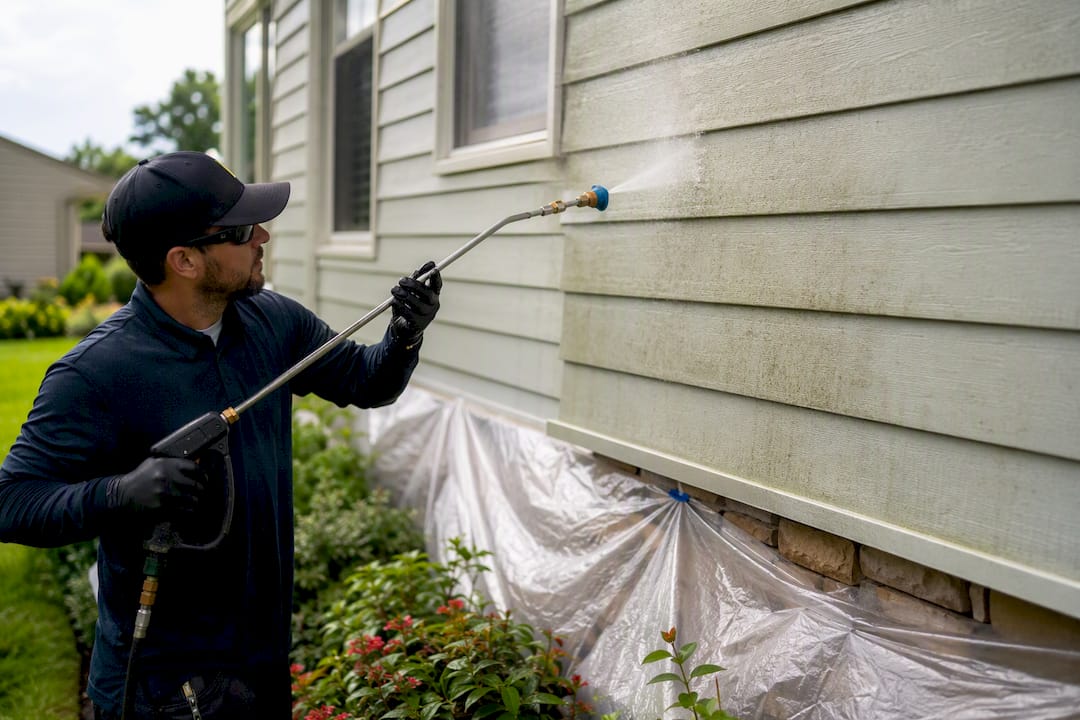
Soft washing is the standard for a reason. It applies a biodegradable cleaning solution at low pressure, which kills algae down at the root instead of just scraping the surface layer off. That matters because algae you merely knock loose without killing tends to come right back within weeks. Soft washing works well on painted wood, fiber cement, vinyl, and most other common siding materials, and it’s gentle enough not to strip finishes the way a pressure washer can.
Oxygen bleach plus dish soap is the DIY workhorse. The dish soap acts as a surfactant, breaking the surface tension of water so it can actually penetrate the algae’s slimy film instead of beading up on top of it. The oxygen bleach then does the lifting, pulling stains and organic buildup free without the corrosive bite of chlorine bleach. It’s a slower process than a commercial soft-wash chemical, but it’s far kinder to your azaleas.
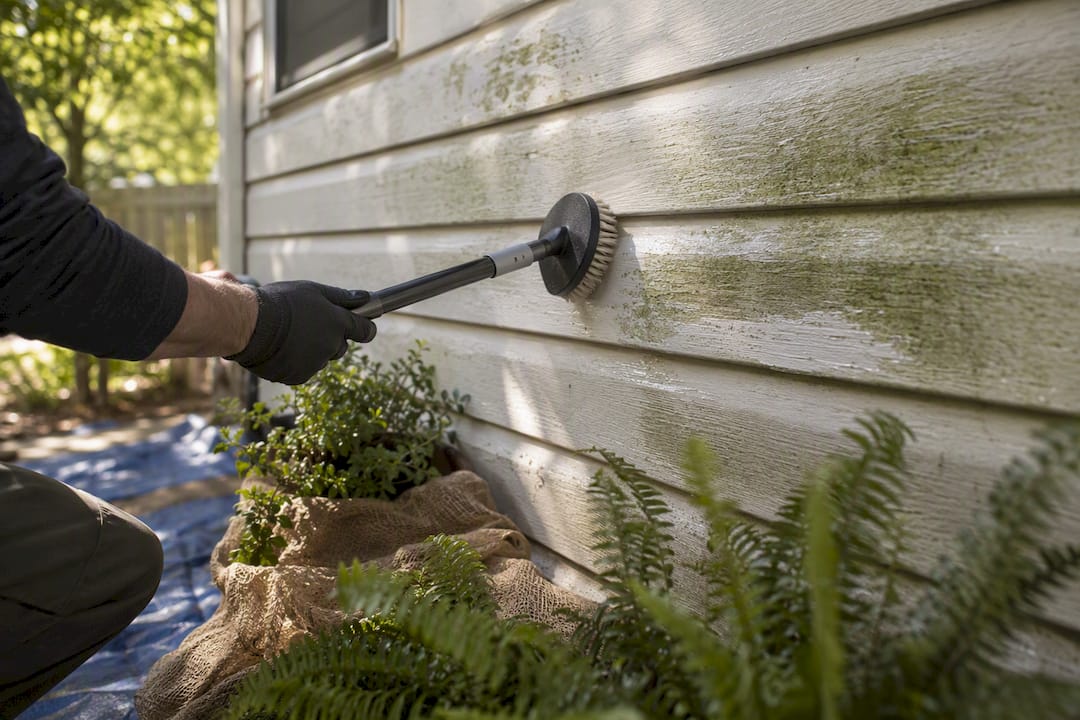
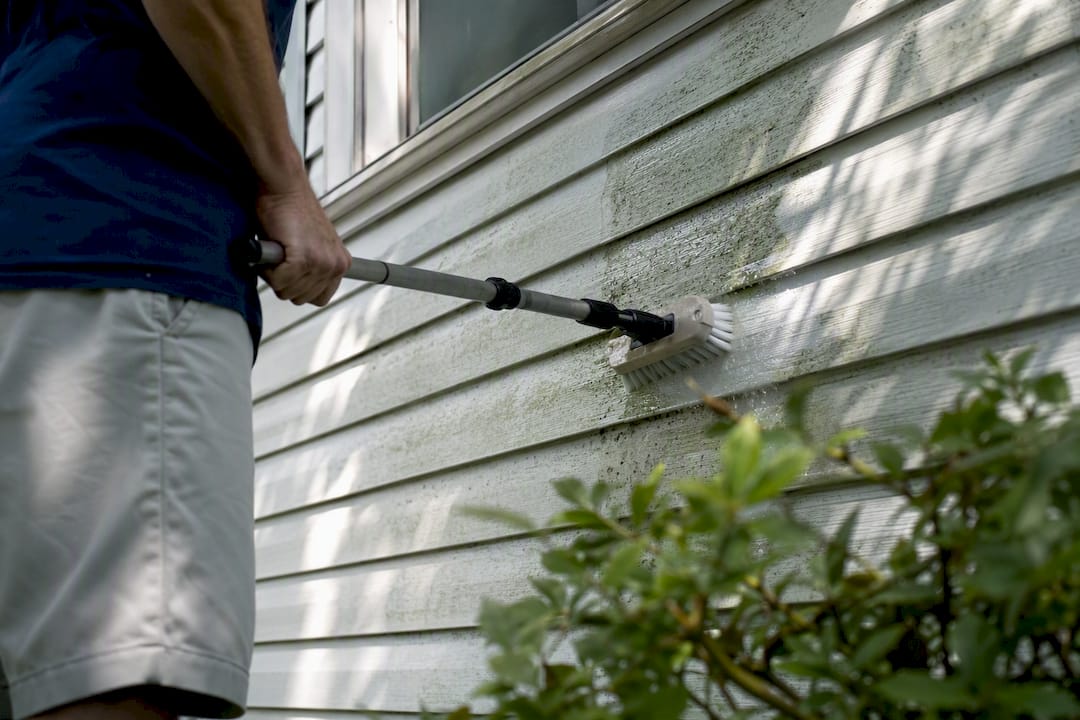
Manual scrubbing earns its place only on light growth, the kind of thin green haze you catch early. A soft-bristle, long-handled exterior brush is the right tool. Anything stiffer risks scratching vinyl or grinding grit into painted wood.
Here’s what to skip entirely: high-pressure blasting. It’s tempting because it looks satisfying, but a pressure washer running above soft-wash settings can force water behind siding seams, strip paint, and crack older or brittle panels. Practitioners regularly warn that the damage from a poorly aimed pressure washer often costs more to fix than the algae ever did.
Pro Tip: If you’re not sure which method your siding can handle, test a small, hidden patch first, like a corner behind a shrub, before treating the whole wall.
How Do You Safely DIY-Clean Algae Off Siding?
You don’t need commercial gear for most residential jobs. A garden sprayer, a soft brush, and a low-pressure hose nozzle will get you through nearly every algae job on a single-story home.
Supplies checklist:
- Non-aluminum garden sprayer (bleach-type solutions corrode aluminum)
- Soft-bristle, long-handled exterior brush
- Garden hose with a low-pressure or fan-tip nozzle
- Rubber gloves and eye protection
- Ladder with a stabilizer if you’re working above the first story
For the cleaning mix itself, a widely used ratio is 1 ounce of mild liquid dish soap per 2 gallons of water. For stubborn, dark staining, add an oxygen-based cleaner such as Stain Solver or a similar Oxi-based product, following the label’s exact ratio. Never substitute chlorine bleach into this mix. It reacts poorly with some detergents and is far more likely to kill nearby plants.
Application steps:
- Pre-wet the ground and any plants near the wall with plain water to dilute runoff.
- Apply the cleaner starting at the top of the wall and working down.
- Let it dwell for 10 to 15 minutes, per most product labels.
- Brush gently, only where buildup remains after the dwell time.
- Rinse from the top down using a low-pressure setting, working with gravity, not against it.
One overlooked fact: moisture that sits on siding for more than four hours creates the exact damp, shaded conditions algae needs to take hold, which is why north-facing and heavily shaded walls get hit hardest.
How to Prevent Algae From Coming Back
Cleaning algae off once is only half the job. If the conditions that grew it are still there, it comes back, usually within a season or two.
- Fix clogged gutters and downspouts that dump water down your siding every time it rains.
- Trim back trees and shrubs to let sunlight and airflow reach shaded walls, especially north-facing ones.
- Keep moisture-loving flower beds a few feet clear of the siding line.
- Inspect shaded and north-facing walls at least once a year, since they dry out slower than sun-exposed sides.
- Plan on a full cleaning every 12 to 24 months if you live somewhere humid or heavily shaded.
Once the siding is clean and fully dry, a mildew-resistant exterior coating can slow the next round of growth. Don’t seal or repaint over damp siding or leftover algae residue. You’ll trap moisture and organic matter under the new coat, which defeats the purpose entirely.
When Should You Hire a Professional for Algae Removal?
DIY works fine for light, first-floor growth. It stops being the right call once height, volume, or siding condition raise the stakes.
Call a soft-wash professional if you’re dealing with heavy, years-deep buildup, a multi-story house, an awkward roofline, or any siding that already shows cracking, warping, or loose panels. Ladders and slick, algae-covered siding are a bad combination, and that alone justifies the call for a lot of homeowners.
When vetting a contractor, ask specifically:
- What chemicals do you use, biodegradable and oxygen-based, or chlorine-based?
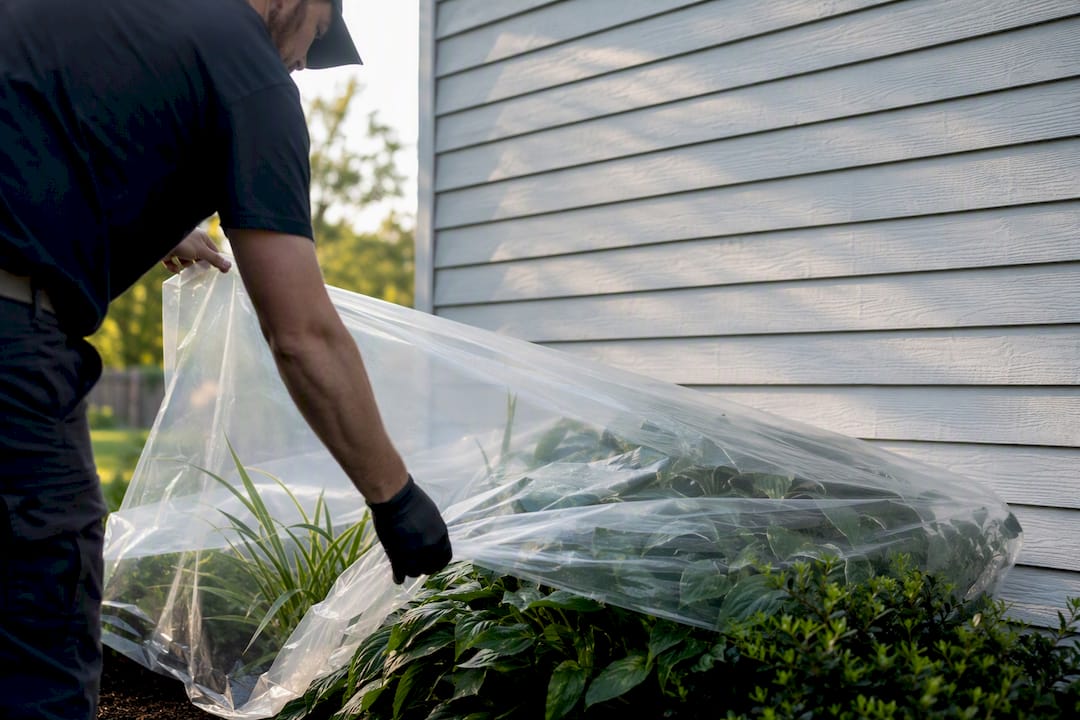
- How do you protect my plants and lawn during application and rinsing?
- Are you insured, and can you provide references?
- Do you offer a guarantee, and how long before I should expect regrowth?
Pro Tip: A legitimate soft-wash crew should be able to explain their chemical dilution ratios without hesitation. If they can’t, that’s a red flag.
A proper professional job includes a pre-inspection, plant protection, low-pressure application and rinsing, and cleanup afterward. Done right, it holds up longer than most DIY attempts, since technicians control concentration and coverage more precisely than a garden sprayer allows.
Why Trust This Siding Cleaning Advice?
This guide leans on the same principles professional soft-wash crews use every day: kill the algae at the root, use the gentlest effective chemistry, and rinse instead of blast.
- All Day Power Washing runs commercial-grade equipment and insured crews, and backs its work with a satisfaction guarantee, the same standards reflected in the soft-wash methods described here.
- Author Brandon has written extensively about pressure washing cleaners and soft-wash technique, which shaped the mix ratios and safety steps in this guide.
- Algae also traps moisture against your siding, and trapped moisture can encourage mold growth in and around the home, one more reason not to let it sit.
On risky jobs, height, aging siding, heavy growth, a professional crew’s control over pressure and chemical concentration protects both your siding and your landscaping.
What Actually Matters Most in Algae Removal
Most siding advice online buries the real lesson under product recommendations: the method matters more than the chemical. A soft-wash approach with a mediocre cleaner beats a high-pressure blast with a premium one, every time, because the damage from pressure is often invisible until months later when paint starts peeling or seams start leaking.
The conventional DIY advice online tends to undersell how much plant damage chlorine bleach causes, treating it as a minor caveat instead of the dealbreaker it usually is. If you’ve got landscaping you care about, that alone should push you toward oxygen bleach or a commercial soft-wash product.
My honest read: homeowners should prioritize the dwell-and-rinse method over any specific brand of cleaner, and they should be far more willing to call a professional for anything above one story. The ladder is usually the bigger risk than the algae.
— Brandon
Get Algae Off Your Siding Without the Guesswork
Alldaypowerwashing handles the exact soft-wash process described in this guide, with commercial-grade equipment, insured crews, and a satisfaction guarantee, so you don’t have to mix chemicals on a ladder or second-guess your dilution ratio.

For homeowners in Colorado Springs or the Denver area dealing with heavy algae, multi-story siding, or landscaping you don’t want to risk with a DIY mix, that’s exactly the kind of job Alldaypowerwashing takes on daily. Crews arrive with the right low-pressure equipment and plant-protection steps already built into the process, instead of you learning them mid-project. If your siding needs more than a light scrub and a garden sprayer, get a quote for pressure washing in Denver and find out what a same-week soft-wash job actually costs.
Recommended
- Pressure Washing a Stucco House: Colorado’s Safe Guide — All Day Power Washing
- Low Pressure House Washing: A Safe Guide for Homeowners — All Day Power Washing
- Eco Friendly Pressure Washing: Safe Guide for Homeowners — All Day Power Washing
- Best Cleaner for Pressure Washing House: 2026 Guide — All Day Power Washing