

Does Pressure Washing Really Boost Curb Appeal?
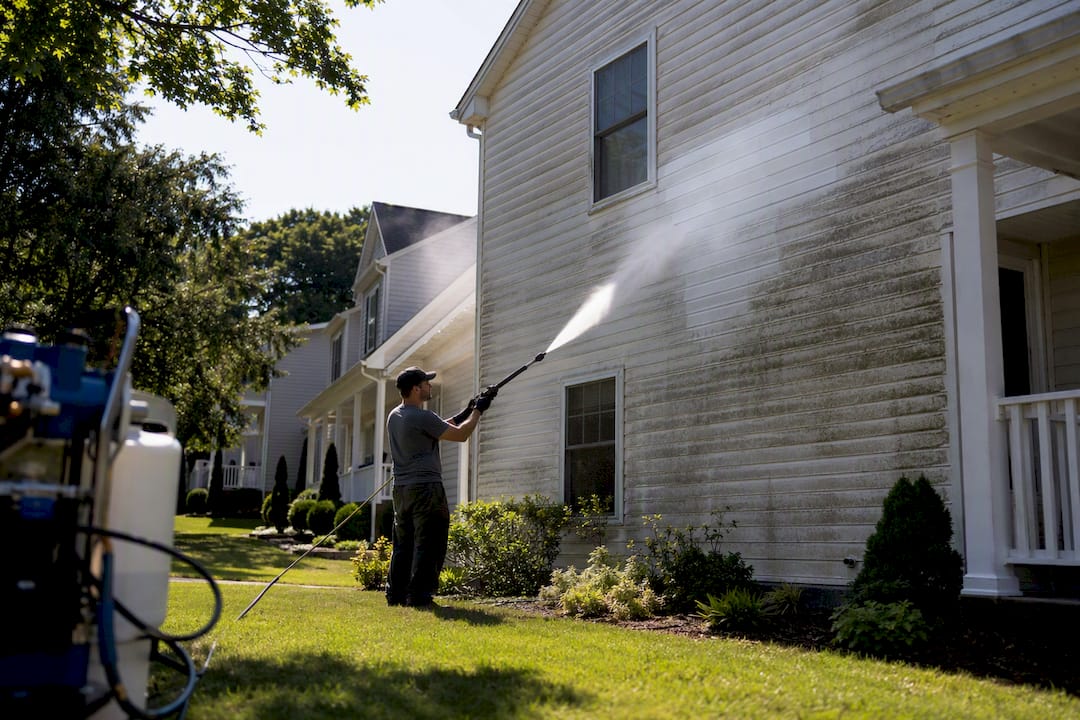
Professional exterior cleaning almost always improves curb appeal, and it does so faster and cheaper than most other pre-listing upgrades. Start with the driveway, front siding, and porch, since those surfaces catch the most eyes from the street. Use pressure washing for concrete and soft washing for siding and roofing. Hire a pro for anything above ground level or near delicate materials, where a rented machine can do real damage.
TL;DR:
- Driveway, porch, and front siding should be prioritized for quick visual impact and cost-effective curb appeal enhancement.
- Full exterior cleaning typically costs between $300 and $800, offering an estimated 1% to 5% increase in sale price, often $5,000 to $15,000.
- Schedule pressure washing one to three weeks before listing photos to ensure surfaces are dry and looking their best for the shoot.
- Hire a professional with insured, commercial-grade equipment and proper soft-wash capabilities to avoid damage to delicate surfaces and landscaping.
- Focus on cleaning the driveway first, then siding and roof, to maximize visual contrast and overall home presentation during showings.
Table of Contents
- What Curb Appeal Pressure Washing Services Actually Cover
- How Much Does Curb Appeal Cleaning Actually Add?
- Which Surfaces Should You Clean First?
- How Do You Choose the Right Pressure Washing Provider?
- When Should You Schedule Service Before Listing Photos?
- Should You Rent a Pressure Washer or Hire a Pro?
- What Should You Look for in a Trustworthy Pressure Washing Company?
- How Do You Prevent Pressure Washing Damage to Wood and Plants?
- What Do Warranties and Satisfaction Guarantees Actually Cover?
- What I’ve Learned Watching Pre-Listing Jobs Go Right (and Wrong)
- Ready to Book Your Curb Appeal Cleaning?
- Sources
What Curb Appeal Pressure Washing Services Actually Cover
“Curb appeal pressure washing” isn’t one service. It’s a set of methods matched to different surfaces, and the industry term that covers the whole category is exterior cleaning or exterior soft washing, depending on the technique. A reputable crew typically offers:
- Driveway and concrete cleaning — high-pressure water strips oil stains, mildew, and years of grime off hard surfaces without harming them.
- House soft washing — low-pressure application with cleaning solution, built for vinyl, stucco, and painted wood siding.
- Roof soft washing — the same low-pressure approach, formulated to kill algae and moss without lifting shingles.
- Deck, fence, and paver cleaning — pressure levels adjusted for wood grain and paver joints.
- Gutter cleaning and brightening — removes streaking that ages a home’s whole facade.
The distinction between “pressure washing” and “power washing” is mostly heat. Power washing adds hot water for tougher grease and stains; pressure washing uses cold water at high force. Soft washing is neither. It’s low pressure plus chemistry, and it’s the recommended method for roofs and delicate siding to avoid stripping paint or driving water behind panels. Ask any provider about their runoff and chemical practices; eco-friendly formulas and containment matter for anything near landscaping or storm drains.
How Much Does Curb Appeal Cleaning Actually Add?
A clean exterior does more than look nice. It changes how buyers and appraisers read the whole property before they walk through the door.
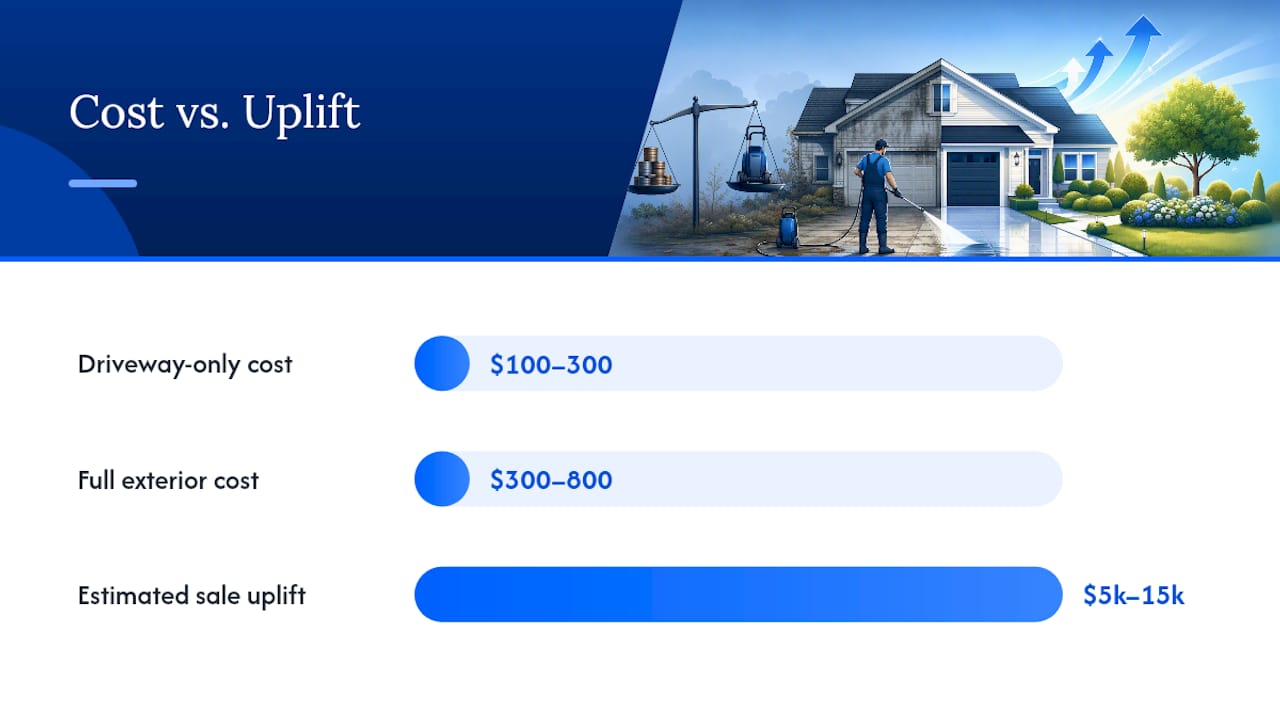
A full exterior clean for a typical single-family home runs $300 to $800, with driveway-only jobs often landing between $100 and $300. Against that, industry estimates put the perceived sale-price uplift from professional exterior cleaning at roughly $5,000 to $15,000 in many markets, or commonly 1% to 5% of listing price when the home was visibly neglected beforehand. That’s a return most renovation projects can’t touch.
The value isn’t only financial. Real estate agents describe a “halo effect”: a clean exterior signals that the interior has probably been maintained too, which reduces buyer suspicion and can speed up offers. It also just photographs better. Listing photos with a bright driveway and streak-free siding pull more clicks, and showings feel more confident when the first thing a buyer sees isn’t algae streaks down the roofline.
Which Surfaces Should You Clean First?
Not every surface deserves the same budget or urgency. If you’re working with limited time or money before photos go live, prioritize in this order:
- Driveway and walkway — the first surface every visitor and every photo sees. Pressure washing concrete usually takes 1 to 2 hours and runs $100 to $300.
- Front porch and entryway — cobwebs, dirt buildup, and mildew here read as neglect even when the rest of the house is fine.
- Front-facing siding — a soft wash restores color and removes streaking, typically in 2 to 4 hours depending on square footage.
- Garage door and area — often overlooked, but garage doors collect grime that stands out against a clean driveway.
- Decks and fences — lower priority unless visible from the street or featured in photos.
Once cleaning wraps, give surfaces a full drying window before shooting photos. Wet concrete and siding photograph darker and duller than dry. Scheduling the job 1 to 3 weeks ahead of your shoot date builds in that buffer.
How Do You Choose the Right Pressure Washing Provider?
Not every company with a pressure washer and a truck should be trusted with your siding, roof, or landscaping. Vet providers the same way you’d vet any contractor working on a major surface of your home.
Before signing anything, confirm:
- Proof of insurance — ask for a certificate, not just a verbal assurance. This protects you if a window breaks or a plant gets damaged.
- Soft-wash capability — a provider who only offers high-pressure cleaning shouldn’t be touching your roof or vinyl siding.
- Before-and-after examples — real job photos, not stock images, tell you what results to expect.
- References or reviews — checking a company against a source like BBB listings gives you a paper trail beyond a five-star badge on their own site.
- Written guarantee — what happens if you’re not satisfied with the result?
- Cleanup and runoff policy — ask directly how they handle wastewater near drains and garden beds.
Red flags are easy to spot once you know what to look for: no interest in a site visit before quoting, a price far below every other bid, or a sales pitch that only mentions “pressure washing” for a job that includes a roof or painted siding.
Pro Tip: Get at least two quotes and ask each company to itemize what’s included, drying time, method used per surface, and cleanup. A vague one-line quote almost always means corners get cut somewhere.
When Should You Schedule Service Before Listing Photos?
Timing this wrong wastes the whole investment. Book the cleaning too close to your photo shoot and you’re shooting wet, streaky surfaces. Book it too early and pollen, rain, or new traffic undoes the work.
The general rule: schedule 1 to 3 weeks before listing photos go live. That buffer gives surfaces time to fully dry and gives you time to address anything the cleaning reveals, like a crack in the driveway or peeling paint you didn’t notice under the grime.
On your end, plan to:
- Move cars out of the driveway and clear anything blocking the walkway.
- Secure pets indoors during the visit.
- Flag any plants or garden beds you want covered or avoided.
A professional crew typically handles furniture relocation on porches, plant protection near the work zone, and containing runoff so it doesn’t pool where you don’t want it. Avoid scheduling during heavy pollen season or a stretch of rain in the forecast. Both undercut the finished look almost immediately.
Should You Rent a Pressure Washer or Hire a Pro?
DIY makes sense for small, forgiving jobs: a patio table, a stretch of fence, a single section of walkway. It stops making sense the moment you’re dealing with a roof, full siding, or anything you’re prepping for a sale.
The most common DIY mistakes involve equipment mismatch. Consumer rental units often run higher PSI than a job needs, and the wrong nozzle at close range can strip paint, gouge wood, or force water behind siding panels where it causes rot you won’t see for months. On roofs, high pressure can lift or crack shingles outright, turning a cleaning job into a repair bill.
Cost-wise, a rental plus chemicals and a wasted afternoon often lands close to what a professional job costs, minus the calibrated equipment and soft-wash chemistry pros bring standard. For roofs, full-perimeter house washing, or anything tied to a home sale, hire a professional. The insurance alone against a mistake is worth the price difference.
What Should You Look for in a Trustworthy Pressure Washing Company?
The gap between an average crew and a genuinely trustworthy one usually shows up in the details you don’t think to ask about until something goes wrong.
Alldaypowerwashing operates on commercial-grade equipment, not consumer rental gear, which matters most on delicate jobs like roof soft washing where the wrong pressure setting causes real damage. Crews are fully insured, so a broken sprinkler head or a scuffed garage door doesn’t become your problem. Same-week quotes mean you’re not waiting two weeks just to get a number, and a satisfaction guarantee backs the finished work rather than leaving you stuck with a bad result.
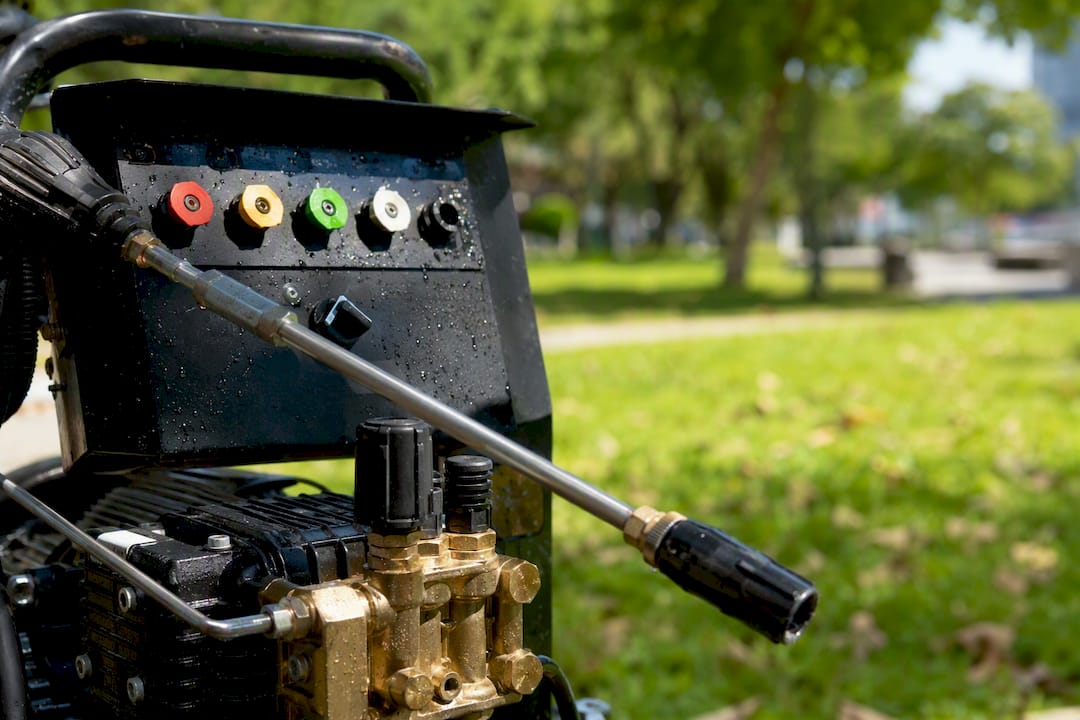
The service list covers the surfaces that actually move curb appeal: house washing, driveway cleaning, roof soft washing, gutter cleaning, and fleet cleaning for property managers handling more than one building. These aren’t add-ons bolted onto a general cleaning business. They’re the core offering, which is why a crew that specializes tends to spot problems (loose gutters, hairline driveway cracks, siding that needs repair before cleaning) that a generalist would miss entirely.
How Do You Prevent Pressure Washing Damage to Wood and Plants?
Wood and landscaping are where most pressure washing damage actually happens, and almost all of it is preventable with the right method and a little planning.
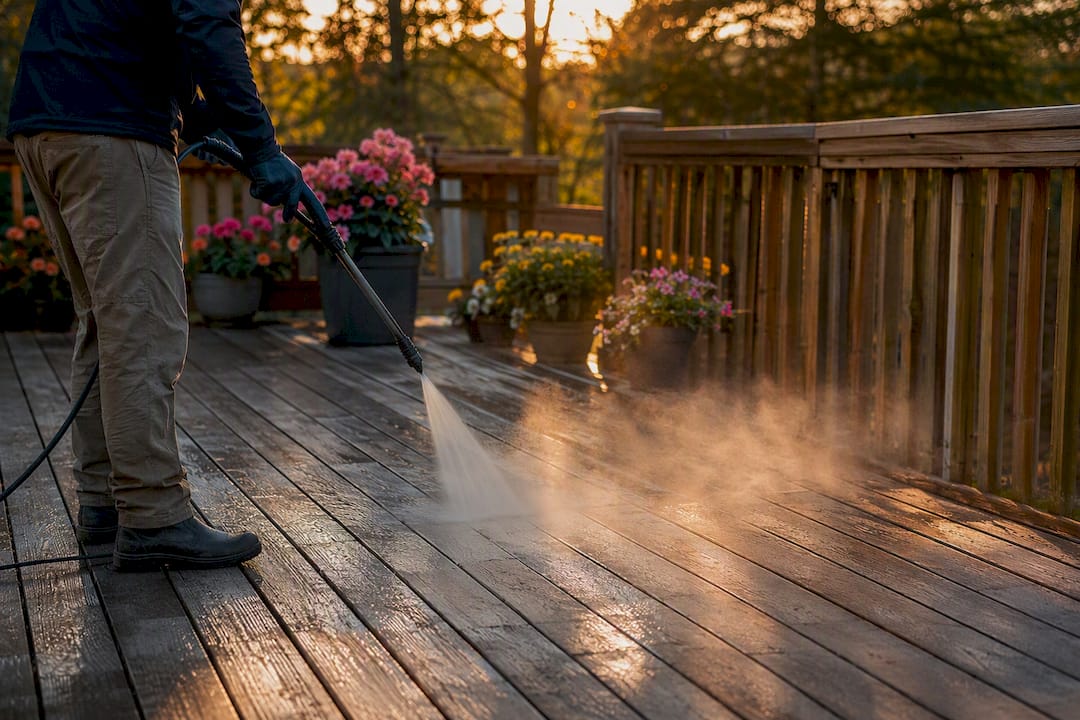
On wood decks and fences, the risk is gouging or “fuzzing” the grain when pressure is set too high or the nozzle held too close. A pro adjusts PSI down significantly for wood compared to concrete, and holds the wand farther back, keeping the surface intact instead of etching lines into it. If a deck needs sealing or staining afterward, that work should wait until the wood fully dries, typically 24 to 48 hours, or the new coat won’t adhere properly.
Plants and garden beds face a different threat: chemical runoff and direct water force. Crews working near landscaping typically pre-wet vulnerable plants, cover delicate beds with tarps, and calibrate chemical dilution and dwell time to the specific plants and climate involved, which limits both plant stress and repeat algae growth. Runoff containment matters here too, since undiluted cleaning solution pooling around root systems can burn foliage or alter soil pH.
One sequencing rule worth knowing if you’re also planning driveway repairs: clean first, repair cracks second, seal last. Sealing over a cracked, dirty driveway traps moisture underneath and makes the damage more visible within a season, not less. A provider who understands that order is a provider who’s thought past the single visit.
What Do Warranties and Satisfaction Guarantees Actually Cover?
A guarantee is only as good as what it specifically promises, and reading the fine print before you book saves arguments later.
Most reputable providers offer some version of a satisfaction guarantee: if you’re not happy with a result, they’ll return to re-clean the area at no extra charge. What varies is scope. Some guarantees cover the full job; others only cover specific surfaces or exclude pre-existing damage like faded paint or worn sealant that cleaning simply revealed rather than caused. Ask directly whether the guarantee covers re-treatment, refunds, or both, and get the timeframe in writing, since “satisfaction guaranteed” with no window attached is functionally meaningless.
Insurance is a separate protection from a satisfaction guarantee, and you want both. A guarantee covers quality of work; insurance covers accidental damage, like a cracked window or a snapped sprinkler line during the job. A company that offers same-week quotes and stands behind its work with a documented guarantee is signaling something real: it expects the job to go right the first time, and it’s willing to put that expectation on paper rather than leave you hoping for the best.
What I’ve Learned Watching Pre-Listing Jobs Go Right (and Wrong)
The biggest mistake I see homeowners make isn’t skipping pressure washing. It’s doing the driveway and calling it done while the siding still has three years of pollen streaking down it. One clean driveway next to a dingy house actually highlights the contrast. On the flip side, a soft-washed exterior paired with a cleaned driveway consistently changes how buyers describe the same house in showings, from “needs work” to “move-in ready.” Hire insured, experienced crews for anything beyond concrete, and the difference shows up in the photos.
— Brandon
Ready to Book Your Curb Appeal Cleaning?
Alldaypowerwashing gives you what a one-truck operator or a weekend rental can’t: commercial-grade equipment calibrated for both concrete and delicate siding, fully insured crews, and a satisfaction guarantee backing every job. For a homeowner prepping a listing or a property manager maintaining curb appeal across multiple buildings, that combination means fewer surprises and no repeat visits to fix damage from underpowered or overpowered equipment.

The service list covers exactly what this article walked through: house soft washing, driveway cleaning, roof soft washing, and gutter brightening, all quoted the same week you reach out. If you’re in Denver, request a quote for your home or property and get a real timeline before you commit to a listing date or an open house weekend.
Sources
- Pressure Washing Before Selling Your House: Is It Worth It? | Pressure Washing Finder
- Does power washing increase home value? | The Spruce
- Is Pressure Washing Before Selling a House Worth It? | WNC Wash Pros
- Why Professional Pressure Washing Elevates Home Value and Boosts Curb Appeal - Gorilla Kleen