

3 Tests to Confirm Downspout Clog Signs and Where They Sit
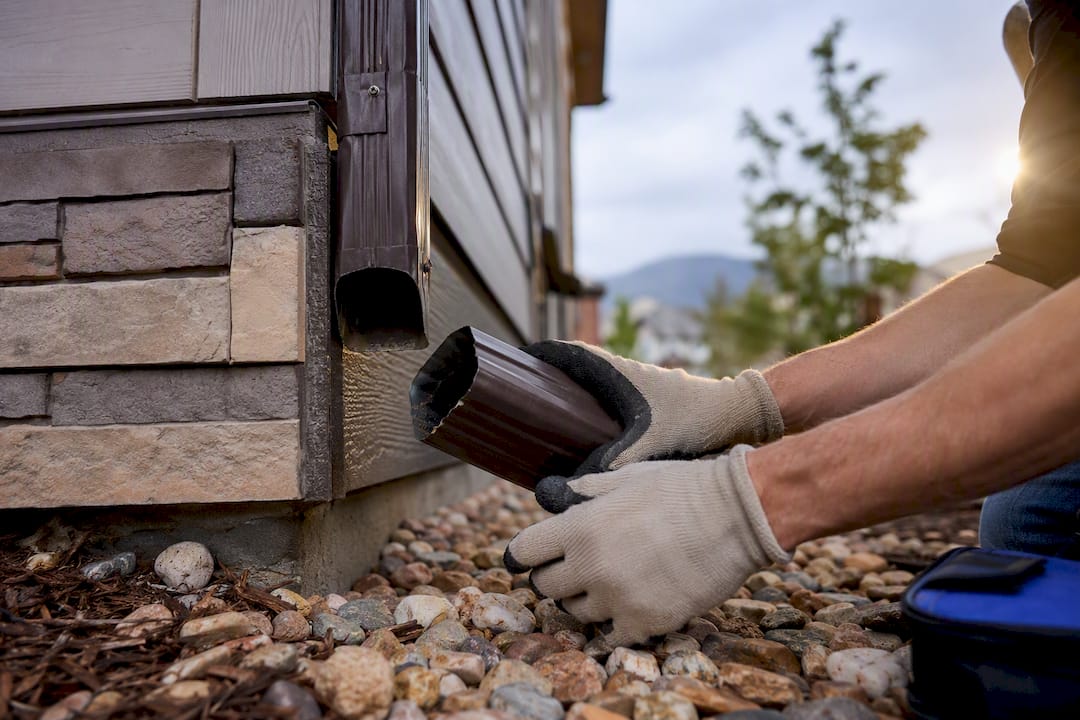
If water pours over the gutter edge right where the downspout meets it, if nothing comes out the bottom during a hard rain, or if you hear gurgling and chugging inside the pipe, you’re almost certainly dealing with a clog. Those three signs, in that order of reliability, catch the vast majority of blockages before they reach your foundation. A hose test or a quick tap on the pipe will confirm it in minutes.
TL;DR:
- Most clogs occur at the top near the elbow or strainer, often caused by leaves, needles, or grit packing the first bend of the pipe.
- Water flow tests, including hose flushing from the top and bottom, help pinpoint the exact location and severity of the blockage.
- Persistent clogs near the outlet or underground suggest issues like crushed pipes or soil erosion rather than simple debris buildup.
- Regular cleaning twice a year, especially after storms or with heavy tree cover, prevents many clogged downspouts and avoids costly repairs.
- Severe or recurring blockages, especially if water reaches the foundation or basement, require professional inspection with specialized equipment.
Table of Contents
- How Do You Know a Downspout Is Clogged?
- What Tests Confirm a Clog and Where It Sits?
- What Do These Signs Usually Mean?
- How Do You Safely Clear a Downspout Clog Yourself?
- How Often Should You Clean Downspouts to Prevent Clogs?
- When Should You Call a Professional Instead of Fixing It Yourself?
- What Do Crews Actually See in the Field?
- Get Your Downspouts Cleared by a Local Crew
- Sources
- FAQ
How Do You Know a Downspout Is Clogged?
The most useful signs split into two categories: what you see during rain, and what you notice when everything’s dry. Both matter, and reading them together tells you almost exactly where the problem sits.
During rain, watch for these patterns:
- Overflow right at the downspout inlet usually means the blockage is at the top, in the elbow, or in the strainer where the gutter feeds into the pipe.
- Overflow spread along the middle of the gutter run more often points to a sagging section or bad pitch rather than a clog, since gutter overflow during heavy rain frequently traces back to a low spot collecting water rather than debris.
- No discharge at all from the bottom opening, even while the gutters above are clearly full, is one of the clearest signs of a clogged downspout drain line.
- Gurgling or chugging sounds inside the pipe mean water is squeezing past a partial obstruction rather than flowing freely. That sound alone is worth investigating before the blockage gets worse.
When it’s dry, look for these clues:
- Vertical streaking or dark stains on the siding below a downspout joint, which suggests water has been escaping through a seam instead of exiting at the bottom.
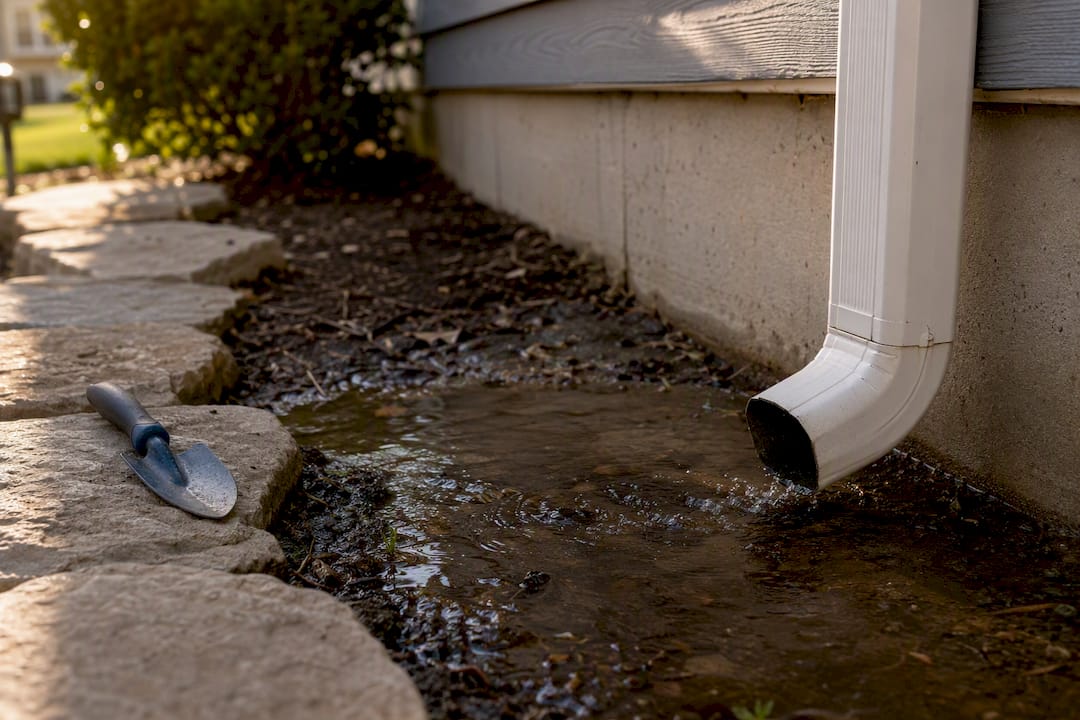
- Soft, sunken, or spongy soil, bubbling, or a visible wet stripe tracking the buried pipe route. A washout or soggy patch right at the base of the downspout is a classic marker of a clogged buried extension.
- Ice buildup or split seams in colder months, which often start as a slow clog that trapped water long enough to freeze and expand.
None of these signs alone is proof positive. Together, though, they narrow down the location fast.
What Tests Confirm a Clog and Where It Sits?
Guessing wastes time. Three simple tests tell you almost everything you need to know, and none require special tools.
- Run the hose test from the top. Have someone feed a garden hose into the gutter near the downspout inlet while you watch the bottom outlet. Water should appear within a few seconds. No flow, a slow trickle, or water backing up and spilling over the top all point to a blockage somewhere in that vertical run. Let the water run for 30 to 60 seconds rather than a quick burst, since a short test can mask a partial clog that a longer flow reveals.
- Flush from the bottom. If the top test fails, insert the hose or a nozzle into the lowest opening and run water upward. Success looks like water eventually breaking through and flowing back down past you, sometimes carrying loosened debris.
- Tap the pipe and listen. Move down the downspout section by section, tapping the exterior. A hollow sound means clear pipe; a dull, solid thud means compacted debris sits at that level, since dense material deadens the sound that would otherwise echo through an empty pipe.
Watch how the system behaves in light versus heavy rain, too. A downspout that drains fine in a drizzle but overflows in a downpour usually has a capacity or outlet problem, not a hard clog. Before you flush anything, check whether the outlet or pop-up emitter at ground level is even visible. If it’s buried under mulch or grass, an outlet that never discharges during steady rain often means the blockage sits right there, not further up the line.
Pro Tip: Pull the splash block or extension off the bottom before you run any test. Testing with it still attached hides whether the pipe itself is clear or the extension is the actual problem.
What Do These Signs Usually Mean?
Every sign above maps to a handful of common causes, and knowing which one you’re dealing with saves a lot of wasted effort.
- Overflow at the top with a dull tap sound near the elbow almost always means needles, leaves, or shingle grit have packed into the first bend. This is the most common and easiest clog to clear.
- Slow, steady dribble that never fully stops, plus repeat clogs every season, points to sediment buildup lining the pipe rather than one solid plug. Cleaning helps, but it comes back faster than a debris clog would.
- A long wet stripe along the buried route, sunken soil, or a soggy patch at the outlet suggests a low spot, crushed section, or separated joint underground. This one usually needs more than a hose.
- An outlet or pop-up emitter that stays dry even when the interior pipe tests clear means the blockage is right at the discharge point, often from soil, roots, or a stuck flap.
- Overflow that happens even with no debris anywhere in the system can be structural: undersized gutters, too few downspouts for the roof area, or bad pitch. Cleaning won’t fix a design problem.
Persistent or recurring clogs almost never come down to one bad storm. Most stubborn cases trace back to a routing or outlet issue that keeps collecting debris in the same spot no matter how often you clean it.
How Do You Safely Clear a Downspout Clog Yourself?
Most top-of-the-line clogs are within reach of a homeowner with basic tools and a little patience. Here’s the order that works.
- Set up safely first. Use a stable ladder on level ground, wear gloves and eye protection, and never stand directly on the gutter to reach a downspout.
- Clear the gutter throat and first elbow by hand before adding any water. Removing loose debris here first keeps you from packing wet material tighter into the bend. Professionals often clear a couple of feet on both sides of the outlet before flushing to give the water somewhere to push debris.
- Try the top-down flush. If water moves through, great. If it backs up, switch to a bottom-up flush to push the clog back the way it came instead of driving it deeper.
- Use a plumber’s snake, handheld auger, or a wet/dry vacuum for anything the hose can’t move. Feel for resistance as you feed the tool in; a sudden stop tells you roughly how deep the blockage sits.
- Detach sections if needed, working from the bottom up, then reseal and re-strap everything once you’re done so nothing rattles loose in the next storm.
Pro Tip: If you have to remove a downspout section to reach a clog, take a photo of how it was strapped before you start. It sounds obvious, but it’s the detail people forget under a ladder.
Stop immediately if you see water in the basement, if overflow continues even after a full flush, or if water keeps surfacing on the ground nearby. Those are signs the problem is bigger than a simple debris clog, and pushing harder with DIY tools can make an underground break worse.
How Often Should You Clean Downspouts to Prevent Clogs?
A twice-a-year cleaning schedule, spring and fall, covers most homes. Properties with heavy tree cover, recent storms, or asphalt shingles shedding grit need a mid-season check too, since granule buildup accumulates faster than most people expect.
- Gutter guards and pre-filters cut down on debris but don’t eliminate cleaning entirely. Check our guide on how often gutter guards still need cleaning for a schedule based on tree type and coverage.
- If you’re not sure how your current cadence stacks up, this breakdown on how often to clean gutters walks through seasonal timing for different roof and yard conditions.
- Keep pop-up emitters and daylight outlets exposed. Mulch, sod, and leaf litter creep over them faster than most homeowners notice, quietly turning a working outlet into a blocked one.
- Grade the soil around the inlet so runoff doesn’t carry sediment into the gutter, and keep splash blocks or short extensions in place to direct water away from the foundation instead of pooling at the base.
Small upgrades beat big repairs. A five-minute check on a dry weekend costs a lot less than digging up a buried line later.
When Should You Call a Professional Instead of Fixing It Yourself?
Some signs mean stop testing and start calling. If water is reaching the foundation, showing up inside the basement, or pooling against the slab, that’s not a maintenance job anymore.
- Recurring clogs in the same spot every season, despite regular cleaning, usually mean a crushed, sagging, or separated buried line that needs a camera inspection to confirm.
- Sagging gutters, detached brackets, or sections pulling away from the fascia need repair before they fail completely, not another flush.
- Stubborn buried blockages sometimes need equipment beyond a garden hose: a sewer jetter, camera scope, or heavy-duty auger can locate and clear what a handheld tool can’t reach.
- Before calling anyone, take photos of the overflow pattern, note what your hose test showed, and mark where the outlet sits. That documentation saves the contractor a diagnostic trip and gets you a faster, more accurate quote.
What Do Crews Actually See in the Field?
Crews who deal with this daily will tell you the same thing: a clog that comes back every year almost never means you cleaned wrong. It usually means the outlet or the routing was never right to begin with, and no amount of flushing fixes a pipe that’s crushed underground or an emitter buried under three inches of mulch. Pressure and jetting equipment earns its place on stubborn sediment buildup, but excavation is sometimes the honest answer for a low-belly line, and pretending otherwise just delays the real fix. One recurring case that sticks with crews: a downspout that clogged every spring for years, until the actual problem turned out to be a buried outlet rerouted to daylight instead of into a dead-end pipe. Once that was fixed, the clogs stopped completely.
— Brandon
Get Your Downspouts Cleared by a Local Crew
Skip the ladder and the guesswork. Local crews clear gutters and downspouts, inspect outlets for buried or stuck emitters, and flag any routing problem before it turns into a foundation issue, often providing a satisfaction guarantee.

Teams work locally with quotes often provided within the same week to address stubborn clogs promptly. Beyond gutters, the same visit can cover house washing, driveway cleaning, and other exterior work if you want to knock out several jobs at once. If a downspout has been overflowing in the same spot for more than one season, that’s usually the outlet talking, not the debris. Request a quote through our Denver service page and get a real crew out to look at it this week.
Sources
- Downspout drain line clogged? (Signs and real fixes) — STURDYMARK
- Signs your buried downspouts are clogged — Done Gutter
- How to clean your gutter downspouts: 5 steps — LeafFilter
- How to clean downspouts (and underground drains) — Clean Pro Gutter Cleaning
FAQ
How can you tell if a downspout is clogged?
Watch for water overflowing right at the downspout inlet during rain, no water exiting the bottom opening, or gurgling sounds inside the pipe. A quick hose test from the top, watching for flow at the bottom, confirms it within a minute.
What are the obvious symptoms of a downspout runoff problem?
Soggy or sunken soil at the base of the downspout, a wet stripe tracking a buried pipe route, and siding stains below a joint all point to water escaping somewhere it shouldn’t. These usually mean sediment buildup or a damaged buried line.
What signs mean a drain clog is serious?
Water reaching the foundation, seepage into a basement, or continuous overflow even after flushing all signal something beyond a simple debris clog. At that point, a camera inspection is worth the cost before the ground around your foundation takes more damage.
My downspout is clogged. What’s the first thing to try?
Clear the visible debris from the gutter throat and first elbow by hand, then run a hose test from the top for a full minute. If water backs up or nothing exits the bottom, try flushing from the lower opening before reaching for an auger or calling Alldaypowerwashing for an inspection.