
Driveway Pressure Washing Cost: What Homeowners Should Budget
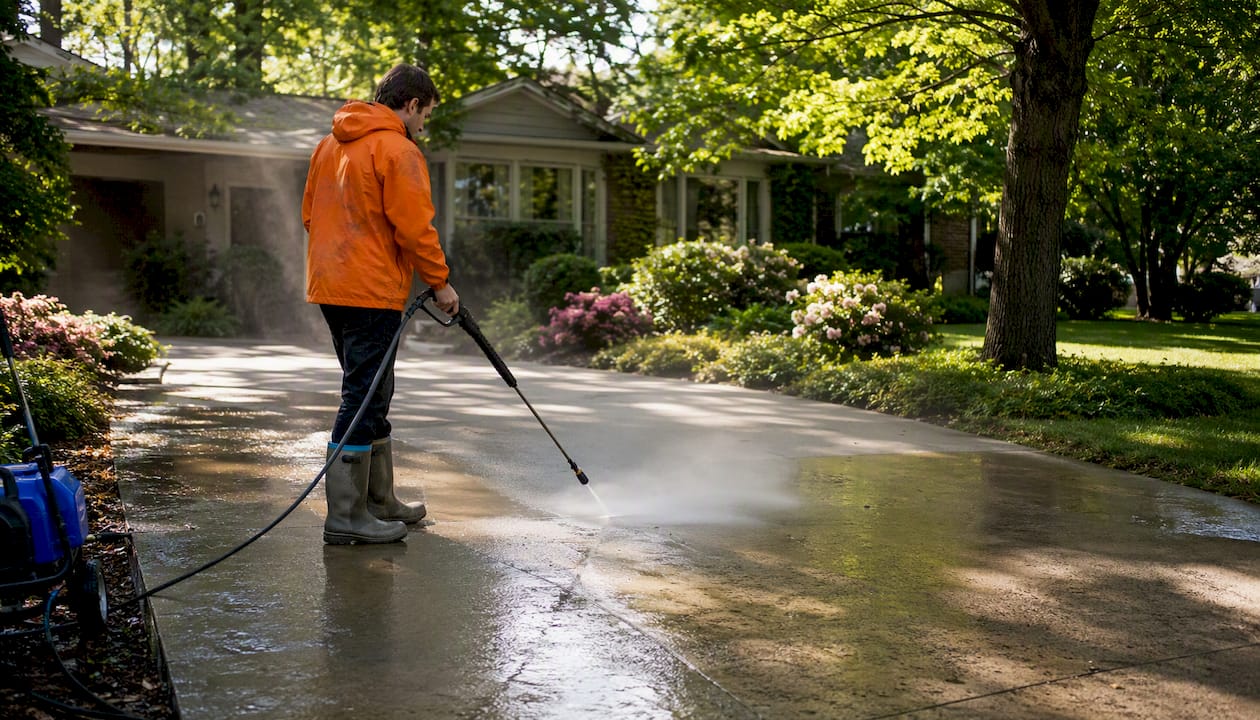
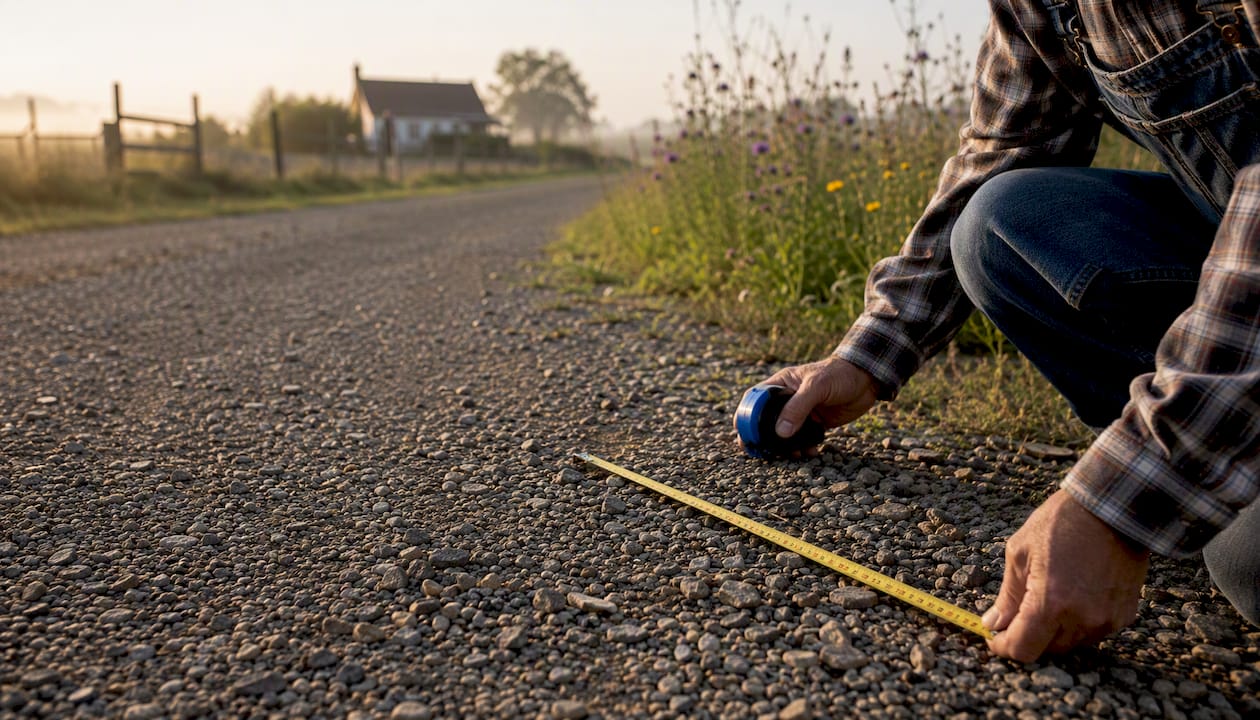
Expect to pay professional driveway pressure washing costs that vary per square foot based on size and condition, with typical total job prices spanning a moderate range. Angi’s national data puts the typical range at $100–$500, while HomeAdvisor pegs the national average at about $210. A single-car concrete driveway generally costs less to pressure wash, while a two-car driveway is more expensive. Before you call anyone, measure your driveway’s square footage (length × width) and get at least three local quotes. That one number is what every contractor needs to give you a real price.
Marketplaces like TaskRabbit list hourly rates alongside per-job pricing, which is useful for cross-checking quotes. Tools like Homewyse’s driveway power washing calculator let you plug in your ZIP code and square footage for a localized estimate. Alldaypowerwashing offers same-week quotes for homeowners in the Denver metro and Colorado Springs, so you can get a real number fast without waiting weeks for a callback.
Table of Contents
- How much does driveway pressure washing cost by size?
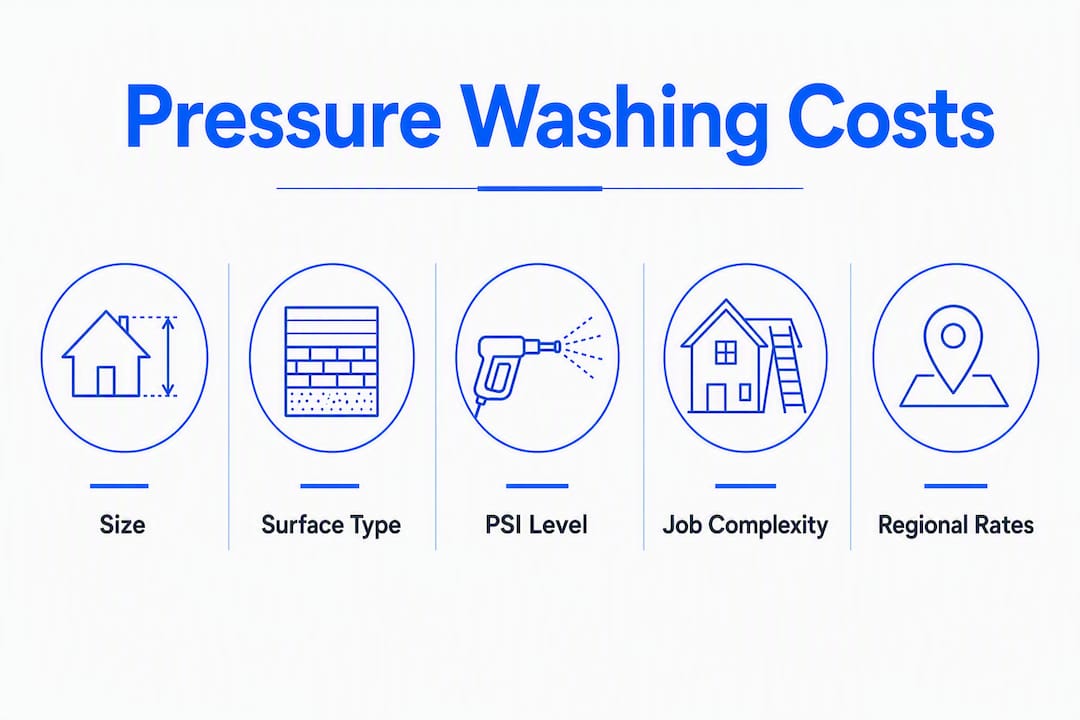
- What factors raise or lower your driveway cleaning cost?
- How do contractors typically price a driveway job?
- How to get accurate local quotes and spot red flags
- Should you DIY or hire a pro?
- What a professional actually does on a driveway job
- Key Takeaways
- Why the cheapest quote is rarely the right one
- Alldaypowerwashing handles driveways in Denver and Colorado Springs
- Tools and sources to check local prices and verify contractors
How much does driveway pressure washing cost by size?
The per-square-foot model is the most common way pros price flatwork, with rates varying by region, surface type, and job intensity.
| Driveway Size | Approx. Sq Ft | Low Estimate | Typical | High Estimate |
|---|---|---|---|---|
| Single-car (short) | 200 sq ft | $60 | — | $150 |
| Two-car | 500 sq ft | $100 | — | — |
| Large two-car | 600 sq ft | — | — | — |
| Long or wide | 1,000 sq ft | — | — | — |
One thing that catches homeowners off guard: many contractors set a minimum job fee to cover travel and equipment setup, regardless of driveway size. A 200-square-foot slab at $0.30 per square foot would theoretically cost $60, but you will almost certainly pay the minimum instead. If your driveway is on the smaller side, ask whether the contractor will bundle the driveway with a walkway or patio to make the trip more cost-effective for both of you.
What factors raise or lower your driveway cleaning cost?
Price differences between quotes often come down to a handful of variables. Understanding them helps you spot whether a high quote is justified or inflated.
Surface material is the biggest single factor after size. Concrete is the most forgiving surface and typically sits at the lower end of the per-square-foot range. Asphalt requires lower pressure (under 2,000 PSI) to avoid surface damage, which can mean slower work. Pavers and brick need careful nozzle selection and often require joint re-sanding afterward, pushing costs higher. Gravel driveways are rarely pressure-washed at all since the force displaces the material.
Stain type and condition can flip a routine job into a specialty one. Algae and general grime from a year or two of buildup come off quickly. Deep-set oil stains, calcium scale, or rust require specialized degreasers and extra dwell time, and Angi notes that heavy staining consistently pushes projects toward the top of published price ranges. A driveway that has not been cleaned in five or more years should be quoted as a heavy-clean job, not a maintenance wash.
- Slope and layout: A steeply pitched driveway or one with tight turns takes longer to work safely and may require extra crew.
- Site access: Limited water or electrical hookups, long hose runs, or obstacles like parked vehicles add time and sometimes equipment costs.
- Landscaping proximity: Beds, grass edges, and drains near the driveway require protective measures or careful rinse direction.
- Travel fees: Contractors outside your immediate area often add a travel surcharge, especially for jobs under $200.
- Seasonality: Spring and early summer are peak season in most U.S. markets. Booking in late fall or winter can sometimes get you a lower rate or faster scheduling.
Pro Tip: PSI matching matters more than most homeowners realize. Pros use 2,000–3,000 PSI for concrete, under 2,000 PSI for asphalt, and 1,200–2,000 PSI for pavers. A contractor who does not ask about your surface type before quoting is a red flag.
Regional cost-of-living differences also matter. The MakeWash calculator applies ZIP-based multipliers, and the same 1,000-square-foot driveway can cost significantly more in a high-cost metro than in a lower-cost market.
How do contractors typically price a driveway job?
Three pricing models show up consistently, and knowing which one a contractor uses changes how you compare quotes.
Per square foot is the standard for most residential flatwork. It scales predictably with size and makes it easy to compare bids. Most pros in this model charge per square foot, with rates varying based on market, surface, and stain difficulty. Thumbtack’s pricing overview confirms that flat pricing for flatwork like driveways is common, with stain-specific add-ons priced separately.
Flat project price is common for straightforward jobs where the contractor can eyeball the scope quickly. You get a single number for the whole job. This is convenient but harder to audit if something unexpected comes up mid-job.
Hourly rates appear more often on marketplace platforms like TaskRabbit, where contractors list an hourly labor rate. This model works in your favor for small, clean driveways and against you for heavily stained ones where the hours are unpredictable.
Common line items to expect on a written estimate:
- Base labor (per sq ft or flat)
- Detergent and chemical costs (sometimes bundled, sometimes separate)
- Oil-stain treatment (almost always an add-on)
- Sealant application (separate service, often $0.10–$0.25 per sq ft extra)
- Joint re-sanding for pavers (separate)
- Travel or minimum fee
- Containment or protective measures for landscaping
Pro Tip: Ask for the per-square-foot rate even when a contractor quotes a flat price. If the implied rate is below $0.15 or above $0.60, ask what is driving it. A fair quote usually falls within roughly 20% of a per-sq-ft estimate; anything outside that band deserves an explanation.
How to get accurate local quotes and spot red flags
Getting three comparable quotes takes about 20 minutes of prep and saves real money. Here is what to do before you call anyone.
- Measure your driveway. Length × width in feet gives you square footage. For irregular shapes, break it into rectangles and add them up.
- Note the surface material. Concrete, asphalt, pavers, or a mix. This affects PSI settings and price.
- Document visible stains. Take photos of oil spots, rust, algae patches, or any discoloration. Send these with your quote request.
- Note access conditions. Is there a water spigot nearby? Is the driveway sloped? Are there garden beds along the edges?
- Ask for a written, itemized estimate. Not a text message with a number. A document that breaks out labor, chemicals, add-ons, and any minimum fees.
Questions to ask every contractor:
- What is your per-square-foot rate for this surface?
- Do you have a minimum job fee, and what does it cover?
- What PSI will you use on my driveway material?
- Are you fully insured, and can you provide a certificate?
- Is oil-stain removal included, or is it a separate charge?
- Do you offer a satisfaction guarantee or warranty on the work?
- How long will the job take, and what is your current lead time?
Red flags to watch for:
- Verbal-only quotes with no written breakdown
- Per-square-foot rates well below $0.15 (suggests underpowered equipment or cut corners)
- No mention of PSI or surface-specific technique
- Refusal to itemize stain treatments separately
- No proof of insurance when asked
HomeAdvisor notes that a typical driveway job takes one to two hours for an average-sized surface, with larger or heavily stained driveways running longer. Factor that into scheduling, especially if you need vehicles moved or gates unlocked.
Should you DIY or hire a pro?
For a light maintenance wash on a clean concrete driveway, DIY is a reasonable option. A consumer-grade electric pressure washer costs $150–$400 to buy or $40–$80 per day to rent. Add detergent, your time, and the learning curve on nozzle selection, and a small job can be done for under $100 out of pocket.
The math shifts quickly once the job gets harder. Deep oil stains require commercial degreasers and dwell time that consumer machines handle poorly. Pavers need precise pressure control to avoid dislodging the sand joints. Slopes and tight spaces add physical risk. And if you over-pressurize asphalt, you can strip the surface binder and create pitting that costs far more to repair than the original cleaning would have.
Hiring a pro makes clear sense when:
- The driveway has not been cleaned in several years
- There are visible oil stains, rust, or calcium deposits
- The surface is pavers, brick, or older asphalt
- You want a warranty or insured service
- The driveway is large enough that rental costs approach the pro quote
For property managers overseeing multiple surfaces, routine professional cleaning prevents the kind of deep buildup that turns a $200 maintenance wash into a $600 remediation job. Scheduling annual or biannual service is almost always cheaper than waiting until the surface looks bad.
What a professional actually does on a driveway job
A well-run driveway cleaning job follows a consistent sequence that justifies the price difference over a DIY rinse.
The crew starts with a pre-inspection: surface material, stain types, slope, nearby landscaping, and drain locations. That assessment drives equipment selection. A concrete driveway in good condition gets a surface cleaner attachment at 2,500–3,000 PSI for even coverage. Asphalt gets a wider fan nozzle at lower pressure. Pavers get a rotating nozzle at 1,200–1,500 PSI with extra care around the joints.
Detergent application comes before the pressure rinse on any job with visible staining. The right cleaner for the stain type (degreaser for oil, acid-based for calcium, algaecide for organic growth) is applied and allowed to dwell before the high-pressure pass. Skipping this step is why some DIY jobs look clean immediately and then show the same stains two weeks later.
Site cleanup includes rinsing runoff away from landscaping and storm drains, removing any protective coverings, and a final walkthrough with the homeowner.
Alldaypowerwashing uses commercial-grade equipment and fully insured crews on every job in the Denver metro and Colorado Springs. Every driveway cleaning comes with a satisfaction guarantee, and same-week quotes are available for homeowners who need a fast turnaround. The company’s service overview covers concrete cleaning, paver cleaning, oil-stain treatment, and sealing prep.
Insurance matters here more than most homeowners think. If a contractor damages a paver, cracks a concrete edge, or strips asphalt binder, an uninsured crew leaves you with the repair bill. A certificate of insurance is a non-negotiable ask before any work starts.
Key Takeaways
Most U.S. driveways cost $100–$500 to pressure wash professionally, with per-square-foot rates of $0.30–$0.55 covering the majority of jobs.
| Point | Details |
|---|---|
| Measure before you call | Know your square footage (length × width) before requesting any quote. |
| Watch for minimum fees | Small driveways often hit a $100–$150 floor regardless of square footage. |
| Stains change the price | Oil, rust, and calcium deposits are almost always priced as add-ons, not included in the base rate. |
| Verify insurance and guarantee | Always request a certificate of insurance and confirm whether a satisfaction guarantee is offered. |
| Alldaypowerwashing for local jobs | Alldaypowerwashing serves Denver and Colorado Springs with insured crews, commercial equipment, and same-week quotes. |
Why the cheapest quote is rarely the right one
The instinct to take the lowest bid is understandable, but driveway pressure washing is one of those services where the gap between a $90 quote and a $180 quote usually reflects real differences in equipment, insurance, and technique rather than profit margin.
A contractor running a 1,500 PSI consumer machine cannot clean concrete the way a commercial surface cleaner at 2,800 PSI does. The result looks similar for about two weeks, then the embedded grime resurfaces because the lower pressure never broke the bond. You end up calling someone else, paying again, and wondering why the first job did not hold.
The more useful frame is not “what is the cheapest price?” but “what is the price for the outcome I actually want?” A driveway that stays clean for 12–18 months, with oil stains fully treated and no surface damage, costs what it costs. Contractors who price that outcome fairly are not overcharging; they are accounting for the right equipment, the right chemistry, and the liability coverage that protects you if something goes wrong.
One thing reputable pros will never do: over-pressurize asphalt or use acid-based cleaners on pavers without warning you first. If a contractor does not mention surface-specific technique during the quote conversation, that silence is information.
Alldaypowerwashing handles driveways in Denver and Colorado Springs
If you are in the Denver metro or Colorado Springs and want a quote without the back-and-forth, Alldaypowerwashing is built for exactly this. The crew handles concrete cleaning, paver cleaning, oil-stain treatment, and sealing prep, all under a satisfaction guarantee and full insurance coverage. You are not dealing with a one-person operation running consumer equipment; these are commercial-grade setups with trained crews who know the difference between a maintenance wash and a heavy-clean job.
Send photos of your driveway, your square footage estimate, and a note on any visible stains. Alldaypowerwashing provides same-week quotes for residential and commercial properties across the Denver service area. When you are ready to book or want a fast estimate, the instant quote form gets you a real number without a sales call.
Tools and sources to check local prices and verify contractors
Before you finalize a quote, run your square footage through at least one calculator and cross-check the result against marketplace data.
| Resource | What it gives you | Link |
|---|---|---|
| Homewyse Cost Calculator | ZIP-adjusted labor and material estimates for driveway power washing | homewyse.com |
| MakeWash Calculator | Regional per-sq-ft estimates with ZIP multipliers | makewash.com |
| Angi Pricing Guide | National per-sq-ft ranges and size-based examples | angi.com |
| Thumbtack Pricing Overview | Contractor commentary on flat vs. per-sq-ft models | thumbtack.com |
| Alldaypowerwashing Blog | Local pricing context, oil-stain guides, and surface-specific advice | House pressure washing prices |
To verify a contractor’s insurance, ask for a certificate of general liability insurance naming your address. Reputable contractors carry it and send it without hesitation. For oil-stain jobs specifically, the Alldaypowerwashing oil-stain guide explains what treatments actually work and what to expect on an itemized estimate. For property managers handling multiple surfaces, scheduled maintenance cleaning consistently costs less over time than reactive heavy-clean jobs.
Recommended
- House Pressure Washing Prices in Colorado: 2026 Guide — All Day Power Washing
- Best Cleaner for Pressure Washing House: 2026 Guide — All Day Power Washing
- Parking Lot Pressure Washing: A Hiring Guide for Property Managers — All Day Power Washing
- Eco Friendly Pressure Washing: Safe Guide for Homeowners — All Day Power Washing