

How Property Managers Stop Dumpster Pad Odor Before Tenants Complain
Remove solids, degrease, pressure wash with hot water, then apply a bio-enzymatic deodorizer. That sequence stops most dumpster pad odors because it treats the source (grease and food residue trapped in porous concrete) instead of covering it up. Quick triage means containing runoff and using granules for same-day relief. If odor persists after cleaning or you suspect grease impregnated deep in the concrete or drain lines, call a professional before the smell becomes a tenant complaint.
TL;DR:
- Grease and organic residue absorbed into concrete often require multiple cleanings over weeks, not just one, to fully eliminate odors.
- Bio-enzymatic treatments effectively break down odor-causing substances, but need reapplication every one to two weeks for persistent issues.
- Most open-air dumpster pads should be cleaned monthly for retail and multifamily properties, but food-service sites may need biweekly to monthly care.
- Proper drainage management, including using filters and avoiding storm drain discharge, is crucial to stay compliant and prevent odor and pollution fines.
- Professional services are recommended when odors persist after routine cleaning, especially if grease is embedded or drain issues cause recurring problems.
Table of Contents
- Step-By-Step Cleaning Checklist for Dumpster Pad Odor Control
- What Odor Control Products Actually Work?
- How Often Should You Clean a Dumpster Pad?
- How Do You Handle Drainage and Runoff Legally?
- Preventing Dumpster Smell Between Cleanings
- What Professional Crews Look for on a Dumpster Pad
- A Five-Step Checklist Worth Printing
- Getting Professional Help With Stubborn Dumpster Pad Odor
- Sources
- FAQ
Step-By-Step Cleaning Checklist for Dumpster Pad Odor Control
A clean dumpster pad starts with the same routine every time, whether your own staff handles it or you hand this list to a vendor.
- Gear up and control traffic. Gloves, eye protection, and boots are non-negotiable. Block off the area so foot and vehicle traffic stay clear during wet work.
- Protect the storm drain first. Cover or block nearby storm drains before you start. This one step prevents the biggest compliance headache on the entire job.
- Clear loose debris and solids. Sweep or shovel out trash, cardboard, and standing food waste. Skipping this step just means you’re pressure washing garbage into a bigger mess.
- Apply a commercial degreaser. Grease and food residue are the primary drivers of dumpster pad odor, and pressure alone rarely lifts it. Let the degreaser sit for the dwell time listed on the product label, usually 10 to 15 minutes, before rinsing.
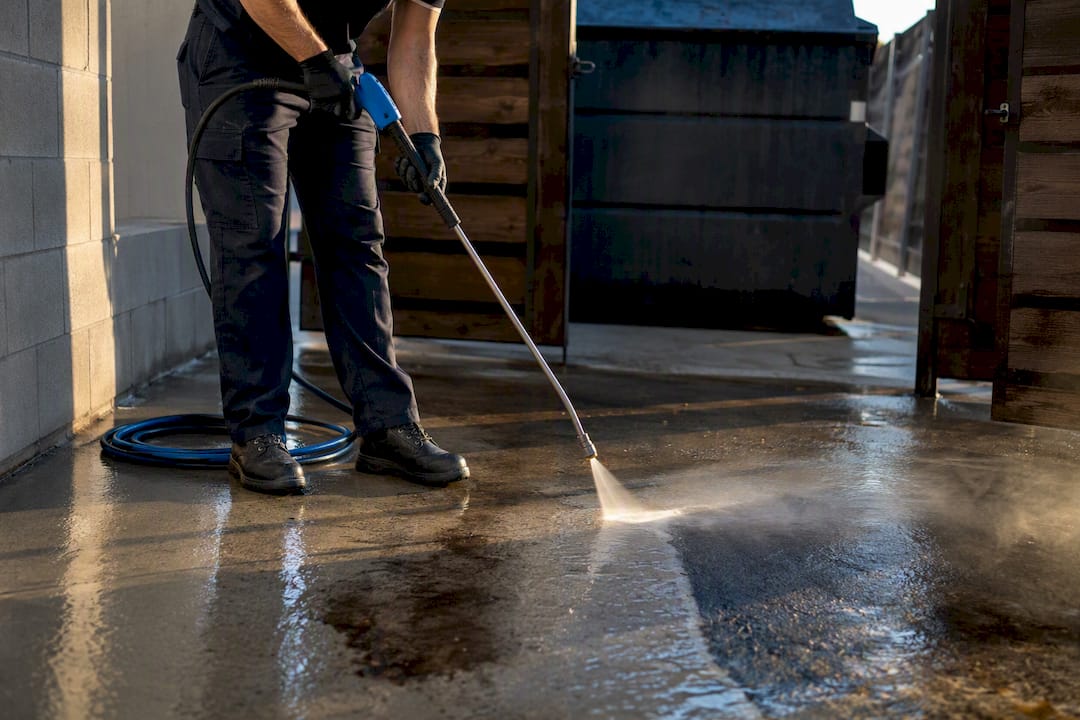
- Pressure wash with the right nozzle and heat. A 15 or 25 degree nozzle at 3,000 to 4,000 PSI clears most grease once it’s broken down; hot water (around 200°F) cuts through baked-in grease faster than cold water alone.
- Sanitize, then deodorize. Apply a bio-enzymatic treatment once the surface is rinsed and mostly dry. Enzymes need time to work, so plan on reapplying every one to two weeks until odor is fully gone.
- Do a final walkthrough. Check that dumpster lids close and latch properly, snap a few photos, and log the date. That record matters if a tenant complains later or an inspector asks questions.
Pro Tip: Grease that’s already soaked into textured concrete rarely comes out in one pass. Plan on repeating the degreasing step over two or three cleanings spaced a week apart rather than scrubbing harder on day one.
What Odor Control Products Actually Work?
Not every product on the shelf removes odor. Some just cover it up for a few hours, which is why picking the right category matters more than picking a brand.
- Bio-enzymatic sprays break down the organic matter causing the smell instead of masking it, which is why commercial cleaning suppliers recommend them as the long-term fix for cracks and crevices pressure washing can’t fully reach.
- Granules and absorbents give immediate relief inside the dumpster itself but don’t kill odor-causing bacteria, so treat them as a bridge between deeper cleanings, not a substitute for one.
- Vapor-phase and industrial neutralizers make sense for large or enclosed facilities with persistent odor problems, often after lab testing and a custom formulation, but they’re overkill for a typical outdoor pad behind a strip mall.
- Activated carbon filtration captures airborne odor molecules that HEPA and MERV filters simply pass through, which makes it relevant for enclosed waste rooms or trash chutes inside a building, not open-air pads.
Store all chemical treatments away from direct sun and away from anywhere staff eat or take breaks, and never mix degreasers with bleach-based products. Combining a fast-acting granule with an enzyme spray after a thorough clean typically gives you both the immediate relief and the lasting control property managers actually want.
How Often Should You Clean a Dumpster Pad?
Cadence depends on what’s generating the waste, not the calendar. Restaurants and food-service tenants need biweekly to monthly cleaning because grease and protein residue build up fast; retail and multifamily properties usually hold up fine on a monthly schedule; low-traffic sites like small offices can often stretch to quarterly.
Three signs mean it’s time to call a professional instead of running the hose again yourself:
- Odor comes back within days of a cleaning, which usually points to grease that’s worked its way into the concrete pores.
- Drains near the pad are slow or clogged, or you’re seeing pest activity you didn’t have before.
- Staining has spread beyond the immediate dumpster footprint, a sign the problem predates your last few cleanings.
A professional service typically adds hot-water degreasing at higher volume, drain-line work your garden hose can’t touch, and wastewater capture that keeps you compliant. Weigh the recurring cost against tenant complaints or a potential fine. The documentation a pro leaves behind is often worth as much as the clean itself if a dispute comes up later.
How Do You Handle Drainage and Runoff Legally?
Grease and food solids should never reach a storm drain. Most municipalities treat that as a direct violation, and even where it’s not explicitly banned, it’s the fastest way to turn a routine cleaning into a compliance problem.
- Route wastewater to a sanitary sewer only where local rules explicitly allow it, and confirm with your property’s environmental officer or municipal ordinance first.
- Use a portable wash-recovery unit on jobs where discharge to a sanitary line isn’t an option.
- Silt bags, inline filters, and grate covers over nearby storm drains catch solids before they travel anywhere.
- On smaller properties without recovery equipment, clean during low-rain windows and lay absorbent pads to catch emulsified oil before it spreads.
These aren’t optional extras. Discharging grease-laden wash water into a storm system is the single most common way a routine cleaning job turns into a fine.
Preventing Dumpster Smell Between Cleanings
The cheapest odor control tool you have is a closed lid. Check hinges and latches during every walkthrough. A gate that won’t fully close is an open invitation for both smell and pests.
- Set clear rules for tenants and staff: bag everything before it goes in, no liquid grease disposal, and flatten boxes away from the pad rather than jamming them against the enclosure walls.
- Keep a small spill kit with absorbent granules on hand for the inevitable bag that tears or leaks after a busy weekend.
- If you’re designing or retrofitting a pad, slope the concrete toward a drain, choose a sealed or easily cleanable surface, and let sunlight and airflow reach the enclosure when the layout allows it.
Food-service tenants in particular benefit from written waste-handling guidelines as part of their lease terms, since inconsistent disposal habits are the most common reason a clean pad smells bad again within a week.
Pro Tip: Post a laminated one-page reminder near the enclosure gate. “Bag it, close it, latch it” sounds obvious, but it’s the single most effective, zero-cost odor prevention tool most properties never bother to put up.
What Professional Crews Look for on a Dumpster Pad
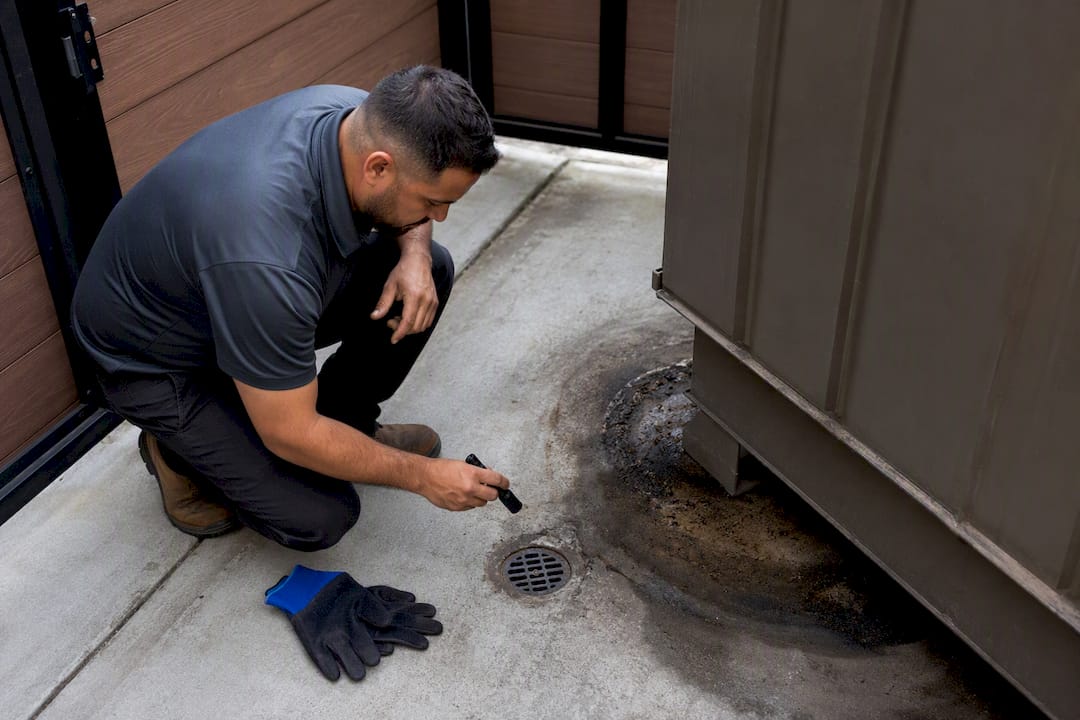
Experienced crews don’t start with the hose. They start with an inspection: checking drain condition, looking for grease rings around the dumpster base, and pulling back skids or gate panels to check for hidden pockets where waste collects unseen. Staining patterns tell a story too. A dark ring that keeps reappearing in the same spot usually means grease has already worked into the concrete, not just sitting on top of it.
The most effective add-ons beyond a standard wash are targeted degreasing on stained zones, a drain-line flush when slow drainage is part of the odor problem, and breathable concrete treatments that resist future staining without sealing the surface completely. One thorough visit typically resolves surface odor and visible grime. Odor tied to deep grease saturation or drain issues usually needs a recurring service plan to fully resolve, not a single appointment.
A Five-Step Checklist Worth Printing
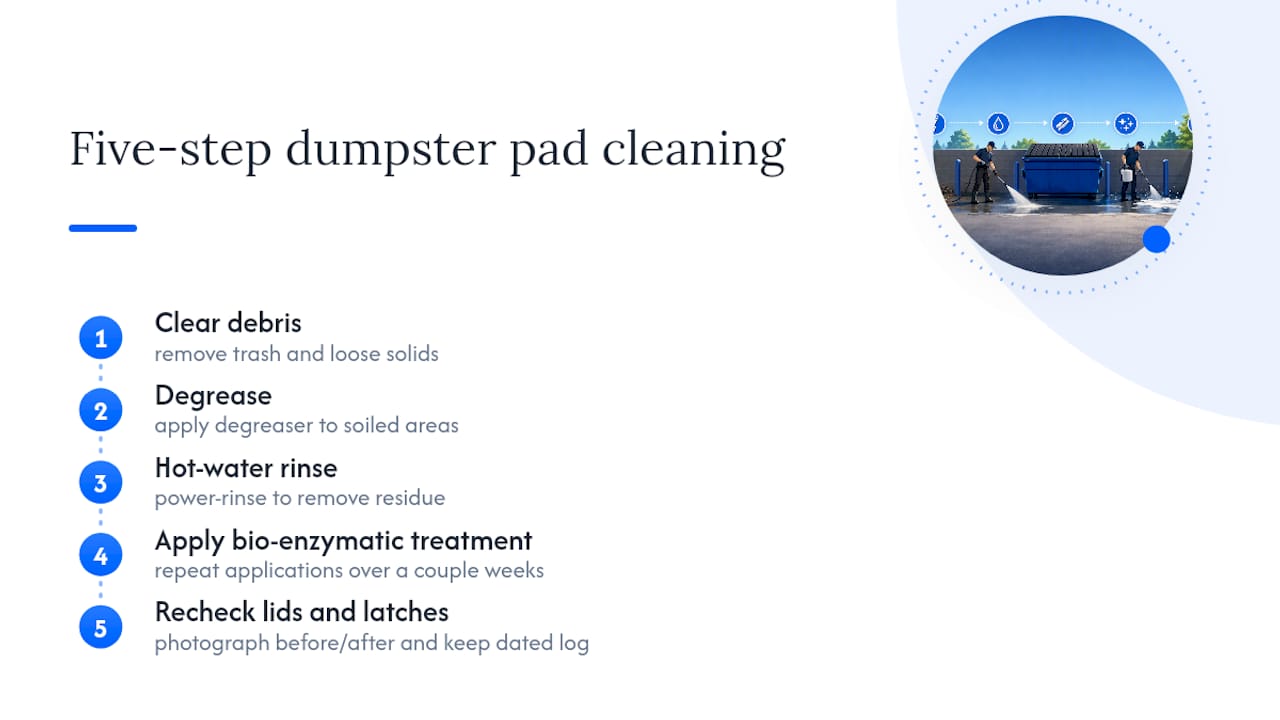
If you take one thing from this guide, print this: clear debris, degrease, hot-water rinse, apply a bio-enzymatic treatment, and recheck lids and latches before you walk away. Five steps, in that order, cover the vast majority of dumpster pad odor complaints I’ve seen written up in property management forums and vendor case notes alike.
What most managers miss isn’t a step. It’s timing. Enzyme treatments need repeat applications over a couple of weeks to fully break down grease that’s already soaked into concrete. One heavy cleaning followed by nothing is why odor “comes back” a month later. It never fully left.
Photograph the pad before and after each cleaning, and keep a simple log with dates. That record protects you in a tenant dispute and helps you spot patterns, like a tenant whose disposal habits keep undoing your work, faster than a nose alone ever will.
— Brandon
Getting Professional Help With Stubborn Dumpster Pad Odor
Professional services are recommended when the problem has moved past a hose and a bottle of degreaser, specifically when grease has soaked into the concrete, drains need real attention, or a recurring route across multiple properties is needed instead of a one-time fix.

Crews typically use commercial-grade equipment built for embedded grease rather than consumer-grade gear. They may be insured and often provide satisfaction guarantees, so if odor persists after a visit, it is addressed rather than left for the property manager to resolve. Services often include handling adjacent problems that show up alongside odor complaints, such as kitchen hood degreasing for restaurant tenants and concrete cleaning for the surrounding lot.
If your dumpster pad has been fighting you for weeks despite regular cleaning, request a quote and get a real crew looking at the actual problem instead of another bottle off the shelf.
Sources
For technical detail beyond this checklist, Imperial Dade’s odor control guide breaks down enzymatic versus masking products. RoboVent’s industrial odor guide explains activated carbon filtration for enclosed spaces. Xylem’s wastewater odor page covers advanced treatment for large or regulated sites.
- Dumpster Odor Control: How to Eliminate Dumpster Odor | Imperial Dade
- Why dumpster pads smell bad in South Florida | BravaSurface
FAQ
How Can I Get Rid of Dumpster Smell for Good?
Remove all solid debris, apply a commercial degreaser with proper dwell time, pressure wash with hot water, then finish with a bio-enzymatic deodorizer rather than a masking spray. Repeat the enzyme treatment every one to two weeks, since grease already soaked into concrete often takes more than one cleaning to fully break down.
What Is the Best Dumpster Deodorizer?
Bio-enzymatic sprays are the best option for lasting control because they break down organic residue instead of covering the smell. Granules work well for immediate, short-term relief but should be paired with an enzyme treatment for results that last.
What Can I Put in a Garbage Can to Stop the Smell?
Granules or absorbent powders formulated for waste odor give same-day relief inside the can itself. For anything beyond a quick fix, a bio-enzymatic spray applied after the can is emptied and rinsed handles the residue causing the smell in the first place.
What Chemicals Neutralize Sewage or Drain Odor Near a Dumpster Pad?
Drain-line odor near a dumpster pad usually points to grease or organic buildup in the line itself, which a professional drain flush combined with enzymatic treatment resolves more reliably than any single chemical poured down the drain. Persistent sewage-like smell after cleaning is a sign to call a professional rather than keep treating the surface.
How Often Should a Commercial Dumpster Pad Be Cleaned?
Restaurants and food-service properties need cleaning biweekly to monthly, retail and multifamily properties do well on a monthly schedule, and low-traffic sites can often stretch to quarterly. If odor returns within days of a cleaning regardless of schedule, that’s a sign to escalate to a professional service rather than clean more often on your own.