

First 10 Minutes: Stop Restaurant Grease on Concrete
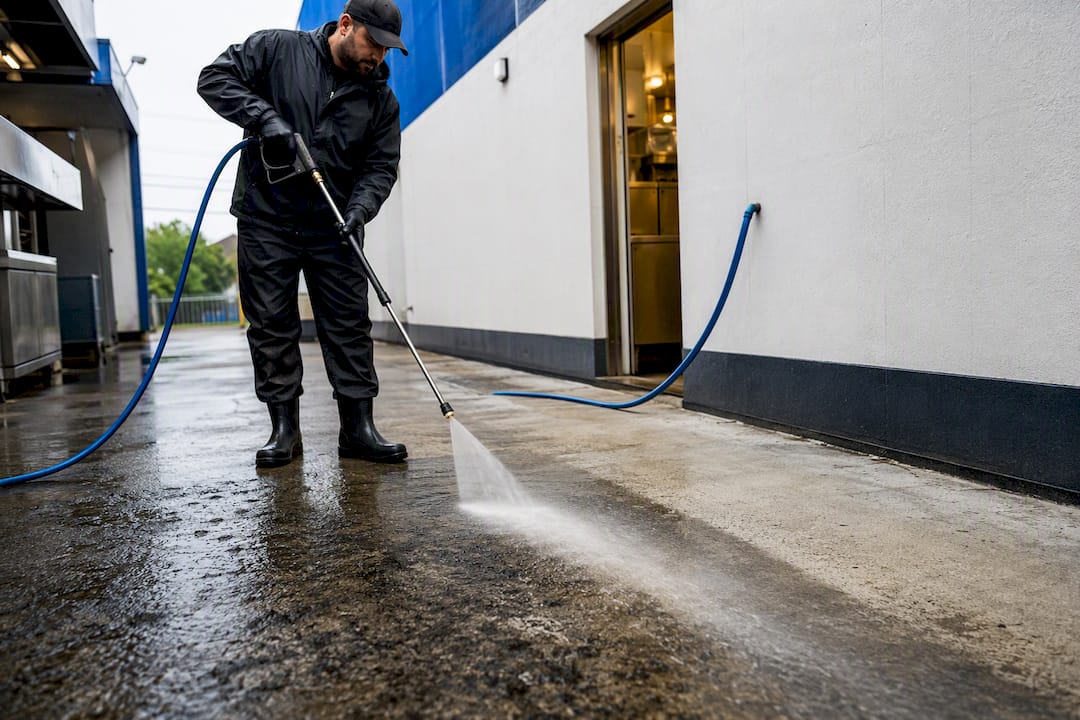
Absorb fresh grease spills right away with cat litter or an oil absorbent to stop the spread. That buys you time, but it won’t erase what’s already there. Full restoration on baked-in restaurant grease on concrete almost always requires a commercial alkaline degreaser with real dwell time, followed by hot-water, high-pressure washing. If the stain is old, large, or keeps coming back, hiring a professional pressure-washing contractor is the fastest path to a surface that’s actually clean and safe to walk on.
TL;DR:
- Professionals recommend using alkaline degreasers with dwell time and hot water pressure washing to effectively remove baked-in restaurant grease from concrete surfaces.
- Repeated treatment cycles may be necessary for long-standing, oxidized grease, and sometimes resurfacing or coating is required if stains are deeply absorbed.
- DIY methods like simple scrubbing or mixing improvised cleaners can worsen the problem by embedding surfactants and leaving slippery films that attract dirt.
- Regular cleaning of rooftop exhaust systems and establishing a routine exterior wash schedule help prevent recurring grease buildup on concrete surfaces.
- Ensuring proper wastewater recovery, safety gear, and traction checks are critical during cleaning, and large or stubborn stains should be handled by professional contractors.
Table of Contents
- What Should You Do the Moment Grease Hits Concrete?
- How Do Professionals Remove Baked-In Restaurant Grease?
- Which DIY Methods Actually Work on Grease Stains?
- How Do You Stop Grease From Coming Back?
- Is Cleaning Grease From Concrete Actually Dangerous?
- When Should You Just Call a Pressure-Washing Contractor?
- How All Day Power Washing Handles Heavy Restaurant Grease
- What Most Restaurant Managers Get Wrong About Grease Cleanup
- Ready to Get Baked-In Grease Off Your Property for Good?
- Sources
What Should You Do the Moment Grease Hits Concrete?
The first ten minutes after a spill decide whether you’re dealing with a five-minute cleanup or a permanent stain. Act fast and follow this order:
- Contain it. Rope off the area or block foot and vehicle traffic immediately. Wet grease tracked across a parking lot spreads the problem to areas that were clean seconds ago.
- Absorb it. Pour on cat litter, sawdust, or a commercial oil absorbent. Let it sit for a few hours so it can pull grease out of the surface pores before you sweep.
- Collect and dispose properly. Bag the used absorbent and throw it out according to local waste rules. Never hose greasy residue toward a storm drain.
- Manage traction until the real cleaning happens. Keep sprinkling absorbent and resweeping the spot through the rest of the shift so nobody slips before a full degreasing and rinse can happen.
This sequence matches what HomeEssentialsGuide recommends for concrete specifically: absorb first, then follow with mechanical cleaning and a strong degreaser once the bulk of the oil is gone. Skipping straight to a mop and soapy water usually just smears the grease into a wider, thinner, harder-to-see stain.
How Do Professionals Remove Baked-In Restaurant Grease?
Grease that’s been baking under kitchen exhaust or summer sun for weeks behaves differently than a fresh spill. It’s partially oxidized, embedded in the concrete’s pores, and mixed with carbon soot that regular soap barely touches. Professionals attack it with a specific combination:
- Alkaline degreasers. High-pH chemistry breaks down fats and carbonized grease chemically, but only if it’s given proper dwell time on the surface. Rinsing too soon wastes the product.
- Hot water. Hot-water pressure washing lifts grease far more effectively than a cold-water wand, since heat helps liquefy fats that are otherwise solid at room temperature.
- Mechanical agitation. Surface cleaners and stiff brushes drive the degreaser deeper into the pores and physically pull residue back out, rather than just pushing it around.
- Wastewater control. Vacuum recovery systems or approved drain connections keep contaminated rinsewater out of storm drains, which matters for staying compliant with municipal stormwater rules near grease trap and pad cleaning sites.
Pro Tip: If a spot has been dark for months, don’t expect one pass to fix it. In hot, sunny climates, grease can go through a kind of thermal curing that locks it into the concrete’s surface, and it often takes two or three treatment cycles before the stain visibly lightens for good.
Heavy, long-standing contamination sometimes needs more than repeat cleaning. When the concrete has absorbed grease deep enough, a contractor may recommend resurfacing or a protective coating rather than chasing a stain that chemistry alone can’t fully lift.
Which DIY Methods Actually Work on Grease Stains?
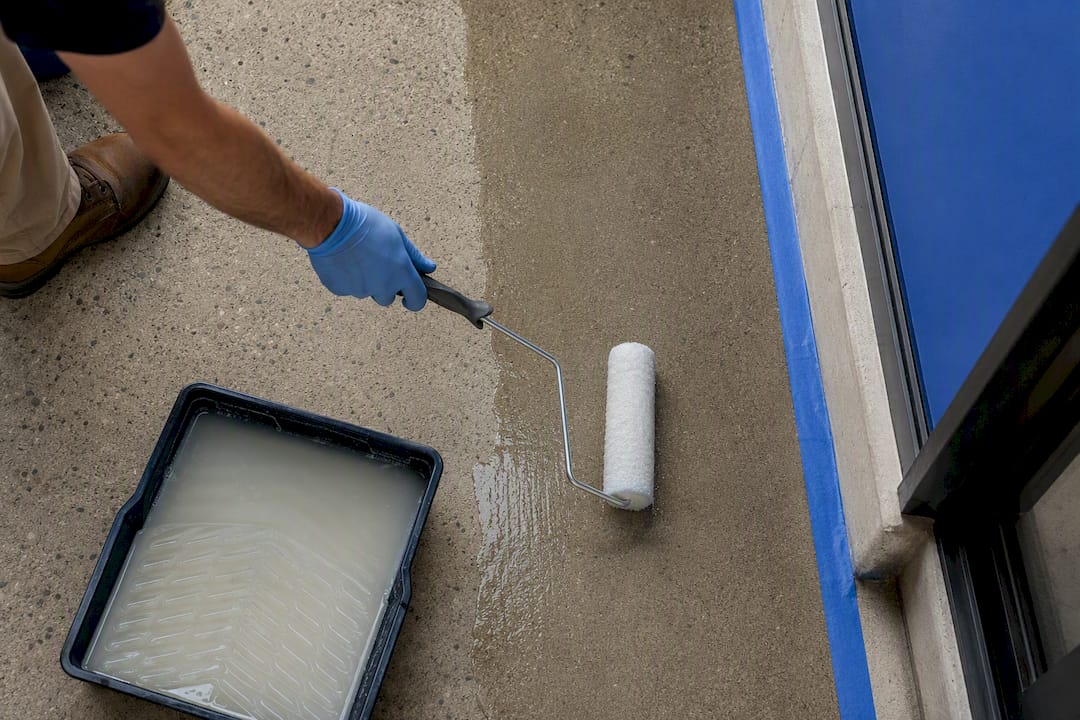
For light or fresh grease, you don’t need a truck-mounted rig to make real progress. A basic sequence works: absorb the spill, apply a concrete-safe degreaser, scrub with a stiff brush, then rinse with the hottest water your hose can deliver. Alconox Foodservice recommends this exact pattern of detergent, agitation, dwell time, and rinse for outdoor concrete, repeating as needed for stubborn spots.
- Baking soda paste or dish soap can lift grease that’s only a day or two old.
- A stiff-bristle push broom does more work than a mop ever will.
- Reapplying degreaser and letting it sit 10 to 15 minutes before scrubbing beats one quick pass with a lot of product.
Where DIY falls apart is chemistry improvisation. Mixing random surfactants, solvents, or degreasers not rated for concrete can leave behind a film that’s more slippery than the grease it replaced. Commercial-strength cleaners often contain caustic compounds like sodium hydroxide or potassium hydroxide, and using them without a full hot-water rinse afterward is a common way managers accidentally trade a grease hazard for a chemical one. Repeated DIY scrubbing without proper hot-water extraction also tends to embed surfactant residue in the surface, which then attracts dirt and grime faster than untreated concrete.
How Do You Stop Grease From Coming Back?
Cleaning the pad doesn’t fix the problem if grease keeps raining down on it from above. A large share of exterior restaurant grease originates in the kitchen exhaust system, traveling through rooftop fans and settling on nearby concrete over time.
- Schedule rooftop and hood cleaning regularly. Reducing airborne grease at the source cuts down on what lands on your sidewalks and pads.
- Set dumpster pad protocols. Covered transfer containers and a designated grease-handling zone limit spills before they start.
- Build a routine exterior cleaning calendar. Match frequency to how busy your kitchen is and how harsh your local climate gets.
- Consider a protective coating. Sealed or coated concrete absorbs less grease to begin with, which makes every future cleanup faster.
A restaurant hood cleaning service paired with monthly exterior washing breaks the cycle that repeat scrubbing alone never solves.
Is Cleaning Grease From Concrete Actually Dangerous?
Cleaning grease off concrete carries its own risks if you skip steps. Cleaned concrete that still has surfactant residue on it can be more hazardous than the grease it replaced, since the film reduces traction without looking slippery.
- Run a traction check by hand or foot after every clean, and give the surface a full, clean-water rinse before reopening it to traffic.
- Wear gloves, eye protection, and slip-resistant footwear any time you’re working with alkaline degreasers.
- Never let oily rinsewater run toward a storm drain; use a recovery method or an approved sewer connection instead.
- Log every cleaning and disposal event. That record matters if an inspector or an injury claim ever asks what you did and when.
When Should You Just Call a Pressure-Washing Contractor?
Large pad areas, carbon that’s clearly baked in, grease that keeps reappearing within weeks, or a slip incident are all signs it’s time to bring in a pressure-washing contractor instead of another round of DIY scrubbing.
- Ask whether they run hot-water equipment, not just cold-water rigs.
- Ask what chemical classes they use and confirm alkaline degreasers are part of the plan.
- Ask about their wastewater recovery process and proof of insurance.
- Ask what guarantee backs the work if the stain reappears.
A legitimate job typically includes a follow-up visit to verify both appearance and traction, not just a one-time spray-and-leave.
How All Day Power Washing Handles Heavy Restaurant Grease
All Day Power Washing runs commercial-grade hot-water pressure washing with real crews on real job sites, not subcontracted labor guessing at the chemistry. The typical job flow: assess the contamination, apply targeted alkaline degreasing with proper dwell time, follow with hot-water surface cleaning, then run a traction check and a follow-up visit to confirm the fix held.
What Most Restaurant Managers Get Wrong About Grease Cleanup
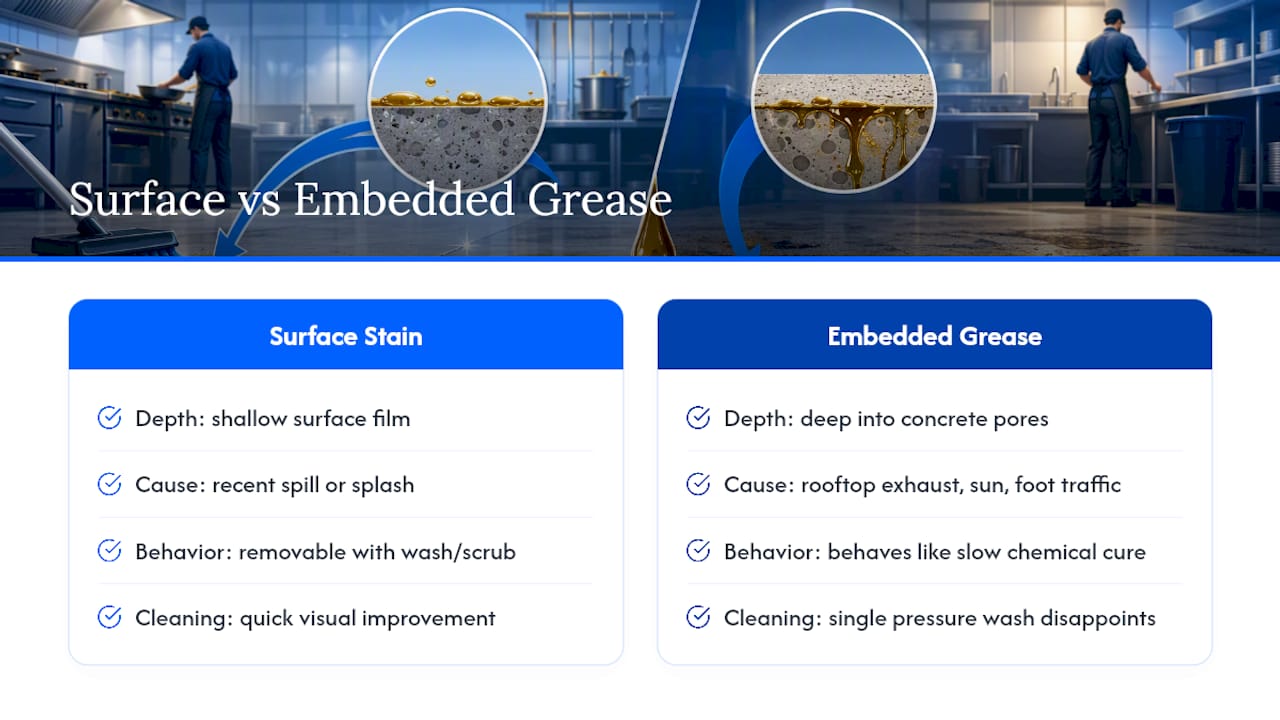
Most advice treats grease removal like a one-time event: spray it, scrub it, move on. That’s the wrong mental model. The research is consistent on one point: grease baked into concrete under sun and heavy foot traffic behaves more like a slow chemical cure than a surface stain, which is why a single pressure wash so often disappoints managers expecting a miracle result.
The bigger mistake is treating the pad and the hood as separate problems. Exhaust systems seed most recurring exterior grease, so cleaning the concrete without addressing the rooftop fan is like mopping a floor under a leaking pipe. Fix the source first, then maintain the surface on a schedule instead of reacting to complaints.
If you take one thing from this, prioritize the traction check over the visual result. A pad that looks clean but still carries surfactant film is a liability waiting for the next rainy shift. Appearance is not the finish line. A hand or foot traction test after every clean is.
— Brandon
Ready to Get Baked-In Grease Off Your Property for Good?
If your pad, sidewalk, or loading dock has grease that’s survived multiple scrubbing attempts, you’re past the point where a mop and a jug of degreaser solves it. Alldaypowerwashing runs the exact combination this article describes: hot-water pressure washing, commercial alkaline degreasers, and crews who know dwell time isn’t optional. No subcontracted guesswork, no cold-water shortcuts that leave a slick film behind.

Colorado Springs and Denver restaurant owners and property managers can get a same-week quote for commercial lot and grease pad cleaning backed by a satisfaction guarantee. If you’re weighing options, browse pressure washing services in Denver or check current customer reviews before booking. Either way, the next step is simple: request a quote and get a firm date on the calendar before that grease has another summer to bake in.
Sources
- Cleaning concrete with a pressure washer — Briggs & Stratton
- Regulations on restaurant grease — OmniContainment
- Cleaning grease from outdoor concrete surfaces — Alconox Foodservice
- Grease trap & pad pressure washing — VA Power Washing Services
- How to clean grease stains — HomeEssentialsGuide