

Insured Pressure Washing: What to Verify Before You Hire
Hire only pressure-washing contractors who can produce a current certificate of insurance showing general liability, workers’ compensation where a crew is on-site, and a surface-damage endorsement for whatever you’re having cleaned. Ask for that certificate sent directly from the insurance agent, not a PDF the contractor emails you. Confirm the general liability limit is at least $1 million per occurrence, and if concrete, wood siding, or roofing is involved, confirm a care, custody, and control endorsement is listed by name. All Day Power Washing meets each of these standards and can send a same-week certificate on request.
TL;DR:
- Ensure the contractor can provide a current insurance certificate directly from the insurer, not just a PDF emailed by the contractor.
- Confirm the general liability coverage is at least one million dollars per occurrence, with a two million dollar aggregate, and include surface damage endorsements for delicate surfaces.
- Verify the certificate lists all necessary endorsements including workers’ compensation, pollution liability, and primary and noncontributory wording when applicable.
- Be wary of contractors who cannot produce proof of insurance within a few days or refuse to have the certificate sent directly from the insurer.
- Recognize that uninsured contractors pose higher risks of surface damage costs, injury liability, and potential fines for runoff violations.
Table of Contents
- What Does “Insured Pressure Washing” Actually Cover?
- Why This Coverage Actually Matters to You
- How to Verify a Contractor’s Insurance in Five Steps
- Does Insurance Coverage Change by Job Type?
- Red Flags That Should End the Conversation
- What Separates a Company That’s Actually Insured From One That Just Says So
- Get a Same-Week Insured Quote From All Day Power Washing
- Sources
What Does “Insured Pressure Washing” Actually Cover?
Insurance for a pressure-washing job isn’t one blanket policy. It’s a stack of coverages, and each one protects against a different kind of failure.
General liability is the floor. It pays for third-party property damage and bodily injury that happen because of the work, and most commercial clients and property managers expect $1 million per occurrence with a $2 million aggregate. That’s the number to ask for before anything else.
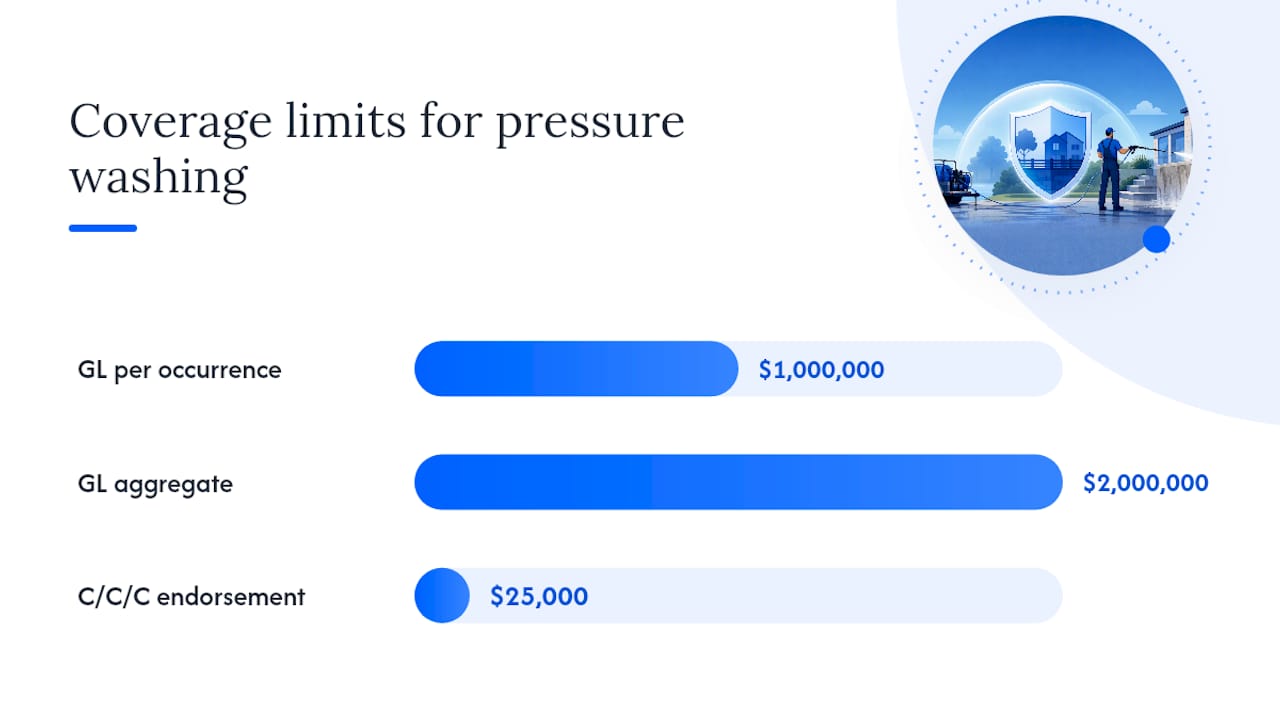
Here’s the part most homeowners miss: general liability usually excludes damage to the exact surface being cleaned. If a crew’s chemical mix strips the finish off your composite deck, standard GL may not pay for it. You need a care, custody, and control (C/C/C) endorsement, sometimes labeled a surface-damage endorsement, and it’s worth confirming the endorsement limit separately, since $25,000 in coverage handles a driveway but not a commercial building envelope.
Beyond GL and C/C/C, ask about:
- Workers’ compensation — required in most states once a contractor has employees; without it, an injured worker on your property can become your liability.
- Commercial auto — covers company vehicles and trailers if something goes wrong en route to or from your job.
- Tools and equipment coverage — protects rented or owned pressure washers, surface cleaners, and hoses, which keeps a damaged-equipment dispute out of your lap.
- Pollution or runoff liability — wash water is treated as a pollutant under the Clean Water Act once it reaches a storm drain, which makes this coverage necessary for parking lots and restaurant pads, not just optional.
Why This Coverage Actually Matters to You
Skip the insurance check and you’re the one holding the bill when something goes sideways, not the contractor.
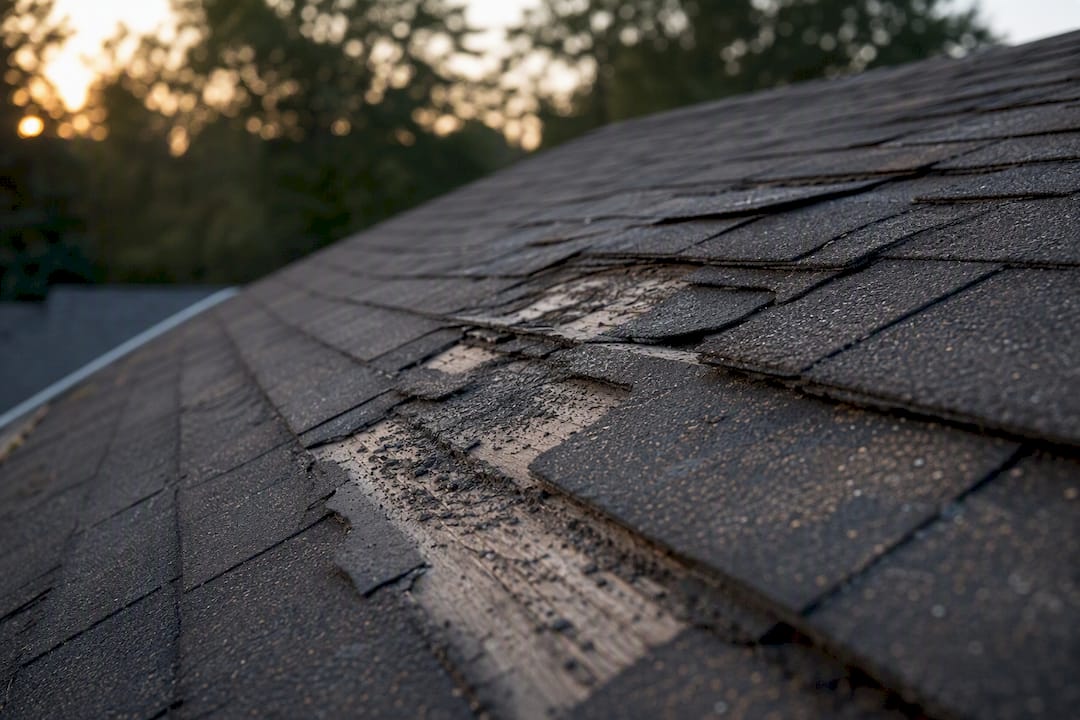
Etched concrete from an over-strength chemical mix can run into the thousands to grind and reseal. Stripped or lifted shingles from an improperly angled wand often mean a partial roof replacement, not a quick patch. If the contractor carries no C/C/C endorsement, that repair cost lands on you, not their insurer.
Injuries are the other half of the equation. A worker who slips off a ladder on your property and has no workers’ comp behind them can pursue you directly for medical costs. That single claim can exceed what most homeowners carry in personal liability coverage.
The financial logic tips in favor of insured contractors easily. Solo operators typically pay somewhere in the $50 to $120 monthly range for general liability, a cost that gets built into their pricing. Homeowners who pay 15% to 30% more for an insured provider are essentially buying insurance against a five-figure loss for a few extra dollars per job. That math isn’t close.
Uninsured contractors also expose commercial property owners to a different risk: municipal fines for uncontrolled runoff into storm drains, which regulators treat as a pollution violation, not a shrug-worthy accident.
How to Verify a Contractor’s Insurance in Five Steps
A certificate of insurance is a summary of a policy, not the policy itself, which is exactly why so many homeowners get burned trusting a document they never fully checked. Verifying the fields on that certificate takes ten minutes and saves you from a much longer headache later.
- Request the certificate from the insurance agent, not the contractor. A contractor-forwarded PDF can be outdated or edited; an agent-sent copy comes straight from the source.
- Check the named insured. The business name on the certificate must match the company you’re hiring, word for word, not a similarly named affiliate or subcontractor.
- Confirm the effective and expiration dates. A policy that lapses mid-project leaves you uncovered for anything that happens after that date.
- Verify the endorsements by name. Look for additional insured status, primary and noncontributory wording, a waiver of subrogation if your contract requires one, and the specific C/C/C or surface-damage form and its limit.
- Call the insurer if anything looks off. A five-minute call confirming the policy is active costs you nothing and eliminates any doubt about a forged or altered document.
Reputable contractors also carry a workers’ comp declaration page, safety data sheets for the chemicals they use, and a written scope of work, according to guidance from the National Power Washing Authority. Ask for all three alongside the certificate.
Pro Tip: Save every certificate you receive in a dated folder, even for one-off residential jobs. If a dispute ever surfaces, having the exact document that was active on the day of service is the difference between a quick resolution and a drawn-out argument.
Does Insurance Coverage Change by Job Type?
The coverage that protects a driveway wash isn’t the coverage that protects a hotel parking structure, and treating every job the same is how gaps slip through.
- Residential house and driveway washing needs solid GL plus a C/C/C endorsement, especially when a crew is using soft-wash techniques on siding, stucco, or aging concrete that scratches or discolors easily.
- Commercial lots and HOA properties need pollution/runoff liability on top of GL, along with additional insured status naming the property owner or management company, since commercial clients routinely require higher limits and specific endorsement wording before work starts.
- Fleet and heavy equipment washing brings commercial auto and tools/equipment coverage into play, particularly when trailers, generators, or specialty rigs are moving between sites.
- Roofs, multi-story buildings, and industrial sites often require special underwriting. If a contractor’s certificate doesn’t obviously cover height work or industrial degreasing, that’s a conversation to have before signing anything.
Property managers overseeing parking lot cleaning in particular should confirm the runoff coverage question directly, since it’s the one most often skipped by smaller operators.
Red Flags That Should End the Conversation
Some issues are worth a follow-up question. Others should end the hiring conversation immediately.
- No certificate at all. A contractor who can’t produce proof of insurance within a day or two isn’t insured, whatever they claim on the phone.
- An expired or altered certificate. Mismatched named insureds and expired dates are among the most common reasons certificates get rejected during vendor onboarding, and they’re not accidents you should overlook.
- Refusal to have the agent email the certificate. A legitimate provider has nothing to hide from a five-minute verification call.
- No workers’ comp when a crew shows up. If more than one person is working your property and there’s no comp policy behind them, you’re exposed the moment someone gets hurt.
- A quote that’s dramatically below every other bid. Missing coverage is one of the easiest ways to shave cost off a bid, and it’s rarely a coincidence.
When you talk to a contractor, ask them to name the exact endorsement you need, the limit attached to it, and whether they can add additional insured and primary/noncontributory language to the certificate. A contractor who answers without hesitation has done this before. One of the sharpest general vetting frameworks for any home-service hire, including questions to ask before booking a service provider, applies the same logic: ask specific questions early, and let the answers (or the silence) make the decision for you.
What Separates a Company That’s Actually Insured From One That Just Says So
The honest test of an insured contractor isn’t whether they claim coverage. It’s whether they hand you proof before you ask twice.
All Day Power Washing operates on that assumption. Same-week quotes come with a certificate of insurance available on request, not after three follow-up emails. Crews run commercial-grade equipment rather than consumer-grade rigs pushed past their limits, which lowers the odds of the surface-damage claims this article walks through. Jobs get documented with before-and-after photos, and a satisfaction guarantee backs the work itself, not just the paperwork behind it.
None of that is complicated. It’s just what a company does when it has nothing to hide and expects to be checked.
— Brandon
Get a Same-Week Insured Quote From All Day Power Washing
All Day Power Washing skips the back-and-forth that usually comes with verifying a contractor’s coverage. Every quote includes a same-week appointment window, and the certificate of insurance comes straight from the agent, not a forwarded file you have to take on faith.

Whether you need a house wash with a soft-wash protocol for siding, a parking lot cleaned with proper runoff containment, a fleet degreased between routes, or a kitchen hood cleaned to NFPA-96 standards, the same coverage stack applies: general liability, a surface-damage endorsement, and workers’ comp for every crew member on-site. If your project involves a delicate finish, the low-pressure house washing approach protects both the surface and the paperwork behind it.
Request a quote through the Denver service page, ask for the agent-sent certificate before scheduling, and confirm the endorsement wording matches what your property or HOA requires. That single step turns hiring a pressure-washing crew from a gamble into a documented, low-risk decision.
Sources
- Pressure Washing Insurance: Companies, Coverage and Costs - NerdWallet
- Pressure Washing Insurance: What you actually need - MakeWash
- Pressure washing insurance (contractor guidance) - VantagePoint Risk
- Pressure Washing COI Checklist | Trades Coverage Tool
Recommended
- Parking Lot Pressure Washing: A Hiring Guide for Property Managers — All Day Power Washing
- Eco Friendly Pressure Washing: Safe Guide for Homeowners — All Day Power Washing
- Best Cleaner for Pressure Washing House: 2026 Guide — All Day Power Washing
- House Pressure Washing Prices in Colorado: 2026 Guide — All Day Power Washing