

Stop Grill Grease: Restaurant Patio Cleaning for Fast Shift Turnover
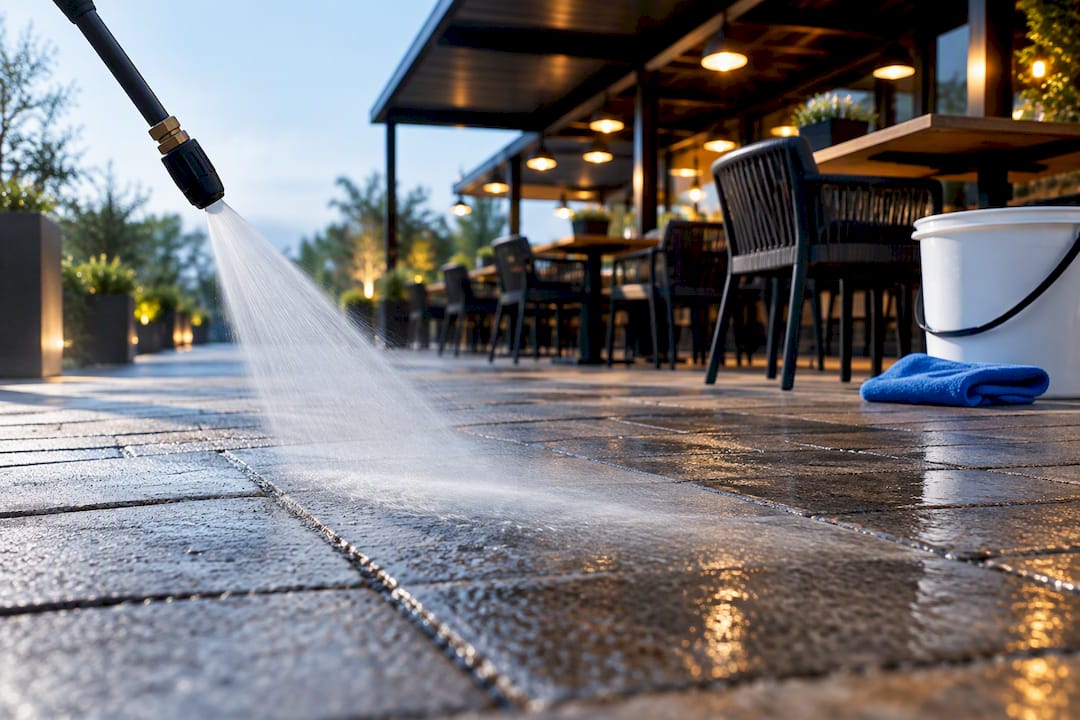
Daily surface wiping paired with a weekly low-pressure rinse stops nearly every patio problem before it starts. When grease hits the pavers, absorb it first, degrease second, and never rub it in. If a stain sits past 48 hours or keeps coming back after cleaning, stop treating it yourself and call a professional crew with commercial-grade equipment.
TL;DR:
- Pressure should stay within 1,900 to 2,700 PSI to prevent damaging pavers or concrete, with wide fan nozzles reducing risk of etching.
- Grease spills must be absorbed immediately with granular material before degreasing and rinsing, especially if they have sat for more than 48 hours.
- Resealing pavers every three to five years enhances stain resistance and prolongs the surface, with summer ideal for sealing due to dry weather.
- Routine weekly cleaning involves low-pressure rinsing, sweeping, and spot-treating spills, with deep pressure washing scheduled during off-peak hours or overnight.
- Persistent stains, noticeable paver damage, or baked-in grease require professional cleaning with commercial-grade equipment for safe and effective results.
Table of Contents
- The Restaurant Patio Cleaning Checklist Staff Actually Follow
- What PSI Is Safe for Cleaning a Restaurant Patio?
- How Do You Get Grease Out of a Restaurant Patio?
- Tools and Cleaners Every Patio Crew Should Stock
- The Five-Minute Shift Routine for a Guest-Ready Patio
- When Should You Reseal a Restaurant Patio?
- When Should a Restaurant Hire a Professional Patio Cleaner?
- How All Day Power Washing Handles Restaurant Patios
- Get a Same-Week Quote for Your Restaurant Patio
- Sources
- FAQ
The Restaurant Patio Cleaning Checklist Staff Actually Follow
A patio only stays guest-ready if the cleaning schedule survives a Friday night rush. Break it into three tiers and assign each one to a shift.
Daily (opening and closing):
- Wipe down tabletops and chairs between every seating
- Sweep walkways and dining zones for crumbs, napkins, and organic debris
- Empty trash bins and reline them before close
- Spot-clean spills the moment they happen, with wet-floor signage posted immediately
Weekly:
- Mop or give the floor a low-pressure rinse to lift ground-in residue
- Treat recurring grease spots before they set permanently
- Check patio drains for standing water or clogged debris
- Inspect furniture joints, umbrella bases, and railings for wobble or rust
Seasonal:
- Spring: full deep clean to remove winter salt residue and grime
- Summer: evaluate whether pavers need resealing during the dry stretch
- Fall: stay ahead of leaf drop, since decomposing leaves and fallen fruit can leave permanent stains if left sitting
- Winter: clear ice-melt residue and check furniture storage before freeze cycles hit
Routine light maintenance like this costs far less than the restorative cleaning neglected patios eventually need.
What PSI Is Safe for Cleaning a Restaurant Patio?
Most patio surfaces respond best to pressure in the 1,900 to 2,700 PSI range, according to Home Depot’s guidance on patio maintenance. Going higher doesn’t clean faster. It just erodes sealer, chips concrete edges, and can blast joint sand right out of paver seams.
Nozzle choice matters as much as PSI. A wide fan tip spreads pressure across a larger area and reduces the risk of etching or gouging. Reserve a narrow tip only for isolated, stubborn spots, and keep it moving.
- Hold the nozzle at least 12 inches from the surface on any decorative paver or sealed concrete
- Start with the lowest effective pressure and increase only if needed
- Angle the spray at 45 degrees rather than straight down to avoid driving water under pavers
- Clear or cover furniture, planters, and outdoor heaters before starting
- Rope off the work zone if diners are seated nearby, and warn staff before you begin
Pro Tip: Always test an inconspicuous corner of the patio first, especially on colored or stamped concrete. A 30-second test spot can save you from an obvious light patch in the middle of your dining area.
If your patio sits on pavers rather than poured concrete, the same low-pressure logic applies twice as hard. Wide spray patterns and a light touch protect the joint sand that holds the whole surface together.
How Do You Get Grease Out of a Restaurant Patio?
Grease is the one stain that punishes hesitation. The correct sequence matters more than the product you grab.
- Fresh grease: Pour a granular absorbent over the spill immediately. Do not rub or wipe it. Rubbing pushes oil deeper into the pores of concrete or pavers, turning a surface stain into a permanent one.
- Remove the absorbent once it has soaked up the bulk of the liquid, usually within 10 to 15 minutes.
- Apply a restaurant-grade degreaser to the remaining residue and let it dwell per the label, typically 5 to 10 minutes.
- Agitate with a stiff scrub brush to work the degreaser into the surface texture.
- Rinse at low pressure and let the area air-dry before reopening it to foot traffic.
Set-in oil that has been baking under a grill station for weeks needs longer dwell time and probably a second treatment cycle. If two attempts don’t lift it, that’s your signal to bring in a professional rather than keep burning labor hours on it.
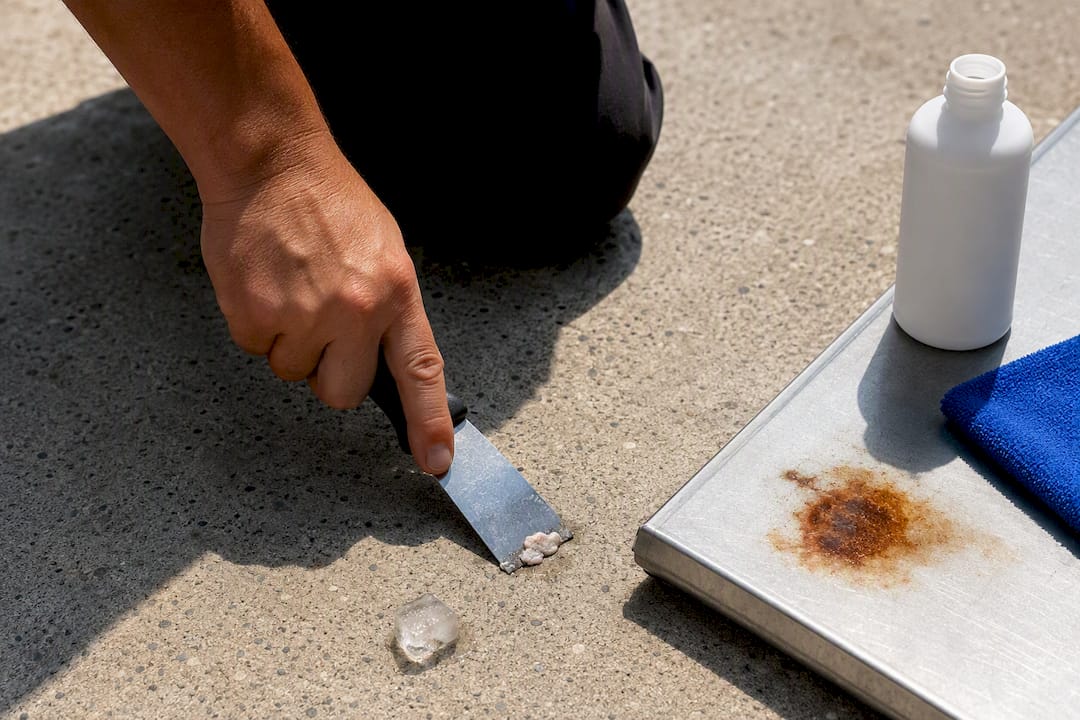
Rust and gum need different tools entirely: a dedicated rust remover for metal staining, and a freeze-and-scrape method (ice cube, then a putty knife) for gum. Spot-test both on a hidden section before treating a visible dining area.
Tools and Cleaners Every Patio Crew Should Stock
Most routine patio work needs surprisingly little gear. A push broom and leaf blower handle the bulk of daily upkeep, and a hose with a spray nozzle covers light rinsing.
- Push broom, leaf blower, and a mop for daily floor work
- Microfiber cloths and scrub brushes for tabletops and stubborn spots
- Wet-floor signs and extra trash liners
- Granular absorbent for grease and oil spills
- Restaurant-grade degreaser and an oxygen-based cleaner for organic staining
- Polymeric sand and paver sealer, kept on hand for scheduled maintenance
For an actual pressure washer, renting one for occasional deep cleans usually beats buying, unless your patio square footage is large enough to justify the upkeep cost of owning commercial equipment. Either way, gloves and eye protection are non-negotiable when handling degreasers.
The Five-Minute Shift Routine for a Guest-Ready Patio
Between seatings, a fast sequence keeps tables turning without leaving grime behind.
- Wipe every surface: table, chair arms, condiment caddies
- Sweep the immediate footprint of the table that just cleared
- Check the floor for spills or debris tracked in from the sidewalk
- Spot-treat anything sticky or greasy before reseating
- Straighten chairs and umbrellas so the space looks intentional, not rushed
If a grease spill happens mid-service, the first ten minutes decide the outcome. Absorb, degrease, agitate, rinse, then dry the area and post a wet-floor sign before anyone walks through it.
Pro Tip: Train one staff member per shift as the designated spill responder. Guests notice a fast, calm cleanup far more than they notice the spill itself.
Keep the tone light with guests while you work. A quick “give us just a second” goes further than silently mopping around someone’s feet.
When Should You Reseal a Restaurant Patio?
Spring is the right window for the deep clean that removes winter grime, and summer’s dry stretch is the better time for resealing, since sealer needs stable, dry weather to cure properly.
- Reseal pavers roughly every several years, per Belgard’s maintenance guidance
- Test any new cleaning product on a small section first, and wait at least 30 days after fresh installation before sealing anything
- Refill polymeric joint sand after any pressure washing session, since even low-pressure rinsing can wash some out
- Prioritize sealing grease-prone zones near grills or service windows first. A sealed surface there resists staining and makes future cleanup dramatically faster
Skipping this cycle is how a manageable annual task turns into a costly restorative project two years later.
When Should a Restaurant Hire a Professional Patio Cleaner?
Some jobs are worth handing off. Persistent stains that survive two treatment attempts, visible settling or cracking in the pavers, repeated failures from DIY degreasing, or any slip hazard near dining tables are all signs it’s time to call in a crew with commercial-grade equipment.
Before hiring anyone, vet them the way you’d vet any vendor touching your dining space:
- Confirm they carry insurance and can show proof
- Ask what equipment they run, and whether it’s rated for commercial-grade work rather than consumer rental gear
- Request references from other restaurant or retail clients, specifically for grease removal
- Ask how they protect furniture, landscaping, and nearby finishes during the job
Logistics matter just as much as technique. Plan your access window around off-peak hours, decide who moves furniture beforehand, and ask how the crew manages water runoff near entrances or storm drains. A contractor who can’t answer that last question clearly probably hasn’t done much restaurant work.
How All Day Power Washing Handles Restaurant Patios
Grease-heavy patios need equipment that consumer pressure washers can’t match, and crews who’ve actually done the job, not just quoted it over the phone. Some professional cleaners run commercial-grade equipment with crews on actual job sites, which matters most on embedded grease near grill lines and service windows.
The company is fully insured and offers same-week quotes, and its scope covers the surfaces around your dining area directly: concrete and trash pad cleaning, and kitchen hood degreasing under NFPA-96 standards. A patio doesn’t exist in isolation from the kitchen exhaust system behind it, and treating both as one maintenance problem tends to produce better results than treating them separately.
— Brandon
Get a Same-Week Quote for Your Restaurant Patio
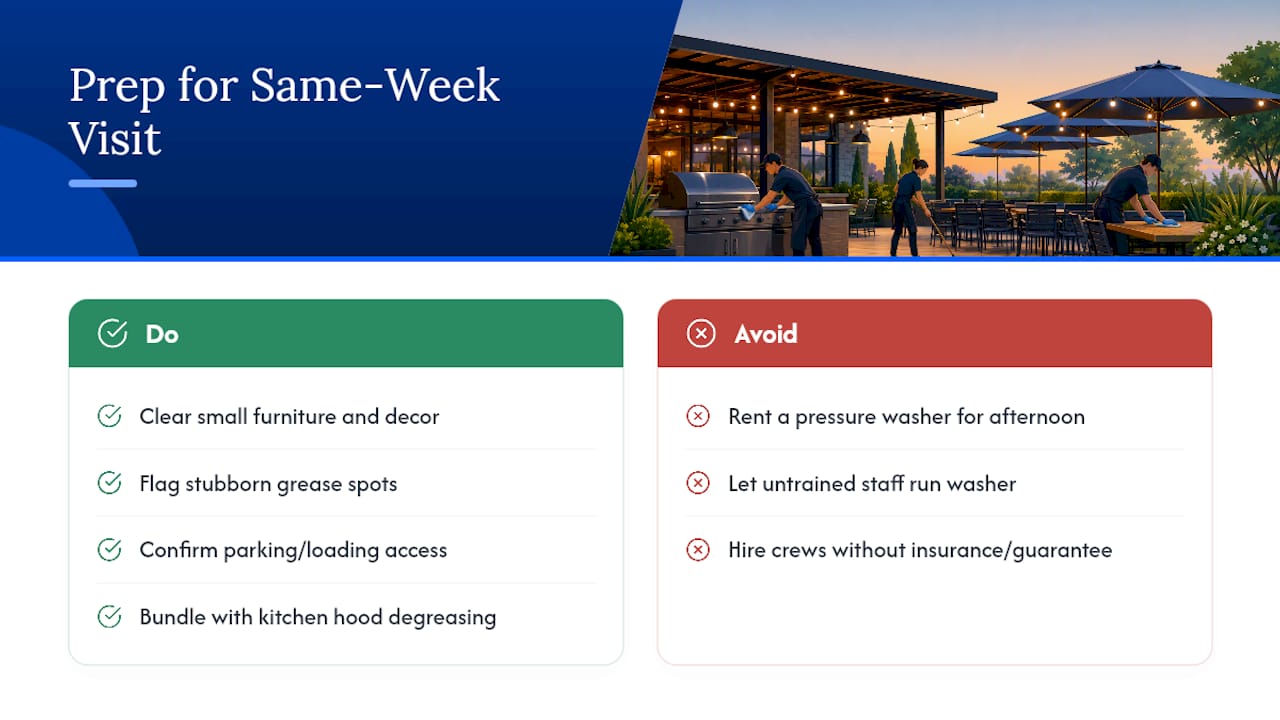
Most restaurant owners don’t have a maintenance staff trained to safely run a commercial pressure washer, and renting one for a single afternoon rarely matches what a dedicated crew delivers on grease that’s been baking into concrete for months. Some local services give restaurants a faster path: insured crews using commercial-grade equipment, with satisfaction guarantees backing the work.

Before your visit, clear small furniture and decor from the patio, flag any stubborn grease spots near grills or service windows, and confirm parking or loading access for the crew. Restaurants can also bundle patio work with kitchen hood degreasing in the same visit to cut down on scheduling headaches.
Request a same-week quote and get your patio and trash pad areas back to guest-ready condition. If you’re in the Denver metro area specifically, check availability here.
Sources
For deeper reference, the Concrete Masonry and Hardscapes Association covers seasonal paver care, Belgard details sealing cadence, Forbes offers a guest-experience angle on spring cleaning, Home Depot sets consumer PSI benchmarks, and AbsorbentsOnline explains proper grease-spill handling.
- Hardscaping for All Seasons: How to Maintain Your Paver Patio Year-Round - Concrete Masonry and Hardscapes Association
- Hardscape maintenance and care guide - Belgard
- Patio maintenance tips - The Home Depot
- Choosing the right granular absorbent - AbsorbentsOnline
FAQ
What PSI Should I Use to Pressure Wash a Restaurant Patio?
Most patio surfaces clean safely in the 1,900 to 2,700 PSI range, using a wide fan tip held at least 12 inches away. Start on the low end and increase only if the surface can handle it without damage.
How Do I Remove Grease From a Concrete Patio?
Absorb fresh grease with a granular absorbent instead of rubbing it, since rubbing drives the oil deeper into the surface. Follow with a restaurant-grade degreaser, scrub brush agitation, and a low-pressure rinse.
How Often Should a Restaurant Reseal Its Patio Pavers?
Reseal roughly every three to five years, depending on foot traffic and grease exposure near grills or service windows. Test any cleaner on a small section first, and always wait at least 30 days after new paver installation before applying sealer.
Do I Need to Close My Patio to Clean It?
Routine daily and weekly tasks don’t require closing, since they happen between seatings or during off-hours. A full pressure-washing session or professional restorative clean usually needs a dedicated access window, which is why most restaurants schedule it during off-peak hours or overnight.
When Should I Call a Professional Instead of Cleaning the Patio Myself?
Call a professional when a stain survives two treatment attempts, when you notice paver settling or cracking, or when grease has been baking in for weeks near a grill line. A crew with commercial-grade equipment, like All Day Power Washing, handles embedded grease and larger surfaces faster and more safely than staff working with rented consumer gear.