

Match Traffic to Mils: Epoxy Floor Thickness Table and What to Ask
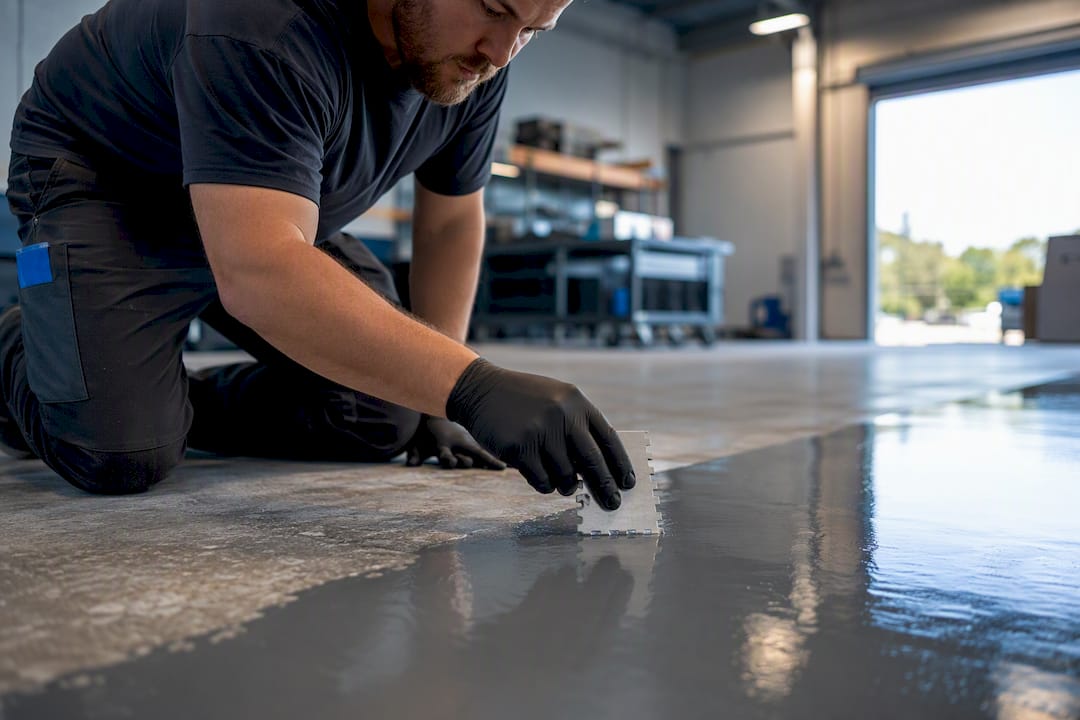
Pick the epoxy system whose total cured thickness matches expected traffic: roughly 14 to 25 mil for a typical garage, 40 to 125 mil for commercial or self-leveling floors, and 125 to 250+ mil for heavy industrial use. Anything under about 10 mil is decorative, not functional, and the single rule that governs everything else is this: thickness has to match both the traffic load and the substrate prep behind it. Skip either half of that equation and the floor fails early, no matter how good the resin is.
TL;DR:
- Ensuring the epoxy system matches the expected traffic load requires a total cured thickness of 14 to 25 mils for garages, 40 to 125 mils for commercial floors, and over 125 mils for heavy industrial applications.
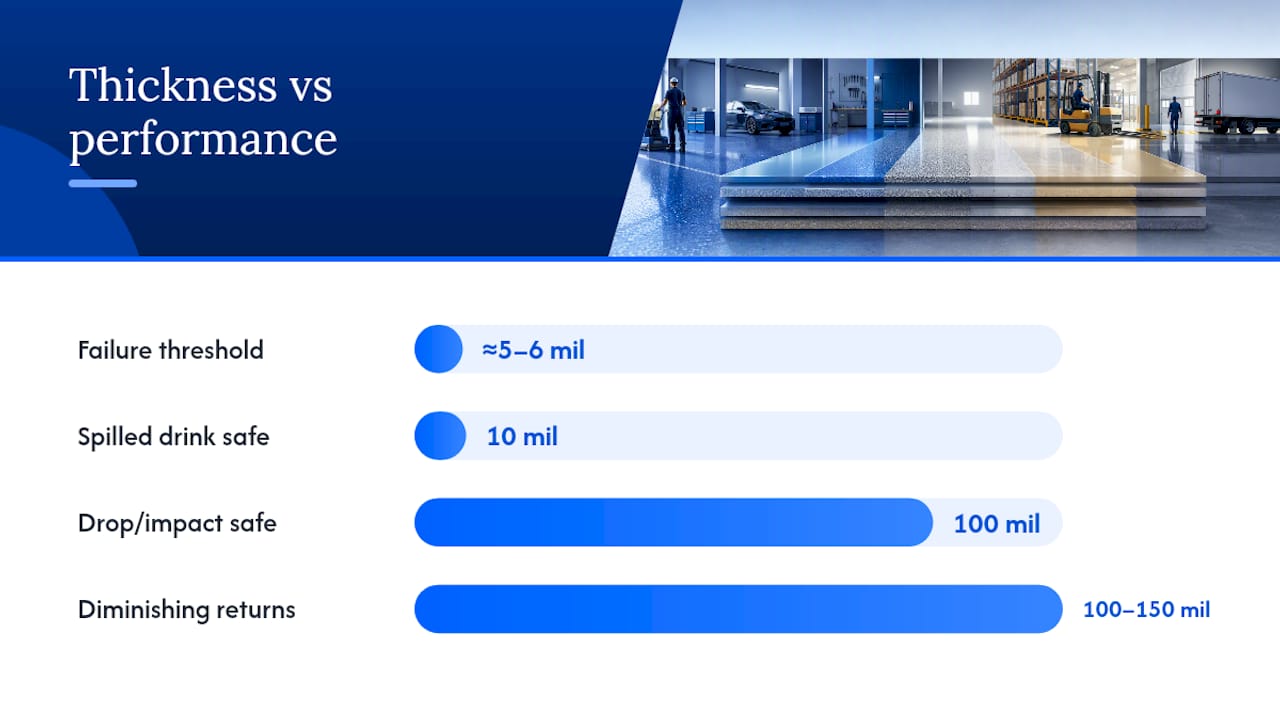
- Coatings thinner than 5 to 6 mils generally fail within a few years due to insufficient film thickness to resist abrasion, impact, and chemical exposure.
- Proper thickness is achieved by multiple coats reaching a specified dry film thickness, with aggregate broadcast adding significant additional thickness and durability.
- Excessively thick pours above manufacturer limits risk exothermic reactions, incomplete curing, and surface cracking, demanding layered application and adequate cooling.
- For high-use or complex projects, professional installation ensures correct substrate prep, precise mil specification, and adherence to curing and layering guidelines to avoid early failure.
Table of Contents
- What Does “Epoxy Floor Thickness” Actually Mean?
- What Thickness Do Different Floors Actually Need?
- How Does Thickness Affect Durability and Failure?
- How Thick Can You Pour Epoxy in One Layer?
- What Should You Ask Before Committing to a Thickness?
- When Does This Job Need a Professional?
- Why Most Epoxy Floor Failures Are Really Thickness Failures
- Get the Thickness Right the First Time With a Local Pro
- Where This Guide’s Numbers Come From
- Sources
What Does “Epoxy Floor Thickness” Actually Mean?
Thickness gets measured in mils, not inches, and one mil equals 0.001 inch. So a 40 mil coating is 0.040 inch thick, and a 100 mil system works out to a tenth of an inch. It sounds tiny, but epoxy is dense and cures hard, so a few mils make a real difference in how a floor holds up.
Installers track two numbers: wet film thickness (WFT), what’s on the floor before it cures, and dry film thickness (DFT), what remains after cure and solvent evaporation. Multiple coats stack up to a total DFT, which is the figure that actually matters when you’re comparing systems or checking a bid. A single-coat DIY kit might land at 6 to 8 mil DFT. A professional multi-coat build easily reaches 20 mil or more before any aggregate goes down.
The floor for functional performance sits around a minimum total build of 10 mil. Coatings thinner than 5 to 6 mil are essentially tinted sealers. They look fine on day one and start showing wear within a season or two.
What Thickness Do Different Floors Actually Need?
Thickness needs scale directly with how hard the floor gets used, and the ranges vary more than most people expect.
These system ranges reflect resin build only. Broadcasting sand, quartz, or vinyl flake into the wet coat adds real thickness on top of those numbers, sometimes pushing a “standard” 40 mil floor closer to 80 or 100 mil once the aggregate and topcoat are factored in. That’s part of why flake floor systems often outlast plain color coats in garages that see regular vehicle traffic.
Lifespan tracks thickness fairly closely. A well-prepped 20 to 25 mil residential garage floor can run 10 to 15 years before it needs a refresh. Push into the 40 to 125 mil commercial range and you’re looking at heavier upfront cost, mainly from more resin volume and labor time, but a floor built to shrug off forklift traffic for a decade or more.
How Does Thickness Affect Durability and Failure?
Every performance property epoxy is known for, abrasion resistance, impact resistance, chemical resistance, and the ability to bridge small cracks in the slab, scales up with thickness. A 10 mil coat resists a spilled drink. A 100 mil system resists a dropped wrench, a forklift tire, or a splashed degreaser without flinching.
Go too thin, though, and you invite a specific set of problems:
- Hot tire pickup: warm tires create suction that lifts thin or improperly cured coatings right off the slab, a problem covered in detail in this hot tire pickup breakdown.
- Peeling and delamination: usually traced to skipped or rushed substrate prep rather than the coating itself.
- Bubbling and pinholing: often caused by moisture vapor pushing through an undersized film during cure.
- Yellowing or cloudiness: linked to poor cure conditions, sometimes from a system installed thicker than its formulation allows.
Thin systems carry a well-documented failure pattern: coatings under about 5 to 6 mil often fail within two to three years of real use, not because the resin is bad, but because there isn’t enough film to absorb abrasion and impact over time.
More thickness isn’t free performance, either. Past a certain point, usually around 100 to 150 mil for most residential and light commercial applications, added mils mostly drive up material cost without meaningfully extending service life. The sweet spot is matching build to actual traffic, not maximizing thickness for its own sake.
How Thick Can You Pour Epoxy in One Layer?
Manufacturers publish maximum pour depths for a reason, and it isn’t arbitrary. Epoxy cures through an exothermic reaction, meaning it generates its own heat as it sets. Pour too much resin at once and that heat has nowhere to go. The result can be excess exotherm, incomplete cure, yellowing, surface cracking, or shrinkage that shows up months after installation.
That’s why thick floors get built in layers rather than one massive pour, and why substrate prep intensifies as target thickness climbs. A light 20 mil coat needs a lightly profiled slab. A 250 mil mortar system needs real mechanical bite.
- Never exceed a manufacturer’s per-layer pour limit, even if the final spec calls for a much thicker total build.
- Match concrete surface profile (CSP) to system thickness; higher-build coatings need more aggressive shotblasting or diamond grinding.
- Thick epoxy mortar systems require true mechanical anchoring to the concrete, or the load-bearing weight of forklifts and machinery will eventually pull the system loose.
- Let each layer cool and cure before broadcasting aggregate or applying the next coat.
- Reach for self-leveling systems when the slab has minor pitting or unevenness that a standard roll-on coat won’t hide.
What Should You Ask Before Committing to a Thickness?
Before you settle on a system, run through what the floor actually needs to survive. Think about traffic type and load (cars versus forklifts versus foot traffic), chemical exposure from oil, cleaners, or food service, the current condition of the slab, how much slip resistance you need, door and transition heights that might cap your total build, and your budget against how long you want the floor to last.
Then take those answers into any quote conversation and ask directly:
- What is the total cured film thickness in mils, not just the number of coats?
- How will the slab be prepped, and to what CSP level?
- Will aggregate be broadcast into the system, and how much?
- What are the cure times and return-to-service rules?
- Is there a written warranty, and exactly what does it cover?
Vague answers here are the biggest red flag in any bid. A contractor who can’t tell you total mils or prep method likely hasn’t planned the job at the level a durable floor requires.
Pro Tip: Get the total DFT and prep method written into the estimate itself, not just described verbally. If a dispute ever comes up about why a floor failed early, a number on paper settles it fast.
When Does This Job Need a Professional?
Some jobs are reasonable for a motivated homeowner. Others aren’t. Forklift or heavy equipment traffic, large slab repairs, self-leveling pours, food-grade sanitation requirements, and multi-layer decorative flake or metallic systems all call for professional installation rather than a weekend DIY attempt.
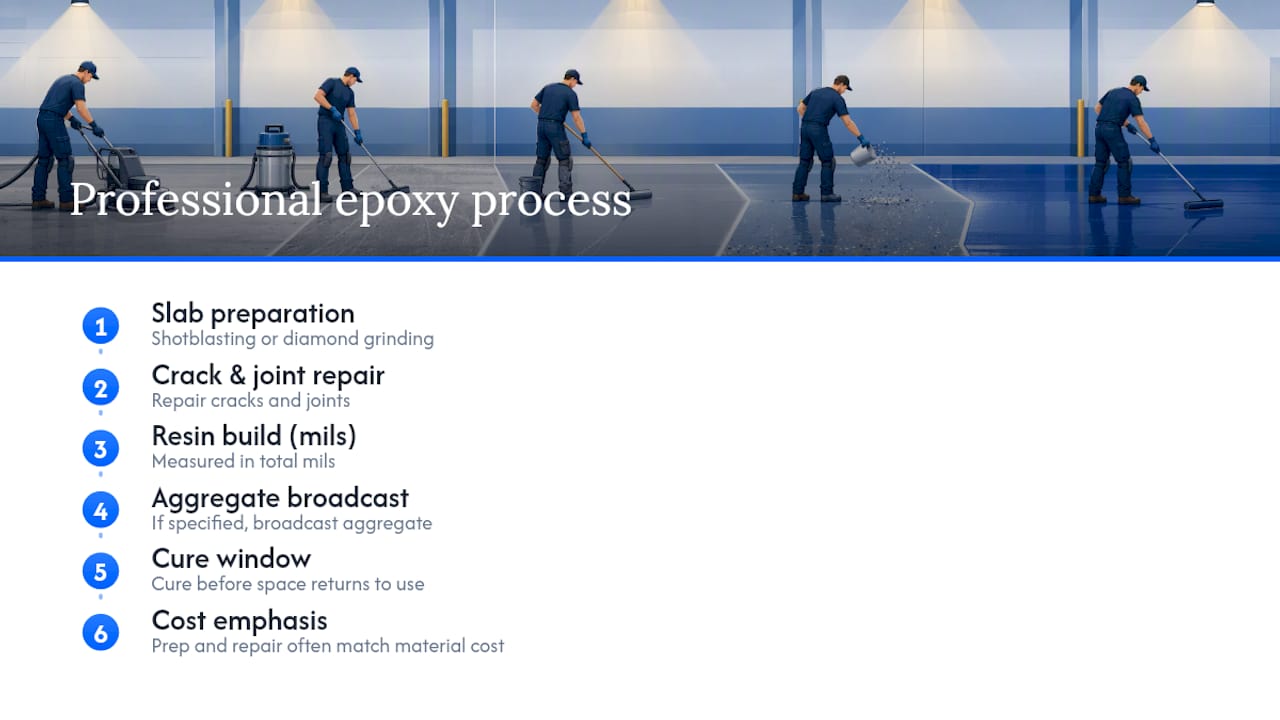
A typical professional timeline runs through slab prep (shotblasting or diamond grinding), crack and joint repair, the resin build itself measured in total mils, aggregate broadcast if specified, and a cure window before the space goes back into use. Cost tracks these same stages, prep and repair work often account for as much of the bid as the coating material itself.
When you’re comparing bids, ask what service types are included, whether crews are insured, and whether you’ll get documentation of the prep method and final mil count in writing.
Why Most Epoxy Floor Failures Are Really Thickness Failures
Here’s the uncomfortable truth about most failed epoxy jobs: it’s rarely the resin’s fault. The chemistry is mature and well understood. What actually goes wrong is a mismatch between thickness and reality, someone specs a 20 mil coat for a floor that sees forklift traffic, or skips the aggressive grinding a 150 mil mortar system needs to bond.
Conventional advice tends to obsess over color, finish, and brand of resin. Those choices matter far less than most buyers think. A gorgeous metallic floor poured at 15 mil over an unprofiled slab in a heavy-use garage will look worse in three years than a plain gray 30 mil coat installed correctly.
If you take one thing from this guide, let it be this: figure out your actual traffic and chemical exposure first, then work backward to the thickness and prep level that supports it. Everything else, color, pattern, sheen, is a downstream decision. Get the mils right and the floor takes care of itself for a decade or more.
— Brandon
Get the Thickness Right the First Time With a Local Pro
Reading a mil spec is one thing. Getting a slab profiled correctly and a multi-coat system installed to that spec is another, and it’s where most DIY attempts run into trouble. Professional installers provide epoxy floor coatings for garages in solid, metallic, and flake finishes built on properly prepped concrete rather than a quick roll-on over a dusty slab.
Here’s what’s included when you request a quote:
- Professional epoxy coatings for garages in solid, metallic, and flake finishes
- Substrate prep matched to your system’s thickness requirements
- A written total DFT in mils and prep method before work begins
Ask for the same details this guide covers: total cured thickness in mils, the prep method planned for your slab, and what the warranty actually covers. Alldaypowerwashing offers same-week quotes and fully insured crews across the Denver area, so you can get a real number for your garage without waiting weeks for someone to show up. Request a quote and get a floor built for the traffic it’ll actually see.
Where This Guide’s Numbers Come From
The thickness ranges and prep guidance above draw on ArmorGarage’s minimum-mil findings, FlooringClarity’s system-range breakdown, Sherwin-Williams’ technical guidance on mechanical bonding, and TotalBoat’s pour-depth limits for cure safety.
Sources
- How Thick Should an Epoxy Floor Coating Be? — Sherwin-Williams
- How Thick Is Epoxy Flooring & Why Does It Matter? — ArmorGarage
- How Thick Is Epoxy Flooring: Pros, Cons, and Buying Guide — FlooringClarity
- Maximum pour thickness for TotalBoat epoxy products — TotalBoat support