

Homeowners: Require 0.42 Wet DCOF to Fix Slippery Epoxy Floors
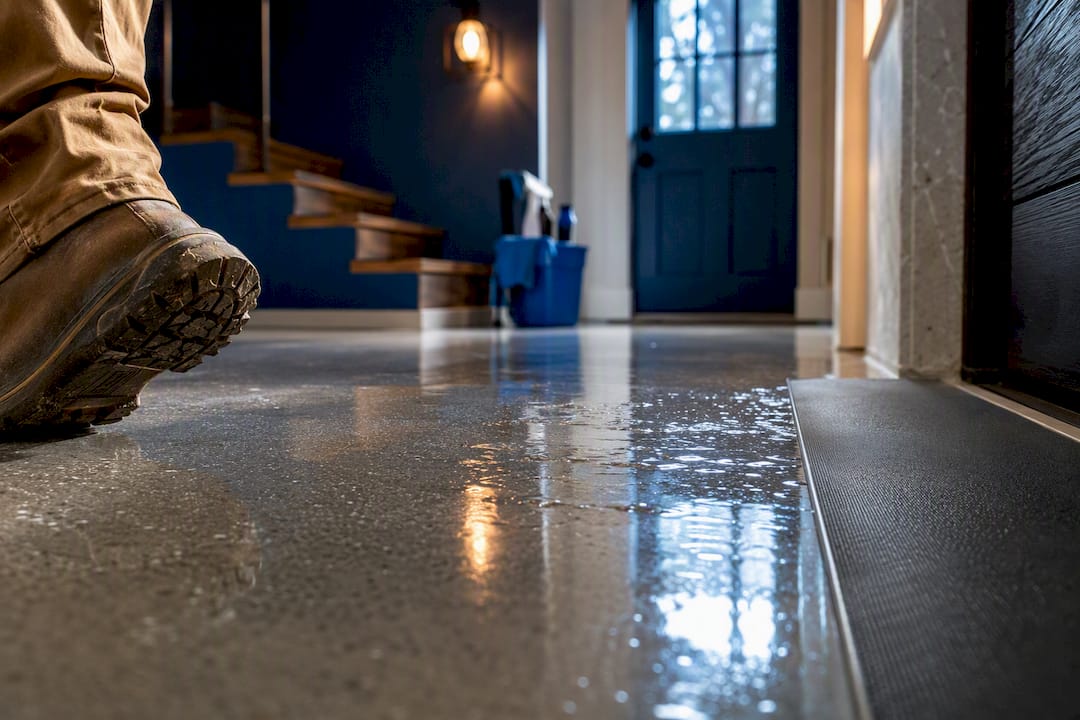
Epoxy flooring is not inherently slippery when dry. It becomes a real fall hazard when it’s wet, oily, or coated in a high-gloss finish with no texture built in. Traction on an epoxy floor is a specification, not an accident of the material. Gloss level, contaminants, surface texture, and how you clean it all determine whether that floor grips a boot or launches it. The fixes below start with what you can do today and move toward what a professional installer should be doing during the job.
TL;DR:
- Higher gloss finishes and contaminants like oil, soap, and grime significantly increase slip risk on epoxy floors, especially when wet.
- Most facilities should aim for a wet dynamic coefficient of friction of at least 0.42 to meet safety standards.
- Installing textured aggregate during application, particularly aluminum oxide for garages, improves long-term traction compared to smooth or blended surfaces.
- Regular cleaning with pH-neutral degreasers and immediate spill cleanup help maintain grip and prevent residue buildup that causes slipperiness.
- Professional recoat options include broadcast aggregate overlays or anti-slip topcoat additives, but proper surface prep is essential for effective traction improvement.
Table of Contents
- Quick Fixes When an Epoxy Floor Feels Slippery
- Why Epoxy Floors Get Slippery in the First Place
- What Numbers Actually Prove a Floor Is Safe
- What to Specify Before the Coating Ever Goes Down
- Fixing a Floor That’s Already Slippery
- Cleaning Routines That Keep Traction From Disappearing
- When to Handle It Yourself and When to Call a Pro
- Balancing Aesthetics and Safety
- Getting a Traction Check or Coating From All Day Power Washing
- Sources
Quick Fixes When an Epoxy Floor Feels Slippery
If someone almost went down on your garage or shop floor this week, don’t wait for a permanent fix. Handle the immediate risk first.
- Stop foot and vehicle traffic in the affected area until it’s dry.
- Mop up standing water, then run a fan or dehumidifier if the area stays damp.
- Break down oil or grease with a citrus-based degreaser rather than plain water, which spreads a thin film without lifting it.
- Sprinkle absorbent (kitty litter works fine in a pinch) on fresh oil spots before wiping.
- Set out rubber-backed non-slip mats and a warning sign at entry points while you sort out a longer-term solution.
Pro Tip: Keep a small jug of degreaser and a stack of shop rags near the garage door. Most epoxy slip incidents trace back to a car dripping oil for weeks before anyone notices the film building up.
If the floor still feels slick after a thorough cleaning and it’s dry, that’s your signal to schedule a professional coefficient of friction test rather than guessing your way through more cleaning products.
Why Epoxy Floors Get Slippery in the First Place
Dry epoxy and wet epoxy behave like two different surfaces. On a dry day, a smooth epoxy coat grips a shoe sole about as well as sealed concrete. Add water, and that same surface can turn into something closer to wet tile, because finish gloss, contaminants, and surface texture are the real variables behind slip risk, not the epoxy resin itself.
A high-gloss topcoat is the biggest offender. That mirror shine looks great in photos, but it’s essentially glass at a microscopic level, with almost nothing for water to break surface tension against. Oil residue, soap film from cleaning, and even incompletely cured epoxy (which stays tacky and traps grime) all compound the problem. Bare feet on a wet pool deck, socks on a basement floor, and tires rolling through a rain-soaked garage each respond differently to the same surface, which is why “slippery” always depends on who’s walking on it and what’s under their feet.
What Numbers Actually Prove a Floor Is Safe
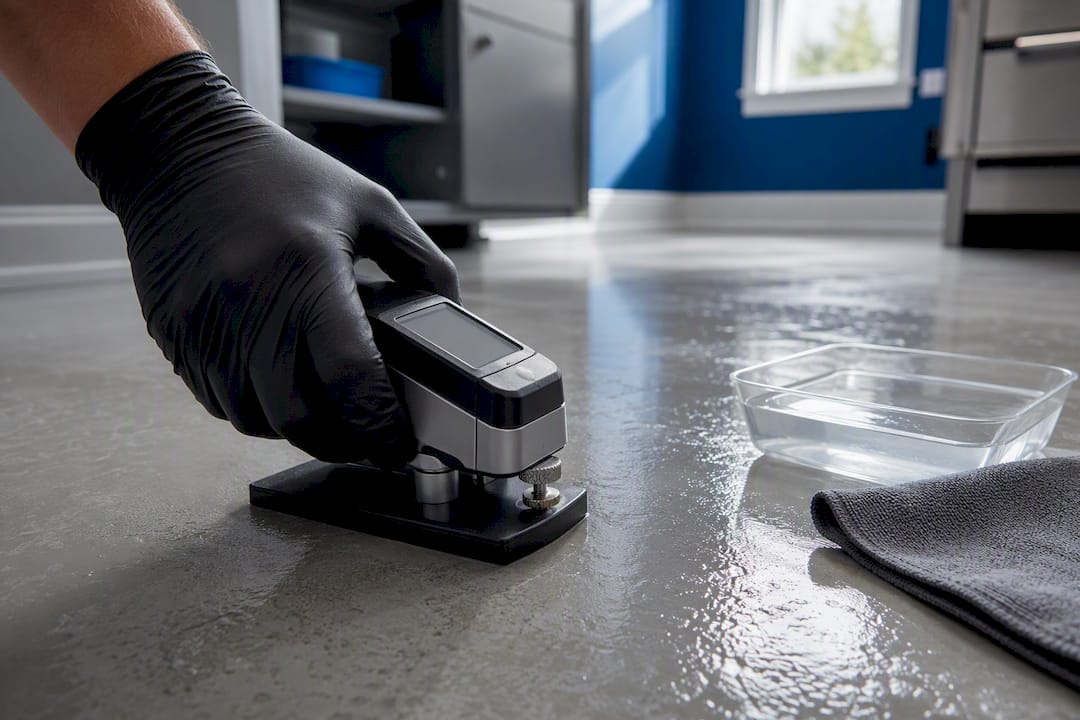
“It feels grippy” isn’t a standard. Coefficient of friction (COF) is. Static COF measures resistance before something starts moving; dynamic COF (DCOF) measures grip during actual motion, which is the number that matters for someone walking across a wet floor. Installers test both with portable tribometers on site.
Most facilities target a wet DCOF of at least 0.42, which lines up with common NFSI B101.3 and ADA-referenced thresholds, with higher targets for spaces that see heavier wet traffic.
| Space type | Recommended wet DCOF | Why |
|---|---|---|
| Dry-use showroom or living space | 0.42 minimum | Baseline safety standard |
| Garage, entryway, mudroom | a higher DCOF suitable for wet or muddy foot traffic | Regular wet or muddy foot traffic |
| Commercial kitchen, pool deck | a DCOF range aimed at constant moisture, grease, or bare feet | Constant moisture, grease, or bare feet |
Ask any installer for their post-installation COF reading in writing, and consider testing again if you notice a change in floor feel underfoot.
What to Specify Before the Coating Ever Goes Down
Traction gets built into the floor at installation, not bolted on afterward. The single biggest decision is broadcast versus blend. Broadcasting aggregate into the wet epoxy at refusal creates a uniform, durable texture, while blending grit into the mixed coat before pouring tends to settle unevenly and wears down faster in high-traffic lanes.
Your aggregate choice depends on the room:
- Aluminum oxide is extremely hard (roughly a 9 on the Mohs scale) and holds its texture for years, making it the standard pick for garages, shops, and commercial floors.
- Polymeric beads feel softer underfoot and suit bare-foot spaces like basements or bathrooms attached to a garage.
- Silica or quartz aggregate works well for a middle-ground texture in mixed-use spaces.
| Zone | Recommended aggregate | Finish |
|---|---|---|
| Garage | Aluminum oxide, medium grit | Satin |
| Kitchen or laundry | Fine aluminum oxide or polymer bead | Matte |
| Pool-adjacent patio | Coarse aggregate | Matte |
| Show floor / flake floor | Light polymer bead broadcast | Satin to light gloss |
Matte and satin topcoats also cut glare and hide the slick “wet look” that makes a floor feel more dangerous than it actually is. If you’re weighing flake systems for the look, our guide to epoxy flake floors walks through how the flake itself adds a texture layer beyond the resin coat.
Fixing a Floor That’s Already Slippery
An existing floor doesn’t need a full tear-out to gain traction. Three retrofit paths cover most situations:
- Recoat with broadcast aggregate: strip the gloss, broadcast fresh grit, and seal with a matte topcoat. This is the most common and most durable fix.
- Anti-slip topcoat additive: a clear coat with fine grit mixed in, applied over sound existing epoxy without a full recoat. Faster and cheaper, but less durable than broadcast.
- Overlay or urethane cement system: for garages or commercial spaces that stay wet constantly, a urethane cement system built for permanent wet exposure often outperforms standard epoxy on wet DCOF and lifespan.
Before any retrofit, an installer needs to check adhesion on the existing coating. Delamination, moisture trapped under the slab, or a coating applied over uncured concrete will undermine even the best anti-slip topcoat. If you’re deciding between recoating epoxy and switching materials entirely, our comparison of epoxy versus garage tile covers how each handles constant moisture.
Cleaning Routines That Keep Traction From Disappearing
Traction fails quietly. Aggregate peaks that once broke water surface tension get filled in with wax, soap film, or oily grime, and the floor turns slick again months after installation.
- Clean with a pH-neutral degreaser, not an oil-based soap or wax product that leaves a film.
- Wipe up spills immediately, especially oil, coolant, and cooking grease.
- Run a full wet mop or pressure rinse weekly in garages and monthly in lower-traffic rooms.
- Deep-clean with a scrub brush or floor machine every few months to lift residue out of the aggregate texture.
- Watch for a duller, filmy look or a “greasy” feel underfoot. Both signal it’s time for a deep clean or a fresh anti-slip topcoat.
Pro Tip: If a garage floor feels slicker a year or two after installation, it’s rarely the epoxy failing. It’s almost always residue buildup from car fluids and soap film. A proper degrease often restores the original grip without any new coating.
For stubborn oil stains specifically, our guide to removing grease from concrete covers products that lift residue without damaging the coating underneath.
When to Handle It Yourself and When to Call a Pro
A small recoat on a low-traffic room with sound existing epoxy is a reasonable DIY project if you’ve done floor prep before. Anything involving commercial traffic, a wet or greasy zone, or a floor with visible peeling or bubbling belongs with a professional installer.
Here’s what a competent contractor should test and document before and after the job:
- Moisture testing on the slab (a coating over a damp floor will delaminate).
- Mechanical prep with a grinder or shot-blaster rather than just an acid etch.
- Precise broadcast timing within the epoxy’s open working window.
- A post-installation wet DCOF reading, something reputable installer guides recommend over judging traction by appearance alone.
Red flags: a quote with no mention of moisture testing, no grinding or shot-blast prep, or vague answers about what grit and aggregate they plan to use. Our breakdown of floor prep steps that actually matter covers what proper prep looks like before a single drop of epoxy goes down.
Balancing Aesthetics and Safety
The mistake I see most often is choosing a coating based on the sample chip instead of the room’s actual use. A glossy showroom finish looks sharp in a photo and turns dangerous the moment a wet tire or a splash of coolant hits it. My rule is simple: when a space sees any regular moisture, oil, or bare feet, specify a light aggregate broadcast or a satin finish and get a wet DCOF reading after installation, in writing. Save the high-gloss look for genuinely dry, low-traffic areas, and build a basic cleaning schedule into the plan from day one. Skipping that test is how a floor that looked great at handoff becomes a liability two years later.
— Brandon
Getting a Traction Check or Coating From All Day Power Washing
If your epoxy floor already feels unsafe, or you’re planning a new install and want it done with traction as a specification rather than an afterthought, All Day Power Washing handles both ends of the job. All Day Power Washing installs solid, metallic, and flake epoxy systems with broadcast aggregate matched to how the space actually gets used, and the crews also handle the pressure washing and surface prep that has to happen before any coating goes down correctly.

Every job is done by an insured crew with commercial-grade equipment, not a subcontractor picked at random, and quotes typically turn around the same week you ask. If a garage floor, commercial kitchen pad, or retail entryway feels slicker than it should, request an on-site quote in Denver or check the full service list to see how coating work fits alongside cleaning and degreasing. Getting a real assessment now beats finding out the hard way after the next rainstorm.
Sources
- Epoxy floor slippery when wet: causes, risks, and traction solutions
- Is Epoxy Flooring Slippery? What the coating actually does - D and G Flooring
- Are Garage Epoxy Floors Slippery? A Complete Guide