

Ask for ASTM F1869 Before You Sign an Epoxy Floor Warranty, Homeowners
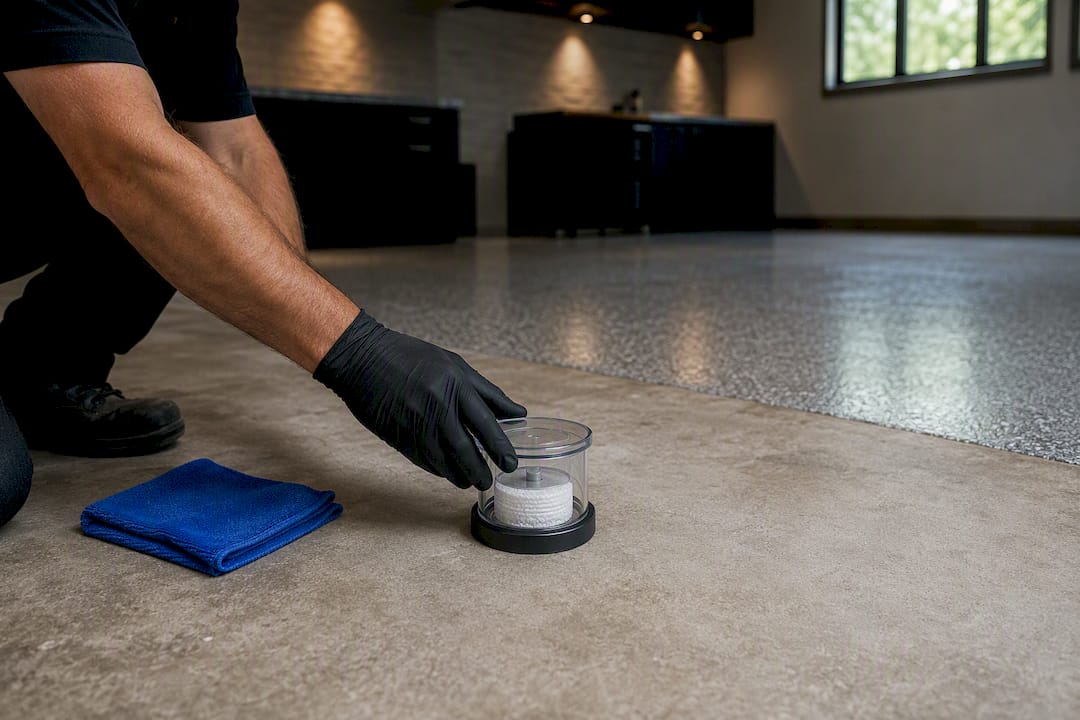
Most epoxy floor warranties split coverage into two lanes: the manufacturer stands behind the material itself, while the contractor who installed it stands behind the workmanship. Insurance-backed or joint warranties push that risk further off your plate. The failure mode that voids more claims than anything else is moisture-driven delamination, so before you sign anything, ask for the written warranty, ASTM F1869 moisture test results, and a documented claim process in plain language.
TL;DR:
- Most epoxy floor warranties split coverage between the manufacturer and the installer; insurance-backed or joint warranties offer more comprehensive and transferable protection.
- Moisture-driven delamination remains the leading cause of claim denial, especially if ASTM F1869 moisture tests were not performed and documented beforehand.
- Warranties of 3 to 5 years from manufacturers or applicators are common, but 10-year or lifetime warranties backed by third parties provide better long-term security and transferability.
- Claims are often denied due to hot-tire pickup, UV fading, owner negligence, or lack of proper moisture testing and surface preparation documentation.
- Protect your warranty by obtaining written documentation of testing, prep procedures, and ensuring proper maintenance, especially with pH-neutral cleaners and prompt spill cleanup.
Table of Contents
- Understanding Epoxy Floor Warranty Coverage Types
- How Long Should an Epoxy Floor Warranty Last?
- What Voids an Epoxy Floor Warranty Fastest
- Verifying Coverage Before You Sign, and Filing a Claim Later
- Maintenance That Keeps Your Warranty Valid
- Why Warranty-Backed Installs Look Different Up Close
- Get a Warranty-Backed Epoxy Floor Estimate
- Sources
- FAQ
Understanding Epoxy Floor Warranty Coverage Types
An epoxy floor warranty rarely comes from one source. It usually splits into a manufacturer material warranty, an applicator or workmanship warranty, or a joint warranty that combines both under one document. The manufacturer typically guarantees the resin and hardener perform as formulated, free of manufacturing defects. The contractor’s workmanship warranty covers the installation itself, meaning how well the surface was prepped, mixed, and applied. Coverage terms differ significantly depending on which entity issued the warranty and which failure category is involved, so two floors with identical coatings can carry very different protection.
Coverage generally addresses a specific set of problems:
- Adhesion failure or delamination from the concrete substrate
- Premature breakdown of the coating under normal use
- Chemical resistance failures, like staining from oil or automotive fluids
- UV-related color fade, though many standard epoxy warranties exclude this outright since epoxy naturally ambers under UV exposure
The remedy language matters as much as the coverage itself. “Limited” warranties usually cap the fix to repair or recoat rather than full replacement, and some prorate the payout based on how many years of the warranty term have already passed. Read the remedy clause before the coverage list.
How Long Should an Epoxy Floor Warranty Last?
Warranty length tells you less than most homeowners assume. A one-year workmanship warranty from a reputable local installer can offer better real-world protection than a ten-year manufacturer-only warranty that never covers labor.
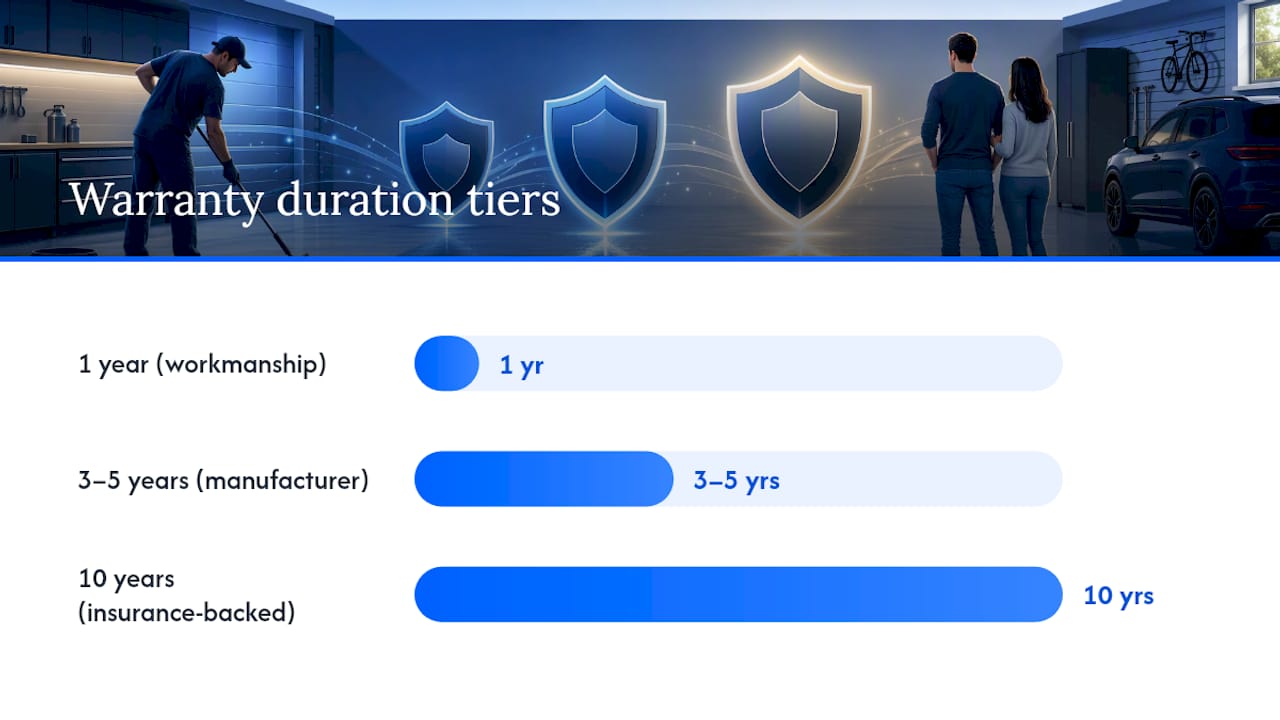
Typical duration tiers break down like this:
- 1 year: Standard workmanship coverage from smaller applicators, usually covering installation errors only.
- 3 to 5 years: Common range for manufacturer material warranties and mid-tier applicator packages. Local contractors often structure these tiers to specific system packages, with exclusions for structural slab movement or owner misuse.
- 10 years or “limited lifetime”: Usually reserved for joint or insurance-backed programs where a third party, not just the installer, stands behind the coverage.
Insurance-backed warranties matter more than the number on the page. Some 10-year programs are backed by a third-party insurer rather than the contractor alone, which means the coverage survives even if the installer closes shop. That structure also tends to make the warranty transferable to a new homeowner, something a manufacturer-only warranty often doesn’t allow. When you’re comparing options, ask directly: who is the obligor if something goes wrong, and can I hand this warranty to whoever buys my house next?
What Voids an Epoxy Floor Warranty Fastest
Delamination tied to moisture is the single most disputed warranty claim in the industry, and manufacturers build their exclusions around it. Warranties commonly exclude delamination caused by moisture vapor emissions exceeding 3 pounds per 1,000 square feet per 24 hours, a threshold measured by ASTM F1869 testing before installation ever begins. If that test wasn’t performed and documented, you have almost no leverage to dispute a moisture-related failure later.
Other common triggers for a denied claim:
- Hot-tire pickup, where a warm tire lifts uncured or improperly cured epoxy. Many warranties treat this as a maintenance issue, not a coating defect.
- UV fade, since standard epoxy topcoats aren’t UV-stable. This is usually excluded outright rather than covered and repaired.
- Owner negligence, including chemical spills left to sit, mechanical gouging from dragged equipment, or cleaning with the wrong products.
- Substrate issues, such as installing over concrete that was never moisture-tested or properly ground to the correct CSP profile.
Watch for contract language that hands the contractor “sole discretion” over whether a claim qualifies, extremely short windows for reporting a problem (some give you as little as 30 days), or no mention of transferability at all. A missing installer certification number is its own red flag.
Pro Tip: Ask to see the installer’s factory training certificate before you sign anything. A certified installer’s paperwork usually references the exact coating system and prep standard used, which becomes your best evidence if you ever need to file a claim.
Verifying Coverage Before You Sign, and Filing a Claim Later
Protecting your warranty starts before installation, not after a problem shows up.
- Get the full written warranty in hand before signing the contract, not a verbal summary of it.
- Confirm exactly who the obligor is (manufacturer, contractor, or insurer) and ask in writing whether the warranty transfers if you sell the property.
- Require a documented ASTM F1869 moisture test, written surface prep records showing the CSP grinding level achieved, and pre-install photos as part of the paperwork, not an afterthought.
- If you ever file a claim, submit photo or video evidence of the damage, your original invoice, copies of the pre-install test reports, and written notice within whatever window the warranty specifies.
Expect a physical inspection once you’ve filed, usually within a couple of weeks, followed by a defined repair scope in writing. If the contractor won’t commit to a timeline for that inspection up front, that’s worth asking about before you ever need the warranty.
Maintenance That Keeps Your Warranty Valid
Warranty language almost always includes maintenance requirements, and skipping them is one of the easiest ways to lose coverage without realizing it. Manufacturers like Sherwin-Williams publish specific cleaner recommendations and caution against harsh chemicals or abrasive brushes on resinous floors, and straying from that list can technically breach the agreement.
Practical rules that keep most warranties intact:
- Use pH-neutral cleaners only; never scrub with metal blades or abrasive pads.
- Wipe up oil, gas, or chemical spills promptly rather than letting them sit for extended periods.
- Scrub high-traffic areas on a regular schedule rather than waiting for buildup to become visible staining.
- Call a professional for deep gouges or peeling instead of attempting a DIY patch, which can void coverage on its own.
Pro Tip: Keep dated photos and receipts every time you clean or maintain the floor. If you ever need to file a claim, that simple paper trail is often what convinces an adjuster or contractor that neglect wasn’t the cause. For a full breakdown of manufacturer-aligned cleaning schedules, our maintenance routine guide covers dilution ratios and when a problem needs a professional instead of a mop.
Why Warranty-Backed Installs Look Different Up Close
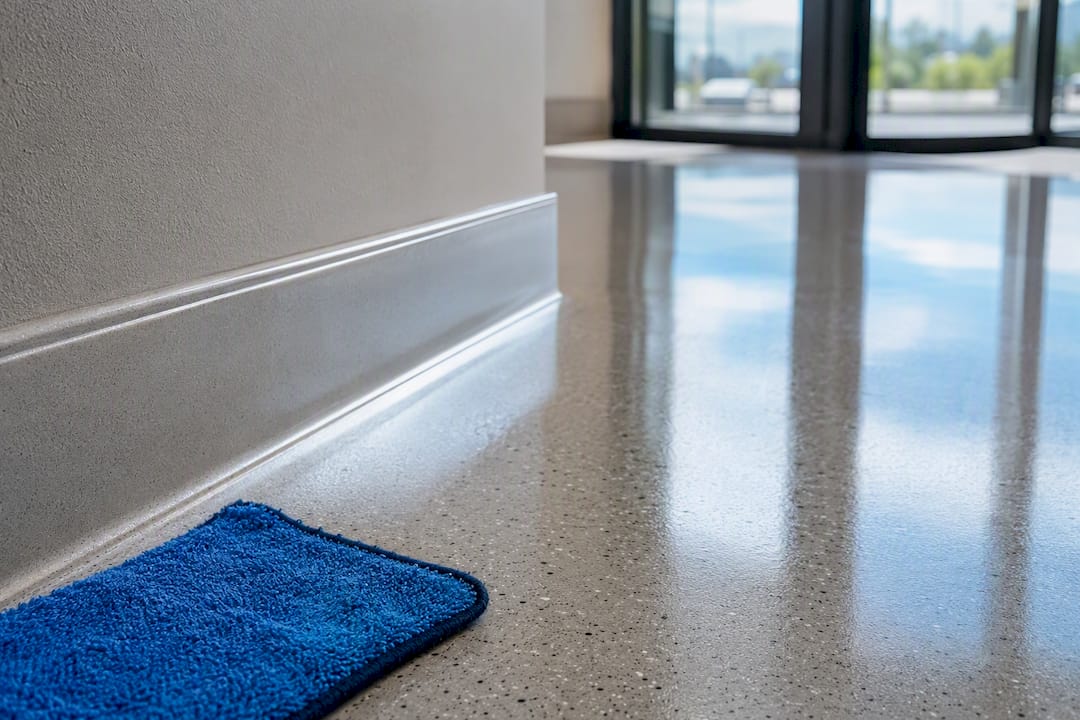
Homeowners rarely see what separates a warranty that holds up from one that collapses at the first claim. It usually comes down to paperwork nobody wants to bother with at the time of install. Some installers run moisture testing and CSP surface prep as a standard part of every epoxy job, not an upsell, because that documentation is exactly what a manufacturer or insurer asks for when a claim gets filed years later.
Commercial-grade equipment and real crews on every job site cut down on the sloppy prep that causes most delamination disputes in the first place. Combined with insurance coverage and a written satisfaction guarantee, such processes can reduce the friction homeowners usually run into when something does go wrong. If you want a documented estimate that spells out exactly what testing and prep your job will include, that conversation starts with a straightforward call, not a sales pitch.
— Brandon
Get a Warranty-Backed Epoxy Floor Estimate
If you’re comparing quotes right now, a key advantage some installers offer is documentation you can actually use later. Instead of a verbal promise and a handshake, some epoxy jobs include ASTM F1869 moisture testing, diamond grinding to the correct CSP profile, and photo records of the prep work before a drop of coating goes down. That’s the paperwork a manufacturer or insurer will ask for if you ever need to file a claim.

At your estimate, bring any existing moisture concerns, questions about your slab’s age, and whatever timeline you’re working with. The estimator will walk you through what prep your specific garage or floor needs, what warranty tier applies, and what the installation and coating process actually looks like from grinding to cure. Colorado Springs and Denver homeowners can request a free estimate and get a written scope before committing to anything. If you’re still deciding between finish types, our comparison of epoxy versus garage tiles is worth a read first, and you can check recent customer reviews before you call.
Sources
- Understanding Concrete Coating Warranty Terms and Coverage
- Sherwin-Williams maintenance and cleaning recommendations for resinous floors
- 6 tips to ensure proper epoxy floor coating maintenance (Carboline)
- 10-Year Warranty Program Overview - American Poly Floor
FAQ
What Is the Typical Warranty Period for Epoxy Flooring?
Workmanship warranties often run 1 to 5 years, while manufacturer material warranties and insurance-backed joint programs can extend to 10 years or limited lifetime coverage, depending on the issuer.
How Many Years Will an Epoxy Floor Last?
A properly installed and maintained epoxy floor commonly performs well beyond its warranty term, but actual lifespan depends heavily on moisture testing at install and how consistently the owner follows manufacturer-recommended cleaning.
What Are the Common Problems With Floor Epoxy?
The most frequent issues are moisture-driven delamination, hot-tire pickup marks, and UV color fade, all of which many standard warranties exclude rather than repair.
Can You Repair a Damaged Epoxy Floor?
Yes, most damage can be repaired through spot recoating or a full recoat, though whether the repair is covered under warranty depends on whether the damage falls under an excluded cause like negligence or untested moisture levels.
Who Actually Issues an Epoxy Floor Warranty?
Coverage can come from the coating manufacturer, the installing contractor, or a joint warranty combining both, and increasingly from a third-party insurer in programs like Alldaypowerwashing’s documented installs, which reduces risk if the original installer ever closes.