

Avoid Cracked Pumps: Pressure Washing Temperature Limits (40°F–90°F)
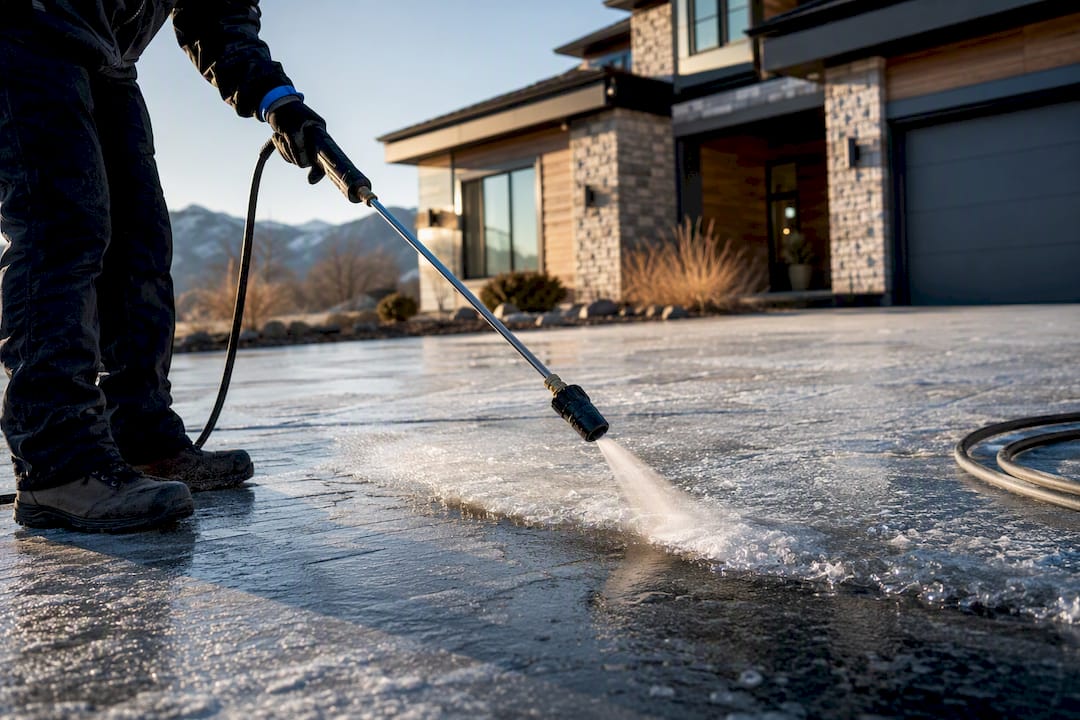
Don’t pressure wash below 32°F, and don’t run supply water above the roughly 100°F cap most manufacturers set for standard equipment. The safest working window sits between 40°F and 90°F, with 32°F to 40°F treated as a caution zone rather than a hard stop. Push past either edge, whether that’s icy pavement or a machine running too hot, and you risk cracked pumps, scalded skin, or a ruined finish. When conditions land in that gray zone, wait it out or call a crew that runs winter-ready equipment.
TL;DR:
- Operating pressure washing equipment safely requires staying between 40°F and 90°F, with extra caution needed near the 32°F to 40°F range due to ice and condensation risks.
- Most consumer pressure washers are limited to about 100°F for supply water, protected by thermal relief valves that discharge at approximately 125°F to prevent damage.
- Cold-weather failures often result from trapped water freezing in pumps or hoses, causing cracks, leaks, or warping, especially below 32°F.
- Using hot water is effective for cleaning grease and heavy soils but poses risks of burns, material warping, or damage to delicate surfaces like vinyl or weathered wood.
- Proper winterization, continuous water flow, and scheduling during the warmest part of the day significantly reduce cold-weather and temperature-related hazards.
Table of Contents
- What Are Safe Pressure Washing Temperature Limits for Ambient Air?
- How Hot Can Pressure Washer Water Actually Get?
- What Happens When You Ignore These Limits?
- When Does Hot Water Actually Help?
- Cold-Weather Pressure Washing: A Practical Checklist
- Field-Tested Tips From Experienced Pressure Washing Crews
- How Do You Control Water Temperature Mid-Job?
- Which Machine Parts Are Most Vulnerable to Temperature Damage?
- Does Water Temperature Change How Well Different Surfaces Get Clean?
- What Protective Gear Matters Most in Extreme Temperatures?
- Why Playing It Conservative on Temperature Beats Pushing the Limits
- Get Professional Help for Temperature-Sensitive Jobs
- Where to Verify Machine-Specific Limits
- Sources
- FAQ
What Are Safe Pressure Washing Temperature Limits for Ambient Air?
The comfortable operating range for most residential and commercial jobs generally runs within a typical moderate temperature band. Inside that band, water flows freely, detergents activate properly, and surfaces dry at a normal rate without flash-freezing or drying too fast to rinse cleanly.
Between 32°F and 40°F, you’re in caution territory. The machine might run fine, but the ground doesn’t always match the air temperature reading on your phone. Concrete and asphalt hold cold longer than the surrounding air, so a 38°F afternoon can still leave a driveway at or below freezing in shaded spots.
Wind chill matters more than people expect here. A light breeze during a wash job speeds up evaporative cooling on wet surfaces, and that can drop the effective surface temperature several degrees below what the thermometer says. Combine that with a garden hose still holding overnight chill and you get ice patches nobody planned for.
Before starting any job near that 40°F line, run through a short checklist:
- Check the hour-by-hour forecast, not just the daily high and low.
- Time the job for midday, when both air and surface temperatures peak.
- Test a small, shaded area first and watch how quickly runoff behaves.
- Skip the job entirely if surfaces show frost or standing ice.
How Hot Can Pressure Washer Water Actually Get?
Most consumer-grade machines are not designed to run hot water at all, and their supply-line limits reflect that. Many manufacturers cap incoming water at around 100°F, with a thermal relief valve built in to protect the pump if things run hotter than intended.
That valve is a safety mechanism, not a suggestion. When internal water temperature climbs to a higher threshold, the valve opens and discharges hot water to prevent pump seal damage and heat buildup that can warp internal components. Generac’s support documentation notes that a valve tripping repeatedly usually points to a supply temperature problem, not a defective machine.
Statistic Callout: Standard consumer pressure washers max out at roughly 100°F supply water, with thermal relief kicking in near 125°F to protect the pump. Commercial hot-water and steam units are a different category entirely.
A few things separate a cold-water consumer unit from a true hot-water or steam-capable commercial machine:
- Hot-water units use a diesel or propane-fired heating coil rather than relying on incoming water temperature alone.
- They carry separate pressure and temperature ratings, often with dedicated burner controls and safety interlocks.
- They’re built for grease, oil, and heavy commercial soil, not everyday siding or driveway work.
Before running anything warmer than tap temperature through your machine, check the owner’s manual for the exact supply-temperature ceiling. Guessing here is how pumps fail early.
What Happens When You Ignore These Limits?
Cold-side failures start with trapped water. Any moisture left in a pump chamber, hose coil, or bypass line will freeze solid below 32°F, and ice expands. That expansion cracks pump housings, splits hoses, and ruins seals in ways that often aren’t visible until the next time you try to start the machine.
Statistic Callout: Below 32°F, standing water in equipment lines is a near-certain freeze risk. Between 32°F and 40°F, surface ice from wind and evaporative cooling becomes the bigger hazard.
Surface icing is the other cold-weather danger, and it’s arguably worse for people than for equipment. Spray water on a cold driveway or walkway, and evaporative cooling combined with wind can flash-freeze a thin, nearly invisible layer of ice, exactly the kind that causes slips.
On the hot side, the danger is scalding, and it happens faster than most people assume:
- Water at moderately elevated temperatures takes several minutes to cause a serious burn.
- Water between 130°F and 140°F can cause a severe burn in seconds, according to burn-time tables from Powerline Industries.
- Direct contact with pressurized hot water multiplies that risk because it forces heat deeper into skin.
Heat also stresses materials. Old wood, softened vinyl, or already-weathered brick can warp or crack under sudden temperature shifts, a problem known as thermal shock.
When Does Hot Water Actually Help?
Heat earns its keep on grease, baked-on oil, and heavy commercial residue. Kitchen hood degreasing, restaurant pad cleaning, and shop-floor oil removal all benefit from hot water because heat breaks down fats and petroleum residue faster than cold water and detergent alone.
For most residential work, though, heat is optional at best. Siding, painted trim, and typical driveway grime respond well to correct pressure, dwell time, and the right detergent. Running hot water on vinyl siding or older painted wood risks softening or warping the surface for no real cleaning gain, a point echoed in Westlink’s analysis of temperature and power cleaning.
If a job genuinely calls for heat, a few adjustments keep it safe; alternatively, you can consider ways to foam your car without a pressure washer to avoid temperature risks while cleaning.
- Lower the PSI slightly to offset the added cleaning power of heat.
- Use detergents rated for hot-water application; not all chemicals hold up the same way when heated.
- Avoid prolonged direct contact on painted or delicate surfaces, even with the right temperature.
Pro Tip: If you’re unsure whether a stain needs heat, test a cold-water pass with the right detergent first. Grease that won’t budge cold is your signal to consider hot water, not the other way around.
Cold-Weather Pressure Washing: A Practical Checklist
Cold jobs go wrong in predictable ways, and most of them are preventable with a routine. Here’s the sequence worth following whenever temperatures flirt with that 40°F caution line:
- Check hourly forecasts, not just the daily average, and watch for late-afternoon drops.
- Test a small patch of the work surface before committing to the full job.
- Keep water moving continuously; a machine sitting idle with water in the lines is the fastest route to a freeze crack.
- Schedule the job for the warmest part of the day, typically late morning through early afternoon.
- Drain hoses and the pump fully as soon as the job ends.
- Flush with non-toxic pump antifreeze or store the unit indoors if temperatures will drop overnight.
Skipping step three is the most common mistake. A quick coffee break with a loaded hose in freezing air can undo an otherwise careful job. Concrete that takes on freeze-thaw cycling from careless winter washing can develop long-term surface damage that shows up as flaking or spalling months later.
Field-Tested Tips From Experienced Pressure Washing Crews
Pressure numbers matter as much as temperature. Crews typically run 2,500 to 3,000 PSI for concrete driveways and drop down to 1,200 to 1,500 PSI for siding, where heat is rarely necessary and can actually damage the finish.
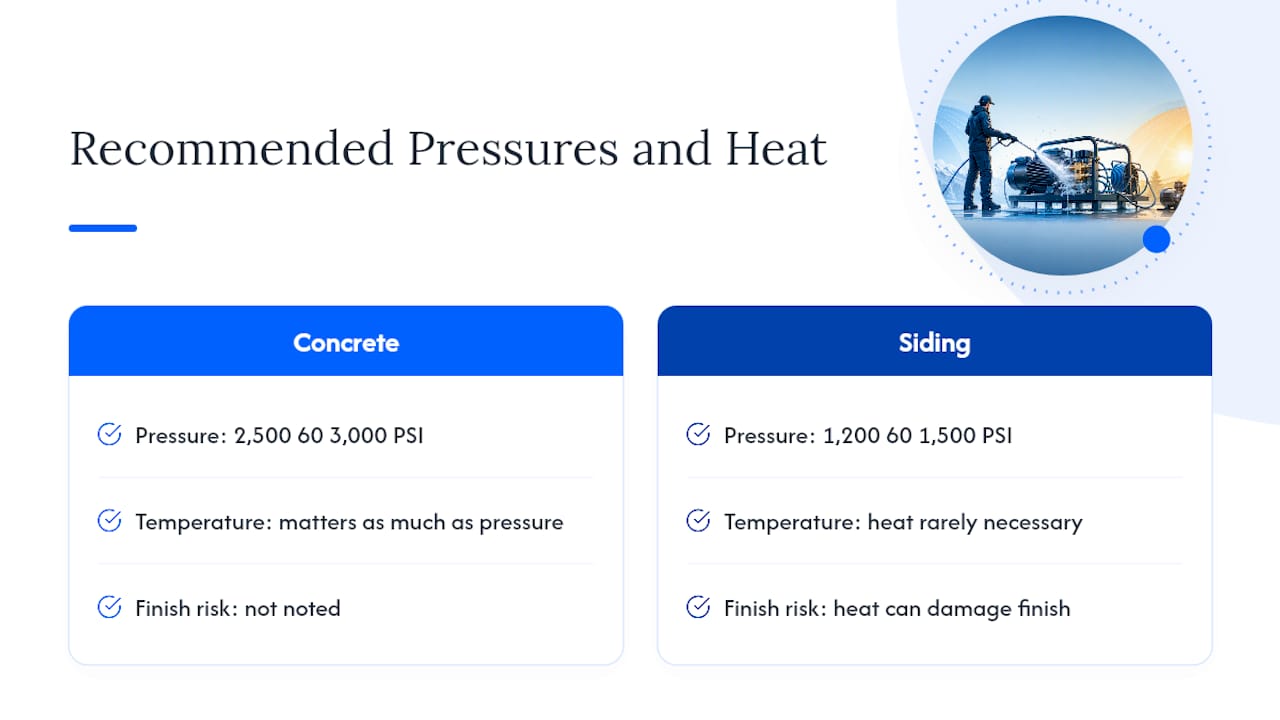
Cold-weather scheduling follows a simple rule: work the midday window when surface and air temperatures align, keep water flowing continuously between sections, and winterize immediately during any pause longer than a few minutes.
If you’re deciding whether to hire out a marginal-weather or grease-heavy job, look for three signals: crews with proper insurance, access to commercial-grade hot-water equipment, and a satisfaction guarantee that covers return visits.
How Do You Control Water Temperature Mid-Job?
Most homeowners never touch temperature controls directly, but property managers running commercial equipment sometimes need to. Thermostatic mixing valves are the standard tool here. They blend hot and cold supply lines to hold output at a set temperature, which matters when a job calls for warm water without risking a full-heat unit’s higher burn potential.
Heat exchangers show up on commercial hot-water units, transferring heat from a burner coil into the water stream without direct flame contact with the water itself. These systems typically include a bypass or dump valve so operators can drop back to cold water instantly if the job or surface changes mid-task, say, moving from a greasy loading dock to an adjacent painted wall.
For consumer equipment, temperature control is far simpler: it’s whatever comes out of your spigot. If your winter tap water runs colder than ideal for detergent activation, running the water briefly before connecting the hose can help, though it won’t get you into true hot-water territory.
The bigger safety point applies to any heated system: never override a thermal relief valve, and never bypass a mixing valve to force higher output temperature. These components exist because manufacturer testing has already identified the failure points in the pump and seals. If your setup can’t hit the temperature a job needs, that’s a sign to rent or hire equipment built for it rather than push a residential unit past its rated range.
Which Machine Parts Are Most Vulnerable to Temperature Damage?
Hoses are usually the first casualty of temperature extremes. Standard rubber and PVC-blend hoses stiffen in cold weather, and a stiff hose kinks and cracks far more easily than a pliable one. On the hot side, most consumer hoses aren’t rated much above the 100°F supply limit already discussed, so pushing hot water through a cold-rated hose risks softening the inner lining over time.
Seals and O-rings take damage from both directions. Cold makes rubber seals brittle, and a brittle seal that gets flexed during startup can crack immediately. Heat has the opposite effect, causing seals to soften and lose their grip, which shows up later as leaks around fittings.
Pumps are the most expensive part to lose, and freezing is the classic killer. Water trapped inside pump chambers expands as it freezes, and that expansion can crack the housing itself, not just a gasket. OSHA’s equipment safety guidance treats this as a primary reason for full winterizing rather than a simple drain-and-hope approach.
A quick reference for common failure points:
| Component | Cold-weather risk | Hot-water risk |
|---|---|---|
| Hoses | Stiffening, cracking, kinks | Lining softening above rated limits |
| Seals/O-rings | Brittleness, cracking on startup | Softening, slow leaks |
| Pump housing | Freeze expansion cracks | Warping near thermal relief threshold |
Check hose and seal condition at the start of each season, not just when something fails.
Does Water Temperature Change How Well Different Surfaces Get Clean?
Surface material changes the calculus on temperature more than most guides admit. Concrete tolerates heat reasonably well because it’s dense and non-porous at the surface, which is part of why hot water shows up on heavily stained commercial pads. But concrete that’s already cracked from freeze-thaw cycling can see hot water accelerate existing damage if it seeps into hairline cracks and then cools unevenly.
Wood is the most temperature-sensitive surface homeowners deal with. Old or weathered wood siding and deck boards can warp or raise grain under hot water, especially if the wood has any existing moisture content. Cold water at correct pressure, paired with the right cleaner, handles most residential wood cleaning without the added risk.
Brick sits in the middle. Older or soft-fired brick and the mortar joints between bricks can suffer from thermal shock, a sudden temperature swing that stresses the material’s structure. Modern kiln-fired brick tolerates more, but there’s rarely a cleaning advantage to heat here that justifies the risk.
Vinyl siding is the clearest case against heat. Vinyl softens noticeably above moderate temperatures, and pairing that softened state with pressurized water can warp panels permanently. This is one reason prepping a house before painting almost always calls for cold or lukewarm water and correct pressure rather than heat as a shortcut.
What Protective Gear Matters Most in Extreme Temperatures?
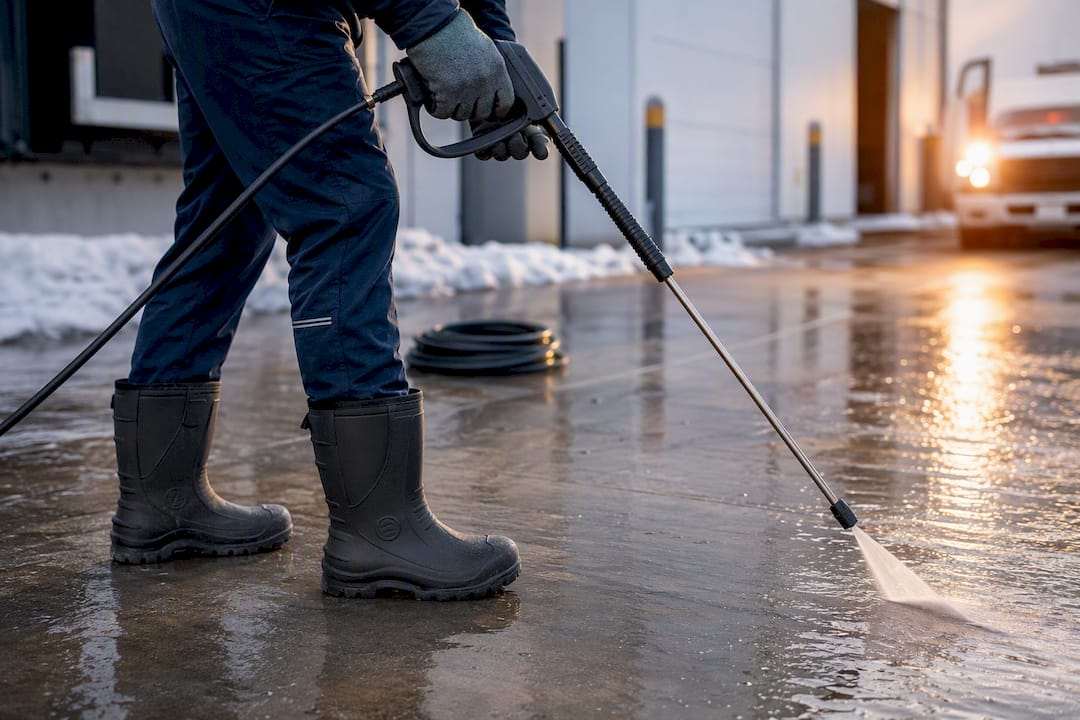
Cold-weather jobs demand attention to footing before anything else. Waterproof boots with real tread are non-negotiable once temperatures near freezing, since wet concrete near 32°F can develop a slick film well before visible ice forms. Insulated, waterproof gloves matter too, both for grip on a cold wand and to prevent numb hands from losing feel for pressure control.
Hot-water jobs flip the priority toward burn prevention. Given how fast water above 130°F causes severe burns, heat-resistant gloves and eye protection aren’t optional extras, they’re the baseline for anyone operating hot-water or steam equipment. Long sleeves and pants reduce splash-back exposure regardless of season, but they matter more when the splash carries real heat.
Layered clothing works better than heavy single layers in cold weather because you’ll generate body heat from the physical work itself. Overdressing leads to sweating, and damp base layers in freezing air is its own hazard.
One safety point applies across both temperature extremes equally: never operate on a surface you can’t see clearly. Ice hides under thin water sheets, and hot-water splash-back is harder to judge in bright glare. If you can’t confirm footing or spray direction with confidence, that’s the moment to stop, not push through.
Why Playing It Conservative on Temperature Beats Pushing the Limits
Most equipment failures and injury reports trace back to someone treating these numbers as suggestions rather than limits. The 40°F caution line and the 100°F supply cap aren’t arbitrary; they reflect where pump seals, hoses, and human skin actually start failing. Erring conservative costs you a delayed job. Ignoring the threshold costs you a cracked pump or a burn. When conditions sit in the gray zone, waiting a day or calling a crew with proper winter-ready equipment is the cheaper choice every time.
— Brandon
Get Professional Help for Temperature-Sensitive Jobs
Marginal weather doesn’t have to mean a canceled job or a risky DIY attempt. Professional services run commercial-grade equipment suitable for edge cases, including hot-water systems for grease and heavy commercial soil, insured crews trained on cold-weather protocols, and a satisfaction guarantee that covers return visits if conditions change mid-job.

Whether you’re dealing with a Colorado Springs driveway that won’t thaw until midday or a commercial kitchen hood that needs real degreasing heat, the full range of power washing services covers house washing, concrete cleaning, gutter cleaning, and fleet work with equipment rated for conditions a consumer machine can’t handle. Property managers in the metro area can also check current service coverage in Denver directly. Request a quote now, and if the forecast looks marginal, the crew will help you pick a safer window instead of pushing a job that risks your property or their equipment.
Where to Verify Machine-Specific Limits
Check your owner’s manual first; supply-temperature limits vary by model and manufacturer. Beyond that, a few sources are worth bookmarking:
- OSHA for general equipment safety and freeze-damage prevention guidance.
- Generac’s support article on maximum water temperature and thermal relief behavior.
- Powerline Industries’ safety guidelines for burn-time tables and hot-water precautions.
- UNC Environment, Health and Safety guidelines for washwater handling and disposal rules.
Sources
- OSHA
- What is the maximum temperature of water that my pressure washer can handle? — Generac Support
- Pressure Wash Safety Guidelines — Powerline Industries
- Pressure washing guidelines — UNC EHS
FAQ
Is 50 Degrees Too Cold to Pressure Wash?
No, an ambient temperature above 40°F sits comfortably within the safe operating range of roughly 40°F to 90°F. Just watch the surface temperature separately from the air reading, since shaded concrete or a windy day can still run colder than the ambient number suggests.
What Do OSHA Guidelines Say About Pressure Washing Temperatures?
OSHA doesn’t set one specific numeric rule for every machine, but its guidance treats operation below 32°F as a clear freeze-damage hazard and stresses proper winterizing and thermal-relief awareness to prevent pump and hose failures.
Can a Pressure Washer Get Too Hot?
Yes. Most consumer units cap supply water around 100°F, and a thermal relief valve typically discharges near 125°F to protect the pump if temperatures climb higher than that.
What Is the Maximum Water Temperature a Pressure Washer Can Handle?
For standard consumer machines, manufacturer guidance generally points to roughly 100°F as the supply-water limit, with relief valves activating near 125°F. Commercial hot-water and steam units use separate heating systems and carry different, model-specific ratings, so always check the manual before assuming your equipment can handle heated water.