

2,500–3,000 PSI for Driveways: Concrete Cleaning for Homeowners
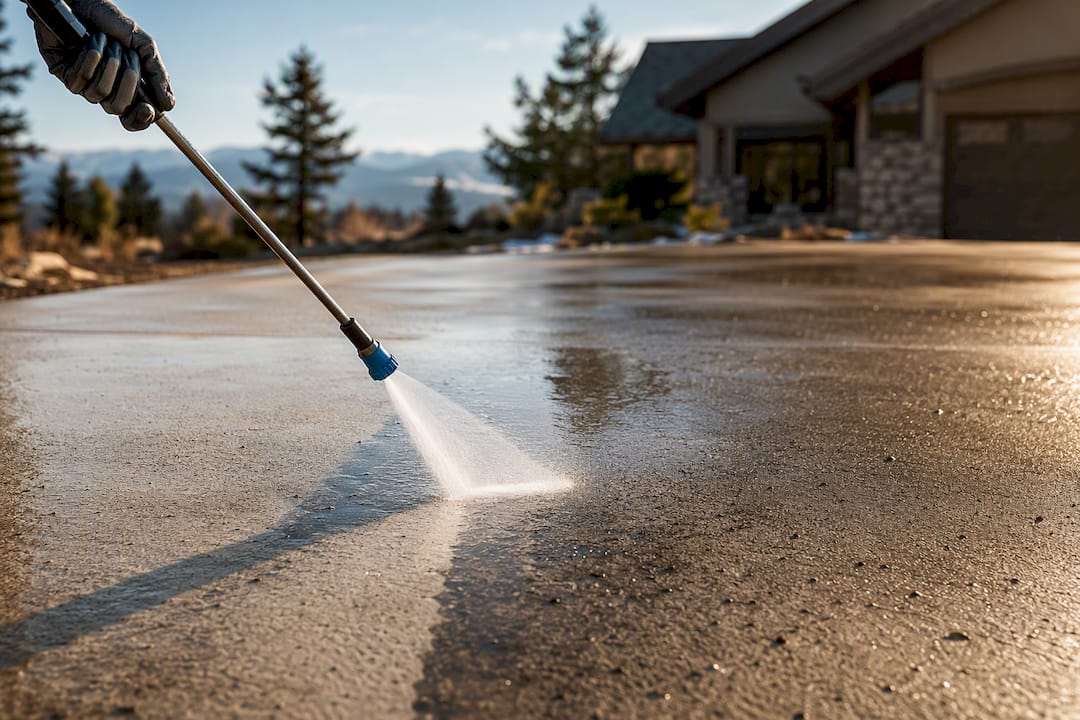
Most residential concrete handles moderate pressure safely when using a 25° nozzle held at a recommended distance from the surface. New concrete under 12 months old and stamped or sealed surfaces need lower pressure because the top layer is softer and more prone to etching. Whatever surface you’re working on, always run a test patch on a hidden corner before committing to a full pass.
TL;DR:
- Using lower PSI settings (around 2,500 PSI) is recommended for stamped or sealed concrete to prevent stripping or damage, especially on new pours under 12 months.
- Never use a 0° nozzle on concrete surfaces because it can cause immediate etching or spalling, and a 25° tip is ideal for most cleaning tasks.
- PSI alone is less important than proper technique, including correct nozzle angle, distance, dwell time, and chemical pretreatment to protect the surface.
- Gas-powered machines with 2,800 to 3,500 PSI and higher GPM are better suited for heavy stains and concrete with a sealant, while electric cleaners work for light dirt.
- A test patch on a hidden corner is essential to determine how your specific surface responds before performing full-pressure cleaning.
Table of Contents
- Recommended PSI Ranges by Task and Surface Condition
- Nozzles, GPM, and Spray Distance: Why Tip and Flow Matter as Much as PSI
- Equipment Choice: Electric vs. Gas, Renting, and When to Hire a Pro
- How to Pressure Wash Concrete Safely, Step by Step
- Stain-Specific Tactics: Oil, Rust, Paint, and Mildew
- Testing, Troubleshooting, and Common Mistakes to Avoid
- Post-Cleaning Care: Sealing, Cracks, and Maintenance Timing
- Where Real-World Proof Backs Up These Numbers
- What the Research Actually Tells You to Prioritize
- When DIY Isn’t Worth the Risk
- Sources
Recommended PSI Ranges by Task and Surface Condition
There’s no single “correct” PSI for concrete. The right number depends on what you’re cleaning and how tough the grime is.
- Light cleaning (dust, dirt, light mildew): Lower pressure settings suitable for delicate cleaning on patios or walkways without risking the surface.
- General driveway cleaning: 2,500 to 3,000 PSI. This is the workhorse range for most poured concrete driveways, and it lines up with what Linea recommends for surfaces in decent condition.
- Heavy stains (oil, tire marks, rust): Higher pressure settings may be effective when paired with degreasers or rust treatments, but caution is needed to avoid damage. Hi-Low Solutions notes that pretreatment lets you clean effectively without cranking pressure to dangerous levels.
- Stamped, sealed, or new concrete: Lower pressure settings recommended to protect delicate surfaces. New pours under 12 months are still curing, and even 2,500 PSI at close range can pit or streak them.
Surface age and finish matter more than most people expect. A driveway poured five years ago has a hardened surface that tolerates real pressure. A stamped patio with a decorative sealant coat is a different animal entirely, and blasting it at 3,000 PSI can strip the color layer right off. If you’re not sure how old your concrete is or whether it’s sealed, Alldaypowerwashing’s guide on new concrete curing timelines explains why waiting matters more than most homeowners assume.
The tradeoff worth understanding: you can almost always hit a lower PSI if you’re willing to add dwell time and chemistry. A degreaser that sits for 10 minutes does real work before the water ever hits the concrete, which means you don’t need to compensate with raw pressure.
Nozzles, GPM, and Spray Distance: Why Tip and Flow Matter as Much as PSI
PSI gets all the attention, but the nozzle tip and your distance from the surface change the actual force hitting the concrete just as much.
Never use a 0° tip on concrete. It’s a pinpoint stream that concentrates all your pressure into a dot the size of a pencil eraser, and that kind of narrow-angle spray can etch or spall concrete instantly if held too close. Stick with a 15° or 25° tip for actual cleaning, and switch to a 40° tip for rinsing detergent off afterward.
- 0°: Avoid entirely on concrete surfaces.
- 15°: Good for stubborn spots, used briefly and carefully.
- 25°: The everyday cleaning angle for driveways and patios.
- 40°: Best for rinsing and general wide-coverage work.
GPM (gallons per minute) is the other half of the equation. A machine pushing 3,000 PSI at 2 GPM cleans slower than one running the same pressure at 4 GPM, because more water volume flushes debris away faster and reduces how long you have to dwell on any one spot. DoorstepHQ’s breakdown of PSI and GPM settings puts the sweet spot for standard concrete at 2,500 to 3,500 PSI paired with 3 to 5 GPM.
Distance is your safety valve. Keep the tip 10 to 12 inches away for a clean finish without gouging. Anything closer than 6 inches on a 25° tip starts concentrating force the way a 0° tip does.
Pro Tip: If you own or rent anything above 3,000 PSI, add a surface cleaner attachment. The spinning dual nozzles spread pressure across a wider footprint instead of pinpointing it, which is why it’s the safer choice for high-output machines.
Equipment Choice: Electric vs. Gas, Renting, and When to Hire a Pro
Electric pressure washers, typically 1,800 to 2,300 PSI, work fine for patios, walkways, and light dirt. They’re quieter and lower maintenance, but they often need a boost from chemical pretreatment or a turbo nozzle to match what a gas unit does on a stained driveway.
- Choose gas for driveways and heavy stains. Gas units routinely deliver 2,800 to 3,500 PSI with better GPM, which matters for oil and rust removal.
- Rent for one-off jobs. If you’re tackling a single driveway once a year, renting a commercial-grade unit beats buying one you’ll use twice.
- Check the rental checklist. Confirm PSI, GPM, whether a surface cleaner attachment is included, and that you get a full nozzle kit (15°, 25°, 40°).
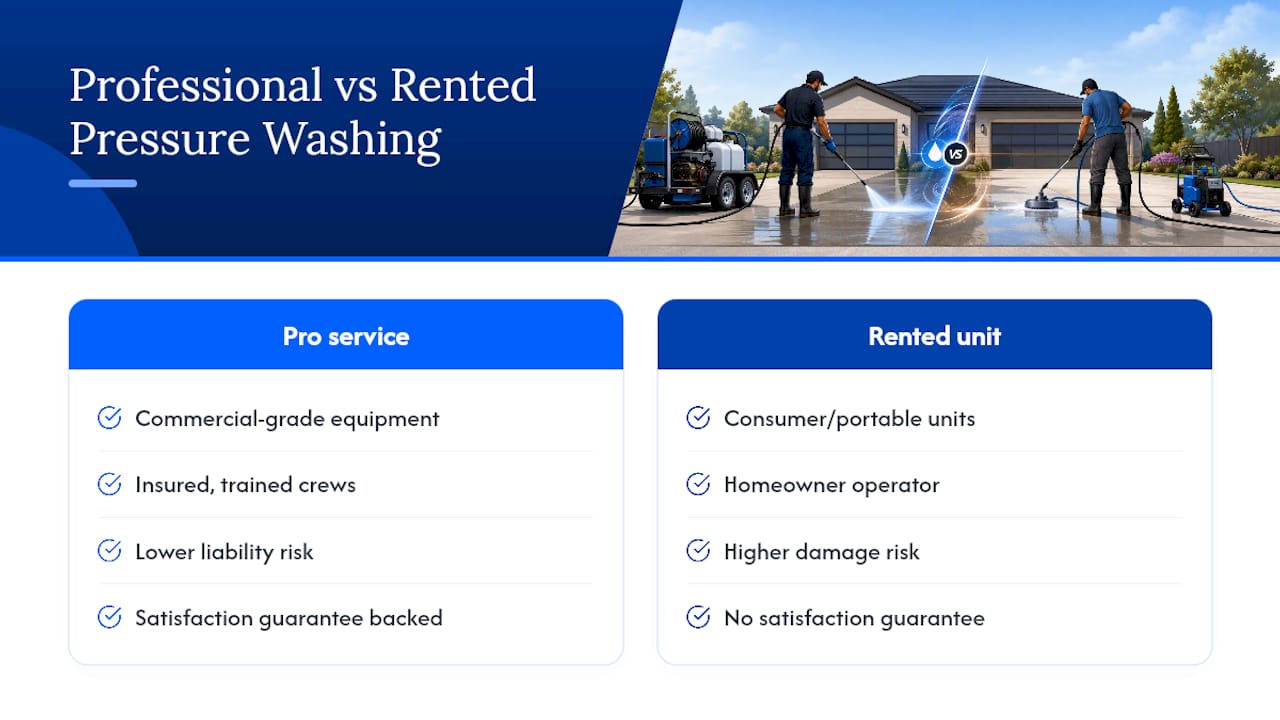
- Call a pro for the tough cases. Deep-set oil stains, cracked concrete, or sealed decorative surfaces are where a DIY attempt risks real damage. Insured crews carry commercial gear calibrated for exactly this kind of job.
How to Pressure Wash Concrete Safely, Step by Step
- Prep the area. Sweep loose debris, move planters and furniture, and cover any nearby plants that chemical runoff could harm.
- Pretreat stains. Apply a degreaser to oil spots or a rust treatment to metal stains. Let it dwell 10 to 15 minutes and agitate lightly with a stiff brush.
- Run a test patch. Start at the low end of your target range, hold the tip 12 inches away, and check a small section for etching or discoloration before doing anything else.
- Increase pressure only if needed. If the test patch looks clean with no marks, move up in small increments rather than jumping straight to 3,000 PSI.
- Wash in steady, overlapping passes. Keep the wand moving at a consistent speed and distance. Stopping in one spot, even briefly, is how stripes and hot spots happen.
- Rinse with a wider-angle tip. Switch to 40° and clear detergent residue completely.
- Let it dry before sealing or walking on it. Give the surface a full day of dry weather before applying any sealer.
Pro Tip: Check your garden hose for kinks before you start. A restricted water supply can cause pressure spikes at the tip that catch you off guard, even when your machine’s PSI setting hasn’t changed.
Stain-Specific Tactics: Oil, Rust, Paint, and Mildew
Different stains call for different combinations of chemistry and pressure, and matching the two correctly saves you from unnecessary damage.
- Oil: Apply an absorbent first if it’s fresh, then hit it with a degreaser and agitate before washing. Alldaypowerwashing’s grease removal guide walks through the process for embedded stains that a single pass won’t lift. Expect to run 2,500 to 3,000 PSI, or call a pro if the oil has soaked in for months.
- Rust: Use a chelating rust remover before you ever pick up the wand. Skipping straight to high pressure at close range just discolors the surrounding concrete without touching the stain underneath.
- Paint: Chemical or mechanical stripping should happen first. Thick coatings on driveways or garage floors are usually a job for professional equipment.
- Mildew and algae: A mildew-specific detergent paired with 2,000 to 2,500 PSI handles most cases, followed by a thorough rinse to prevent regrowth.
For any of these, matching the cleaner to the stain (see Alldaypowerwashing’s cleaner comparison) often does more work than pressure alone.
Testing, Troubleshooting, and Common Mistakes to Avoid
A test patch tells you almost everything. Etching looks like a lighter, rougher patch where the surface texture changed. Pitting shows up as small craters or pockmarks.
- Mistake: Holding a 0° or 15° tip too close for too long. Fix: switch to 25° and back off to 12 inches.
- Mistake: Inconsistent wand speed leaving visible stripes. Fix: keep passes steady and overlapping.
- Mistake: Skipping pretreatment on tough stains and compensating with more PSI. Fix: add a degreaser instead of pressure.
Post-Cleaning Care: Sealing, Cracks, and Maintenance Timing
Let concrete dry fully, usually 24 to 48 hours, before applying a penetrating sealer. Sealing locks out moisture and makes the next cleaning easier.
- Cracks: Small hairline cracks can be filled with a concrete crack filler; anything wider or structural warrants a professional look, and Alldaypowerwashing’s crack repair guide covers both. The same sealing logic applies to pool decks, where protecting the surface after cleaning matters just as much.
- Maintenance schedule: Plan on cleaning annually for low-traffic areas, or twice a year if you’re dealing with heavy oil exposure or shaded, mildew-prone spots.
Where Real-World Proof Backs Up These Numbers
These PSI ranges aren’t guesswork. They reflect what actually happens to concrete surfaces when pressure, distance, and chemistry are mismatched, and it’s a mismatch Alldaypowerwashing’s crews see constantly across Colorado Springs and Denver driveways, commercial lots, and grease-stained trash pads. Insured crews running commercial-grade equipment back every job with a satisfaction guarantee, which is a different risk profile than a rented unit and a Saturday afternoon.
What the Research Actually Tells You to Prioritize
The biggest gap between conventional pressure-washing advice and what actually protects concrete comes down to sequencing. Most guides list PSI ranges first and technique second, as if pressure were the main lever. It isn’t. Distance and dwell time do more of the real work, and PSI is just the number you dial in after you’ve already decided how close you’ll hold the wand and how long you’ll let a degreaser sit.
Here’s what gets overlooked: a homeowner running 2,000 PSI with poor technique, too close, uneven passes, no pretreatment, can do more damage than someone running 3,000 PSI correctly. The number on the machine matters less than most people think. The test patch matters more than almost anyone bothers to do.
If you take one thing from this, let it be the test patch. Thirty seconds on a hidden corner tells you more than any PSI chart ever will. Everything else, nozzle angle, distance, chemistry, is downstream of that first honest look at how your specific concrete responds.
— Brandon
When DIY Isn’t Worth the Risk
Some jobs are worth the Saturday and the rental fee. Others aren’t, especially when you’re staring at a stamped patio with an unknown sealant history, a trash pad soaked in years of grease, or a driveway with cracks that could widen under the wrong nozzle. That’s the line where Alldaypowerwashing’s commercial-grade equipment and insured crews take over the risk instead of you.

Professional services can handle the exact situations covered here: general driveway washing, sealed and stamped concrete that needs a gentler touch, and heavy grease on trash pads and commercial lots that DIY degreasers rarely fully clear. Some professional jobs come backed by a satisfaction guarantee, and crews often use surface cleaners and calibrated equipment most rental units don’t include. If your concrete falls into the “I’d rather not gamble on this” category, get a quote for pressure washing in Denver and let a crew that does this daily take the pressure question off your hands.
Sources
- How to pressure wash a driveway without damaging concrete — Linea
- How Much PSI to Clean Concrete: Complete Guide to Pressure Washing Driveways, Patios, and Sidewalks — Hi-Low Solutions