

Homeowners, Remove Tire Marks From Concrete Without Stripping Sealers
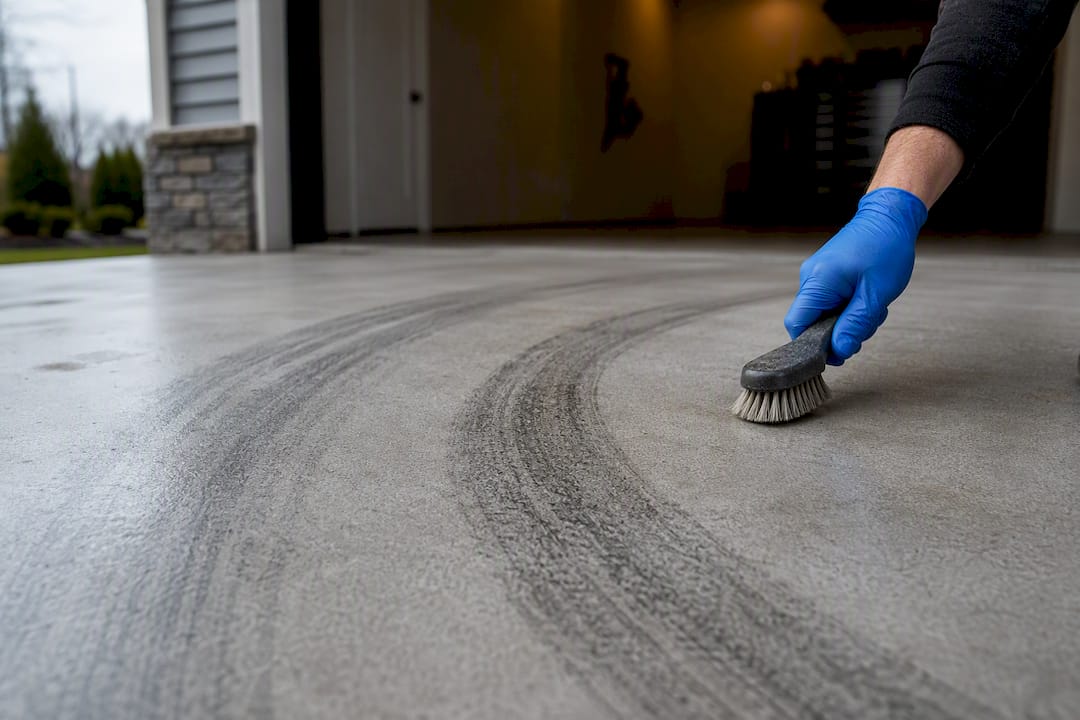
The fastest reliable fix is a citrus or concrete degreaser applied straight to the dry scuff, given time to dwell, agitated with a stiff nylon brush then rinsed thoroughly. That routine lifts most rubber marks on established driveways and floors without damaging the surface. For heavy commercial burns or large parking areas, pressure washing or a professional crew usually finishes the job faster and with less risk to sealed or new concrete.
TL;DR:
- Using a citrus or concrete degreaser is effective for removing tire marks from dry concrete, with dwell time and proper agitation being critical.
- Porosity of the surface determines the removal approach, with bare concrete being more tolerant of strong chemicals and decorative or sealed surfaces needing gentler methods.
- Mechanical removal using pressure washing should follow chemical treatment and is ineffective on new, coated, or sealed concrete, which requires softer cleaning methods.
- Sealing concrete with penetrating or film-forming coatings helps prevent future tire stains, especially when combined with regular rinsing and timely stain treatment.
- Large or deeply embedded tire burns, especially on fresh or coated surfaces, are best handled by professional pressure-washing services to avoid surface damage.
Table of Contents
- Why Tire Marks Form and Why Surface Type Matters
- Chemical-First Removal: Products and a Safe Step-by-Step Routine
- Mechanical Methods: Safe Pressure Washing and Scrubbing Techniques
- How to Treat New, Decorative, or Sealed Concrete Safely
- How to Reduce Future Tire Marks
- When to Call a Professional Pressure-Washing Service
- The Mistakes That Turn a Simple Job Into a Repair Bill
- Get Help With Tire Marks You Can’t Shift Yourself
- Sources
Why Tire Marks Form and Why Surface Type Matters
Tire marks aren’t just dirt sitting on top of your driveway. Friction heat from braking or turning softens the rubber compound, and plasticizers in the tire bond into the tiny pores of the concrete surface. That’s why a garden hose barely touches them. The porosity of the slab decides how deep that staining goes and how hard removal will be.
Surface type changes the strategy entirely:
- Bare poured concrete is porous and absorbs rubber residue quickly, but it also tolerates stronger degreasers and firmer scrubbing.
- Decorative or sealed concrete has a coating layer on top, and the wrong cleaner can strip that sealer right along with the stain.
- Epoxy-coated floors trap heat under tires, which can cause the coating itself to lift, separate from what’s known as hot-tire pickup.
- New concrete, poured within the last month, is still curing and far more vulnerable to chemical and mechanical damage than a slab that’s been down for years.
Knowing which category your surface falls into before you grab a bottle or a wand saves you from turning a cosmetic problem into a repair bill.
Chemical-First Removal: Products and a Safe Step-by-Step Routine
Chemical treatment should always come before scrubbing or blasting. Two product classes handle most residential and light commercial tire marks: citrus degreasers built on D-limonene, and alkaline concrete degreasers formulated specifically for driveways and garage floors. Both work by softening the bonded rubber so it releases from the pores instead of grinding deeper into them, an approach professionals rely on for stubborn scuffs. Vendor guidance also points to name-brand options like SunSpot, Natural Orange, and Simple Green as reliable starting points, while warning that some products are too aggressive for coated surfaces.
Here’s the sequence that actually works:
- Sweep away loose debris, gravel, and dirt so the degreaser contacts bare concrete.
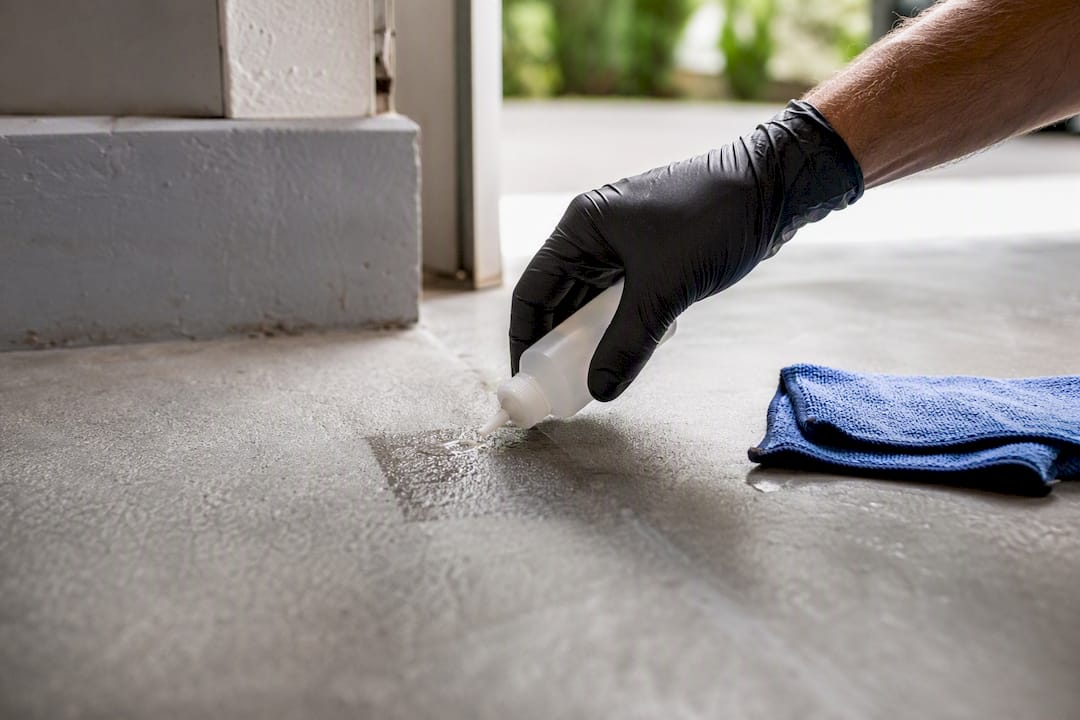
- Apply the degreaser generously to the dry scuff mark, not a pre-wetted surface. Wet concrete dilutes the chemical before it can penetrate.
- Let it dwell for 10 to 30 minutes, keeping the area wet by reapplying if it starts drying out in the sun.
- Agitate with a stiff nylon brush, working in overlapping passes rather than one direction.
- Rinse thoroughly with a garden hose or low-pressure setting, and repeat the cycle if shadowing remains.
For genuinely stubborn industrial rubber burns, some guides recommend escalating to xylene as a last resort, but that’s a solvent better suited to commercial settings than a residential driveway, given its fumes and flammability.
Pro Tip: Always spot-test any degreaser on a hidden corner of the slab first. Some formulas that lift rubber beautifully will also strip a decorative sealer, and you won’t know until it’s too late for that patch of driveway.
Mechanical Methods: Safe Pressure Washing and Scrubbing Techniques
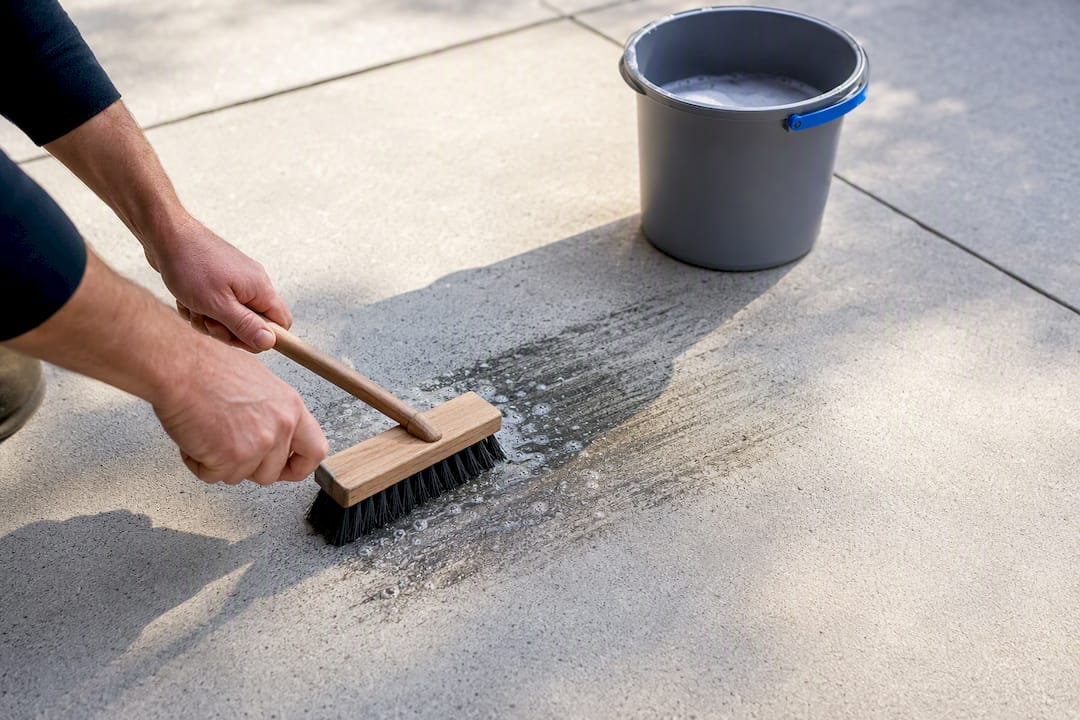
Pressure washing works best as the second step in the process, never the first. Blasting a rubber mark with water alone can actually drive residue deeper into the pores instead of lifting it out, which is why solvent-first treatment followed by agitation and a high-volume rinse outperforms pressure alone.
Once the degreaser has done its work, mechanical agitation finishes the job:
- Use a pressure washer in the 3,000 to 3,500 PSI range for established, bare concrete driveways.
- Keep the wand at least 12 inches from the surface and use a fan tip, not a pinpoint nozzle.
- Skip pressure washing entirely on new concrete or anything decorative or sealed.
- For garages, warehouse floors, or large commercial lots, a walk-behind floor buffer with an aggressive pad clears marks faster than manual scrubbing and needs fewer dwell cycles.
Skip wire-bristle brushes. They can shed metal fragments into the concrete that rust later, leaving orange staining that’s arguably worse than the tire mark you started with. Stiff nylon brushes or rotary scrubbers do the job without that risk.
How to Treat New, Decorative, or Sealed Concrete Safely
Not every slab can handle the same treatment, and getting this wrong is one of the most expensive mistakes a homeowner can make. Concrete poured within roughly the last 28 days is still curing and hasn’t reached full strength, so high-pressure washing or harsh chemicals can etch or pit the surface permanently.
For vulnerable surfaces:
- Skip the pressure washer on concrete under a month old; stick to gentle chemical cleaning and light hand agitation instead.
- Use sealer-safe cleaners on decorative or sealed driveways, since many standard degreasers strip the sealer right along with the stain.
- Stick with soft brushes on sealed or epoxy floors to avoid scratching the coating or triggering hot-tire pickup.
- Check the manufacturer’s cleaning guidance for any decorative coating before applying anything you haven’t spot-tested.
If you’re not sure how old your driveway is or whether it’s sealed, treat it as fragile until you know otherwise. For more detail on curing timelines, see this guide on protecting new concrete from pressure washing damage.
How to Reduce Future Tire Marks
Removal only solves today’s problem. Sealing is what keeps the same spot from staining again next month. Film-forming coatings like acrylic, epoxy, or polyaspartic sit on top of the slab and physically block rubber and plasticizers from reaching the pores. Penetrating sealers work differently. They soak into the concrete and reduce porosity from within without leaving a visible film, which makes future stains easier to lift even when they still occur.
A few habits stretch the life of any seal job:
- Rinse driveways and garage floors regularly, especially after wet or salty weather.
- Treat fresh tire marks within a day or two, before the rubber has time to bond further into the surface.
- Reseal on the schedule your product recommends, typically every two to three years for film-forming coatings.
Garages tend to benefit most from a full epoxy or polyaspartic coating since they see repeated hot-tire pickup from parked vehicles. Driveways exposed to weather often do better with a penetrating sealer that won’t peel under sun and freeze-thaw cycles.
Pro Tip: If you’re weighing a coating for a garage floor, ask about hot-tire pickup resistance specifically. Not every epoxy formula handles a warm tire sitting overnight the same way, and that’s where a lot of DIY coating jobs fail.
When to Call a Professional Pressure-Washing Service
DIY has its limits, and knowing where those limits sit saves you from wrecking a driveway trying to save an afternoon. A few situations point straight to hiring out:
- The rubber burn is extensive, deeply set, or has been there for years rather than weeks.
- You’re dealing with a large parking lot or warehouse floor where manual scrubbing simply can’t cover the square footage in a reasonable time.
- The concrete is new, decorative, or coated, and the risk of etching outweighs the convenience of doing it yourself.
- You’ve already tried degreaser and scrubbing without meaningful improvement.
Professional crews bring commercial-grade degreasers, hot-water rigs, and rotary surface cleaners that generate far more consistent results than a homeowner’s pressure washer and a garden brush. Before hiring anyone, ask whether they’re insured, what equipment and chemicals they use, whether they protect landscaping and nearby finishes, and whether resealing is part of the service.
The Mistakes That Turn a Simple Job Into a Repair Bill
Most tire-mark disasters aren’t caused by a stain that was too tough. They’re caused by shortcuts. Wire brushes get reached for because they scrub faster, and then rust spots show up months later where fragments embedded in the concrete. Pressure washers get cranked to max PSI on a driveway poured six weeks earlier because nobody checked the pour date. A degreaser gets dumped on a sealed patio with zero spot-test, and now there’s a discolored patch that’s more obvious than the tire mark ever was.
Some professional services build their process around commercial-grade equipment and crews who know the difference between a bare slab and a sealed one, because that distinction changes every decision that follows. The gap between a homeowner’s result and a professional’s result usually isn’t effort. It’s knowing which surface can take pressure and which one can’t.
— Brandon
Get Help With Tire Marks You Can’t Shift Yourself
If you’ve already tried degreaser and a stiff brush and the mark is still staring back at you, that’s usually a sign the residue has gone deeper than a driveway cleaner can reach on its own. Professional services often run commercial-grade equipment and send dedicated crews, not a single person with a rental unit, which matters on large lots, fleet yards, or garage floors where a consumer pressure washer just doesn’t have the output to finish the job in one pass.

Small spots on an older driveway are worth tackling yourself with a citrus degreaser and some elbow grease. But for extensive rubber burns, new concrete you’re worried about damaging, or a commercial lot with dozens of parking stalls, hiring out is the safer call. Some professional services offer same-week quotes, insured crews, and satisfaction guarantees for jobs in various local areas. Get a same-week quote for Denver-area concrete cleaning and find out what a professional-grade treatment can do for the stains you’ve been fighting all season.
Sources
For more detail on the removal methods and prevention strategies covered above, these sources are worth a closer look: pro removal tips for tire scuff marks, sealer-safe cleaning guidance from RadonSeal, and low-pressure foam techniques for delicate surfaces if you’re looking for a gentler approach on coated concrete.
- Engineerskill
- How to Remove Tire Marks From Concrete - SunDek
- How To Remove Tire Marks From Concrete - Concrete Camouflage
- How To Remove Tire Marks From Concrete | RadonSeal
- How to Remove Tire Marks From Warehouse Floors | FCE