

Protect Concrete With 3 Step Sidewalk Gum Removal That Avoids Etching
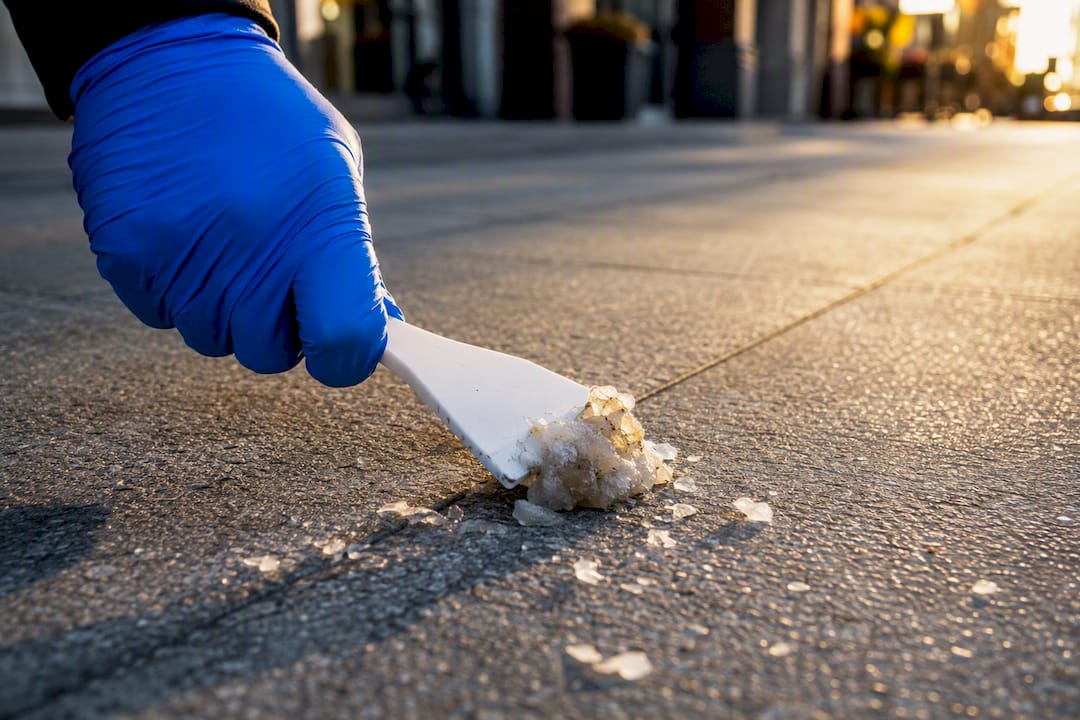
Freeze the gum with ice or a canned freezing spray, then chip it off at a low angle with a plastic putty knife. That handles most fresh-to-moderate spots. Baked-in gum, large infestations, or aging or porous concrete call for a professional hot-water pressure washing service instead. Expect a faint dark residue either way. The steps below cover both paths.
TL;DR:
- Freezing with ice or spray effectively handles fresh or moderately aged gum, but older or deeply bonded spots often require chemical and professional treatments.
- Using heat can loosen fresh gum but risks spreading or damaging older concrete if not carefully controlled, making cold methods preferable for extensive or old stains.
- Residue from removed gum often remains as a dark adhesive film in the concrete pores, which needs soap, degreasers, or multiple cycles of scrubbing to fully lift.
- Professional pressure washing with hot water and wide fan nozzles minimizes surface damage when cleaning large infestations or aged concrete, unlike high-pressure cold-water sprays.
- Sealing concrete surfaces annually and removing gum promptly prevent future buildup, reducing both effort and potential surface damage over time.
Table of Contents
- Quick-Start Checklist for Sidewalk Gum Removal
- How Do You Freeze and Scrape Gum Off Concrete?
- Can You Use Heat Instead of Ice on Gum?
- What Solvents Actually Dissolve Gum Residue?
- How Do Professionals Pressure Wash Gum Off Sidewalks Without Damaging Concrete?
- How Do You Get Rid of the Black Residue Gum Leaves Behind?
- Which Tools and Cleaners Are Safe for Concrete?
- When Should You Call a Professional for Gum Removal?
- How Do You Prevent Gum From Sticking to Concrete Again?
- What Do Professional Crews Actually Prioritize on a Gum Job?
- Get a Same-Week Quote for Professional Gum and Stain Removal
- Sources
Quick-Start Checklist for Sidewalk Gum Removal
Before you touch a single wad, gather three things: a can of compressed air (held upside down to release freezing spray) or a bag of ice, a stiff plastic putty knife, and a stiff nylon brush. Add rubber gloves and eye protection if you’re mixing any solvent later.
The flow itself has three steps:
- Harden it. Chill the gum until it turns brittle, usually 30 to 60 seconds with freezing spray or a few minutes with ice packed in a bag.
- Scrape it. Work the putty knife under the edge at a shallow angle and pop the piece free in one motion.
- Treat and rinse. Hit the leftover film with a soap or degreaser solution, scrub, then rinse thoroughly so no residue re-settles.
Before you start, triage the spot. Fresh gum (still a bit soft, no visible dirt embedded) usually pops off clean after freezing. Gum that’s flat, dark, and shiny has been there for months and has likely bonded into the concrete’s pores. That kind almost always needs a follow-up chemical treatment, not just a scrape.
Pro Tip: Test one wad first. If it shatters into clean chunks under the putty knife, freezing alone will handle the rest of the walkway. If it just smears, skip straight to the solvent step and save yourself the ice.
How Do You Freeze and Scrape Gum Off Concrete?
Gum is a synthetic rubber polymer, and rubber gets brittle when it’s cold. Below a certain temperature, the molecular chains that let gum stretch and stay tacky lock up, and the wad turns from pliable to crumbly, almost like hard candy. That’s the whole trick: you’re not fighting the adhesive, you’re changing its physical state so it breaks instead of stretches.
This is the recommended first-line DIY method for gum that’s fresh or only moderately aged, and it works without a drop of chemical.
Here’s the sequence:
- Clear the area. Sweep away loose grit and dirt so the ice or spray makes direct contact with the gum.
- Apply cold. Pack ice cubes in a sandwich bag and press it against the gum for 3 to 5 minutes, or use a canned air/freezing product held upside down for a 15 to 30 second burst.
- Test brittleness. Tap the edge with your fingernail. If it cracks rather than dents, you’re ready.
- Scrape low and slow. Hold the plastic putty knife nearly flat against the concrete and push under the wad’s edge, popping it loose in sections rather than trying to peel the whole thing at once.
- Repeat if needed. Thicker deposits sometimes soften back up mid-scrape. Re-chill and finish the job in a second pass.
Freezing gets rid of the bulk almost every time, but it rarely gets rid of everything. A thin adhesive film typically stays bonded to the concrete’s surface texture even after the main wad is gone, and that residue is what turns dark and grimy over time. Don’t mistake a clean-looking scrape for a finished job. You’ll need the soap or solvent step covered further down to actually lift that film out of the pores.
Can You Use Heat Instead of Ice on Gum?
Heat works on the same principle as freezing, just backward: warm gum instead of stiffening it, and it should peel away in one soft mass. It’s a reasonable option for a single fresh wad, especially indoors or on a small entryway where you don’t want to haul out ice. It’s a poor choice for a sidewalk covered in a dozen old spots.
A hairdryer on high, held a few inches away for 20 to 30 seconds, is usually enough to loosen a fresh piece. Boiling water poured directly on the spot works too, though it cools fast on cold concrete and may need a second pour.
Keep these points in mind before you reach for heat:
- Warm the gum just until it turns glossy and soft, not until it liquefies. Overheating makes it spread rather than lift.
- Scrape immediately while it’s still warm. Waiting even a minute lets it firm back up and stick harder than before.
- Wash the area right after scraping. Warm gum residue smears into pores far more easily than the brittle chips you get from freezing.
- Skip a heat gun on a large area unless you’re experienced. Concentrated heat on old, oxidized concrete can discolor the surface or, in rare cases, cause localized surface stress cracking.
- Never use an open flame. It’s overkill for gum and a real fire risk near dry landscaping or mulch beds.
If a spot smears instead of lifting cleanly, stop, let it cool back down, and switch to the freeze-and-scrape method instead. Fighting warm gum with more heat just makes the mess worse.
What Solvents Actually Dissolve Gum Residue?
Once the bulk of the gum is gone, you’re left with a thin, often gray or black film. That’s not gum anymore. It’s adhesive residue mixed with dirt, and it responds to solvents and mechanical scrubbing, not scraping.
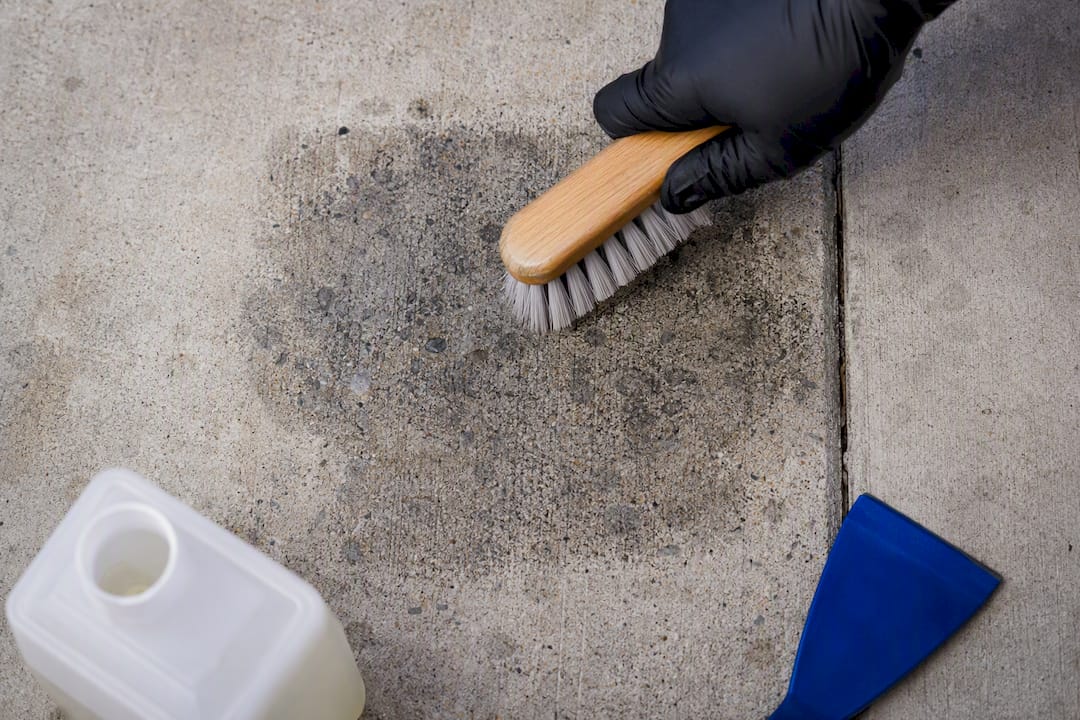
Start with the cheapest option: a household surfactant solution made from 1 tablespoon of dish soap per quart of warm water. Dish soap is a surfactant, which means it breaks the surface tension holding oily adhesive compounds against the concrete, letting the residue lift free instead of just smearing sideways when you scrub. Pour it on, let it sit for a few minutes, then work it with a stiff brush.
For residue that shrugs off soap and water, step up to a commercial citrus degreaser. Citric-based cleaners are strong enough to break down the adhesive’s polymer bonds without the harshness of a straight solvent like acetone, which can discolor sealed concrete. Applied undiluted with roughly a 10-minute dwell time, citrus degreasers often loosen film that household soap simply can’t touch.
Dwell time is the variable most people skip. Spraying a cleaner and immediately scrubbing wastes most of its cleaning power. The chemical needs contact time to actually break down the bond before agitation does its job.
A few rules for using solvents without making a bigger mess:
- Always test a small, inconspicuous patch first, especially on colored or sealed concrete.
- Let the product sit for the full recommended dwell time before scrubbing. Rushing this step is the single biggest reason people end up re-treating the same spot twice.
- Use a stiff-bristled nylon brush, not metal, to agitate the residue after it’s had time to work.
- Rinse thoroughly with clean water. Leftover degreaser residue attracts new dirt and can leave a slightly oily film that looks worse than the original stain.
- Avoid straight WD-40 as a primary treatment. It can loosen some residue in a pinch, but its petroleum base leaves an oily stain of its own if it isn’t rinsed completely, and it does little for older, oxidized gum.
How Do Professionals Pressure Wash Gum Off Sidewalks Without Damaging Concrete?
For large infestations, high-traffic commercial walks, or old concrete where you’re worried about etching, professional hot-water pressure washing is usually the better call, and the reason comes down to heat, not force.
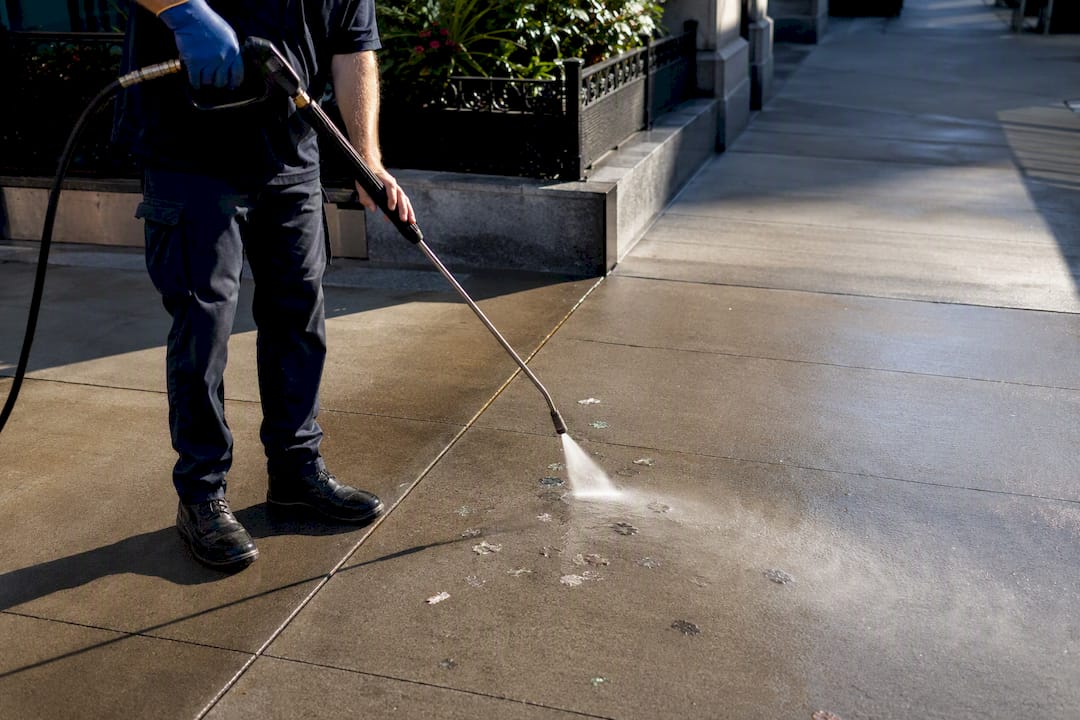
Blasting gum with a cold, narrow-jet nozzle at max PSI is exactly how amateur pressure washing goes wrong: the raw force can gouge soft or aged concrete, and cold water does nothing to break the gum’s polymer bond. Crews solve this by relying on heat over pressure. Hot water melts the adhesive’s structure so it lifts with much less mechanical force, which is what protects the surface underneath.
The technical details matter here:
- A hot-water unit paired with a 25° fan nozzle spreads the stream wide instead of concentrating it into a single damaging point.
- Starting distance is typically around 12 inches from the surface, adjusted based on how the concrete responds.
- The effective pressure at the surface with this setup lands closer to a few hundred PSI rather than the full rated output of the machine, since the fan pattern and standoff distance dissipate force across a wider area.
That combination, heat doing the chemical work and a wide fan pattern doing the mechanical work, is why a trained crew can clear a gum-covered plaza without leaving etch marks, while a rented cold-water unit on max pressure often does.
Pro Tip: If you’re renting equipment yourself, resist the urge to switch to a narrow “turbo” nozzle for stubborn spots. That’s the exact setup most likely to gouge older or already-weathered concrete.
Older, more porous concrete is the highest-risk surface for etching regardless of technique, which is one more reason avoiding pressure washing new concrete too soon after a pour matters just as much here as it does for other cleaning jobs.
How Do You Get Rid of the Black Residue Gum Leaves Behind?
The dark stain left after a wad is gone isn’t the gum itself. It’s dirt and grime that worked into the gum while it sat on the ground, then got pressed into the concrete’s surface pores along with a thin adhesive film. That’s why a spot can look “removed” and still leave a visible shadow for months.
Work it out with the same surfactant solution from the solvent step, 1 tablespoon of dish soap per quart of warm water, but focus on mechanical agitation this time. Scrub in small circles with a stiff nylon brush, forcing the soapy water down into the concrete’s texture rather than just across the top.
For residue that won’t budge:
- Apply an undiluted citric degreaser and let it dwell for 10 minutes before scrubbing again.
- Repeat the dwell-and-scrub cycle two or three times on stubborn spots rather than scrubbing harder once. Patience across multiple cycles removes residue that a single aggressive pass can’t.
- Rinse completely between cycles so you’re not just redistributing dirty water.
- Once the stain lifts, rinse the surrounding few inches too, not just the treated spot, so the cleaned patch doesn’t stand out against dirtier concrete around it.
- Consider sealing the area afterward if it’s a high-traffic spot prone to repeat gum drops. A sealed surface resists staining far better the next time around.
This blending step is where a lot of DIY jobs fall short. A perfectly clean circle surrounded by grimy sidewalk looks almost worse than the original gum spot, so treat a slightly wider radius than the stain itself.
Which Tools and Cleaners Are Safe for Concrete?
Not every tool marketed for gum removal belongs anywhere near your sidewalk. The safe list is short and inexpensive:
- Plastic putty knife — scrapes brittle gum without scoring the concrete surface.
- Stiff nylon brush — agitates residue and soap solutions without scratching.
- Citrus degreaser — breaks down adhesive film with a manageable dwell time and minimal fumes.
- Low-pressure garden-hose attachment or low-PSI washer — rinses without the etching risk of high-pressure blasting.
On the other side, a few common shortcuts do real damage:
- Metal razor blades or scrapers gouge concrete, especially anything textured or lightly sealed.
- High-concentrate solvents left to air-dry without a full rinse can leave discoloration or an oily film that attracts new dirt.
- Close-range rotary or turbo nozzles on a pressure washer are the single most common cause of accidental concrete etching among DIYers.
If you’re using a commercial-strength degreaser, wear rubber gloves and eye protection, and contain the runoff so it doesn’t drain straight into a storm grain or planting bed. Most municipalities have runoff rules for anything beyond plain water, so check local guidance before treating a large commercial lot.
When Should You Call a Professional for Gum Removal?
DIY methods handle a scattered spot here and there just fine. Hand the job off when any of these apply:
- You’re looking at more than a handful of spots across a large walkway, plaza, or parking area.
- The concrete is older, visibly porous, or already shows wear, making it more etching-prone under pressure.
- Gum has clearly been ground in for months and left a heavy black stain rather than a fresh wad.
- You need the job done fast and correctly the first time, without repeat dwell-and-scrub cycles eating your weekend.
A professional crew brings commercial-grade hot-water equipment most homeowners simply don’t have access to, along with the fan-nozzle and standoff-distance technique that avoids etching. Some professional crews run that exact setup on jobs across Colorado Springs and the Denver metro area, with insured crews handling both the initial removal and the residue treatment in the same visit. Same-week quotes and a satisfaction guarantee mean you’re not gambling on a rental machine and a Saturday afternoon.
How Do You Prevent Gum From Sticking to Concrete Again?
A sealed surface is genuinely harder for gum to bond to, which is the biggest lever you have for cutting future cleanup. Apply a penetrating concrete sealer to high-traffic entryways and walks every couple of years, following the product’s cure-time instructions before foot traffic resumes.
Beyond sealing, a few habits keep gum from becoming a recurring problem:
- Sweep high-traffic areas weekly so fresh gum gets caught and removed before it’s had time to bond and darken.
- Do a quick visual spot-check near entrances, bus stops, and benches where gum tends to concentrate.
- Remove new gum the same day it’s spotted. Fresh gum takes 30 seconds with a freezing spray; month-old gum takes a full solvent cycle.
- Place trash receptacles near seating and entry points. Reducing the temptation to spit gum on the ground is cheaper than any cleaning product.
What Do Professional Crews Actually Prioritize on a Gum Job?
Speed and surface preservation pull in opposite directions, and that tension shapes every real decision on a gum job. Cranking pressure or grabbing a metal scraper clears a spot faster, but it’s also how you end up with an etched patch that looks worse than the gum did.
Crews that do this work daily start with a test patch, always, on anything older or unfamiliar. They watch for surface shedding, that slightly chalky look concrete gets right before it starts to pit, and back off pressure or switch to a wider fan nozzle the moment they see it. That instinct only comes from doing the job enough times to see what damage looks like before it’s obvious.
The honest takeaway: gum removal isn’t hard chemistry. It’s discipline about not rushing the scrape, the dwell time, or the nozzle distance, in that order.
— Brandon
Get a Same-Week Quote for Professional Gum and Stain Removal
If your sidewalk, entryway, or parking area has gum spots that ice and dish soap haven’t fully solved, Alldaypowerwashing handles the rest with commercial-grade hot-water equipment built for exactly this job, without the etching risk of a rented consumer unit.

Every visit combines the initial removal pass with the follow-up residue treatment that most DIY attempts skip, so you’re not left with a faded outline where the gum used to be. Crews are fully insured, and every job is backed by a satisfaction guarantee. For a walkway, retail entrance, or commercial lot in Colorado Springs or the Denver metro area, you can see the full range of exterior cleaning work Alldaypowerwashing offers or head straight to request a same-week quote for your property. If you’re coordinating a broader cleanup that includes tree debris or landscaping near your walkways, McCullough Tree Service is a solid resource for that side of the job. Book your gum and stain removal through the Denver service page and get it handled in one visit.
Sources
- Gum Removal from Concrete: A Professional’s Guide
- How to Remove Gum from Concrete | Stain Removal Guides